
Archive | 2025/12/02

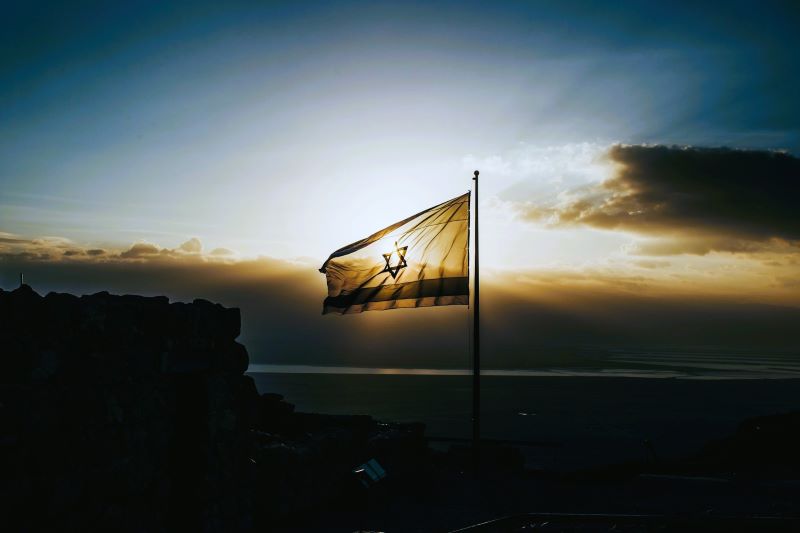
10 niesamowitych historii o Izraelu


10 niesamowitych historii o Izraelu

Joshua Hoffman


Współczesne Państwo Izrael to opowieść o ludziach, którzy nie uznają ograniczeń logiki ani konwencjonalnej mądrości, jaka obowiązuje inne narody.

Historia Izraela zupełnie nie przypomina uporządkowanych osi czasu, jakie znamy z podręczników. To wir niemożliwych misji, szalonego ryzyka, tajnych operacji ukrytych pod przykrywką kurortów wakacyjnych i decyzji podejmowanych w ułamku sekundy — decyzji, które zadecydowały o losach całego państwa.

W świecie, który często redukuje Izrael do nagłówków i politycznych punktów programu, prawda okazuje się dziwniejsza, odważniejsza i bardziej niewiarygodna, niż większość ludzi przypuszcza. To nie są mity, legendy ani scenariusze filmowe — to udokumentowane wydarzenia, realizowane przez ludzi, którzy odmówili podporządkowania się ograniczeniom logiki czy normom obowiązującym inne państwa.

Poniżej przedstawiamy przegląd najbardziej szalonych, zuchwałych i niesamowitych historii w dziejach Izraela — momentów, w których granica między przetrwaniem a unicestwieniem była cienka jak brzytwa, a mimo to niemożliwe stawało się rzeczywistością.


1. Wigilijne porwanie okrętów — Operacja Arka Noego (1969)

Izrael pilnie potrzebował kutrów rakietowych dla swojej marynarki. Francja zgodziła się je sprzedać, ale nagle nałożyła embargo na broń. Tyle że statki już zbudowano i czekały w porcie.

Izraelczycy założyli więc fikcyjną norweską firmę, stworzyli fałszywych dyrektorów, fałszywe dokumenty przewozowe i całą przykrywkę komercyjną. Francuzi pomyśleli: „Świetnie, Norwegowie je kupili”.

24 grudnia, gdy wszyscy francuscy urzędnicy spędzali Wigilię przy winie i świątecznych potrawach, izraelskie załogi po cichu weszły na pokłady, uruchomiły silniki i wypłynęły na Morze Śródziemne.

Zanim ktoś się zorientował, statki były już w połowie drogi do Hajfy. Francja była wściekła, ale oszustwo było legalne — przynajmniej na papierze. Światowe media nazwały to „największą morską kradzieżą stulecia”.


2. Luksusowy kurort Mossadu w Sudanie — Operacja Bracia (1977–1984)

By przemycić tysiące etiopskich Żydów z wrogiego terytorium, Mossad wpadł na pomysł… prowadzenia kurortu. Naprawdę. Wynajęto opuszczony hotel nad Morzem Czerwonym, odnowiono go, przygotowano broszury, zbudowano bar, oferowano lekcje windsurfingu, a agenci zostali przeszkoleni również w roli barmanów.

Turyści byli zachwyceni. Sudańscy urzędnicy cieszyli się z wpływów podatkowych. Mossad uwielbiał to, że nikt niczego nie podejrzewał.

Za dnia agenci prowadzili kursy nurkowania i serwowali drinki. W nocy prowadzili konwoje z etiopskimi Żydami przez pustynię do samolotów, które zabierały ich do Izraela.

Pewnej nocy sudańscy żołnierze zatrzymali agentów. Oficer Mossadu blefował:
„Musimy pilnie naprawić pompę wodną w ośrodku.” Pozwolili mu jechać dalej.

Operacja ocaliła tysiące ludzi.


3. Kibuc, który przypadkiem stał się częścią programu nuklearnego (lata 50.–60.)

Izraelski program nuklearny był tak tajny, że nawet osoby zajmujące się jego logistyką nie wiedziały, co robią.

W kibucu Sdot Yam członkom mówiono, że produkują „materiały ceramiczne” na eksport. W rzeczywistości wytwarzali kluczowe komponenty do reaktora nuklearnego w Dimonie.

Pracownicy sądzili, że pakują ceramikę albo sprzęt przemysłowy. Dopiero po dekadach dowiedzieli się, że uczestniczyli w najściślej strzeżonym programie strategicznym Izraela.

Wyobraź sobie: rano doić krowy, a po południu — pakować części do instalacji nuklearnej. Tylko w Izraelu.


4. Kiedy Izrael „porwał” własny samolot — jako test bezpieczeństwa (1954)

W początkach izraelskiego lotnictwa postanowiono przetestować, jak załogi zareagują na porwanie. Nie uprzedzono pasażerów. Agenci udający terrorystów „przejęli” samolot w trakcie lotu. Pilot się podporządkował, pasażerowie wpadli w panikę. Niektórzy próbowali wedrzeć się do kokpitu.

Chaos był tak duży, że po incydencie wprowadzono jasne zasady: nigdy więcej symulacji z udziałem niczego nieświadomych cywilów.

To wydarzenie stało się fundamentem izraelskiej filozofii bezpieczeństwa: musi być realne, rygorystyczne i nigdy improwizowane.


5. Noc, gdy Ben-Gurion zmienił strefę czasową Izraela, by wygrać bitwę (1948)

Podczas oblężenia Jerozolimy różne oddziały posługiwały się różnymi czasami: „żydowskim”, „brytyjskim”, „arabskim”. Skuteczna koordynacja ataku była niemożliwa.

Rozwiązanie Ben-Guriona? Tymczasowo wprowadził nową narodową strefę czasową, nakazując wszystkim synchronizację zegarków według jednej godziny — tylko na tę noc.

Zadziałało. Skoordynowany atak przerwał arabskie linie oblężenia i otworzył drogę do Jerozolimy. To być może jedyny przypadek w historii, gdy o wyniku bitwy zadecydowała… zmiana czasu w całym kraju.


6. Pierwsze izraelskie lotnictwo: złom, buntownicy i desperacja (1948)

Młode państwo nie miało lotnictwa. USA zakazały eksportu broni. Brytyjczycy blokowali wszystko. Co zrobił Izrael?

Kupił używane czechosłowackie podróbki Messerschmittów, przemycił amerykańskich pilotów wojennych przez Europę, a samoloty składano w stodołach. Jeden z pilotów leciał, trzymając drzwi kokpitu ręką, bo się nie domykały. Inny mówił, że samolot trząsł się tak bardzo, że wypadły mu plomby.

A jednak — piloci zatrzymali egipską armię wystarczająco długo, by siły izraelskie mogły się przegrupować. W historii wojskowości uchodziło to za niemożliwe. Izrael zrobił to w pierwszym tygodniu istnienia.


7. Operacja Diament: kradzież najnowocześniejszego myśliwca ZSRR (1966)

MiG-21 był dumą sowieckiego lotnictwa i podstawą sił powietrznych krajów arabskich. Izrael chciał zdobyć jeden do analizy. CIA — jeszcze bardziej.

Wytypowano chrześcijańskiego pilota z Iraku, Munira Redfę, który czuł się dyskryminowany. Przez wiele miesięcy budowano zaufanie. Obiecano mu bezpieczeństwo dla rodziny, nowe życie w Izraelu, dużą sumę pieniędzy i karierę po ucieczce.

Redfa przeleciał nisko pod radarem nad pustynią — i wylądował w Izraelu. Gdy CIA zobaczyła myśliwiec, analitycy dotykali go jak relikwii. Zmieniło to równowagę sił powietrznych na Bliskim Wschodzie.

Dzięki zdobytym informacjom Izrael zdominował niebo w czasie wojny sześciodniowej w 1967 r.


8. Szpieg, który wspiął się na szczyty syryjskiej władzy (1960–1965)

Podwójne życie Eli Cohena w Damaszku to jedna z najbardziej niezwykłych historii szpiegowskich na świecie. Organizował wystawne przyjęcia. Syryjscy generałowie dzielili się tajemnicami po alkoholu. Został bliskim przyjacielem ministra obrony. Niemal został wiceministrem obrony.

Jego najsłynniejszy wyczyn: przekonał syryjskich oficerów, by posadzili eukaliptusy wokół umocnień na Wzgórzach Golan — „dla cienia”. Izrael wykorzystał te rzędy drzew jako znaczniki celów podczas wojny sześciodniowej.

Cohena w końcu złapano, ale jego informacje uratowały Izrael.


9. Rolodex ajatollaha (1979)

Podczas rewolucji irańskiej izraelscy dyplomaci mieli zaledwie kilka godzin na ewakuację. Ale przed opuszczeniem ambasady agenci Mossadu rozpruli sejfy, zabrali tajne dane, zniszczyli dokumenty i ukryli materiały w zwykłych workach pocztowych.

Zabrali też kody komunikacyjne nowego reżimu i kluczowe dokumenty należące do rządu ajatollaha Chomeiniego. Wszystko wysłano do Izraela jako zwykłą pocztę dyplomatyczną. Gdy Gwardia Rewolucyjna weszła do budynku, sejfy były puste.

Irański oficer miał podobno powiedzieć: „Izraelczycy ukradli nam budynek.”


10. Odmowa zaakceptowania niemożliwego

Brzmi jak fikcja polityczna w stylu Aarona Sorkina. Ale wydarzyło się naprawdę — i zmieniło układ sił na Bliskim Wschodzie.

Jednym z pierwszych i najważniejszych zadań Szimona Peresa jako 29-letniego dyrektora generalnego izraelskiego Ministerstwa Obrony była organizacja kampanii synajsko-sueskiej w 1956 r. To właśnie wtedy Peres doznał swego rodzaju objawienia.

W pewnej francuskiej willi, gdzie Izraelczycy, Brytyjczycy i Francuzi planowali kampanię, Peres zaproponował coś, co wszyscy uznali za niewykonalne. Ku jego zaskoczeniu — francuscy ministrowie się zgodzili: Francja pomoże Izraelowi stworzyć własny program energii jądrowej.

W 1957 r. Francja zgodziła się dostarczyć Izraelowi reaktor na pluton. Potrzeba było jeszcze podpisów ministra spraw zagranicznych i premiera.

Peres, przygotowany na wszystko, przekonał ministra Pineau, że reaktor będzie „wyłącznie pokojowy”, a wszelkie zmiany będą konsultowane z Francją. Pineau zgodził się i podyktował warunki sekretarce.

Premier nie odbierał telefonu. Peres czekał w jego biurze do nocy, pijąc whisky i licząc na cud. W końcu, 30 września, nad ranem, Bourgès-Maunoury — właśnie obalony premier — podpisał dokument datowany wstecznie.

W ten sposób zasiano ziarno izraelskiego programu jądrowego.

Peres podsumował: „Ta czy inna data, co za różnica? Między przyjaciółmi to bez znaczenia.” Minister Mosze Dajan dodał: „Reaktor powstał, bo Szimon Peres nie uznawał słowa ‘niemożliwe’.”


Link do oryginału: https://www.futureofjewish.com/p/10-unbelievable-stories-about-israel

Od Redakcji „Listów”

Warto tu dodać Entebe, pagery i kilka operacji skracających życie arcywrogów.  


Zawartość publikowanych artykułów i materiałów nie reprezentuje poglądów ani opinii Reunion’68,
ani też webmastera Blogu Reunion’68, chyba ze jest to wyraźnie zaznaczone.
Twoje uwagi, linki, własne artykuły lub wiadomości prześlij na adres:
webmaster@reunion68.com


Does it matter that they’re lying about Israel?


Does it matter that they’re lying about Israel?

Jonathan S. Tobin


The blood libels against Israel keep being repeated, even as evidence that the charges of genocide and starvation were untrue continues to pile up.

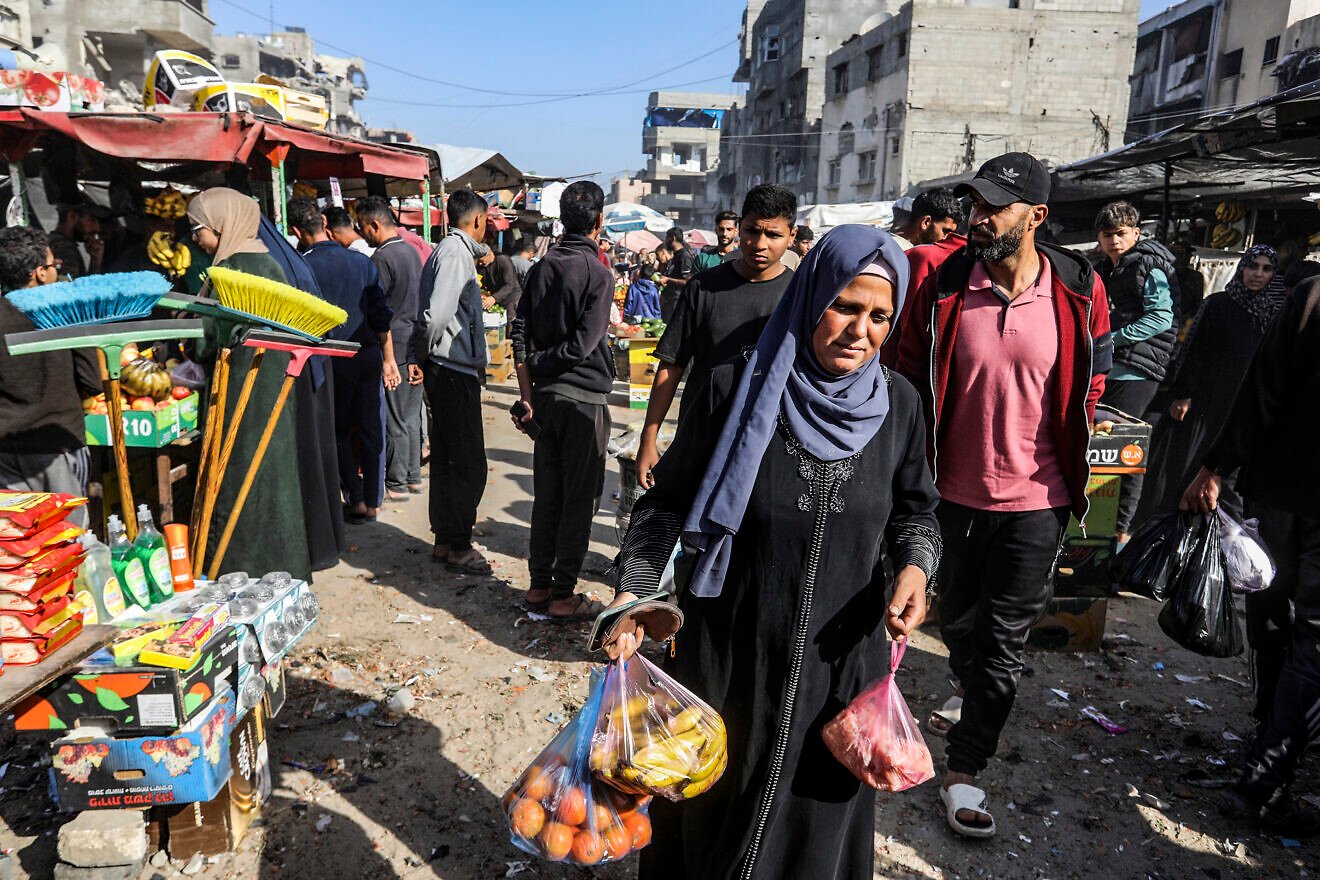
Palestinians shop at a market in Khan Yunis, in the southern Gaza Strip, on Nov. 21, 2025. Photo by Abed Rahim Khatib/Flash90.

A curious thing happened last week in Israel. More than 100 military officers from 20 countries attended an international conference hosted by the Israel Defense Forces. Among them were representatives from countries that had falsely accused the Jewish state of committing war crimes, deliberate starvation or even genocide in Gaza during the war with Hamas that followed the Palestinian terrorist attacks on Israel on Oct. 7, 2023.

While there, they visited the sites of the Oct. 7 massacres and attended briefings about the challenges presented by urban warfare as well as discussions of how the IDF used AI, drones, artillery and medical services for the wounded.

Some nations, like the United Kingdom, whose left-wing government continues in its vitriolic demonization of the Jewish state and has passively accepted the growing mainstreaming of antisemitism in British society, boycotted the event. But others who were just as vociferous in backing up the claims that what Israel had done in Gaza was uniquely awful, such as France and Canada, showed up alongside representatives from friendlier countries like the United States, the Czech Republic and Hungary.

They were accompanied by officers from Germany, Finland, India, Greece, Cyprus, Poland, Austria, Estonia, Japan, Morocco, Romania, Serbia and Slovakia. Many have either joined in the international community’s Israel-bashing, recognized “Palestine” as an independent, albeit still non-existent, country or chose not to stand with Israel during the past two years as it fought for its life against genocidal Islamist terrorists.

They don’t really believe the lies

That Israel has much to teach the world about the use of high-tech and intelligence in warfare, added to its expertise in avoiding civilian casualties and how to deal with emergencies, is nothing new. The Israelis have been sharing their knowledge in these and other topics with other nations for decades. So, in that sense, the military conference wasn’t all that newsworthy.

But it matters because it shows that many of those countries that tacitly or openly endorsed the blood libels against Israel during the course of the war that, at least temporarily, concluded with the ceasefire-hostage release deal brokered by the United States in October, don’t really believe the accusations. If they did, they wouldn’t have been there or subsequently, members of their delegations would have spoken about alleged links between Israeli military tactics and the claims of mass murder.

Except they didn’t. Because those claims don’t exist.

As military experts, like British Col. Richard Kemp and U.S. urban warfare researcher John Spencer have pointed out, the evidence for “genocide,” famine or indiscriminate killings of civilians doesn’t exist because none of it happened. Israel’s army is, in fact, the most moral in the world, with a record in combat with respect to civilian casualties that is superior to that of any other nation.

Israel fought a war in Gaza against a tenacious enemy that had attacked across the border between the Jewish state and the Hamas state (in all but name), committing the largest mass slaughter of Jews since the Holocaust. Hamas deliberately used civilians as human shields and built its fortifications in and around as well as under schools, hospitals and dwellings where ordinary Palestinian Arabs lived. Yet the IDF still fought under rules of engagement that were not only highly restrictive and humane, but also stand in stark contrast to the orgy of murder, rape, torture, kidnapping and wanton destruction that the Palestinians engaged in when they attacked Jewish communities in southern Israel.

As happens in war, a great many Gazans died during the subsequent fighting, others were wounded, and everyone in the area suffered in one way or another. Claims of Palestinian civilian casualties were vastly exaggerated by Hamas propagandists, but despite claims to the contrary, the ratio between civilian and Hamas combatant deaths in Gaza (which Israel-bashers never mention) was roughly one to one. That’s an unprecedentedly low number in the history of urban warfare. And it’s far lower than the number of civilians killed in Iraq by U.S. and allied forces during that Mideast war earlier this century or by Allied armies during World War II.

We can point out that the claims of famine and starvation so prevalent during the past summer simply evaporated once the fighting stopped—and not because of any increase in the supply of food in Gaza. Rather, it’s because, thanks to the ceasefire, Hamas is back in firm control of much of the area, and there is no longer any propaganda value in making false claims about how people are faring under its rule.

The ‘genocide’ narrative

Nevertheless, the narrative about “genocide” and famine continues to be repeated by media outlets like The New York Times, commentators like former Fox News host Tucker Carlson and New York City mayor-elect Zohran Mamdani, who did so live on television during his meeting last week with President Donald Trump.

To his discredit, the president did not contradict Mamdani. But he’s not alone in letting lies like that go unanswered. Much like the false claims that democratic Israel is an “apartheid” state are routinely mouthed by the ignorant, so, too, the lies about genocide have simply become part of the language of contemporary discourse, despite being disconnected from the facts. The lies about Israel blend into Mamdani’s left-wing version of antisemitism. They do the same for Carlson’s right-wing narratives about Zionism being an enemy of Western civilization. That shows that he has gone beyond platforming radical antisemites like the neo-Nazi “groyper” Nick Fuentes to mimicking their hatred.

In the face of the calumnies spewed by officeholders like Mamdani and populist hate-mongers like Carlson, it often seems like the facts don’t matter.

Inconvenient information that debunks the lies about genocide doesn’t matter to ideologies like the myths about race, intersectionality and settler-colonialism in which Jews and Israelis are falsely depicted as “white” oppressors, no matter what they do, and Palestinians are always considered oppressed victims. These toxic ideas are the guiding principles of Mamdani’s public career in much the same way that Carlson’s and Fuentes’s blend of religious-based hate has led them to their obsessive hatred for Israel and the Jews.

Facts and truth are of no use in debating products of the bizarre red-green alliance of Marxism and Islamism that produced Mamdani. The same is true for his right-wing counterparts in spewing hate.

No one is going to persuade Mamdani or Carlson that their information—if indeed their beliefs are actually based on anything other than their ideological obsessions—about Israel is incorrect. Nor will we do so for those chanting for Jewish genocide (“From the river to the sea”) and terrorism against Jews everywhere (“Globalize the intifada”), all the while calling the intended victims of these atrocities “Nazis.” Citing objective facts about the war or the reality of life in democratic Israel or a Palestinian society dominated by Islamist doctrines that are little different from a death cult will simply fall on deaf ears.

Not everyone is listening to the hate-mongers

But something that many friends of Israel can sometimes forget amid the deluge of antisemitic invective hurled at them and their cause is that most Americans aren’t listening to either Mamdani or Carlson, or agreeing with those who refuse to be judgmental about their hate. The vast majority of people in the United States remain distrustful of political extremists and are, when presented with facts, persuadable.

The false charges that are hurled at Israel hurt, especially when, thanks to a biased media, they migrate from the fever swamps of the far left and right to mainstream public discourse. When magnified by the algorithms of social-media platforms like TikTok, they can metastasize into a growing chorus of hate echoed by a generation that relies on such untrustworthy sources for their information about the world. And that is another reason why those outlets, like JNS, that do tell the truth about the conflict, are more important than ever. 

Yet as we saw with last week’s conference in Israel, the vast distance between left-wing or right-wing antisemitic canards rooted in Hamas propaganda and the truth is sometimes very easy to discern.

As infuriating as it can be to have to witness the way blood libels about “genocide” have become commonplace, those falsehoods aren’t strong enough to demolish the reality of Israel. The nation is not perfect, nor are all of its people. But the Jewish state survived the horrors of Oct. 7 and then went on to defeat its Iranian, Hezbollah and Hamas foes, and did so while still preserving its standards and humanity. Those of us who care about it and the truth know who is lying and who is not. We should be equally certain that the Israel Mamdani and Carlson and their various followers wish to destroy will still be standing long after its opponents have passed from the scene.


Jonathan S. Tobin is editor-in-chief of the Jewish News Syndicate, a senior contributor for The Federalist, a columnist for Newsweek and a contributor to many other publications. He covers the American political scene, foreign policy, the U.S.-Israel relationship, Middle East diplomacy, the Jewish world and the arts. He hosts the JNS “Think Twice” podcast, both the weekly video program and the “Jonathan Tobin Daily” program, which are available on all major audio platforms and YouTube. Previously, he was executive editor, then senior online editor and chief political blogger, for Commentary magazine. Before that, he was editor-in-chief of The Jewish Exponent in Philadelphia and editor of the Connecticut Jewish Ledger. He has won more than 60 awards for commentary, art criticism and other writing. He appears regularly on television, commenting on politics and foreign policy. Born in New York City, he studied history at Columbia University.


Zawartość publikowanych artykułów i materiałów nie reprezentuje poglądów ani opinii Reunion’68,
ani też webmastera Blogu Reunion’68, chyba ze jest to wyraźnie zaznaczone.
Twoje uwagi, linki, własne artykuły lub wiadomości prześlij na adres:
webmaster@reunion68.com


Palestinian Islamic Jihad Said to Be Expanding Military Presence in Syria With Government’s Knowledge


Palestinian Islamic Jihad Said to Be Expanding Military Presence in Syria With Government’s Knowledge

Ailin Vilches Arguello


Terrorists stand during the funeral of two Palestinian Islamic Jihad gunmen who were killed in an Israeli raid, in Jenin refugee camp, in the West Bank on May 10, 2023. Photo: REUTERS/Raneen Sawafta

The Palestinian Islamic Jihad (PIJ) terrorist group is reportedly expanding its military presence in Syria, a move that could put the Syrian government in violation of US conditions for restoring full diplomatic ties and lifting additional economic sanctions

According to Israeli public broadcaster Kan News, PIJ has expanded its military wing — the al-Quds Brigades — within Syria in recent weeks, notably increasing activity in Palestinian refugee camps near Damascus, apparently with the full knowledge of the Syrian government.

Syrian President Ahmed al-Sharaa is said to have appointed an envoy to oversee PIJ’s activities in the country, responsible for facilitating communications between the Palestinian terrorist group and the government, Kan reported.

However, a government security source denied such accusations, saying there is “no intention to allow military operations against Israel,” which borders Syria.

PIJ also denied reports of intensified activity in Syria, saying they are entirely fabricated and intended to provoke hostility against the Palestinian people and their refugee camps.

Following the United States’ recent statements that it does not support Israeli airstrikes in Syria, the embattled Middle Eastern country could now provide a particularly convenient base for PIJ, allowing the group to expand its operations with less risk of Israeli retaliation.

Under the Trump administration, Washington has lifted sanctions on the Syrian government to support the country’s reconstruction efforts and pushed for Damascus to normalize relations with Israel. Earlier this month, US President Donald Trump hosted Sharaa for the first-ever visit by a Syrian president to Washington, DC, vowing to help Syria as the war-ravaged country struggles to come out of decades of international isolation.

To pave the way for the full restoration of US diplomatic relations, deeper economic ties, and the lifting of additional economic sanctions, Washington has set five conditions for the Syrian government, including deporting Palestinian militants, joining the Abraham Accords with Israel, and expelling foreign terrorists.

The government must also help prevent an Islamic State (ISIS) resurgence and take responsibility for detention facilities holding ISIS fighters, supporters, and their families in the northeast.

If the Syrian government is aware of the reported PIJ activity, it risks jeopardizing its relationship with Washington by effectively endorsing the operations of a designated foreign terrorist organization — in open defiance of a key condition for improving bilateral ties.

As Damascus seeks to restore international credibility and strengthen its standing on the global stage, Israeli officials have remained highly cautious of Syria’s new leadership.

Israeli Foreign Minister Gideon Saar has previously described the current Syrian regime as “a jihadist Islamist terror group from Idlib that took Damascus by force.”

He has even warned senior European officials that Hamas and PIJ were operating in Syria to create an additional front against Israel

“We will not compromise the security on our border. Hamas and Palestinian Islamic Jihad are acting in Syria to create another front against Israel there,” the top Israeli diplomat said earlier this year.

According to Hebrew media reports, Defense Minister Israel Katz warned lawmakers in Israel’s parliament, the Knesset, this week that armed groups operating inside Syria, including the Yemen-based Houthis, are considering launching attacks on the Golan Heights, a strategic region on Israel’s northern border previously controlled by Syria.

Hamas, PIJ, and the Houthis are all backed by Iran, which provides the internationally designated terrorist groups with arms and funding.

Israel has consistently vowed to prevent the Syrian government from deploying forces in the country’s southern region, along its northeastern border.

Sharaa, a former al Qaeda commander who until recently was sanctioned by the US as a foreign terrorist with a $10 million bounty on his head, became Syria’s transitional president earlier this year after leading a rebel campaign that ousted long-time Syrian leader Bashar al-Assad, whose brutal and authoritarian Iran-backed rule had strained ties with the Arab world during the nearly 14-year Syrian war.

The collapse of Assad’s regime was the result of an offensive spearheaded by Sharaa’s Islamist Hayat Tahrir al-Sham (HTS) group, a former al Qaeda affiliate.

Following Assad’s fall in December, Israel moved troops into a buffer zone along the Syrian border to secure a military position to prevent terrorists from launching attacks against the Jewish state. 

The previously demilitarized zone in the Golan Heights was established under the 1974 Disengagement of Forces Agreement between Damascus and Jerusalem that ended the Yom Kippur War. However, Israel considered the agreement void after the collapse of Assad’s regime.

Now, Israel and Syria are reportedly in the final stages of months-long negotiations over a security agreement that could establish a joint Israeli, Syrian, and US presence at key strategic locations.

Jerusalem and Damascus have agreed to form a joint Israeli-Syrian-American security committee to oversee developments along their shared border and uphold the terms of a proposed deal.

Al-Sharaa told The Washington Post earlier this month that his government has expelled Iranian and Hezbollah forces from Syria and is ready for a new phase of ties with the United States. However, Syria’s reported knowledge of PIJ activity may be a hurdle as talks between Washington, Damascus, and Jerusalem proceed.

Earlier this year, tensions escalated after heavy fighting broke out in Sweida between local Druze fighters and Syrian regime forces amid reports of atrocities against civilians.

At the time, Israel launched an airstrike campaign to protect the Druze, which officials described as a warning to the country’s new leadership over threats to the minority group. The Druzean Arab minority who practice a religion originally derived from Islam, live in Israel, Syria, and Lebanon. In Israel, many serve in the military and police, including during the war in Gaza.

Jerusalem has pledged to defend the Druze community in Syria with military force if they come under threat — motivated in part by appeals from Israel’s own Druze minority.

But the Syrian government has accused Israel of fueling instability and interfering in its internal affairs, while the new leadership insists it is focused on unifying the country after 14 years of conflict, which began with Assad violently cracking down on anti-government protests in 2011.


Zawartość publikowanych artykułów i materiałów nie reprezentuje poglądów ani opinii Reunion’68,
ani też webmastera Blogu Reunion’68, chyba ze jest to wyraźnie zaznaczone.
Twoje uwagi, linki, własne artykuły lub wiadomości prześlij na adres:
webmaster@reunion68.com