
Archive | 2025/12/15

Obalanie mitu ludobójstwa: jak sondaże medialne zamieniają uprzedzenia w „opinię publiczną”


Obalanie mitu ludobójstwa: jak sondaże medialne zamieniają uprzedzenia w „opinię publiczną”

Bob Goldberg


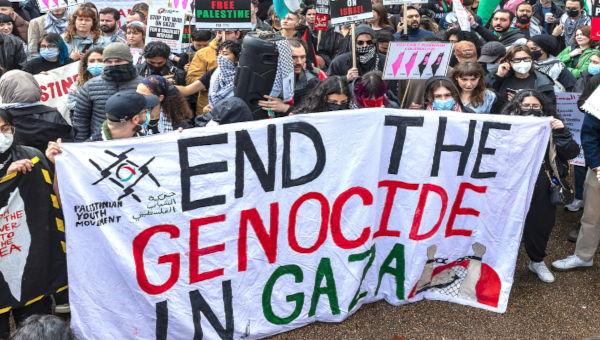
Samozwańczy strażnicy prawdy z głównych mediów — ci kapłani z „New York Timesa” i „The Guardian” — wydali wyrok: Izrael popełnia „ludobójstwo” w Gazie, a amerykańska opinia publiczna jest w stanie sprawiedliwego oburzenia. Wymachują swoimi binarnymi sondażami jak talizmanami: wrześniowe badanie YouGov z 2025 roku, toporne niczym maczuga, pyta wprost, czy Izrael „dokonuje ludobójstwa na palestyńskich cywilach”, i voilà — 42% respondentów na poziomie krajowym odpowiada twierdząco, przy czym 67% respondentów wśród Demokratów i 81% wśród liberałów się do tego przyłącza. Takie liczby krzyczą z nagłówków, tworząc narrację, która podsyca moralny sprzeciw wobec państwa żydowskiego. Jak analizuje Zach Goldberg na łamach „Tablet Magazine”, odniesienia do „ludobójstwa” w kontekście Izraela osiągnęły w 2024 roku absurdalne rozmiary — 1,43% artykułów NYT określało wojnę w Gazie jako ludobójstwo, co znacznie przewyższało częstotliwość wspomnień o Rwandzie i Darfurze. To nie jest prawdziwe dziennikarstwo — to zmanipulowana kampania mająca na celu wzbudzenie oburzenia, osłabienie legitymacji Izraela i zignorowanie brutalnej rzeczywistości jego działań obronnych.<

Jak odwrócić tę narrację opartą na sondażach? Ostatnio Goldberg, wraz z zespołem z Instytutu Zarządzania i Obywatelstwa Uniwersytetu Stanowego Florydy (Florida State University’s Institute for Governance and Civics, IGC), przeprowadził badanie wśród 1 447 dorosłych Amerykanów, w tym 252 mieszkańców Florydy (próba nadreprezentowana). Porzucili oni tendencyjne pytania w stylu „czy nadal bijesz swoją żonę” na rzecz bardziej wyważonych opcji: celowe działania, obojętność, unikanie (pomimo wykorzystywania cywilów przez Hamas), odrzucenie samej ramy pytania lub brak zdania.

Wyniki sondażu pokazują, że społeczeństwo wcale nie jest jednomyślnie wściekłe na Izrael.

Na poziomie krajowym tylko 24% respondentów przypisuje Izraelowi celowe działania na szkodę ludności cywilnej — tyle samo (24%) przypisuje ofiary cywilne działaniom Hamasu. Dodatkowe 12% przejawia obojętność, 13% odrzuca wszystkie przedstawione opcje jako niezgodne z ich poglądami, a 27% nie ma zdania. Ogółem 76% nie podziela wizji prezentowanej przez „New York Times”.

Sondaż YouGov twierdził, że 42% Amerykanów uważa, iż Izrael dopuszcza się ludobójstwa.

Z kolei badanie IGC — co nie dziwi — pokazuje, że Republikanie i konserwatyści znacznie rzadziej zgadzają się z tezą, że Izrael celowo szkodzi cywilom. Zaledwie 5% Republikanów zgadza się z taką oceną, w porównaniu z 37% Demokratów. Dla porównania — sondaż YouGov sugerował, że 67% Demokratów i 81% liberałów uważa, iż Izrael „dokonuje ludobójstwa”; tymczasem w badaniu IGC 37% Demokratów i 50% liberałów sądzi, że szkody wyrządzone cywilom przez Izrael są celowe.

Goldberg w swoim tekście na łamach „Tablet” przypisuje to zjawisko tzw. „rozmywaniu pojęć” (ang. concept creep) — czyli rozciąganiu definicji „ludobójstwa” do granic absurdu, co prowadzi do moralnego zamętu, potęgowanego przez cyfrowe tłumy, które bardziej cenią kliknięcia niż kontekst.

A co z tezą, że show Tuckera Carlsona zmobilizowało młodych konserwatystów do popierania jego twierdzenia, że Izrael to pasożytnicza i demoniczna siła, która od pokoleń oszukuje Amerykanów, aby finansowali ludobójstwo, zamiast obsypywać Iran miłością? Alarmiści twierdzą, że rośnie „silny” nurt młodych konserwatystów radykalizujących się w stronę antysemityzmu.

Nonsens. Wykres 7 z badania IGC to obala:
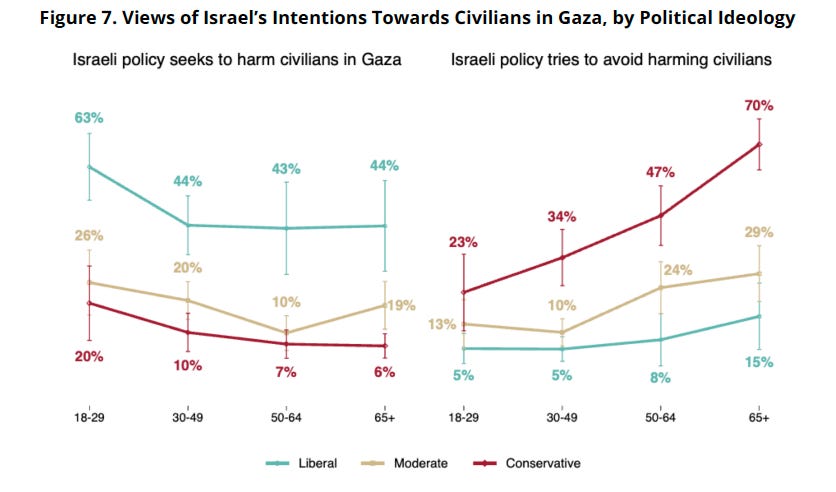
Wśród konserwatystów w wieku 18–29 lat 20% uważa działania Izraela za szkodliwe, a 23% jest zdania, że Izrael unika szkód — niemal równowaga, żadnej fali. Wskaźnik postrzegania szkód spada do 10% (30–49 lat), 7% (50–64), 6% (65+); z kolei „unikanie” rośnie do 70% wśród starszych. Tylko co piąty młody konserwatysta przypisuje Izraelowi złą wolę — to margines, nie większość. W całej grupie konserwatystów: 9% wskazuje na celowe szkody, 47% na unikanie, 22% nie ma zdania.

Ale manipulacja sięga głębiej: ta machina tworzy „spiralę milczenia” — ten podstępny mechanizm, w którym domniemane większości uciszają mniejszości poprzez lęk przed izolacją. Stronnicze sondaże wywołują iluzję konsensusu antyizraelskiego, media społecznościowe grzebią głosy sprzeciwu, promując jednocześnie nienawiść — Izrael „przegrywa wojnę w mediach społecznościowych”, gdzie mniej niż 10% głosów jest mu przychylnych.

Rozmywanie pojęć dopełnia obrazu: nazwij samoobronę „ludobójstwem”, a jej obrońców zamień w wyrzutków. Efekt? Żydzi zdemoralizowani, wyobcowani we własnym kraju. Po 7 października antysemityzm w USA wzrósł o 360%, a kampusy uniwersyteckie stały się pożywką dla nienawiści. Na Harvardzie 46% żydowskich studentów ukrywa swoje poglądy, 73% unika rozmów o polityce, chowając kipy jak zbiegowie. Tymczasem uczelnia, wciąż odpierająca zarzuty o antysemityzm, zatrudnia wykładowców nienawidzących Izraela i jego zwolenników. Zdemoralizowanie nie jest skutkiem ubocznym użycia sondaży do demonizowania Izraela — to ostrze, które wycina żydowską determinację, jeden stłumiony głos po drugim.

Jak zauważył Winston Churchill: „Nie istnieje coś takiego jak opinia publiczna. Istnieje tylko opinia opublikowana.” Nigdzie ta prawda nie jest bardziej widoczna niż w nieustannej kampanii mającej na celu przedstawienie Izraela jako ludobójczego potwora w Gazie.

Te sondaże to nie niewinne pytania — to taktyczne uderzenia, wzmacniające światopogląd najmłodszych i najbardziej lewicowych grup, jednocześnie zagłuszając głos rozsądku reszty Amerykanów. Ale — jak pokazuje sondaż IGC — gdy Amerykanie mają szansę rzeczywiście zdefiniować działania Izraela bez osadzenia w uprzedzeniach środowisk antyizraelskich, widzą państwo żydowskie nie jako demoniczną machinę wojenną, ale jako demokrację walczącą z barbarzyńcami. Nawet na wypaczonym polu gry, badanie IGC sugeruje, że prawda ma moc wpływu na postawy — niezależnie od tego, czy zostanie opublikowana, czy nie.


Link do oryginału: https://thenewzionisttimes.substack.com/p/debunking-the-genocide-how-media

The New Zionist, 7 grudnia 2025


Zawartość publikowanych artykułów i materiałów nie reprezentuje poglądów ani opinii Reunion’68,
ani też webmastera Blogu Reunion’68, chyba ze jest to wyraźnie zaznaczone.
Twoje uwagi, linki, własne artykuły lub wiadomości prześlij na adres:
webmaster@reunion68.com

Members of Congress mark 50 years of ‘Zionism is racism’ resolution


Members of Congress mark 50 years of ‘Zionism is racism’ resolution

Andrew Bernard


“This should be a time not to run and hide but to indeed prove that Zionism is not racism,” Rep. Joe Wilson told attendees.

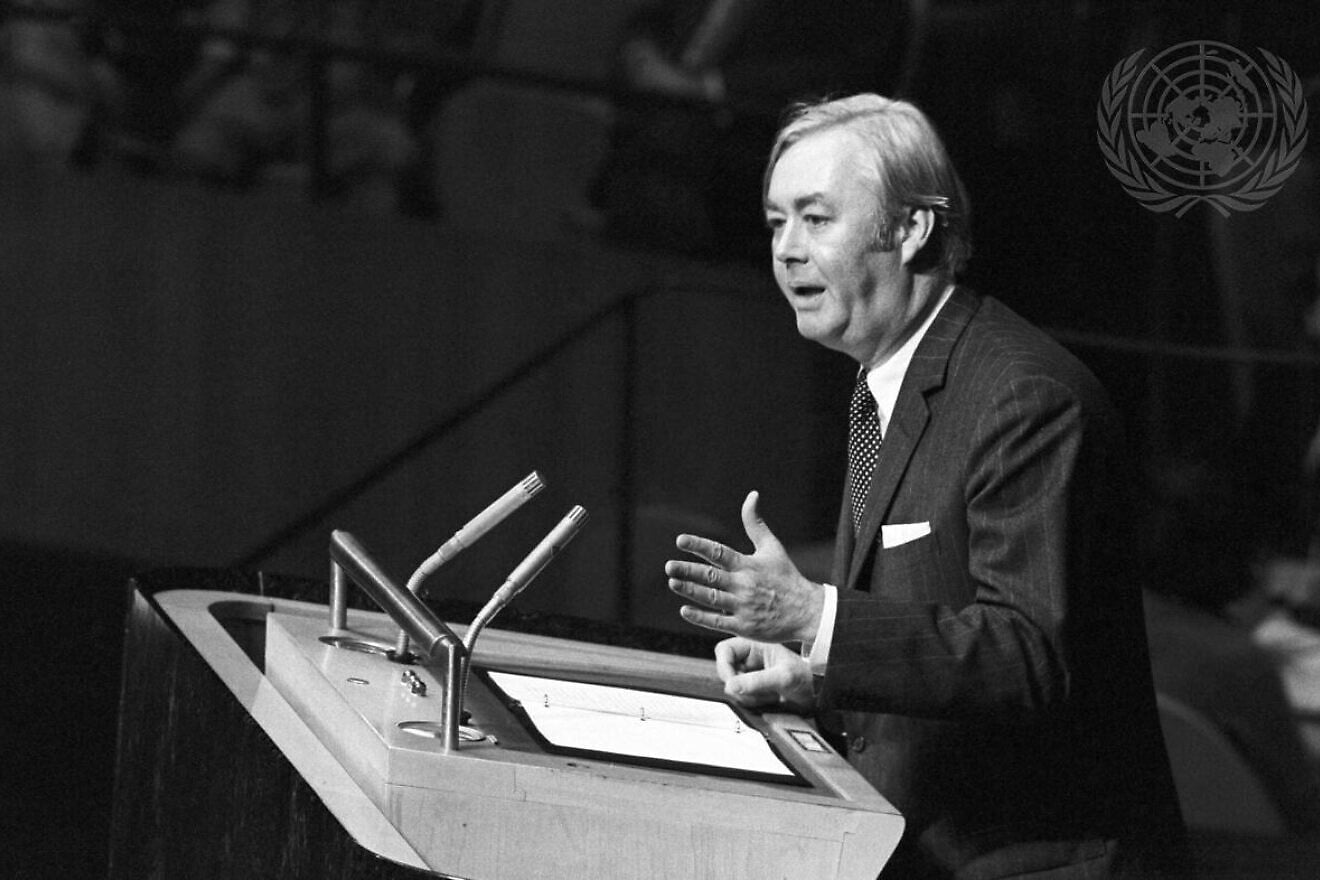
Daniel Patrick Moynihan, U.S. ambassador to the United Nations, condemns the U.N. General Assembly vote to call Zionism “racism,” Nov. 10, 1975. Credit: Teddy Chen/U.N. Photo.

Members of Congress gathered at the U.S. Capitol on Tuesday to mark the 50th anniversary of the United Nations resolution determining that Zionism is a form of racism and Daniel Patrick Moynihan’s denunciation of that “infamous act.”

Rep. Joe Wilson (R-S.C.) said that for the past 50 years, Israel has proven that Resolution 3379 “was not true.”

“This should be a time not to run and hide but to indeed prove that Zionism is not racism, and you can see it in modern-day Israel,” Wilson said. “How many resolutions of any organization could be proven wrong for 50 years?”

Led by a bloc of Arab states and communist countries, 72 countries passed the “Zionism is a form of racism” resolution in 1975 with the support of many non-aligned countries. 

The resolution was repealed in 1991 after the fall of the Berlin Wall, and to date, it is the only resolution ever repealed in the General Assembly.

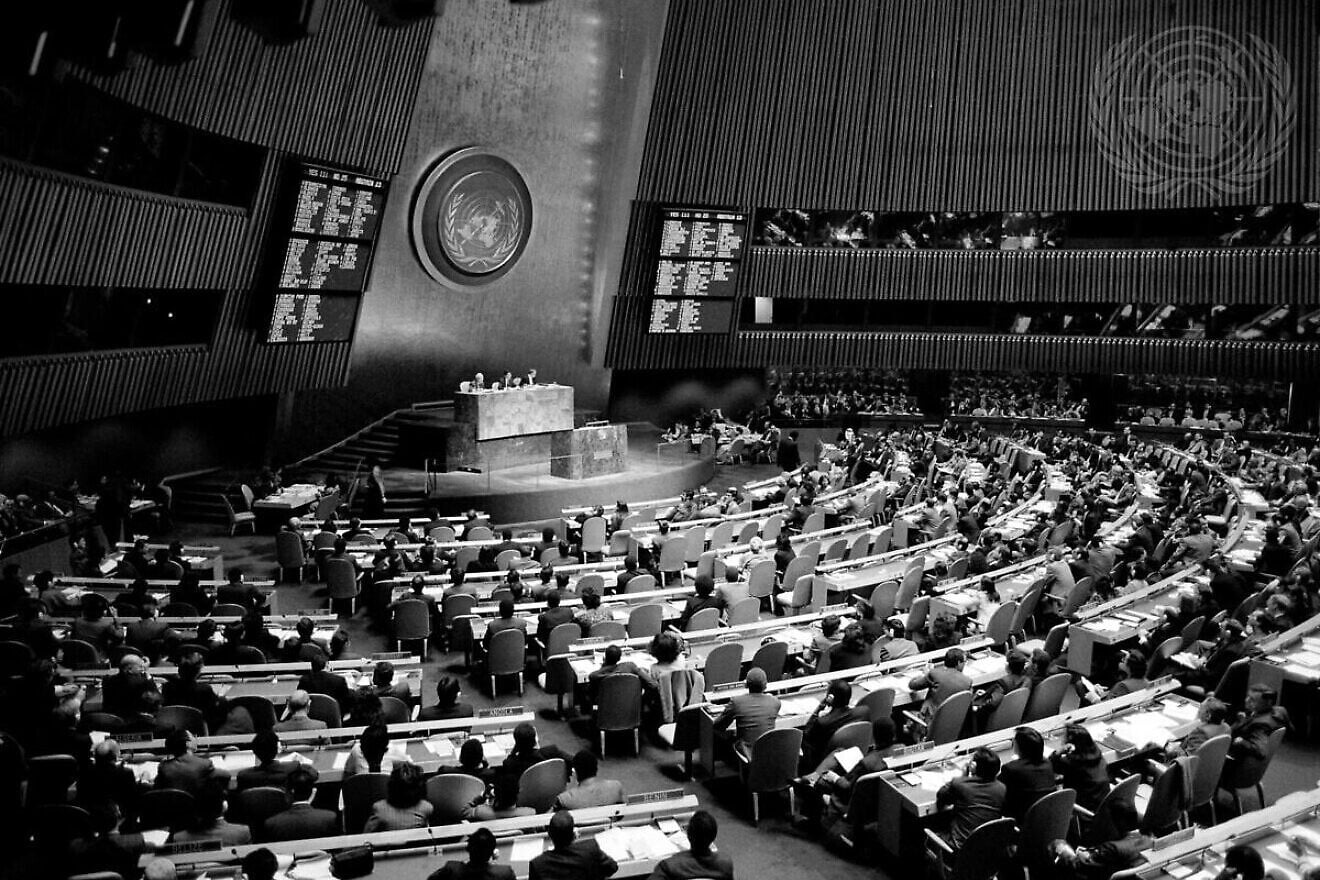
The United Nations General Assembly repealed a 1975 resolution that equated Zionism with “racism,” Dec. 16, 1991. Credit: Milton Grant/U.N. Photo.

Daniel S. Mariaschin, CEO of B’nai B’rith International, which hosted the Dec. 9 event, told JNS that despite the repeal of 3379, the United Nations and its agencies remain a hotbed of anti-Israel discrimination.

“The more things change, the more they stay the same,” Mariaschin said. “All we have to do is take a look at the record. Israel has never served on the Security Council of the United Nations. It’s been a member of the U.N. since 1949.”

“Wherever you look in the system, you have this inherent bias, and yes, these various agencies, and there are many agencies and many organizations inside the U.N. system that practice this kind of bias, and frankly, this kind of hatred,” he added.

The American ambassador to the United Nations in 1975, Daniel Patrick Moynihan, reacted to the passage of the resolution with fury in a speech that is widely celebrated as one of the greatest pieces of rhetoric ever delivered at the General Assembly.

“A great evil has been loosed upon the world,” the envoy said. “The General Assembly today grants symbolic amnesty—and more—to the murderers of the six million European Jews.”

Gil Troy, a distinguished scholar in North American history at McGill University and author of “Moynihan’s Moment,” a history of the speech, said that the future New York senator used blunter words to convey his support to Israel’s U.N. Ambassador Chaim Herzog.

“He stands up, straightens his tie, walks across the room, hugs Herzog and yells really loudly, ‘f**k ’em,’” Troy said. “He later said, ‘I uttered an Anglo-Saxonism not found in the Talmud.’”

Moynihan’s condemnation of the resolution was almost immediately undercut by the Ford administration, when Secretary of State Henry Kissinger said in the days following the speech that “we have to keep the American reaction in some balance” and that the United States should “pay no attention” to the vote.

Troy told JNS that the contrast between the two reactions was “mind-blowing.”

“There’s this tremendous ego clash between Moynihan and Kissinger, Harvard professors who are used to being the smartest guy in the room,” Troy said. “On the day of Nov. 10, 1975, before Moynihan gives the speech, Kissinger turns to one of his WASPy State Department aides and says, ‘Moynihan doesn’t get it. We’re running American foreign policy. This isn’t a synagogue.’”

“Here you have the Holocaust-survivor Jew making fun of the Irish-Catholic liberal Democrat,” Troy told JNS.

Troy said that Moynihan’s legacy is having stood for both America’s values as well as its interests.

“The flow-through of a Moynihan is so important, because if the United States doesn’t stand for core values, and it doesn’t stand for democracy, it doesn’t stand for principles, then what are we?” Troy said.

All of the congressional speakers at the B’nai B’rith event on Tuesday were Republicans, including Reps. Chuck Fleischmann (R-Tenn.), Kevin Kiley (R-Calif.), Jim Jordan (R-Ohio) and Randy Fine (R-Fla.). Rep. Steny Hoyer (D-Md.) shared a letter of support, saying he was unable attend in-person.

Mariaschin told JNS that his organization is committed to ensuring that support for Israel remains bipartisan but that he is concerned about “some erosion” in Congress of support for the Jewish State.

“I’m concerned about some of the language which is being used about Israel when you start talking about ‘It’s all about the Benjamins,” he said, referring to a 2019 comment from Rep. Ilhan Omar (D-Minn.). 

“When you talk about an apartheid state, when you start voting to embargo delivery of weapons to Israel in the middle of a war, there are serious issues here,” he said. “We need to address them.”

Some on the right have also begun to use “Zionist” as an apparent slur, with Rep. Marjorie Taylor Greene (R-Ga.) writing on Sunday that Sen. Ted Cruz (R-Texas) is a “Canadian-born Zionist Texas senator.”

“It’s moving in from both sides,” Mariaschin said. “At the time when this resolution was adopted, there was universal opprobrium, pretty much from all sides of the spectrum. That’s not the case today, and the erosion is visible.”


Zawartość publikowanych artykułów i materiałów nie reprezentuje poglądów ani opinii Reunion’68,
ani też webmastera Blogu Reunion’68, chyba ze jest to wyraźnie zaznaczone.
Twoje uwagi, linki, własne artykuły lub wiadomości prześlij na adres:
webmaster@reunion68.com


US-led center says over 30,000 aid trucks have entered Gaza


US-led center says over 30,000 aid trucks have entered Gaza

JNS Staff


Despite the progress, officials say that major challenges remain, including the removal of some 60 million tons of debris from across the Strip.

A humanitarian-aid truck rolls off the U.S.-built floating pier on its journey to a U.N. warehouse in Gaza. Source: CENTCOM/X.

The U.S.-led Civil-Military Coordination Center (CMCC) announced on Thursday that it has facilitated the movement of more than 30,000 truckloads of humanitarian aid and commercial goods into Gaza since its establishment in October.

According to a U.S. Central Command article posted on X, the milestone reached this week follows five consecutive weeks in which at least 4,200 truckloads of aid and goods entered the Gaza Strip.

The coordination hub, established on Oct. 17, has also expanded its international footprint, now including representatives from approximately 60 partner nations and organizations.

“The CMCC’s integrated approach has proven essential in addressing complex challenges,” said U.S. Army Maj. Gen. Brad Hinson, who leads the center’s humanitarian assistance working group. “This central platform allows stakeholders to align priorities and resolve challenges in real time, increasing the efficiency of humanitarian delivery.”

CENTCOM said coordinated deliveries have included food, shelter supplies, winter clothing, sanitation materials and medical equipment. Aid partners have also supplied equipment to local bakeries in Gaza, allowing nearly 20 internationally supported bakeries to produce more than 160,000 loaves of bread daily.

In addition, hot meal kitchens are now providing an estimated 1.6 million meals per day, representing a 140% increase since September, according to the statement.

Despite the progress, officials acknowledged that major challenges remain, particularly debris removal across Gaza. CMCC estimates suggest more than 60 million tons of debris are scattered throughout the territory.

The coordination center’s engineering working group has developed a mapping system to assess the scale and distribution of debris, helping international partners prioritize cleanup efforts. CMCC staff are also working to clear unexploded ordnance along key logistical routes and to ensure the continued delivery of winter supplies.

The CMCC operates out of Kiryat Gat in southern Israel and includes an operations floor and meeting spaces designed to enable real-time monitoring and joint planning related to Gaza.


Zawartość publikowanych artykułów i materiałów nie reprezentuje poglądów ani opinii Reunion’68,
ani też webmastera Blogu Reunion’68, chyba ze jest to wyraźnie zaznaczone.
Twoje uwagi, linki, własne artykuły lub wiadomości prześlij na adres:
webmaster@reunion68.com