
Archive | April 2026

Prawdziwy powód stojący za izraelską ustawą o karze śmierci

Źródło zdjęcia Times of Israel


Prawdziwy powód stojący za izraelską ustawą o karze śmierci

Seth Mandel


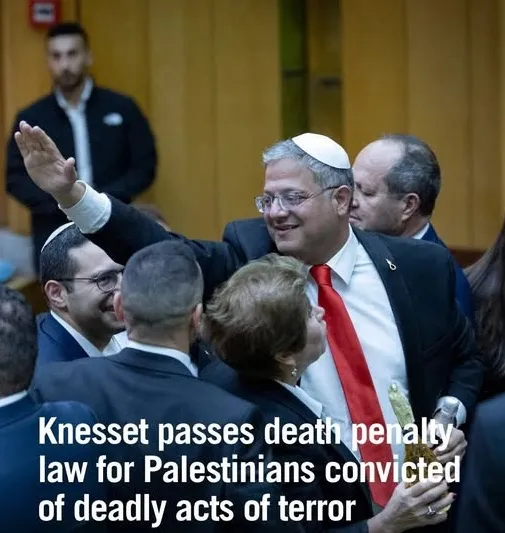
Wczoraj izraelski Kneset uchwalił przełomową ustawę, która jednak najpewniej nigdy nie wejdzie w życie. W tej sytuacji motywacja stojąca za projektem jest prawdopodobnie ważniejsza niż jego treść.

Ustawa rozszerza zakres stosowania kary śmierci tak, by obejmowała zabójstwa dokonane w celu „zanegowania istnienia Państwa Izrael”. Izrael formalnie wciąż posiada karę śmierci w swoim systemie prawnym, lecz nigdy z niej nie korzysta, przez co pozostaje ona w praktyce martwym przepisem. Ostatnią osobą straconą przez izraelski wymiar sprawiedliwości był nazistowski zbrodniarz Adolf Eichmann — w 1962 roku (i powszechnie uznaje się, że był to przypadek wyjątkowy, z oczywistych powodów).

Od dawna w Izraelu pojawiają się postulaty wprowadzenia kary śmierci dla terrorystów, lecz nigdy wcześniej nie zostały one uchwalone. Teraz się to udało — i wkrótce ustawa zostanie uchylona przez izraelski Sąd Najwyższy. Dlaczego przyjęto ją właśnie teraz i dlaczego nie przetrwa kontroli sądowej?

Zacznijmy od drugiego pytania. Ustawa w obecnym brzmieniu ułatwiłaby uniknięcie kary śmierci oskarżonym żydowskim w porównaniu z arabskimi, którym łatwiej byłoby przypisać szczególny motyw działania polegający na próbie zniszczenia państwa. Inne szczegóły, takie jak ograniczone ramy czasowe na odwołania, również wydają się niewykonalne. Z tych i innych powodów ustawa wygląda niemal tak, jakby została napisana z myślą o tym, by Sąd Najwyższy ją odrzucił.

Czy taki był zamiar lub oczekiwanie jej zwolenników? Prawdopodobnie nie, ale mogło to ułatwić poparcie projektu przez polityków partii centroprawicowych, takich jak Likud Benjamina Netanjahu, którzy nie spodziewają się, że będą musieli bronić jego faktycznego wdrożenia.

Dlaczego więc taka ustawa została w końcu przyjęta właśnie teraz? Ma to związek z jej rzeczywistym celem: storpedowaniem porozumień dotyczących zakładników.

Kontrowersyjne wymiany, w których Izrael oddaje tysiąc lub więcej palestyńskich więźniów — wielu odpowiedzialnych za śmiertelne ataki terrorystyczne — w zamian za niewinnych izraelskich cywilów przetrzymywanych przez Hamas i inne organizacje terrorystyczne, od dawna uznawane są za zachętę do kolejnych porwań. Najgłośniejsza taka wymiana miała miejsce w 2011 roku, gdy Netanjahu zgodził się uwolnić ponad tysiąc palestyńskich więźniów w zamian za kaprala Gilada Szalita, który spędził wówczas pięć lat w lochach Hamasu.

Nie tylko jednak dysproporcja liczb budzi wśród wielu Izraelczyków wątpliwości. Między kwietniem 2014 a lipcem 2015 roku sześciu Izraelczyków zostało zamordowanych przez terrorystów uwolnionych w ramach tej wymiany. A to był dopiero początek: Jahja Sinwar, przywódca Hamasu i architekt wydarzeń z 7 października, również został wtedy wypuszczony na wolność. Dlatego choć Izraelczycy traktują priorytetowo odzyskanie wszystkich zakładników, obawiają się także zagrożeń, jakie to rodzi dla reszty kraju. To rozdzierający dylemat, którego samo rozważanie jest bolesne — i właśnie dlatego Hamas oraz inne grupy uczyniły branie zakładników barbarzyńską koroną palestyńskiego terroryzmu.

Nasuwające się pytanie brzmi: jeśli izraelscy ustawodawcy chcą zapobiec przyszłym wymianom więźniów, dlaczego po prostu nie uchwalą ustawy, która by to jasno zakazywała?

Odpowiedź brzmi: próbowali i wielokrotnie im się to nie udało od 2014 roku. Głównym powodem porażki tych inicjatyw było to, że kolejne rządy nie chciały same sobie wiązać rąk, dlatego projekty ustaw ograniczały się do wprowadzania pośrednich restrykcji dotyczących takich porozumień, zamiast ich całkowicie zakazywać. Najskuteczniejszym rozwiązaniem byłoby zakazanie zwalniania palestyńskich więźniów skazanych na dożywocie w ramach takich wymian. Jednak i tak prawdopodobne jest, że rządy izraelskie znalazłyby sposób na obejście wyroków.

Co więcej — i dotyczy to również obecnej ustawy o karze śmierci — nowe przepisy nie działałyby wstecz, więc nie objęłyby osób już przebywających w więzieniach.

W związku z tym pojawia się tok rozumowania: jedynym sposobem, by uniemożliwić rządowi uwalnianie skazanych terrorystów, jest zobowiązanie go do ich egzekwowania.

Istnieje jeszcze jeden powód „sukcesu” ustawy, która od początku skazana jest na unieważnienie — i wiąże się on z obecnym wzrostem przemocy antyarabskiej w Judei i Samarii.

Najlepszym przykładem jest sprawa Chalida Nadżdżara. Został on skazany za terrorystyczne morderstwo ponad 20 lat temu. Rodzina ofiary pamięta, jak podczas ogłoszenia wyroku szydził z nich słowami: „Będziemy porywać żołnierzy, dopóki ostatni z naszych więźniów nie zostanie uwolniony. Siedem wyroków dożywocia? Nie przywiązuję wagi do tych liczb. Zostanę uwolniony”.

I tak się stało. Zginął dopiero w maju 2024 roku w wyniku uderzenia Sił Obronnych Izraela.

Nadżdżar, jak wielu splamionych krwią terrorystów, wiedział, że nigdy nie odsiedzi swojego wyroku do końca. Z powodu porozumień dotyczących zakładników wyroki za morderstwa jedynie tymczasowo usuwają sprawców z pola walki. To kpina z systemu sprawiedliwości.

Nieliczna grupa młodych osadników terroryzujących Palestyńczyków w Judei i Samarii jest łatwa do potępienia z moralnego punktu widzenia: morderstwo jest złem, podpalenia są złem, kradzież jest złem. Zasługują oni także na potępienie z perspektywy strategicznej: szkodzą wizerunkowi Izraela, prowokują odwet, szerzą anarchię, zmuszają do przekierowania zasobów i sił IDF itd. Jednak ci nieliczni brutalni osadnicy wierzą — błędnie — że działają w warunkach już istniejącej anarchii, a nie że torują drogę nowemu bezprawiu. Wykorzystali oni jako broń poczucie frustracji części Izraelczyków wobec systemu, który gwarantuje, że najgroźniejsi palestyńscy terroryści unikną odbycia kar i będą wypuszczani, by zabijać raz za razem.

Ci brutalni osadnicy nie mają racji — bez żadnych zastrzeżeń. Nie zmienia to jednak faktu, że terroryści potrafili wykorzystać izraelski system sprawiedliwości, a izraelscy przywódcy nie byli w stanie lub nie chcieli powstrzymać tej manipulacji.

Ustawa o karze śmierci ma charakter performatywny. Jej celem jest wysłanie sygnału w sprawie porozumień dotyczących zakładników. A ten sygnał — w świecie po 7 października — trafia do szerszej publiczności niż kiedykolwiek wcześniej.


Link do oryginału: https://www.commentary.org/seth-mandel/the-real-reason-behind-israels-death-penalty-bill/

Commentary, 31 marca 2026


Zawartość publikowanych artykułów i materiałów nie reprezentuje poglądów ani opinii Reunion’68,
ani też webmastera Blogu Reunion’68, chyba ze jest to wyraźnie zaznaczone.
Twoje uwagi, linki, własne artykuły lub wiadomości prześlij na adres:
webmaster@reunion68.com

Finish the job, Mr. President!


Finish the job, Mr. President!

Melanie Phillips


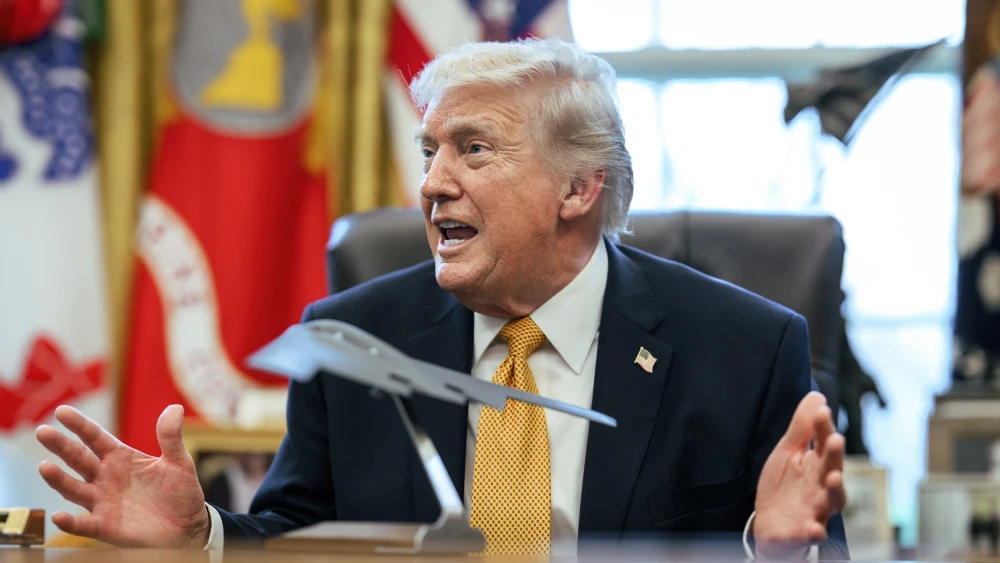
U.S. President Donald Trump signs an executive order creating an anti-fraud task force to be led by U.S. Vice President JD Vance, March 16, 2026. Credit: Molly Riley/White House.

As the clock ticks away toward U.S. President Donald Trump’s latest “negotiate or I unleash hell” deadline, the Iranian regime thinks that it’s winning.

In the West, the serried ranks of “experts” also think that America and Israel are heading either for a deepening quagmire or a humiliating retreat. It’s not possible to predict how the war against Iran will end—or even what the next day will bring.

But on the face of it, Tehran’s claim that it has the upper hand—echoed by Western commentators who said before the war even started that it would be a disaster, have kept saying that it is a disaster and predict that it will undoubtedly end in disaster—is demonstrably absurd.

On every available metric of war, the regime is clearly losing. Its air defenses are all but obliterated, its navy is largely sunk, its stocks of missiles and launchers have been decimated, its senior ranks are being progressively eliminated, and its nuclear program has been further damaged.

In these respects, the United States and Israel have had so far a spectacularly successful war.

Yet despite all this, not only is the regime not yet defeated, but it still presents fearsome challenges. It has turned the Strait of Hormuz into a lethal weapon by choking off most of its normal shipping channels. And Israel and the United Arab Emirates are still being bombarded by missiles every day, causing damage, injury and death.

Washington is reportedly chewing over the likely costs to its own forces if it tries to seize Kharg Island to gain control over Iran’s oil production or free the Straits of Hormuz. Trump is likely weighing up the damage to his own political future from a domestically unpopular war that may start drawing American blood.

The stakes are enormous. If the Iranian regime isn’t totally defanged but survives to recover and rearm, it will not only continue to menace the region. Such an outcome will also advertise that the leader of the free world is a paper tiger.

That will hugely embolden China, Russia and North Korea. Israeli defense expert professor Dan Schueftan says that if America doesn’t prevail in this war, it will be the beginning of the end for the West.

“These processes don’t happen overnight,” he told the Israeli commentator Haviv Rettig Gur. “But if the United States is incapable of dealing with the Iranian challenge, the ability of the Chinese to change the world order will be much stronger than before.”

So why can’t the West see this? Why do so many Americans and Brits view Trump and Israeli Prime Minister Benjamin Netanyahu as their greatest threat rather than Iran, the world’s No. 1 terrorist state, exporter of violence and cultural destabilization to the West, and crucial hinge of the world’s axis of evil powers?

Partly, this is because the Trump administration has never properly made the case for war to the American public, while governments in Britain and Europe are actively hostile.

Partly it’s because of the belief that whenever the West ventures into the Middle East cauldron, the outcome is disastrous.

While the wars in Iraq and Afghanistan ended in a debacle, the obdurate refusal by the West to take commensurate action against Iran has resulted in a conflict that is now infinitely more difficult and damaging than it would otherwise have been had the threat from Tehran been countered earlier.

Richard Williams, a former commander of Britain’s SAS commando force in Iraq and Afghanistan, wrote in Britain’s Mail that he witnessed Iran’s Islamic Revolutionary Guard Corps up close as they and Iranian proxies killed hundreds of British and American soldiers.

Saying that this gave him an understanding of the “utter evil that is the Iranian regime,” he wrote: “We have let the regime fester and grow since the revolution in 1979 as a result of the cowardice and indecision of our political leaders.”

By doing everything it could to avoid war with Iran, the West made this terrifying and now desperate war inevitable. The catastrophic 2015 nuclear deal brokered by former President Barack Obama allowed Iran to cheat and make steady progress over the years towards building nuclear weapons.

Some 440 kilograms of enriched uranium—enough to make 11 nuclear bombs in two weeks—is reportedly still in Tehran’s hands.

Sanctions were also nearly useless because the regime simply bypassed them and sold its oil to China.

It did not use this revenue to look after the basic needs of the Iranian people. It used it instead to construct missile cities below ground—some buried deep inside mountains, apparently out of reach even of America’s most powerful bombs, and from where the regime continues to fire missiles at Israel and its neighbors in the Gulf.

The death and destruction being inflicted as a result—not least upon the oppressed Iranian people—is the real disaster. This should be laid at the door of a West that has sung the siren song of appeasement for decades.

It’s done so largely because it subscribes to the dogma that war is pointless, and all conflicts can and should be settled by negotiation and compromise. No longer valuing its own historic identity, which it has dismembered through multiculturalism and victim culture, it has become suicidally defeatist, believing there is nothing to fight or die for.

The reason Israel survives and thrives as it does is because it is never defeatist and believes there is everything to fight or die for.

Saudi Arabia and the UAE also understand the mortal threat posed to them by the Tehran regime. That’s why they are urgently pressing Trump to finish it off rather than declare a totally false victory and walk away.

Trump is incredulous that the regime won’t accept that it has lost the war. This may be merely Trumpian rhetoric designed to humiliate Tehran. More ominously, it may be that he’s trying to reshape reality to what he wants it to be, but isn’t.

But on another level, he’s applying the wrong metric. It may well be that in terms of conventional warfare, the regime can’t possibly win. But fanatical Islamists like this think in completely different terms. To them, mere survival is victory.

Iran’s foreign minister, Abbas Aragchi, gloated this week: “No nation in history has stood for nearly a month against the greatest nuclear-armed power on earth and stopped them from achieving a single goal. This is a point of pride for all of humanity.”

The West simply doesn’t understand religious fanaticism. It doesn’t understand that for the Islamists of Tehran, who believe that causing an apocalypse will bring the Shia messiah to earth, “martyrdom”—their mass deaths—is accordingly to be embraced with ecstasy.

The West also fails to grasp something Israel has been forced to accept for decades. The Iranian regime may be outgunned by America’s superior military might, but it can outfox it through its use of “asymmetric warfare,” which refuses to recognize the conventions of war laid down by the international community.

This means that while the West takes care not to target civilians or hit the essential civilian infrastructure of electricity or water supplies, the Iranians will not only target all such enemy lifelines but will unhesitatingly sacrifice all their own people, too.

Accordingly, they think that the more missiles they continue to fire, the more they’ll demonstrate defiantly that they hold all the cards, and so America must “negotiate” on the terms they have laid down.

The only acceptable response to that is to redouble the effort to defeat them utterly and completely.

Let’s hope Trump has come to the same conclusion.


Melanie Phillips, a British journalist, broadcaster and author, writes a weekly column for JNS. Currently a columnist for The Times of London, her new book, Fighting the Hate: A Handbook for Jews Under Siege, has just been published by Wicked Son. Her previous book, The Builder’s Stone: How Jews and Christians Built the West and Why Only They Can Save It, was published in 2025. Access her work at: melaniephillips.substack.com.


Zawartość publikowanych artykułów i materiałów nie reprezentuje poglądów ani opinii Reunion’68,
ani też webmastera Blogu Reunion’68, chyba ze jest to wyraźnie zaznaczone.
Twoje uwagi, linki, własne artykuły lub wiadomości prześlij na adres:
webmaster@reunion68.com


The Spanish Sabotage: How NATO’s Weakest Link Endangers the War Effort


The Spanish Sabotage: How NATO’s Weakest Link Endangers the War Effort

Amine Ayoub


Spanish Prime Minister Pedro Sanchez speaks during a press conference after attending a special summit of European Union leaders to discuss transatlantic relations, in Brussels, Belgium, Jan. 23, 2026. Photo: REUTERS/Yves Herman

As the Western alliance entered the second month of its existential struggle against the Iranian regime, the southern anchor of NATO officially buckled.

In a calculated move that serves as a strategic windfall for Tehran, the Spanish government — led by Prime Minister Pedro Sánchez — closed its national airspace and sovereign military bases to United States forces engaged in “Operation Epic Fury.”

By branding the mission to dismantle Iran’s nuclear infrastructure as “illegal and reckless,” Madrid has transitioned from a passive free-rider to an active obstructionist, prioritizing a radical domestic agenda over the survival of the trans-Atlantic security architecture.

This is not merely a tactical disagreement; it is a textbook manifestation of “lawful Islamism” and the erosion of Western resolve. While American and Israeli pilots risk their lives to prevent a nuclear-armed mullahcracy from finalizing its breakout, Spain has opted for a “Neutrality of the Grave” that threatens to lengthen the conflict and embolden the Axis of Resistance.

The immediate impact of Spain’s decision is felt at the fuel pump and the flight line.

By denying the US the use of Naval Station Rota and Morón Air Base — historical gatekeepers of the Mediterranean — Sánchez has severed the primary logistical “air bridge” for Operation Epic Fury. US refueling tankers, including KC-135s and KC-46s, have been forced to relocate to more distant hubs in Germany and the United Kingdom, creating a congested bottleneck in Northern Europe.

Rerouting around the Iberian Peninsula adds between 300 and 800 nautical miles to every mission, a “strategic tax” that adds up to two hours of flight time for time-sensitive strikes.

On a typical widebody military aircraft, this delay consumes an additional 13,000 pounds of fuel per sortie. In a theater where seconds determine whether a mobile Islamic Revolutionary Guard Corps (IRGC) missile launcher is neutralized or fired at an Israeli city, Spain’s “neutrality” is measured in the blood of its allies.

Spain’s sabotage is driven by the internal mechanics of the Sánchez government — a fragile minority coalition captured by radical left and Islamist-aligned forces. The influence of parties like Sumar and EH Bildu — a group with historical ties to Basque terrorism — has effectively outsourced Madrid’s foreign policy to a “Red-Green Alliance” that views the US and Israel as greater enemies than the IRGC.

This ideological subversion was punctuated by the unfiltered rebuke of Spain’s Transport Minister, Óscar Puente, who directed a statement at the Israeli leadership that has since reverberated across the globe: “We are not going with you even around the corner, you genocidal bastard.”

This is the language of rupture, signaling that Spain no longer considers itself a partner in the defense of Western values.

The hollow morality of the government’s stance was dismantled on March 29 by General Fernando Alejandre, the former Chief of the Spanish Defense Staff (JEMAD).

In an interview with ABC Spain, Alejandre warned that the “No to War” slogans used by the cabinet are merely “simplistic advertisements” that ignore the topographical reality of modern threats. Alejandre noted that Spain has “sublimated the word peace,” mistakenly believing that an “unjust peace” is preferable to a necessary defense, a path that inevitably leads to total indefension.

Alejandre’s most haunting warning concerned Spain’s own sovereignty. He identified Morocco as a “certain and clear threat” that is closely watching Spain’s lack of a solid defense culture. By alienating the United States in its hour of conflict, Spain is gambling with the security of the Canary Islands, Ceuta, and Melilla. As US strategic interest shifts toward Rabat — a pro-Western partner and Abraham Accords signatory that has seen a 17.6% increase in its 2026 defense budget — Spain risks being left alone on its own southern flank.

The economic repercussions are already beginning to bite. President Donald Trump has characterized Spain as a “terrible” ally, and instructed US Treasury Secretary Scott Bessent to prepare a total trade embargo against Madrid. Furthermore, by complicating the mission to reopen the Strait of Hormuz, Spain is directly contributing to the global energy shock that has sent Brent crude toward $110 per barrel.

The Spanish sabotage is a case study in the danger of allowing domestic extremism to dictate international security. When a NATO member chooses to facilitate the survival of the Iranian regime by weaponizing its geography against its allies, the alliance must react. The “habit of consultation” that has defined NATO since 1949 is broken. For the mission to deny Iran nuclear weapons to succeed, the West must recognize its weakest links and forge new partnerships with those who demonstrate a genuine commitment to victory.

The cost of Madrid’s betrayal is a grave that the Iranian regime is currently digging for the entire West; Sánchez is merely making sure the US has a harder time stopping them.


Amine Ayoub, a fellow at the Middle East Forum, is a policy analyst and writer based in Morocco. Follow him on X: @amineayoubx


Zawartość publikowanych artykułów i materiałów nie reprezentuje poglądów ani opinii Reunion’68,
ani też webmastera Blogu Reunion’68, chyba ze jest to wyraźnie zaznaczone.
Twoje uwagi, linki, własne artykuły lub wiadomości prześlij na adres:
webmaster@reunion68.com


„Wygnanie Judasza” – dawny obrzęd wielkanocny, który zanikł w XX wieku

Na zdjęciu Ochotnicza Straż Pożarna ze Skoczowa. /Muzeum “Górnośląski Park Etnograficzny w Chorzowie”/facebook


„Wygnanie Judasza” – dawny obrzęd wielkanocny, który zanikł w XX wieku

szb/ dki/


Niegdyś popularny w wielu regionach Europy wielkanocny obrzęd symbolicznego „wygnania Judasza” dziś przetrwał jedynie w przekazach i rekonstrukcjach folklorystycznych. Ten widowiskowy zwyczaj był jednym z wyrazistych elementów ludowej obrzędowości pasyjnej jeszcze na początku XX wieku.


Zwyczaj był szeroko rozpowszechniony w Europie Środkowej i Południowej – m.in. na terenach dzisiejszych Czech, Słowacji, Polski, Węgier, a także w krajach niemieckojęzycznych oraz na Półwyspie Iberyjskim i Bałkanach. W zależności od regionu obrzęd nazywano „wygnaniem Judasza”, „paleniem Judasza” czy „sądem nad Judaszem” i przyjmował on różne formy, jednak jego istotą było symboliczne ukaranie jednego z apostołów – biblijnego zdrajcy.

W Polsce „wygnanie Judasza” było szczególnie popularne w Małopolsce, na Podhalu, Sądecczyźnie, Śląsku Cieszyńskim oraz w niektórych częściach Podkarpacia i Wielkopolski. Obrzęd odbywał się zazwyczaj w Wielki Czwartek lub Wielki Piątek i angażował głównie dzieci i młodzież. Polegał na przygotowaniu kukły ze słomy i starych ubrań, którą – w zależności od regionu – obnoszono po wsi, bito kijami, wleczono, zrzucano z kościelnej wieży, a na końcu wieszano, palono lub topiono.

Jak podkreślała w swoich badaniach etnografka Urszula Janicka-Krzywda, człowiek w tradycyjnych kulturach funkcjonował w rytmie cykli przyrody i wydarzeń granicznych, a obrzędy – zwłaszcza w okresie przełomów – miały na celu zapewnienie ładu, ochronę i pozyskanie przychylności sił wyższych. W tym kontekście ogień i woda pełniły funkcję oczyszczającą, a palenie kukły symbolizującej zło wpisywało się w szerszy, przedchrześcijański model rytuałów wiosennych.

Badaczka wskazywała, że wielkotygodniowe palenie Judasza było jednym z takich obrzędów oczyszczających, praktykowanych w Polsce południowej jeszcze do XX wieku. Obrzęd łączył elementy religijne i ludowe – kukła była niszczona jako symbol zdrady i zła, ale jednocześnie wpisywała się w szerszy schemat rytuałów związanych z przejściem zimy w wiosnę.

Jak odnotowywali etnografowie, w XIX wieku zwyczaj ten miał bardzo rozbudowaną formę i był szeroko opisywany w literaturze pamiętnikarskiej i ludoznawczej. Kronikarz polskich tradycji Zygmunt Gloger opisywał procesję z kukłą Judasza, jej symboliczne „sądy”, bicie, obwożenie po wsi, a następnie palenie lub topienie. Podobne relacje pozostawili m.in. Łukasz Gołębiowski oraz Oskar Kolberg, którzy dokumentowali jego powszechność w Polsce południowej.

W niektórych regionach obrzęd przybierał jeszcze bardziej dramatyczną formę – kukłę zrzucano z wieży kościelnej, wieszano, wleczono przez wieś, a następnie palono i wrzucano do wody. Opisy tego typu praktyk pozostawił również Jędrzej Kitowicz, który wskazywał na ich dawne zakorzenienie w tradycji ludowej.

Obrzęd zaczął zanikać w pierwszej połowie XX wieku. W Polsce najdłużej przetrwał – do lat 50. XX wieku – na Podbeskidziu oraz w okolicach Krakowa i Myślenic. Przyczyną zaniku były m.in. przemiany społeczne, urbanizacja oraz odchodzenie od tradycyjnej kultury wiejskiej. Istotne znaczenie miała również zmieniająca się wrażliwość społeczna oraz krytyka brutalnych form obrzędu. Badacze zwracają także uwagę, że w niektórych przypadkach zwyczaj nabierał wydźwięku antysemickiego, co w XX wieku – w kontekście tragicznych doświadczeń historycznych i zmiany postaw społecznych – spotkało się z jednoznaczną krytyką.

Dziś „wygnanie Judasza” przetrwało głównie jako element opracowań naukowych i rekonstrukcji folklorystycznych, pozostając świadectwem dawnych wyobrażeń o cykliczności świata, rytuałach przejścia oraz ludowym rozumieniu symboliki Wielkiego Tygodnia.

Przypomnieniem tego typu dawnych praktyk stało się odtworzenie w 2019 r. w Wielki Piątek w Pruchniku tzw. „sądu nad Judaszem”, podczas którego kukła symbolizująca zdrajcę została poddana biciu, obcięto jej głowę, a następnie spalono ją i wrzucono do rzeki. Wydarzenie wywołało szeroką debatę publiczną oraz interwencję naczelnego rabina Polski Michaela Schudricha i przedstawicieli Konferencji Episkopatu Polski, którzy jednoznacznie odnieśli się do sprawy, wskazując na jej antysemicki wydźwięk.(PAP)


Zawartość publikowanych artykułów i materiałów nie reprezentuje poglądów ani opinii Reunion’68,
ani też webmastera Blogu Reunion’68, chyba ze jest to wyraźnie zaznaczone.
Twoje uwagi, linki, własne artykuły lub wiadomości prześlij na adres:
webmaster@reunion68.com

Editor’s Notes: This Passover, Israeli children deserve a future that’s more than sirens


Editor’s Notes: This Passover, Israeli children deserve a future that’s more than sirens

ZVIKA KLEIN


Singer Maya Bouskilla and Mor Krigel, the young boy who wrote the UAV song – which became viral amongst Israeli children. / (photo credit: OR GEFEN/MAARIV)

A funny song has been bouncing around Israel these past weeks, the kind children grab onto before adults have figured out whether to laugh or cry.

My six-year-old daughter loves it. She sings it happily, over and over, with the determination children bring to anything catchy. But the song is about Iranian drones in the sky. That is what I cannot shake. The song is a child’s tune, a viral joke, and it contains the language of war.

What’s that up there in the sky, not a bird and not a plane?

It’s an unmanned aerial vehicle, it’s an unmanned aerial vehicle, it’s a drone.

It’s a drone, boom, boom, boom.
.

.

My children – they are one reason I am writing this.

One day, I want you to know what these years looked like from where your mother and I stood. I want you to know what parents were carrying while you were busy doing the things children are meant to do, singing, arguing, leaving crumbs everywhere, asking for snacks, asking impossible questions at inconvenient moments, and somehow keeping the house alive.

In recent weeks, Israelis have been sharing stories online that exemplify what we are all experiencing. A newborn already taken to shelter several times in her first days of life. A toddler excited by the possibility of a siren. A child who knows how to get to the safe room alone in the middle of the night. People react so strongly to these stories because they no longer sound rare.

Israeli childhood has been knocked off course for years now. First came COVID, with closures, screens, isolation, and school life thinned out into something improvised.

Then came the October 7, 2023, mega-atrocity by Hamas, and the long war that followed, with reserve duty, grief, fear, displacement, and the national shock that still has not lifted. Then, this past June, a 12-day direct war with Iran.

Now another round with Iran. For younger children, especially, there barely has been enough quiet in between for ordinary life to settle into place.

And still, these children are full of life. Anyone living here sees it every day. They are noisy, funny, impatient, resilient, exasperating. They still fight over nonsense, obsess over songs, leave a room wrecked in minutes, and drag tired adults back into the practical business of living. That is real too. But it would be dishonest to stop there.

Our teenagers have had some of their adolescence taken from them. High school is supposed to be uneven in familiar ways: friends, boredom, sports, exams, awkwardness, first loves, the slow work of becoming yourself. Many Israeli teenagers got that in pieces. First, the pandemic broke up their school years. Then war did. Some barely had a normal high school experience at all.

Younger children take things in by feel. They read the house. They pick up on half-heard conversations, on the way adults go quiet when a phone lights up, and on how fast everyone starts moving when an alert comes in. They may not understand the whole story, but they know when the room has changed.

One of the hardest parts of these years has been the split life of parenthood. You still have to work. You still have to answer messages, meet deadlines, write, edit, teach, manage, shop, cook, and keep the day moving. At the same time, you are following the news, checking alerts, watching your children’s faces, and making sure they do not learn too much from yours. You are getting them into shelter when necessary. You are also trying to keep fear from taking over the house.

With all due respect to my own parents’ generation, and I mean that sincerely, the old comparisons do not fully capture this. The Gulf War was frightening, but it was short. The First and Second Intifadas were brutal and formative. What Israeli families are dealing with now has lasted longer and gone deeper into domestic life. It has reached school calendars, sleep, work calls, homework, kitchen tables, WhatsApp groups, and the private rhythm of childhood.

That is why Passover is so important this year. It comes after Purim, the holiday of masks, reversals, noise, and a world turned upside down. This year, Purim stopped feeling playful very quickly. The region underwent a significant transformation. So did the hatred directed at us. Many Israelis have spent the weeks following Purim perceiving the country with a more objective perspective.

Children: The reason for Israel’s strength

Then comes Passover, which asks something else of us. After fear, what do we hand our children?

Passover has always put children at the center. We sat them down at the table and told them that slavery, bitterness, and danger were real and that these were not the last words. That is why the story continues.

My children, there is a reason parents in Israel keep pushing forward through all this. There is a reason soldiers serve, families absorb the strain, and homes try to remain homes when the country is tense and fragile. I mean something simple when I say that we are fighting for your future. We are trying to secure a life in which Jewish children can grow up with dignity and safety, in a country able to defend them, and in homes where the sounds of childhood are not shaped mainly by sirens and interruption.

The late Rabbi Jonathan Sacks once wrote that “to defend a country you need an army. But to defend a civilization, you need schools. You need education as the conversation between the generations.” That line has helped me stay focused throughout this war.

Israel needs strength, and it needs to win. But strength is there to protect something: the inner life of its homes, the confidence of its children, and the chain that links one generation to the next. Around the Seder table, that chain becomes visible. We are trying to make sure our children inherit more than fear.

That is why the domestic scene is so important right now. Parents are making dinner, cleaning for Passover, answering questions they cannot fully answer, hurrying children into shelter, and then trying to bring the day back to a normal shape. They are protecting bodies, yes. They are also protecting tone, routine, proportion, and a child’s sense that home is still home.

Will all this be worth it? It must be genuine, not just something people say when they are exhausted. Such beliefs must be true for the children growing up today. The point has to be a country steadier than the one that raised them. It has to be school years that hold together. A home where a song can stay a song. A childhood remembered for more than sirens.

That is why I keep coming back to that tune my daughter sings. It is funny. Our children are humming along. We, the adults, hear everything underneath.

In the end, the question is not whether our children will remember that these were dangerous years. Of course they will, in one form or another.

The deeper question is what else they will remember alongside the danger. Whether they will remember adults who were ruled by fear or adults who carried fear and still built a home. Whether they will inherit a Jewish story reduced to siege or one still capable of transmitting dignity, proportion, and hope.

That, for me, is the force of Passover this year. We are deciding, in real time, what kind of inner inheritance this generation will receive.


Zawartość publikowanych artykułów i materiałów nie reprezentuje poglądów ani opinii Reunion’68,
ani też webmastera Blogu Reunion’68, chyba ze jest to wyraźnie zaznaczone.
Twoje uwagi, linki, własne artykuły lub wiadomości prześlij na adres:
webmaster@reunion68.com