Archive | August 2026

Could a Future Iran Be an Ally of the United States? A History of Strong Relations Says Yes


Could a Future Iran Be an Ally of the United States? A History of Strong Relations Says Yes

Walter E. Block and Hushang Manuchehri


People walk past an anti-US billboard on a street in Tehran, Iran, Aug. 3, 2026. Photo: Majid Asgaripour/WANA (West Asia News Agency) via REUTERS

In 1957, the United States chose Iran as one of its primary partners under the “Atoms for Peace” program, which established the Tehran Nuclear Research Center in 1967. This equipped the Persian state with an American-supplied reactor and civilian scientific training.

On the intelligence and strategic front, American and Iranian forces operated joint signals intelligence installations along the Soviet frontier — such as Project Dark Gene and Project Ibex — effectively securing NATO’s critical southern flank.

Following the 1972 “Twin Pillars” policy, Iran was granted access to advanced defense hardware available nowhere else outside NATO.

Iran became the only country in the world permitted to purchase the top-tier F-14 Tomcat fighter jet, armed with long-range AIM-54 Phoenix missiles. This was far more than a standard military exchange: The Shah’s historic order of 80 F-14s and his vital financial guarantees in the mid-1970s literally saved Grumman, the legendary American defense contractor, from bankruptcy. These monumental agreements directly supported tens of thousands of high-paying jobs across the United States.

By 1978, more than 40,000 American military advisors, engineers, technicians, and their families were living and working in Iran — reflecting a level of industrial and human integration unmatched anywhere else in the region, apart from Israel.

Iran repeatedly proved its value as the anchor of regional stability. Iranian forces deployed to assist in ending the Soviet-backed insurgency during the Dhofar Rebellion in Oman, maintaining peace in the Gulf and keeping the Strait of Hormuz open. During the 1973 OPEC oil embargo, Iran stood firm, refusing to cut off oil supplies to the West or Israel.

Simultaneously, Iranian students formed the largest foreign student population on American university campuses, building organic, enduring, ties between both societies.

The 1979 revolution replaced a key partner with an oppressive cartel. Today, the regime in Tehran does not act as a sovereign state protecting its citizens. Instead, it operates as an armed mob wearing religious robes, designed to siphon national resources to fund foreign violence and domestic oppression.

The core of Iran’s economy — energy, telecommunications, banking, and international trade — is monopolized by the Islamic Revolutionary Guard Corps (IRGC) and its industrial arm, Khatam al-Anbiya. This explains why standard diplomatic incentives fail: A military cartel will virtually never negotiate away the structural foundation of its own power.

If Western decision-makers are serious about achieving a durable resolution, they must address the practical realities of a regime transition. Any realistic plan for what follows the Islamic Republic must answer four decisive operational imperatives:

    • Popular Mobilization: Who commands real, organic support inside Iran — whose name has been passionately chanted by citizens across streets and university campuses throughout decades of anti-regime uprisings, rather than someone promoted in foreign think-tank panels?
    • Ideological Orientation: Whose platform offers a secular, constitutional, and liberal framework — guaranteeing human rights, free markets, and law — while actively rebuilding strong diplomatic and economic relationships with the US, Europe, and the Middle East?
    • State Integrity & Transition: Who possesses the standing to preserve national integrity during the moment of regime collapse — someone regular military officers would respect, preventing civil war or ethnic fragmentation?
    • Regional Security: Whose transition strategy would completely eradicate the jihadist and proxy funding networks Tehran has established across the Middle East, rather than merely re-labeling them?

Before rushing to generic conclusions, Western analysts and policymakers must face an uncomfortable reality: Name a single alternative candidate or group currently elevated in Western media or think-tank panels that satisfies even one of those four essential criteria — let alone all four.

When examined closely, the alternative choices pushed by foreign institutions remain largely out of touch. For years, Western panels have recycled the same rotation of discredited reformists, exile factions, and outdated ideological groups who possess no real base inside Iran. Some continue to promote discredited Marxist-Islamist ideas; others favor dividing Iran along ethnic lines — concepts overwhelmingly rejected whenever Iranians express their true desires in the streets. Yet these discredited voices dominate foreign policy circles, falsely telling Western leaders that no viable alternative exists.

The claim that “there is no alternative” has caused immense strategic damage, offering policymakers a justification for passivity and fear of change. This myth is not an accident; it is a deliberate narrative cultivated by the regime’s propaganda machinery to buy survival time. Declaring that no alternative exists is a dishonest tactic meant to protect a tyrannical regime that cannot endure honest scrutiny.

When you listen directly to the Iranian people, a clear choice emerges. One name repeatedly chanted across nationwide uprisings in Tehran, Isfahan, Shiraz, and Mashhad is Crown Prince Reza Pahlavi. When ordinary citizens risk their lives to declare his name, it represents a clear, calculated judgment on who might be able to hold the nation together. We do not advocate the installation of the Crown Prince. We only predict that when democratic elections take place, there is a good chance he could take office.

The benefits of a liberated Iran are undeniable. For the Iranian nation, overthrowing this regime means ending decades of poverty, ideological terror, and severe environmental damage — allowing an ancient civilization to rejoin the world economy. For the US and its allies, facilitating this transition solves the nuclear crisis at its source, cuts off funding to regional terror proxies, and restores a powerful strategic partnership. The Iranian public remains one of the most pro-Western and secular populations in the Middle East.

At the present time, the vision of an amalgamation between the US and Iran looks like the ravings of a madman. However, at one time in our not-too-distant past, the relationship between America on the one hand and the Axis Powers on the other was nothing to write home about either. Nowadays Germany, Italy, and Japan have strong and mostly flourishing relations with our country.

So let us be of good cheer in the hope that in the foreseeable future, the US and Iran will be more than merely at peace with one another. 


Walter E. Block is the Harold E. Wirth Eminent Scholar Endowed Chair and Professor of Economics at Loyola University New Orleans. Hushang Manuchehri is the pseudonym of an independent scholar and dissident who now lives in a country where free speech is restricted.


Zawartość publikowanych artykułów i materiałów nie reprezentuje poglądów ani opinii Reunion’68,
ani też webmastera Blogu Reunion’68, chyba ze jest to wyraźnie zaznaczone.
Twoje uwagi, linki, własne artykuły lub wiadomości prześlij na adres:
webmaster@reunion68.com

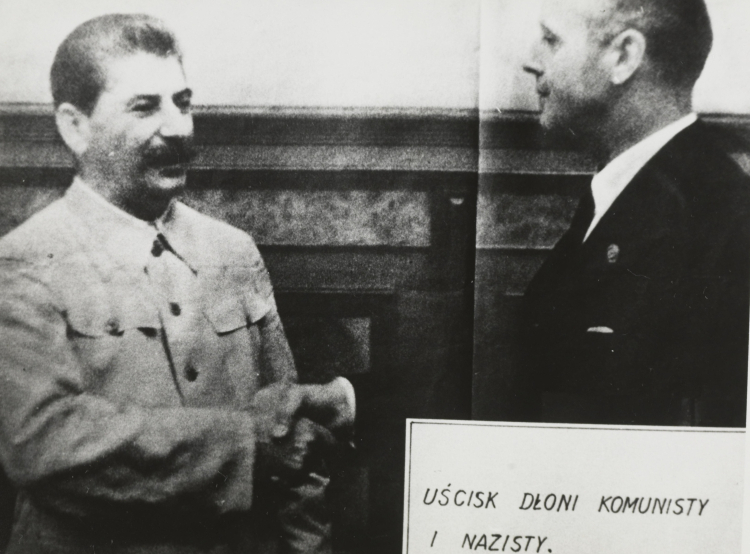
Niemiecki historyk: Stalin ponosi współwinę za wybuch II wojny światowej


Niemiecki historyk: Stalin ponosi współwinę za wybuch II wojny światowej

Jacek Lepiarz (PAP)


Źródło: polona.pl

Niemcy ponoszą główną winę za II wojnę światową, ale nie wolno pomijać współwiny Związku Sowieckiego – uważa historyk Manfred Kittel. Bez porozumienia Hitlera ze Stalinem w 1939 r. uderzenie III Rzeszy na Polskę i dalsze prowadzenie wojny byłyby znacznie trudniejsze – argumentuje na łamach „FAZ”.

Niemiecki historyk Manfred Kittel przypomniał na wstępie, że Parlament Europejski w 2009 r. ogłosił 23 sierpnia Europejskim Dniem Pamięci Ofiar Reżimów Totalitarnych, upamiętniając podpisanie paktu Ribbentrop-Mołotow 23 sierpnia 1939 r. „Ta data do dzisiaj nie weszła na stałe do niemieckiej kultury pamięci” – ocenił historyk.

Odwołując się do opinii cenionego historyka Karla Schloegla, Kittel pisze, że w świadomości Niemców główną rolę odgrywają daty 1 września 1939 r. i 22 czerwca 1941 r. (napaść III Rzeszy na ZSRS), natomiast „pomija się 22-miesięczny okres kolaboracji obu dyktatur i losy narodów wschodnioeuropejskich pod władzą narodowego socjalizmu i komunizmu”.

„Ślepota na jedno oko” niemieckiej kultury pamięci stanowi „zagrożenie dla zewnętrznego bezpieczeństwa liberalnych demokracji”, ponieważ „zniekształca spojrzenie na imperialistyczną politykę (przywódcy Rosji) Władimira Putina” – podkreślił autor. Jego zdaniem centralne znaczenie paktu Ribbentrop-Mołotow dla przebiegu II wojny światowej jest nadal niedoceniane.

Historyk powołuje się na opinię eksperta od historii III Rzeszy Klausa Hildebranda, że pakt o nieagresji „był w rzeczywistości paktem o agresji”: Stalin dał zielone światło „pracującej pełną parą niemieckiej lokomotywie wojennej”.

Dowodem na świadomość współwiny Moskwy za wybuch wojny w 1939 r. są, zdaniem autora, podejmowane do ostatnich dni ZSRR próby kwestionowania i tuszowania tajnego protokołu, w którym zdecydowano o podziale Polski i krajów bałtyckich.

Kittel przyznaje, że nie można ze stuprocentową pewnością przesądzić, czy bez umowy ze Stalinem Hitler zaatakowałby Polskę. Pewne jest natomiast, że bez paktu byłby w „nieporównanie gorszej sytuacji wyjściowej”. Zdaniem historyka tylko dzięki pomocnictwu Stalina Hitlerowi udało się w krótkim czasie opanować Europę kontynentalną i wykorzystać jej zasoby do kontynuowania wojny.

Deportacje potencjalnych przeciwników politycznych ze wschodniej Polski w lutym 1940 r., mord w Katyniu i kolejne fale deportacji zadają kłam sowieckiej tezie o czysto defensywnym charakterze porozumienia z Niemcami – podkreśla Kittel. Wskazuje przy tym na powiększającą się dysproporcję między coraz intensywniejszym zajmowaniem się w Niemczech zbrodniami „niszczycielskiego nazistowskiego imperializmu” a wypychaniem ze świadomości grzechów „konwencjonalnego imperializmu terytorialnego typu carskiego i stalinowskiego”.

W jego opinii ta dysproporcja ma ogromne konsekwencje polityczne, tym bardziej, że Putin instrumentalizuje miliony „rosyjskich” ofiar II wojny, z których wiele było w rzeczywistości Ukraińcami. Putin przedstawia wojnę przeciw Ukrainie jako walkę z rzekomym „nazistowskim reżimem w Kijowie”, mającą stanowić kontynuację walki z faszyzmem Hitlera.

Kittel zarzuca niemieckim władzom, że obchodząc historyczne rocznice, pomijają rolę sowieckiej Rosji. Przypomniał słowa ówczesnego szefa MSZ Niemiec Heiko Maasa, który w maju 2020 r. twierdził, że Niemcy są jedynym krajem odpowiedzialnym za wojnę.

Polemizując z tym poglądem, Kittel przypomina, że już w 1989 r. polski historyk, były więzień Auschwitz Wacław Długoborski mówił w siedzibie Bundestagu o „niewątpliwej współwinie” Stalina. Dodaje, że Putin obarcza Polskę współodpowiedzialnością za rzekomo niedostateczną gotowość do ustępstw w 1939 r.

Kittel zwraca uwagę, że narrację podobną do rosyjskiej stosuje niemiecka prawicowo-populistyczna partia Alternatywa dla Niemiec. Jej honorowy przewodniczący Alexander Gauland nazwał pakt Ribbentrop-Mołotow decyzją „słuszną, wynikającą z realizmu politycznego” i służącą przetrwaniu narodu.

Nazwanie po imieniu współwiny Stalina za rozpętanie II wojny światowej i fatalnej roli rosyjskiego imperializmu jest ważne – podkreślił w konkluzji Kittel. Jego zdaniem nadszedł czas, aby 23 sierpnia stał się dniem narodowej pamięci w Niemczech.


Zawartość publikowanych artykułów i materiałów nie reprezentuje poglądów ani opinii Reunion’68,
ani też webmastera Blogu Reunion’68, chyba ze jest to wyraźnie zaznaczone.
Twoje uwagi, linki, własne artykuły lub wiadomości prześlij na adres:
webmaster@reunion68.com


Netanyahu Calls Erdogan an ‘Antisemitic Dictator’ as Turkey Seeks International Arrest Warrant for Israeli PM


Netanyahu Calls Erdogan an ‘Antisemitic Dictator’ as Turkey Seeks International Arrest Warrant for Israeli PM

Debbie Weiss


Turkish President Tayyip Erdogan speaks during a ceremony for the handover of new vehicles to the gendarmerie and police forces in Istanbul, Turkey, Nov. 28, 2025. Photo: REUTERS/Murad Sezer

Israeli Prime Minister Benjaman Netanyahu’s office on Friday lambasted Turkish President Recep Tayyip Erdogan as an “antisemitic dictator” hours after Turkey said it would seek an international arrest warrant for Netanyahu.

The latest developments further escalated already high tensions between the two countries following Israel’s strike earlier this week on a Syrian airbase over Israeli concerns regarding the potential deployment of Turkish troops there.

In the Israeli statement, Netanyahu’s office vowed to combat Erdogan’s “aggression” in the Middle East and described the Turkish effort to get him arrested as a “pathetic” way to try to intimidate Israel.

“Erdogan is an antisemitic dictator who has massacred Kurds, harbors Hamas terrorists, occupies half of Cyprus, and jails record numbers of journalists and politicians who oppose him,” the statement said. “He now seeks to extend his aggression against Israel into Syria. Israel will not tolerate it.”

Netanyahu’s office added, “Erdogan’s pathetic attempt to intimidate the leaders and soldiers of Israel, the only true democracy in the Middle East, will go nowhere.”

The statement came after Turkey earlier on Friday said it would seek an Interpol red notice for the arrest of Netanyahu as part of a domestic criminal case linked to Israel’s interception of an activist flotilla bound for Gaza.

An Interpol red notice is a global alert to police forces worldwide to locate and provisionally arrest a person, but it does not legally compel any country to make an arrest. Instead, the measure relies on a national arrest warrant or court order issued by a specific country or international tribunal.

Turkish Justice Minister Akin Gurlek announced the move on social media, saying that arrest warrants had been issued for Netanyahu and another suspect on charges that included “genocide” and “crimes against humanity” as part of a case before an Istanbul court against 35 people concerning Israel’s interception of the Gaza-bound flotilla.

“A request has been made to our Ministry of Interior for the issuance of a red notice at the international level for their search, and the relevant documents have been forwarded to our Ministry of Foreign Affairs,” Gurlek posted.

As part of the Global Sumud Flotilla, anti-Israel activists have tried multiple times to break Israel’s naval blockade of Gaza, claiming they aim to deliver humanitarian aid to the enclave. Israeli authorities have noted that the amount of aid on the flotillas have been tiny in comparison to the humanitarian aid entering Gaza, calling the activist effort a “PR stunt.” Each time Israeli forces have intercepted the ships.

Israel launched its blockade to prevent Hamas, the Palestinian terrorist group that ruled Gaza before the war and currently controls about 40 percent of its territory, from getting weapons and other supplies to attack the Jewish state.

Since the outbreak of the Israel-Hamas war in Gaza in October 2023, Erdogan has emerged as one of Israel’s fiercest critics on the global stage, comparing the country to Nazi Germany and even threatening to invade.

However, tensions skyrocketed even further earlier this week over Syria.

Israel warned Turkey on Thursday against “dangerous adventures” in Syria, two days after striking an airbase where it said Ankara was preparing to deploy troops.

Erdogan is “dragging Turkey into dangerous adventures in Syria. Israel will not allow any actor to threaten its security,” Defense Minister Israel Katz wrote on X. “He would be better off continuing to deliver empty, fantastical speeches against Israel in the Turkish parliament rather than testing Israel’s determination to defend itself.”

Turkey’s Defense Ministry hit back, saying Ankara would continue supporting Syria’s efforts to develop its military capabilities and infrastructure. “It is essential for the peace and stability of both Syria and the region that Israel ceases such reckless attacks and complies with the requirements of international law,” the ministry said.

The exchange followed Israel’s strike on Tuesday on the Abu al-Duhur airbase in northwestern Syria, where Israeli officials said Turkey was preparing to establish a military presence. The attack damaged runways and hangars at the base, which had recently undergone reconstruction.

Netanyahu said Israel had warned Ankara against moving forces into the area before the strike. “We made it clear to Turkey: Don’t,” he said Wednesday. “Apparently they didn’t hear the message, so we made sure they understood it better.”

Syrian officials disputed Israel’s account, saying there had been no plan to establish a Turkish base or permanent troop presence at Abu al-Duhur. Turkey’s Defense Ministry also denied that a Turkish military delegation was at the base before or during the Israeli strike.

Four days before the attack, Mossad chief Roman Gofman spoke with Syrian Foreign Minister Asaad al-Shaibani in one of the highest-level known contacts between Israel and Syria’s new government, Reuters reported Wednesday, citing three people familiar with the matter. Turkey’s military role was a central subject of the call, with Gofman raising Israeli concerns about Turkish troop deployments, weapons sales, and drones supplied to the Syrian military, according to the report. 

The strike was the clearest sign yet that Israel is prepared to use force to prevent Ankara from establishing military capabilities there that could threaten Israel or restrict its freedom of action, an approach Eitan Shamir, director of the Begin-Sadat Center for Strategic Studies at Bar-Ilan University, said was based on “similar logic” to Israel’s years-long campaign against Iran’s military entrenchment in Syria.

Shamir drew a distinction, however, between Turkey’s role today and the much deeper relationship Iran had with Syria under former President Bashar al-Assad.

“It was a kind of exchange,” he told The Algemeiner. The Iranians “guaranteed the regime’s survival, and the [Assad] regime opened the door to them completely. The idea was to build a front directly against Israel.”

From Israel’s point of view, the response is essentially the same, he said.

“We don’t like either of them. We’re telling everyone that there is a red line, and if you cross it, we will act. We will destroy everything you are building and everything you are doing.”

However, Hay Eytan Cohen Yanarocak, a Turkey expert at Tel Aviv University’s Moshe Dayan Center, said Israel was careful not to jeopardize longstanding ties with Turkey, which date back to Turkey’s recognition of Israel in 1949 and, unlike its relations with many regional neighbors, did not require a formal peace treaty. 

“Turning Turkey into an active enemy would be contrary to Israel’s national security interests,” he told The Algemeiner. “The main objective of the latest strike was precisely to prevent a more serious confrontation with Turkey in Syria and to reduce the potential for further friction between the two countries.”

According to Shamir, Turkey views Syrian President Ahmed al-Sharaa’s government as a client state after helping him in his fight against Assad. 

“The Turks see Syria completely as their backyard,” he said. 

Ankara, Shamir added, views northern Syria as an area under “quasi-Turkish sovereignty,” with Turkish forces already deployed there and a de facto security zone along the Turkish border.

Turkey has become one of al-Sharaa’s closest foreign backers since Assad was ousted in December 2024. Ankara and Damascus signed a military cooperation accord in 2025, under which Turkey agreed to provide training, weapons systems, and logistical equipment to Syria’s military. Shamir described al-Sharaa as “a kind of protégé or even a proxy” for Turkey.

The growing ties have also extended to the Mediterranean. Turkish Naval Forces Commander Adm. Ercument Tatlioglu traveled to Syria’s Latakia port aboard the TCG Istanbul frigate in July, the first visit by Turkish naval vessels to the port since the Syrian civil war began. Turkish and Syrian commanders held talks on expanding military cooperation and inspected Latakia’s military port as part of Ankara’s support for the restructuring of Syria’s armed forces.

From Israel’s perspective, Shamir said, the concern is that Turkey could expand its military presence farther south, closer to Israel, a development he described as “very, very bad.”

Israel faced a similar problem when Russia intervened militarily in Syria in 2015. Nine days before Russian combat operations began, Netanyahu flew to Moscow with then-IDF chief Gadi Eisenkot and military intelligence chief Herzi Halevi to establish a deconfliction mechanism with President Vladimir Putin. The arrangement lasted nearly a decade, allowing Israel to carry out hundreds of strikes against Iran and Hezbollah in Syria without directly confronting Russian forces. 

Washington, meanwhile, has sought to keep the escalating tensions from turning into a direct clash between two of its regional partners.  

“Erdogan has Trump’s ear,” Shamir said, referring to US President Donald Trump

US special envoy for Syria Tom Barrack called Israel’s strike an “unnecessary escalation” and said the Trump administration was working on a deconfliction mechanism among Israel, Turkey, and Syria to allow the sides to exchange information and reduce the risk of an accidental confrontation.


Zawartość publikowanych artykułów i materiałów nie reprezentuje poglądów ani opinii Reunion’68,
ani też webmastera Blogu Reunion’68, chyba ze jest to wyraźnie zaznaczone.
Twoje uwagi, linki, własne artykuły lub wiadomości prześlij na adres:
webmaster@reunion68.com


Rachel Goldberg-Polin, mother of murdered Oct. 7 hostage, represents victims of terrorism at UN


Rachel Goldberg-Polin, mother of murdered Oct. 7 hostage, represents victims of terrorism at UN

JERUSALEM POST STAFF


“My son was executed at close range and returned to me after 330 days,” said Rachel in a recorded video. “That body that I had carried in my body for nine months, many moons ago.”

Rachel Goldberg-Polin speaks in a recorded message at the United Nations International Day of Remembrance and Tribute to the Victims of Terrorism, August 21, 2026. /  (photo credit: Screenshot/Courtesy Rachel Goldberg-Polin)

Rachel Goldberg-Polin, mother of the murdered Gaza hostage Hersh Goldberg-Polin, represented Middle Eastern victims of terrorism at the United Nations on Friday in honor of the International Day of Remembrance and Tribute to the Victims of Terrorism.

“My name is Rachel,” she began, “and I will always be the mother of Hersh Goldberg-Polin.”

Her remarks, delivered in the form of a recorded video, sought to call attention to Israeli terror victims, with Rachel sharing the story of her son Hersh, who lost his arm when he was kidnapped by Hamas terrorists on October 7, 2023.

“Hersh will always be my only son,” she said. “Hersh will always be my eldest child, and Hersh will always be 23 years old.”

She was the first Israeli representative in the role, which has been given to Palestinians in recent years, with her testimony shown alongside those of other terror victims from around the world.

RACHEL AND JON Goldberg-Polin attend the funeral of their son, Hersh, in Jerusalem. (credit: YONATAN SINDEL/FLASH 90)

The UN event, held annually on August 21, was established by the UN General Assembly in a 2017 resolution “to honor and support the victims and survivors of terrorism and to promote and protect the full enjoyment of their human rights and fundamental freedoms,” according to the UN’s website.

Hersh’s experience at the hands of Hamas

Rachel described the experiences of her late son at the hands of the Hamas terror organization, as well as her experience as his mother amid his kidnapping, hostage status, and eventual murder.

“My son was executed at close range and returned to me after 330 days,” said Rachel. “That body that I had carried in my body for nine months, many moons ago. That body and soul, that I had adored and beheld.”

She then discussed the 1932 correspondence at the League of Nations between Albert Einstein and Sigmund Freud on the topic of why humans wage war with one another.

“Freud explains that we humans continue to engage in active conflict even though the vast majority of us suffer terribly from this way of existence,” she said. “Civilization has to decide whether to rise to the challenge to continually contain our natural tendencies toward war, or to give that slavery of selfish interest to give into it.”

“What Freud inheritely is inherently saying is that there are people on both sides of any conflict whose drive toward destruction of the other is exactly the same and therefore, ironically, those destructive entities on opposing sides in fact have more in common with each other than the very people they claim to represent,” she continued, noting that the same is true, acording to Freud, for the victims in war, whose motivations are “hope, and life, and love.”

A blessing and a warning to the world

She concluded her remarks with “a blessing and a warning,” praying that human civilization will use its “wisdom, strength and might to do what is right.”

“The choice is hard, but the choice is ours,” she said. “Shall we take the easy way out and follow blindly? Even as we march ourselves right over a cliff? Or shall we push ourselves to live up to the most elevated challenges and goals that are presented?” 

Rachel’s role at the UN event marks a significant step for Israel in its efforts to ensure proper international recognition for Israeli terror victims, including those of the October 7 massacre.

Israel’s Ambassador to the UN, Danny Danon, commented on the significance of Rachel’s remarks and her role at the UN event, saying that Israel’s UN mission “will continue working to ensure that Israeli victims of terrorism are given the recognition they deserve at the UN and that their stories are never forgotten.”


Zawartość publikowanych artykułów i materiałów nie reprezentuje poglądów ani opinii Reunion’68,
ani też webmastera Blogu Reunion’68, chyba ze jest to wyraźnie zaznaczone.
Twoje uwagi, linki, własne artykuły lub wiadomości prześlij na adres:
webmaster@reunion68.com


John Fetterman daje Jonowi Stewartowi lekcję o Izraelu


John Fetterman daje Jonowi Stewartowi lekcję o Izraelu

Bob Goldberg


Senator z Pensylwanii wyjaśnia, że antysyjonizm nigdy nie kończy się na Izraelu – i dlaczego obrona państwa żydowskiego nie oznacza nielojalności wobec Ameryki.


Jon Stewart próbował pouczyć senatora z Pensylwanii Johna Fettermana o różnicy między Żydami a Izraelem. Fetterman odpowiedział Stewartowi, że obrona Izraela oznacza obronę Żydów na całym świecie.

Wtedy Stewart przeszedł do argumentacji w stylu „jako Żyd”, mówiąc senatorowi: „Społeczność żydowska i Izrael to nie jest to samo, bracie. To nie jest to samo”.

Fetterman odparł w istocie, że Izrael jest politycznym wyrazem żydowskiej wspólnoty narodowej – ojczyzną, schronieniem i środkiem samoobrony stworzonym po stuleciach, w których Żydzi przekonali się, jaką cenę płaci się za uzależnienie własnego przetrwania od innych.

Dlatego też – argumentował – Partia Demokratyczna przekracza polityczną czerwoną linię, gdy staje się antyizraelska, atakuje Izrael i usprawiedliwia Hamas. Stewart nie krył niedowierzania: jak Fetterman może zgadzać się z progresistami w większości kwestii polityki wewnętrznej, a jednocześnie odrzucać ich stanowisko w sprawie Izraela?

Wówczas Stewart ponownie sięgnął po argument „jako Żyd”, stwierdzając: „Izrael to nie jest nasz kraj”.

„Jako Żyd” kontra wartości żydowskie. (Fot. WESA90)

Z geograficznego punktu widzenia Stewart miał całkowitą rację. Fetterman reprezentuje Pensylwanię, a nie Petach Tikwę. Tyle że Fetterman nigdy nie twierdził niczego przeciwnego. Powiedział jedynie, że porzucenie Izraela jest dla niego nieprzekraczalną czerwoną linią – nie zaś, że Izrael jest jego krajem.

Mimo to sformułowanie Stewarta niosło wyraźną insynuację: że poparcie Fettermana dla państwa żydowskiego czyni jego lojalność wobec Stanów Zjednoczonych podejrzaną.

Odpowiedź Stewarta: „to nie jest nasz kraj” była tym bardziej nieuczciwa, że Fetterman wcześniej wyjaśnił już, dlaczego Izrael ma znaczenie dla Ameryki.

Fetterman zalicza Izrael do grona państw takich jak Ukraina i Tajwan – demokracji przeciwstawiających się antydemokratycznej agresji. Wielokrotnie mówił, że wspieranie tych sojuszników pokazuje, „po czyjej stronie stoimy i jakie wartości reprezentujemy”. Argumentował również, że wspieranie sojuszników broniących się przed agresją nigdy nie powinno budzić kontrowersji.

Stewart potraktował jednak poparcie dla Izraela jako dowód niewłaściwie ulokowanej lojalności. Ukrainy można bronić w imię demokracji. Tajwanu można bronić w imię odstraszania. Ale gdy ktoś broni Izraela, nagle przypomina mu się, że „to nie jest nasz kraj”.

Czy Stewart powiedziałby to samo senatorowi, który uznaje przetrwanie Ukrainy za moralny imperatyw? Czy przerwałby pełną zaangażowania obronę Kijowa, by oznajmić, że Ukraina „to nie jest nasz kraj”? Czy poparcie dla Tajwanu również wywołałoby pytania o to, które państwo reprezentuje amerykański senator?

Oczywiście, że nie. Popierasz Ukrainę – bronisz demokracji. Popierasz Palestyńczyków – bronisz praw człowieka. Popierasz Izrael – i nagle twój patriotyzm wymaga zbadania.

Stewart ujawnił także, gdzie sam lokuje swoją lojalność. Nie przy jakiejś surowej doktrynie „America First”. Jest ona związana z progresywną ortodoksją, która akceptuje zaangażowanie we wszystkie modne sprawy międzynarodowe – z wyjątkiem przetrwania narodu żydowskiego.

Ta ortodoksja pozwala Żydom istnieć jako jednostkom – najlepiej zaniepokojonym i pełnym poczucia winy. Pozwala im pamiętać o prześladowaniach, pod warunkiem że nie wyciągają z nich żadnych politycznych wniosków. Mogą modlić się zwróceni ku Jerozolimie, o ile nie wysuwają wobec niej żadnych roszczeń. Mogą opłakiwać żydowską bezsilność, o ile nigdy nie zdobędą żydowskiej siły.

Antysyjonistyczny napastnik nie zatrzymuje się przed synagogą, aby sprawdzić, którzy wierni popierają Benjamina Netanjahu. Wandale nie badają stanowiska żydowskiego centrum społecznościowego wobec osiedli, zanim wybiją w nim szyby. Prześladowca nękający żydowskiego studenta nie rozróżnia starannie między syjonistą, liberalnym syjonistą, niesyjonistą a antysyjonistą.

Dlatego właśnie antysyjonizm nie pozostaje sterylnym sporem o granice. Gdy Izrael zostaje uznany za wyjątkowo zły – kolonialny, rasistowski, dopuszczający się ludobójstwa – Żydzi stają się domniemanymi przedstawicielami tego państwa. Synagogi, szkoły żydowskie, żydowskie przedsiębiorstwa i pojedynczy Żydzi stają się celami ataków.

Czy można krytykować Izrael bez popadania w antysemityzm? Oczywiście. Izrael jest demokracją, a nie świętością. Jego premierzy, działania wojskowe, osiedla i polityka mogą być przedmiotem ostrej debaty.

Jak zauważył Charles Krauthammer (o czym wielokrotnie pisałem), ocenianie Izraela według standardów, których nie stosuje się wobec żadnego innego państwa, oraz systematyczne potępianie państwa żydowskiego za działania tolerowane gdzie indziej nie jest stawianiem Izraelowi wyższych wymagań – jest dyskryminacją. „A dyskryminacja wobec Żydów również ma swoją nazwę” – podsumował. „Tą nazwą jest antysemityzm”. Kiedy Stewart, występując „jako Żyd”, odnosi do Izraela podejrzenia, których nie kieruje wobec żadnego porównywalnego sojusznika, jest antysemitą.

Ponieważ Fetterman odmawia porzucenia Izraela, sam doświadcza dziś tego dyskryminacyjnego standardu.

Podobnie jak Izrael, Fetterman musi najpierw udowodnić swoją legitymację, zanim jego argumenty zostaną w ogóle wysłuchane. Izrael musi dowodzić swojego prawa do istnienia, zanim będzie mógł się bronić. Fetterman musi udowodnić swoją lojalność wobec Ameryki, zanim będzie mógł bronić Izraela.

Stewart zasugerował, że popieranie Izraela jako państwa żydowskiego prowadzącego wojnę z islamistycznym kultem śmierci jest niemal zdradą. Można się spodziewać, że każdy antysyjonistyczny kandydat ubiegający się o urząd będzie przy każdej okazji wykorzystywał ten argument do odpierania krytyki. Fetterman dostrzega to, czego historia nauczyła Żydów: kiedy kampania przeciwko żydowskiej suwerenności odnosi sukces, bardzo rzadko kończy się na suwerennym państwie żydowskim.

Izrael może nie być krajem Fettermana. Rozumie on jednak, że Ameryka i Izrael zostały zbudowane na tej samej nadrzędnej zasadzie: że wolny naród ma prawo sam sobą rządzić i sam się bronić. Rozumie również mroczniejszą prawdę, o której Stewart woli zapomnieć – że bez Izraela Żydzi znów stają się wszędzie niemile widzianymi gośćmi i nigdzie nie mogą czuć się bezpiecznie.


Zawartość publikowanych artykułów i materiałów nie reprezentuje poglądów ani opinii Reunion’68,
ani też webmastera Blogu Reunion’68, chyba ze jest to wyraźnie zaznaczone.
Twoje uwagi, linki, własne artykuły lub wiadomości prześlij na adres:
webmaster@reunion68.com