Archive | June 2026

Fernando Pessoa and the Jewish Question


Fernando Pessoa and the Jewish Question

Marco Roth


In a forgotten essay, Portugal’s greatest writer resists the rise of antisemitism

Illustration by Demetrios Psillos

Nearly anywhere it was possible for a Jew at the beginning of the 20th century to set foot, Eliezer Kamenezky set foot. From his birthplace in Luhansk, he first made the rounds of czarist Russia while apprenticed to a touring Italian opera company. He then emigrated successively to London and the United States—starting off in New York before setting out for California, only getting as far as Cincinnati and Louisville, Kentucky, hoboing on trains before reverse-emigrating to Germany, from which he self-deported to Russia. There, he was jailed for not having a passport, he discovered the mystic vegetarian writings of a Polish Jewish doctor that would change his life, and he traveled throughout the Romanovs’ gulag archipelago as an unwilling guest of the state. Freed at last, he tried to settle down, studying at a cantorial school in Odesa before taking flight again to Argentina, via Germany, then to Brazil, Marseille, Algeria, Tunisia, onward to Port Said and Lebanon, entering the Holy Land clandestinely on foot through the Galilee, visiting communities of both the old and new yishuv and staying at Greek Orthodox monasteries in and around Jerusalem, before going on all the way to Benares via Aden and Bombay. Unsatisfied, he eventually made it back to Brazil. All of this happened between 1903 and 1911 before he’d turned 23, and it was done with no money apart from what he earned in various odd jobs and day labors in his various ports of call.

The tale of these travels reads at times like Jack London or dime-store boys’ adventure tales of the 1890s; you can learn how to stow away on a commercial freighter, hop trains, or how to survive a lice-ridden Russian prison. These practical, hard-earned instructions are served with a hefty side of moralizing: Did you know that there are men of such low and desperate character that they would not only sell you a threadbare pair of trousers for a hunk of bread but then steal them back from you the next day? When he forgets to be didactic and gives into his fascination with gamblers, drunkards, prostitutes, and other kinds of lowlife, Kamenezky can sound like the narrator of Isaac Babel’s “Awakening.” More often he sounds tedious but sweet, in the style of every stoned hippie you’ve ever heard recounting every meal he ate and every cute girl he saw while searching for the meaning of life.

On a single page describing his voyage from Brazil to Marseille, Kamenezky explains how he used to eat only half a rice ration so he would have something left over to sell at the port, how watching the sunset expanded his soul and gave him a sense of “something too happy to be ours,” and how he met “one of the most lovely Jewesses I have ever seen,” a seventeen year old who was “being taken to a hidden and ignoble destination.”The overall effect is uncannily like much contemporary writing in its seeming obliviousness to any principle of selection or sound storytelling—like a series of travel substack posts—a wandering Jew’s #vanlife for an age before digital media.

Pessoa inverts the fascist language of identity politics

As is often the case with these kinds of rambling memoirs of rambling men, the most valuable contributions to posterity, particularly Jewish posterity, were only dimly present in the author’s mind as he wrote. His adventures turn out to be less interesting than the varied social structures and folkways that permitted them. Kamenezky travels the world as a Jew, never explicitly hiding who he is except one time—from some Arab shepherds—when he chooses to pass as a Russian Orthodox monk. He makes his way through a network of official Jewish agencies, charities, an uncle in New York (just like in Kafka’s Amerika, except that Kamenezky is straightaway put to work hauling blocks of ice), a matzo baker in Cincinnati, synagogues across North Africa and the Arab Middle East, a bohemian diaspora of Ashkenaz artists in Alexandria, a chain of Ukrainian Jewish farming settlements in Argentina. Here is a glimpse of a vast interconnected world of Jews helping Jews that reads as the true-to-life obverse of The Protocols of the Elders of Zion (published in 1903, in Russia, the same year that Kamenezky began his wanderings when he ran away to join the opera). There is no grand conspiracy, just a filigree of networks formed by communities and individuals—themselves one or two steps removed from poverty—helping out other Jews in genuine need or—like Kamenezky—those who learn to game this international brotherhood of tzedakah.

Originally, the memoir was all written down in Portuguese sometime in the late 1920s or early 1930s, purportedly by Kamenezky himself, although, as we’ll see, he had some assistance. It would have been his third or fourth language, not bad for someone who dropped out of yeshiva at 14. I was able to read this remarkable, never published, and otherwise wholly overlooked document of 20th-century Jewish history in a neatly typed English translation made in 1931 by the man widely celebrated (posthumously) as Portugal’s finest 20th-century poet and one of the leading lights of 20th-century literary modernism—equal in degree to Kafka or Joyce, the creator of both a poetry and a poetics of tradition and individual talent, self and nationhood, that surpasses in sophistication anything dreamed up by Eliot and Pound—Fernando Pessoa.

And thereby hangs a fascinating tale of a peculiar friendship between Jew and gentile, immigrant and native, unfolding in Lisbon over a few short years close to the climax of the previous age of European antisemitism. Not much is known about how the two men met. By the late 1920s, Kamenezky had settled in Lisbon after years in Brazil; he was an alfarrabista, or antiquarian book and antique dealer with a shop in Bairro Alto, close to where Pessoa lived. He occasionally wrote and published pamphlets on the benefits of vegetarianism and what was then called “naturism,” part nudism and part hiking. His reasons were less concerned with the well-being of animals than fueled by a quasi-gnostic belief in human perfectibility through an elimination diet for the soul. We can speculate a little about the scene: bohemian, a melting pot of various spiritualisms and mysticisms that would branch off into future wellness fads and progressive schooling ideologies after nurturing a lot of mediocre art and a few works of transcendent genius—a bit like the Greenwich Village of Edna St. Vincent Millay, E.E. Cummings, and Georgi Gurdjieff.

Kamenezky had become friends with one of these characters: Maria O’Neil, a novelist, theosophist, and doyenne of literary and spiritualist Lisbon; Kamenezky’s widow credited her with helping him compose and edit the memoir and some of his poems; his portrait was painted by José Malhoa—a self-styled Manet of Portuguese painting, then in the last decade of his life. Compared with these luminaries of bohemia, Pessoa was a figure of modest reputation: a literary jack-of-all-trades, an editor of various small magazines, a contrarian polemicist and controversialist literary critic, a translator both to and from Portuguese, as well as occasional adman (he penned the first jingle for Coca-Cola in Portugal, before the soft drink was banned by the health ministry of António Salazar’s Estado Novo, or New State, fascist dictatorship). His best-known and most admired poems had been published in a range of styles under a trio of different names: Alberto Caeiro, Ricardo Reis, and Álvaro de Campos. It wasn’t until 1928 that Pessoa revealed these to be part of one of modern literature’s greatest conceptual projects, one that challenged the whole idea of authorship, not to mention any theories of unitary human identity.

The poets Caeiro, Reis, and de Campos were not “pseudonyms” and not, Pessoa insisted, aspects of his personality, since “the human author of these books has no personality of his own.” Rather, in a novel literary coinage, he termed these authorial personalities “heteronyms,” endowed with their own distinct literary styles, biographies, contrasting philosophies, and politics. They were voices in his head that originated somewhere outside his head, like characters in a play but where all the world was literally the stage. Aside from these three major heteronyms, at least a hundred more emerged from the steamer trunk containing Pessoa’s archives in 1983, including a whole series of English heteronyms who wrote poetry, philosophical essays, and even some commentaries on their Portuguese counterparts. Where Whitman wrote that he “contained multitudes” and Rimbaud declared “I am another,” Pessoa actually managed to follow through on such grand proclamations.

Such a poetry of plural and dispersed identities and styles was not conducive to great material success or glamorous recognition in a single short human life. According to Richard Zenith’s definitive biography of Pessoa, An Experimental Life, the initial relationship between Pessoa and Kamenezky came about because Pessoa owed money around town to various tailors and booksellers (whether Kamenezky was one of them Zenith doesn’t say), whereas Kamenezky needed a freelance editor and translator to help with his literary endeavors and the dissemination of his more practical spiritual teachings into English and French. In addition to the memoir, already written in 1927, though still in search of a publisher, he was at work on a book of poems.

Another possibility is that before any commercial relationship existed, the two men had met and bonded over mutual interests in various esoterica and the occult. Pessoa had a long running fascination with Kabbalah, which he’d first encountered in bastardized form via a friendship with Aleister Crowley of the “Hermetic Order of the Golden Dawn.” Kamenezky was a spiritual type and also dealt in the kind of books that Pessoa sought to nourish his fascination with esoteric systems of knowledge, whether astrology, Rosicrucianism, or Freemasonry. The man who took over Kamenezky’s shop tells Zenith that Pessoa used to sleep off benders in a basement room there. Zenith includes the anecdote but dismisses it as a typical piece of an apparently vast circulating trove of apocryphal Pessoa stories after he inspects the room and pronounces it barely fit to stand up in. Like all good apocrypha, however, the story probably approximates something that really happened—Pessoa was a notorious drinker; Kamenezky had at least a couch and most likely a spare room.

Most likely, as with many friendships, sympathy and opportunity combined with convenience to bring them together. Pessoa, a man who could write “To travel! To change countries! To be forever someone else,” took up with another man who’d actually traveled nearly everywhere on earth.

The only enduring trace of their relationship appeared once Kamenezky succeeded in publishing his poems, titled Alma Errante, or Wandering Soul. The copy in Pessoa’s archive contains the handwritten dedication “To my dear friend, Fernando Pessoa, from his sincere friend and admirer Eliezer Kamenezky,” signed March 2, 1932. The edition comes with a preface written and signed by Pessoa, as himself.

A signed Pessoa preface was by no means an unqualified endorsement. He liked to heighten the contradictions between the different characters who inhabited his universe, whether they were his various imaginary friends, or, like Kamenezky, endowed with their own independent bodily existence. A preface wasn’t just an opportunity to make distinctions, but also to philosophize about the relationship of poetry to reality. This was a man who, while introducing his heteronyms, could write, with total sincerity, “the author of these books doesn’t know what it means to exist, nor whether Hamlet nor whether Shakespeare is more real, or truly real.”

What Pessoa does with Alma Errante is a similar kind of ground-shifting exercise in perspective. By turns mischievous, equivocal, and ironic, Pessoa’s preface becomes a platform for his considerations on that great European theme on the essence of “Jewishness”; it is also, equally a semiparodic play on a whole way of talking and thinking about Jews that fused 19th century racial pseudo-science with Idealist Philosophy with some old-style Catholic antisemitism baked in. Introducing Kamenezky with a brief biographical sketch, Pessoa concludes that he is “idealistic and romantic like all Jews, when they are not the opposite.” This clearly reads like a joke. But at whose expense?

In Zenith’s account, Kamenezky appears as the “unwitting dupe” of Pessoa. Instead of offering a proper introduction to what is frankly mediocre poetry, Pessoa uses the preface to ventilate and work through some familiar and unfamiliar stereotypes about Jews with some extensive digressions on Freemasonry and national character. While I agree that the poetry is largely a pretext, I’d suggest that Pessoa has a different target in mind and uses the occasion to tackle Portuguese antisemitism.

His conclusion reads like a joke—but at whose expense?

The first part of the preface is devoted to the elaboration of a recognizably Pessoaistic system by which every nation has a mystical counterpart that is either its opposite or more intense shadow, though only in exceptional cases contained in the same individual. The practical and businesslike nature of the English, for example, also explains why their lyric poetry is ethereal and subtle, with Shakespeare as the paragon, “a banal bourgeois tidily managing his theater, lending money at interest to fellow townspeople and at the same time writing The Tempest …” Appearances in this way are both deceiving and revealing. Applied to the Jews, this same logic of opposites explains how a people known for their evident love of money, their “materialism,” as Pessoa politely names it, could also produce the esoteric mysticism of Kabbalah as well as what Pessoa sometimes calls radical egalitarianism or social radicalism.

And here the essay takes another unexpected turn, tackling head on the conspiracist claims made by “enemies of the Jewish people”: that Jews have a secret agenda to undermine and overthrow “Greco-Roman, Christian European civilization.” Pessoa manages to be unusually direct for him, but still ironic. Contrary to what people say, it wasn’t Jews or Freemasons who fomented the French Revolution or the Russian Revolution; it was the tyranny of the ancien régime and of czarist Russia that had brought about their own downfall. Not only that, Pessoa continues, but “social idealism” has its own roots in Christian teachings and Christ’s doctrines. “And so social radicalism can only be called Jewish in the sense that Christianity is Jewish.”

For all that, Pessoa concedes that there is a distinctly Jewish form of social radicalism and idealism, arising, he says, from the emotions associated with having lost their homeland (pátria). Pessoa, however, characterizes this social radicalism as a state of feeling, a type of sentimentalism that he crucially refers to as “um saudosismo”:

Jewish social idealism is, overall, a saudade and a kind of hatred, or more properly, a saudosismo and a defense. The yearning for the lost homeland necessarily takes the form of a yearning for the presumed original form—patriarchal and simple—of that same homeland.

Pessoa characterizes this exclusively Jewish structure of feeling with a word linked to one of the key untranslatable terms in the Portuguese language, a word that Portuguese intellectuals before, during, and after Pessoa’s lifetime have taken as a signifier of essential Portugueseness, namely saudade, a specific category of yearning that can refer to a sudden sense of loss or sadness amid a situation of plenitude, or equally the pleasure that one takes from longing to return to an impossible state that might be both a moment of glory and a simple home pleasure. Put simply, one of the most distinctively Jewish things about the Jews—according to Pessoa—is that they are Portuguese.

If we remember that Pessoa is writing this in 1932, the target audience—those readers whose heads Pessoa most wanted to mess with—starts to become clearer. Like the emerging Nazi Party in Germany who referred to the perils of Judeo-Bolshevism, the explicitly Catholic reactionary Iberian far-right then coalescing around the Falange in Spain and Salazar’s New State in Portugal often identified the state’s internal enemies under the heading of “Judeo-Freemasonry.” Pessoa’s long digression that disentangles Jewish mysticism from Freemasonry and Rosicrucianism—while also noting the deep Judeo-Christian roots of both—makes more sense if he’s writing to an audience of poetry readers who might be—in today’s terminology—“fascist curious.” Rather than coming at them head on, he offers, in the realm of European nationalism and identity politics of the 1930s, a challenge to identitarian thinking similar to the one he poses through his own heteronymy.

At the same time, returning to literature and national character at the end of the preface, Pessoa ends with what can only be interpreted as an obscure and also somewhat dark private joke. All Jewish literature, all Semitic literature, even, Pessoa claims, is “uncoordinated and diffuse.” Jews are incapable of writing with the logical beauty of a Greek ode, neither could they write anything as beautiful as a line of Aeschylus that Pessoa then translates into Portuguese, “nor,” he adds, “clearly, no Jew could have written this preface.”

The irony is that the author of these sentences knows and elsewhere acknowledges himself to be of Jewish ancestry. Pessoa’s family on his paternal grandmother’s side, the Cunhas, were documented “New Christians,” that is, Portuguese Jews who’d converted rather than accept expulsion from Portugal. In an autobiographical document he drew up a few months before his death in 1935, Pessoa describes his ancestry as “a mixture of Jews and nobles.”

Pessoa, however, wasn’t only privately Jewish. On at least one previous occasion, his writing had been publicly declared an example of “Jewish thought” and his photograph printed as an example of “Asiatic” Jewish racial characteristics in a book published in 1925, ominously titled A Invasão dos Judeus (i.e.The Invasion of the Jews). Its author, Pessoa’s friend Mário Saa, no less Jewish than Pessoa, purported to expose the pernicious influence of Jewishness in Portuguese politics and culture. It’s unclear whether Saa was writing an authentic work of Jewish self-hatred, in the manner of Otto Weininger, or if this was an early instance of South Park style deadpan satire making fun of a type of antisemitism fashionable in reactionary literary circles influenced by Charles Maurras’s Action Française and rapidly gaining general popularity throughout Europe.

The last sentence of Pessoa’s preface is also a type of self-negating antisemitism but different from Saa’s gonzo embrace of paranoid racial purity tests. Pessoa’s deliberate misrepresentation of his background is a performance similar to the conversion and renunciation once made by his New Christian ancestors. At the same time, the official renunciation makes a total mockery of any theories about essential and ineradicable “Jewish traits.” It is the descendant of Jews who not only makes the line of Aeschylus into a beautiful Portuguese phrase, but also serves as the vessel—if not the author—for the wholly Portuguese poetry of Caeiro, Reis, and Álvaro de Campos—himself, as Pessoa described him, “neither pale nor dark, vaguely corresponding to the Portuguese Jewish type.”

Writing as a Jew who was not a Jew, through the work of his friend Kamenezky, a Jew who willingly always remained a Jew, Pessoa was able to invert the fascist language of early 1930s European identity politics—tradition, national character, and racial character—revealing them to careful readers as hollow essentialism with no essence behind it. Unlike T.S. Eliot, who hid behind the mask of poetic impersonality in “Tradition and the Individual Talent” to make the case for poetry as the exclusive preserve of people like him, Pessoa used his own impersonality in the preface to plead a case, not for his friend’s mediocre poetry, but—even more importantly in the shadow of what was about to overtake European Jewry—for his continued existence and freedom to live and write however and wherever he chose. Although they were born a year apart, Kamenezky would outlive Pessoa by 22 years, going on to act in Portuguese films, keeping his antiquarian shop until his death in 1957. I’ve visited his grave in Lisbon’s Jewish cemetery.


ENDNOTE: Pessoa explains his relationship to the voices of his heteronyms with a moving comparison. The man who writes down the poems “writes as if he were being dictated to. And as if the person dictating were a friend (and for that reason could freely ask him to write down what he dictates), the writer finds the dictation interesting, perhaps just out of friendship.” In a roughly analogous way, almost everything of interest I have to say here is thanks to my friend, Nuno Ribeiro, a scholar of Pessoa, his philosophy, and his world. Nuno and I met Pessoaistically, that is we ended up sitting next to each other in a loud restaurant as part of a larger group made up of some poets, a photographer, a set designer for films, and a psychiatrist who’s also a painter. The purpose of the gathering was drinking, which is how Pessoa spent much of his time with those companions who had independent bodies as well as independent voices. Nuno was one of the first Portuguese people I’d met here who was truly open to sharing their life and thoughts with an expat interloper, and I was, as is often the case here, the first real-life Jew he’d encountered. Through him I learned about the friendship between Pessoa and Kamenezky and was able to access the text of Kamenezky’s memoir and the edition of Kamenezky’s poems with Pessoa’s preface. Which one of us is therefore the author, which one the disembodied voice, I can’t say and have no wish to disentangle.


Marco Roth is Tablet’s Critic at Large.


Zawartość publikowanych artykułów i materiałów nie reprezentuje poglądów ani opinii Reunion’68,
ani też webmastera Blogu Reunion’68, chyba ze jest to wyraźnie zaznaczone.
Twoje uwagi, linki, własne artykuły lub wiadomości prześlij na adres:
webmaster@reunion68.com

US, Iran Signal Peace Deal Close as Tehran Claims Victory


US, Iran Signal Peace Deal Close as Tehran Claims Victory

Reuters and Algemeiner Staff


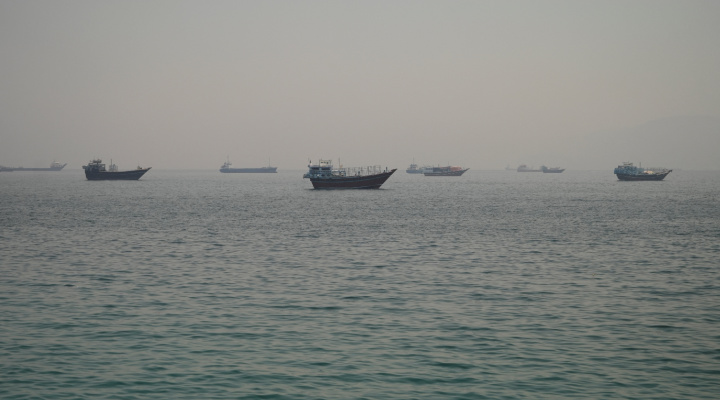
Vessels are anchored in the Strait of Hormuz, as seen from Musandam, Oman, June 11, 2026. Photo: REUTERS/Stringer

The United States and Iran signaled on Friday that an agreement to end their war was close, with a senior US administration official saying both sides had agreed on a text and that Washington expects to sign an initial deal in the coming days.

Iranian Foreign Minister Abbas Araqchi said changes were yet possible, but the tentative agreement made clear that his country had emerged stronger from the conflict.

Iran is the winner of the war with the US,” he said on state television.

The so-called memorandum of understanding calls for reopening the Strait of Hormuz and lifting the US blockade on Iranian ports, sources on all sides of the deal said. Negotiations over Iran‘s nuclear program — US President Donald Trump’s stated rationale for starting the war — would take place afterward.

The US official, speaking on condition of anonymity, told reporters that the deal met Trump’s core objectives and put negotiations “in a very, very good place.”

Leaked terms of the proposed memorandum outlined by Western, Pakistani, and Iranian sources earlier on Friday appeared to favor Iran, drawing criticism from Trump, who dismissed the reports as inaccurate.

While there were minor differences in the accounts, all appeared to offer Tehran much of what it has demanded so far, with Trump appearing to win little of what he has sought beyond the reopening of the strait, which Iran shut after the US and Israel launched attacks in February.

Araqchi said Iran would along with Oman retain control of traffic through the strait, which before the war handled one-fifth of the world’s oil and gas supply.

“Our sword will always hang over the Strait of Hormuz,” he said.

WHAT’S IN THE DEAL?

Draft terms of the deal described to Reuters by multiple sources indicate that the US would immediately begin releasing billions of dollars in frozen Iranian assets and waive sanctions on its oil exports, in return for Iran opening the strait.

Iran‘s nuclear program would be addressed during a 60-day period of talks. The US official said the agreement would ultimately lead to the dismantling of Iran’s nuclear program, with its stockpile of highly enriched uranium to be destroyed and removed — a key US demand.

The proposals include discussion of possible war reparations for Tehran and dropping longstanding US demands for limits on Iran‘s missile program, the sources said.

Another senior US official, describing the agreement, said Iran‘s stockpile of highly enriched uranium “will be destroyed and removed” and Iran‘s nuclear program would be dismantled. The terms also include an inspection regime to ensure it is enforceable in the long term.

“None of their money released until they perform. Strait of Hormuz will be open. No Iran funding of terrorist groups,” said the official, who spoke on condition of anonymity. “This is what they have agreed to. This is a performance-based deal.”

ISRAEL NOT PARTY TO MEMORANDUM

A Western source said the deal could be signed as soon as Sunday by US Vice President JD Vance and Iran‘s parliament speaker, Mohammad Baqer Qalibaf, with Geneva seen as the likeliest venue.

Araqchi said the deal would be signed remotely before it is announced.

The US administration official said Europe had been discussed as a venue for signing but no decision had been made.

Israel, which launched the war alongside the United States, has not been part of the negotiations. Prime Minister Benjamin Netanyahu said his country would not be party to the agreement.

Netanyahu has clashed with Trump in recent weeks over US demands that Israel curb military action in Lebanon to let Washington reach a deal with Tehran.

Araqchi said the agreement would end the war in Lebanon, which would mean Israel’s withdrawal from occupied areas.

Israel’s defense minister, however, said it would not withdraw from Lebanon. A senior Israeli official said Israel expects to retain its freedom to act against threats in areas under its control.

OIL PRICE FALLS

The progress toward an agreement has emerged at the end of a week that brought a sharp escalation in hostilities in the Gulf, including Israeli-Iranian exchanges of fire and US strikes on Iranian targets, followed by retaliation against US bases.

Global stocks rose and oil prices fell on the news. Brent crude prices were down more than 3% at their lowest in nearly two months.

The conflict has become a political headache for the White House, amid rising fuel prices and slipping approval ratings for Trump.

Some Republicans worry that the war’s unpopularity could cost them control of Congress in November’s midterm elections. But many of his fellow Republicans may have difficulty endorsing an agreement viewed as too favorable to Iran.

Tehran has always said its nuclear program is peaceful and accepted temporary curbs on it in return for the lifting of sanctions under a 2015 agreement with the administration of then-US President Barack Obama.

Trump abandoned that deal during his first term in 2018.

Iran has since then ramped up its enrichment of uranium, producing more than 400 kg (around 900 pounds) of material at close to the purity needed to make a bomb.

Many experts and Western governments contend that there is no civilian use or justification for Iran’s nuclear activity, such as enriching uranium to high levels near weapons-grade and building fortified facilities into mountains.


Zawartość publikowanych artykułów i materiałów nie reprezentuje poglądów ani opinii Reunion’68,
ani też webmastera Blogu Reunion’68, chyba ze jest to wyraźnie zaznaczone.
Twoje uwagi, linki, własne artykuły lub wiadomości prześlij na adres:
webmaster@reunion68.com


Jak rozpoznawać i zwalczać własne uprzedzenia poznawcze Rozdział 6 książki How to Think Elder of Ziyon


Jak rozpoznawać i zwalczać własne uprzedzenia poznawcze Rozdział 6 książki How to Think Elder of Ziyon

Elder of Ziyon


Do tej pory kierowaliśmy uwagę na zewnątrz – na źródła, które wprowadzają w błąd, twierdzenia odporne na falsyfikację, ramy interpretacyjne zniekształcające obraz rzeczywistości oraz techniki manipulacji. Założenie było takie, że czytelnik, wyposażony w odpowiednie narzędzia, jest w stanie uczciwie oceniać napływające do niego informacje. Ale czy rzeczywiście tak jest? Zanim zapytamy, dlaczego ludzie źle rozumują w konkretnych sytuacjach, warto zadać wcześniejsze pytanie: biorąc pod uwagę to, co wiemy o rzeczywistym funkcjonowaniu ludzkiego umysłu, dlaczego mielibyśmy oczekiwać, że ktokolwiek będzie rozumował dobrze?

Uczciwa odpowiedź brzmi: nie powinniśmy tego oczekiwać. Ludzki umysł nie został zaprojektowany do poszukiwania prawdy. Jesteśmy biologicznie przystosowani do przetrwania w małych grupach społecznych oraz do unikania wykluczenia z tych grup. Zrozumienie konkretnych sił, które zniekształcają myślenie – u każdego człowieka, w każdej kulturze, jeszcze zanim zostanie zastosowana jakakolwiek celowa manipulacja – sprawia, że narzędzia opisane w poprzednich rozdziałach stają się jednocześnie bardziej potrzebne i bardziej wyrozumiałe.

Wszyscy jesteśmy stronniczy, niezależnie od tego, jak bardzo chcielibyśmy udawać, że jest inaczej.

Woda, w której pływasz

Najgłębsza warstwa zniekształconego myślenia to ta, która zostaje zainstalowana jeszcze zanim pojawi się zdolność do jej oceny.

Każdy człowiek przyswaja w dzieciństwie i w okresie wczesnego kształtowania się osobowości zestaw założeń dotyczących tego, komu można ufać, co uznaje się za dowód, jakie obowiązki wobec grupy są wiążące i jakie są konsekwencje sprzeciwu. Nie są to wnioski wypracowane drogą rozumowania; są one środowiskiem, w której owo rozumowanie pływa. Nie postrzegasz swoich podstawowych założeń jako założeń. Doświadczasz ich jako oczywistej rzeczywistości.

Amerykanie negocjujący z japońskimi partnerami w dekadach po II wojnie światowej regularnie interpretowali milczenie jako zgodę, ponieważ w amerykańskiej kulturze biznesowej milczenie podczas negocjacji oznacza akceptację. W japońskiej kulturze biznesowej milczenie sygnalizuje coś przeciwnego – dyskomfort, brak zgody albo potrzebę większej ilości czasu. Żadna ze stron nie kłamała ani nie próbowała celowo utrudniać rozmów. Każda działała w obrębie założeń tak głęboko zakorzenionych, że nawet nie były postrzegane jako założenia. Amerykanie opuszczali spotkania przekonani, że osiągnięto porozumienie. Japończycy wychodzili z tych samych spotkań pewni, że jasno zakomunikowali swoje poważne zastrzeżenia. Nieporozumienie nie dotyczyło faktów. Dotyczyło niewidzialnej architektury komunikacji – architektury, którą każda ze stron przyswoiła, zanim była wystarczająco dorosła, by uświadomić sobie jej istnienie.

Kultury honoru – w których podstawowym obowiązkiem jest obrona reputacji grupy przed oceną zewnętrzną, a domniemane zniewagi wymagają odpowiedzi – kształtują systematycznie odmienny stosunek do świadectw i mówienia prawdy niż kultury winy, w których głównym ograniczeniem jest wewnętrzny koszt nieuczciwości. Żaden z tych systemów nie jest charakterystyczny wyłącznie dla jednego narodu czy regionu. Oba pojawiały się w historii w wielu formach, lecz prowadzą do odmiennych nawyków rozumowania w warunkach konfliktu lub zagrożenia. Członek kultury honoru, poproszony o złożenie zeznań przeciwko własnej społeczności, postrzega takie zeznanie jako formę zdrady, niezależnie od jego zgodności z faktami. Członek kultury winy odbiera jako zdradę właśnie niepowiedzenie prawdy. Ten sam czyn ma przeciwstawną wagę moralną w zależności od tego, w ramach której architektury funkcjonuje dana osoba – i żadna z nich prawdopodobnie nie będzie świadoma, że jej reakcja wynika z tej architektury, a nie po prostu z tego, co uważa za słuszne.

Praktyczna konsekwencja jest taka, że znaczna część tego, co wydaje się rozumowaniem, jest w rzeczywistości zastosowaniem wcześniej wgranych założeń, które nigdy nie zostały poddane analizie, ponieważ nigdy nie wypłynęły na powierzchnię świadomości. Pierwszym krokiem ku uczciwemu myśleniu jest uznanie, że to środowisko istnieje – że pływasz w pewnym środowisku, a ono zostało ci narzucone, zanim mogłeś wyrazić na nie zgodę.

Umysł plemienny

Na te kulturowe założenia nakłada się kolejna, bardziej bezpośrednia i równie potężna siła: tożsamość grupowa.

Ludzie zasadniczo nie dochodzą do wniosków drogą rozumowania, a następnie nie dołączają do grup podzielających te same wnioski. Najpierw dołączają do grup – albo się w nich rodzą – a następnie przyjmują poglądy podzielane przez grupę. Dopiero później konstruują uzasadnienia dla tych poglądów, które z ich własnej perspektywy wydają się niezależnym rozumowaniem. Sam proces rozumowania wydaje się autentyczny. Jednak wnioski, których broni, zostały przyjęte jeszcze zanim to rozumowanie się rozpoczęło.

Psycholog Jonathan Haidt przeprowadził eksperyment dotyczący tego zjawiska. Kiedy ludzi proszono o wyjaśnienie własnych ocen moralnych – dlaczego coś wydaje im się odrażające, niesprawiedliwe lub złe – bez trudu i z dużą pewnością siebie podawali uzasadnienia. Jednak gdy te uzasadnienia były podważane kolejnymi pytaniami, nie zmieniali swoich ocen. Zaczynali szukać nowych argumentów. Ocena była stała; rozumowanie służyło jej obronie. Haidt nazwał to zjawisko „moralnym osłupieniem” (moral dumbfounding) – doświadczeniem polegającym na całkowitej pewności, że coś jest złe, przy jednoczesnej niemożności wyjaśnienia dlaczego, nawet gdy wszystkie wcześniej podane wyjaśnienia zostały obalone. Pewność nie była produktem rozumowania. To rozumowanie zostało wytworzone w obronie tej pewności.

Psychologia polityczna udokumentowała konkretną formę, jaką zjawisko to przybiera we współczesnym życiu. Gdy badanym prezentowano identyczne propozycje polityczne, zmieniając jedynie informację o tym, która partia polityczna je popiera, oceniali je jako lepsze lub gorsze, bardziej lub mniej rozsądne, lepiej lub słabiej uzasadnione – w zależności od tego, której partii je przypisano. Ludzie nie oceniali samej propozycji. Oceniali własną plemienną relację z tymi, którzy ją przedstawiali. Rozumowanie dotyczące zalet danego rozwiązania było konstruowane później, aby uzasadnić osąd podjęty wcześniej na gruncie lojalności grupowej.

Wniosek jest taki, że większość przekonań politycznych nie ma u swoich podstaw charakteru politycznego. Ma charakter społeczny. Osoba wyznająca określony zestaw poglądów zwykle przyjęła je dlatego, że są to poglądy jej wspólnoty – rodziny, sąsiedztwa, środowiska edukacyjnego czy zawodowego – a koszt przyjęcia odmiennych stanowisk miałby charakter społeczny, a nie jedynie intelektualny. Rozumowanie towarzyszące tym poglądom jest szczere. Jest jednak wtórne wobec społecznej kalkulacji, która została dokonana, zanim proces rozumowania w ogóle się rozpoczął. 


Link do oryginału:

Elder’s Substack

Zawartość publikowanych artykułów i materiałów nie reprezentuje poglądów ani opinii Reunion’68,
ani też webmastera Blogu Reunion’68, chyba ze jest to wyraźnie zaznaczone.
Twoje uwagi, linki, własne artykuły lub wiadomości prześlij na adres:
webmaster@reunion68.com


There Is No ‘Good Deal’ to be Made with Iran’s Regime


There Is No ‘Good Deal’ to be Made with Iran’s Regime

Eric Levine


  • The Obama strategy was apparently to make any deal and call it a “good deal
    .”
  • In exchange for these concessions to the Ayatollah, the Obama Administration agreed to lift economic sanctions on Iran at a time when its frozen overseas assets totaled approximately $115 billion, and delivered $400 million of cash on a pallet as ransom for American hostages being illegally held by the Islamic Republic
    .
  • In short, Obama gave away everything and got nothing in return. Now that is a really bad deal
    .
  • Obama and his lead negotiator, Secretary of State John Kerry, must have understood that the money Iran received was to be used to fund its military, its international terror network, and to advance its hegemonic goals in the region
    .
  • Obama rammed the deal down the throats of a skeptical American public and implemented it in the face of overwhelming bipartisan congressional opposition. Moreover, Israel and the Gulf Arab states — the countries most directly impacted by the deal and that strenuously opposed it — were not consulted
    .
  • The Obama propaganda machine also understood that it could not tell the truth about the terms of the deal if they wanted any support from the American people. So they simply lied about them
    .
  • The current hostilities with Iran are a direct result of Obama’s failed policy. Obama did not just save the Iranian regime; he empowered it
    .
  • Iran’s regime will only make a deal with the US if Iran’s rulers believe the survival of the regime is guaranteed. No matter what is agreed to by Trump, Iran’s rulers are sure to violate the agreement. Maybe not today or tomorrow, but as soon as Trump leaves office
    .
  • If Trump makes a deal, even a great one, it will last no longer than his presidency. The Gulf states will hedge their bets. Trump will be gone but the Iranian regime, perhaps with the support of a new American administration, will still be in their midst.

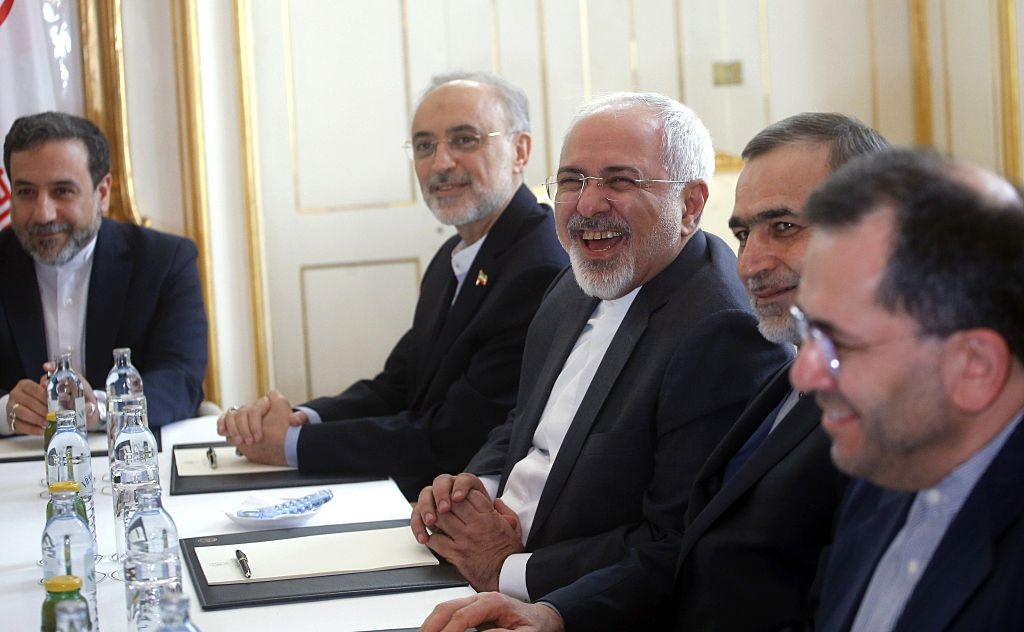
The current hostilities with Iran are a direct result of Obama’s failed policy. Obama did not just save the Iranian regime; he empowered it. The Obama strategy was apparently to make any deal with Iran and call it a “good deal.” Obama and his lead negotiator, Secretary of State John Kerry, must have understood that the money Iran received was to be used to fund its military, its international terror network, and to advance its hegemonic goals in the region. Pictured: Iran’s then Foreign Minister Mohammed Javad Zarif (center) shares some laughs with his delegation during nuclear deal negotiations with Kerry in Vienna, Austria, on June 30, 2015. (Photo credit should read Carlos Barria/AFP via Getty Images)

Before agreeing to the JCPOA (the Iran “nuclear deal”) in 2015, President Barack H. Obama assured the American people that he understood, in the words of his press secretary, Josh Earnest, that “no deal is better than a bad deal.”

Obama then proceeded to make a historically epic terrible deal.

Because Obama made it clear to friend and foe alike that he would never use military force to prevent Iran from obtaining nuclear weapons, the only possible outcome was a “bad deal.”

As Obama told a skeptical and worried Israeli public on June 1, 2015:

“I can, I think, demonstrate, not based on any hope but on facts and evidence and analysis, that the best way to prevent Iran from having a nuclear weapon is a verifiable, tough agreement…. A military solution will not fix it. Even if the United States participates, it would temporarily slow down an Iranian nuclear program but it will not eliminate it.”

The Obama strategy was apparently to make any deal and call it a “good deal.”

President Donald J. Trump is assuring the American people that he will only make a “good deal.” Trump, unlike Obama, has demonstrated his willingness to use military force. Because of the nature of the Iranian regime and the damage done to America’s national security interests in the region, not to mention the distrust Obama’s nuclear deal engendered among our Arab allies, it is not possible for Trump to make a “good deal” with Iran’s current regime.

Trump’s only alternative for a positive outcome is regime change, which can only be achieved by resuming kinetic military action. It appears that Trump has reached the same conclusion, and renewed military operations against the Iranian regime have commenced this week.

Obama, while purposely misleading the average American about the terms of his deal and the nature and goals of the Iranian regime, may well have believed that he made a “good deal.” It seems that for Obama, the goal of the deal (any deal) justified the lies.

The Obama deception was not the good deal/bad deal dichotomy. The lie was the motivation behind the deal and how it was sold to the American people.

For Obama, even a deal like the one he negotiated that empowered the Iranian regime and fundamentally changed the security architecture of American policy in the Middle East from an Israel-centric system to an Iranian-centric or bi-polar Israeli-Iranian geopolitical paradigm, was a “good deal.”

On March 24, 2007, the United Nations Security Council unanimously adopted Resolution 1747, imposing sanctions on Iran for violating its obligations under the Treaty on the Non-Proliferation of Nuclear Weapons.

On March 3, 2008, the UN Security Council adopted Resolution 1803, imposing additional sanctions on Iran for its refusal to suspend its uranium enrichment.

On June 9, 2010, the UN Security Council adopted Resolution 1929, noting that Iran had failed to abide by previous resolutions designed to stop its uranium enrichment program, and prohibiting it from outsourcing its nuclear program.

The UN Security Council also seems to have understood that a nuclear weapon without the means to deliver it was of limited use. Therefore, the international community sought to frustrate Iran’s ability to launch a nuclear warhead, and included the following provision in Resolution 1929:

“… Iran shall not undertake any activity related to ballistic missiles capable of delivering nuclear weapons, including launches using ballistic missile technology, and that States shall take all necessary measures to prevent the transfer of technology or technical assistance to Iran related to such activities.”

Obama allowed Iran to continue developing nuclear weapons. He refrained from enforcing the UN resolutions or supporting the popular uprisings of the Iranian people in 2009 and 2015 that sought to overthrow Ayatollah Ali Khamenei’s Islamic Republic. Instead, Obama agreed to a deal that allowed the mullahs to violently crush the popular protests, and required the repeal of each of the UN resolutions. Obama’s deal provided for all limitations on Iran’s uranium enrichment and development of its “civilian” nuclear program to expire in 2030, and permitted Iran, the world’s leading state sponsor of terrorism for 39 straight years, to enrich uranium and legitimately develop a ballistic missile system designed to deliver nuclear weapons at the expiration of the agreement in October 2025.

In exchange for these concessions to the Ayatollah, the Obama Administration agreed to lift economic sanctions on Iran at a time when its frozen overseas assets totaled approximately $115 billion, and delivered $400 million of cash on a pallet as ransom for American hostages being illegally held by the Islamic Republic.

In short, Obama gave away everything and got nothing in return. Now that is a really bad deal.

Obama and his lead negotiator, Secretary of State John Kerry, must have understood that the money Iran received was to be used to fund its military, its international terror network, and to advance its hegemonic goals in the region.

Obama rammed the deal down the throats of a skeptical American public and implemented it in the face of overwhelming bipartisan congressional opposition. Moreover, Israel and the Gulf Arab states — the countries most directly impacted by the deal and that strenuously opposed it — were not consulted.

The Obama propaganda machine also understood that it could not tell the truth about the terms of the deal if they wanted any support from the American people. So they simply lied about them.

We were famously told by Kerry that the Iran deal “closed off all paths to a bomb.” Obama told an identical fib when he announced to the world that America had reached a “[c]omprehensive long-term deal with Iran that will prevent it from obtaining a nuclear weapon… Every pathway to a nuclear weapon has been cut off.”

There was talk of “[c]onstant international supervision,” “24/7 access to key nuclear facilities,” and “access where necessary, when necessary.”

Obama and his lackeys left out the part of the deal that effectively prevented inspectors from searching Iranian military sites and the requirement of almost one month’s notice by international inspectors concerning locations they found suspicious. That allowed ample time for Iran to cover its tracks.

Obama could not but appreciate that the deal was problematic. It could never pass the Senate as a treaty. There was no possibility of getting 67 votes (two-thirds of the Senate) to approve it.

With the help of Kerry and the complicity of Senate Democrats, in particular Chuck Schumer, Obama turned the Constitution on its head and implemented a protocol requiring 67 votes to disapprove the nuclear deal. The fix was in.

The current hostilities with Iran are a direct result of Obama’s failed policy. Obama did not just save the Iranian regime; he empowered it. Every pathway to an Iranian nuclear weapon was not cut off. To the contrary, Obama guaranteed Iranian success. He helped Iran fund its military and its terror proxies — the same ones that have killed and maimed thousands of American service members. Obama’s nuclear deal helped fund the October 7 attack against Israel. The attack drones and ballistic missiles that Iran launched at American service members, at Israel, and at our Gulf Arab allies, were paid for in large part by Obama’s nuclear deal.

Yet, the nuclear deal did have one positive unforeseen consequence. It persuaded many of the Arab states looking for a reliable ally that an alliance with Israel was their best geopolitical hedge against an ascendant Iran and a schizophrenic America.

To his credit, Trump understood the dynamic and seized the opportunity. The Abraham Accords was born.

Iran’s regime will only make a deal with the US if Iran’s rulers believe the survival of the regime is guaranteed. No matter what is agreed to by Trump, Iran’s rulers are sure to violate the agreement. Maybe not today or tomorrow, but as soon as Trump leaves office.

The regime will test the next president.

If it is a Democrat, whatever Trump agrees to will be meaningless. Can anyone imagine a President Harris or Buttigieg using military force against Iran? These people are rooting for Iran to win the war just so they can say “Trump lost.”

Depending on who the next president is, it is more likely that American policy will be to move away from, weaken, and isolate Israel. Israel will be cut loose, and with it, the safety net the members of the Abraham Accords are looking to build.

The principal beneficiary of such an “agreement” will be Iran. The Gulf Arab states understand that all too well.

If Trump makes a deal, even a great one, it will last no longer than his presidency. The Gulf states will hedge their bets. Trump will be gone but the Iranian regime, perhaps with the support of a new American administration, will still be in their midst.

The Arabs no doubt are planning for that possibility now and will make accommodations with Iran at a time when we need them to stand with us against this predatory death cult. Rather than join the Abraham Accords, Saudi Arabia and other Gulf states will run from it. Joining the Abraham Accords under those circumstances would be tantamount to suicide.

Trump’s only long-term “good deal” is no deal. Regime change is his only option.

Our enemies are watching.


Eric Levine, a New York attorney, represents both plaintiffs and defendants. His clients range from individuals to Fortune 100 companies. He served formerly at the U.S. Department of Treasury, Office of Thrift Supervision, where he prosecuted Savings and Loan fraud. Mr. Levine then worked at the international law firm, Proskauer Rose, before starting his own firm in New York City, Eiseman Levine. He has appeared multiple times on FOX Business News, FOX News, and CNN. Mr. Levine is also a co-host of the Sunday morning WABC radio show, Let the Record Show, where he discusses local, state, federal, and national security issues. He has appeared on BBC radio and been quoted in the New York Times, the Washington Post, Le Monde and other international publications concerning his views on the American political landscape.


Zawartość publikowanych artykułów i materiałów nie reprezentuje poglądów ani opinii Reunion’68,
ani też webmastera Blogu Reunion’68, chyba ze jest to wyraźnie zaznaczone.
Twoje uwagi, linki, własne artykuły lub wiadomości prześlij na adres:
webmaster@reunion68.com

Helen Mirren Responds to Being Called ‘Evil Zionist B—h’ on the Street in London


Helen Mirren Responds to Being Called ‘Evil Zionist B—h’ on the Street in London

Shiryn Ghermezian


Actress Helen Mirren arrives for the Premiere of the film ‘Fast X’ on May 12, 2023, at the Colosseum monument in Rome. Photo: Luca Carlino via Reuters Connect

The man who called Dame Helen Mirren an “evil Zionist b—h” on the streets of London was perhaps “mentally not quite stable,” the Oscar-winning actress said while addressing the incident for the first time publicly.

Mirren, 80, made the comments while talking to reporters on the sidelines of the annual Taormina Film Festival, where she is the recipient of the Lifetime Achievement Award.

As seen in a video shared on social media in late May, Mirren was walking with her husband in East London at night when a man approached the couple and called Mirren an “evil Zionist b—h” and an “avowed Zionist” because of pro-Israel comments she made in 2023. It was later reported that the incident actually took place last year.

Mirren, who played former Israeli Prime Minister Golda Meir in the 2023 film “Golda,” had told the Israeli media outlet N12 in 2023: “I believe in the existence of Israel, and I believe Israel has to go forward into the future for the rest of eternity. And I believe in Israel because of the Holocaust.”

When asked about the incident in London, Mirren told reporters at the film festival in Sicily she was “attacked by mistake by a man who was maybe a little over passionate or maybe mentally not quite stable.”

“I don’t know whether he read things on the internet or thought he read something which he hadn’t read, I don’t know,” she added, according to The Times. She then clarified her stance on Israel while seemingly criticizing the country’s military campaign against the Hamas terrorist group in Gaza.

“Evil forces are rising everywhere, even in a country like Israel,” she said. “How could you possibly repeat the actions of what was done to you as people to other people? Crimes against humanity, it’s called.”

She added that she has “great friends from Israel” and praised the country’s artistic and “intellectual” communities as being “so remarkable.” The actress then explained that her support for Israel is in part due to the fact that she grew up in the years immediately following the Holocaust.

“I was born at the end of the Second World War. I grew up in Europe post-Second World War and the realization in my parents’ generation of what had happened in the Holocaust was so profound, so important,” she noted. “Therefore, the creation of Israel was a very important moment, although maybe it was done in completely the wrong way, in the wrong place, I don’t know. But something had to happen after the horror.”

Mirren said that she has “many Jewish friends” and her first two boyfriends were Jewish, including an Englishman with whom she traveled to Israel. Mirren first visited the country after World War II and worked as a volunteer at Kibbutz Ha’on in the Galilee region.

While talking to reporters at the Taormina Film Festival, she also compared Israel’ss recent military actions to the conquests of Catherine the Great and Alexander the Great.

“When you play Catherine the Great, why was Catherine called the Great? Because she took land. Why was Alexander the Great? Because he took land. He invaded, he killed people, he destroyed cities and he took land. Why is he remembered in history? Because with incredible brutality and unbelievable cruelty, he took land. So, it devastates me. That’s what I mean,” the actress said. “The evil is always lurking, waiting to take over, even in a place like Israel. I played Golda Meir and worked in a country that was the idealistic Israel, and I always thought it was a country that would never do wrong, but of course they were doing wrong, even then.”

Mirren condemned the Hamas-led terrorist attack in Israel on Oct. 7, 2023, shortly after the massacre took place and was among more than 1,000 members of the entertainment industry who supported Israel’s participation in the Eurovision Song Contest this year.


Zawartość publikowanych artykułów i materiałów nie reprezentuje poglądów ani opinii Reunion’68,
ani też webmastera Blogu Reunion’68, chyba ze jest to wyraźnie zaznaczone.
Twoje uwagi, linki, własne artykuły lub wiadomości prześlij na adres:
webmaster@reunion68.com