Archive | June 2026

Lebanon Finally Says It Out Loud: Lebanon Does Not Belong to Iran, Iran Is the Problem


Lebanon Finally Says It Out Loud: Lebanon Does Not Belong to Iran, Iran Is the Problem

Khaled Abu Toameh


  • “You are not trying to help us; the people of Lebanon are paying the price for your own interests…. Our interests do not align with yours…. This is not your country, it is our country.” — Lebanese President Joseph Aoun, directly addressing Iran’s regime; CNN, June 5, 2026
  • Aoun’s remarks amount to a public admission that Hezbollah has effectively created a state within a state, one that decides when Lebanon goes to war and when it agrees to a ceasefire, regardless of the wishes of the elected government of the Lebanese people.
  • “Spare our South, and cease treating it and its people as mere bargaining chips to improve your negotiation terms…. this war is not ours, that it is not fought for us, but on our soil and at the expense of our people.” —Lebanese Prime Minister Nawaf Salam, June 5, 2026.
  • The Lebanese leaders are finally saying publicly what many observers have argued for years: Hezbollah is not defending Lebanon. It is defending Iran’s regional interests.
  • The tragedy of Lebanon closely resembles the tragedy of the Gaza Strip.
  • The Palestinians in Gaza are paying the price for decisions made by Hamas, another Islamist terrorist organization acting in accordance with Iran’s broader regional agenda.
  • All terrorist roads lead first to Tehran.
  • Without Iran’s interference in Lebanese and Palestinian affairs, both peoples would likely be focused on building their economies, strengthening their institutions, and improving the lives of their citizens instead of enduring endless cycles of war and destruction.
  • [Iran’s] goal is always the same: expand Iranian influence while keeping the region in a permanent state of confrontation.
  • The ceasefire agreements brokered by the Trump Administration were also supposed to strengthen Lebanese sovereignty and curb Hezbollah’s military power.
  • Why, then, is Hezbollah still armed? Why does it continue to decide matters of war and peace? Why is the Lebanese government still unable, or unwilling, to assert full authority over its territory?
  • The same questions apply to Hamas. Why is Hamas still in control of large parts of the Gaza Strip? Why is the Trump Administration’s “Board of Peace” still talking about the disarmament of Hamas instead of insisting upon it? Why do mediators continue to negotiate with terrorist organizations that openly reject disarmament?
  • Washington needs to demand the immediate and unconditional disarmament of Hezbollah and Hamas — terrorist organizations that seek Israel’s destruction. The Trump Administration would greatly help its agenda if it insisted that the Lebanese government alone exercise control over decisions of war and peace. It would help to stress that no sovereign state can tolerate an armed militia operating outside government authority.
  • So long as Hezbollah and Hamas remain armed and in power, and the Islamic Revolutionary Guard Corps remains ruling Iran, there will be no lasting peace or stability in the Middle East. All three remain deeply committed to their jihad (holy war) against Israel and are prepared to pursue it indefinitely.
  • Lebanon’s leaders have finally identified the problem. The question is whether they have the courage, and the whole-hearted, committed support of the United States to back it up.
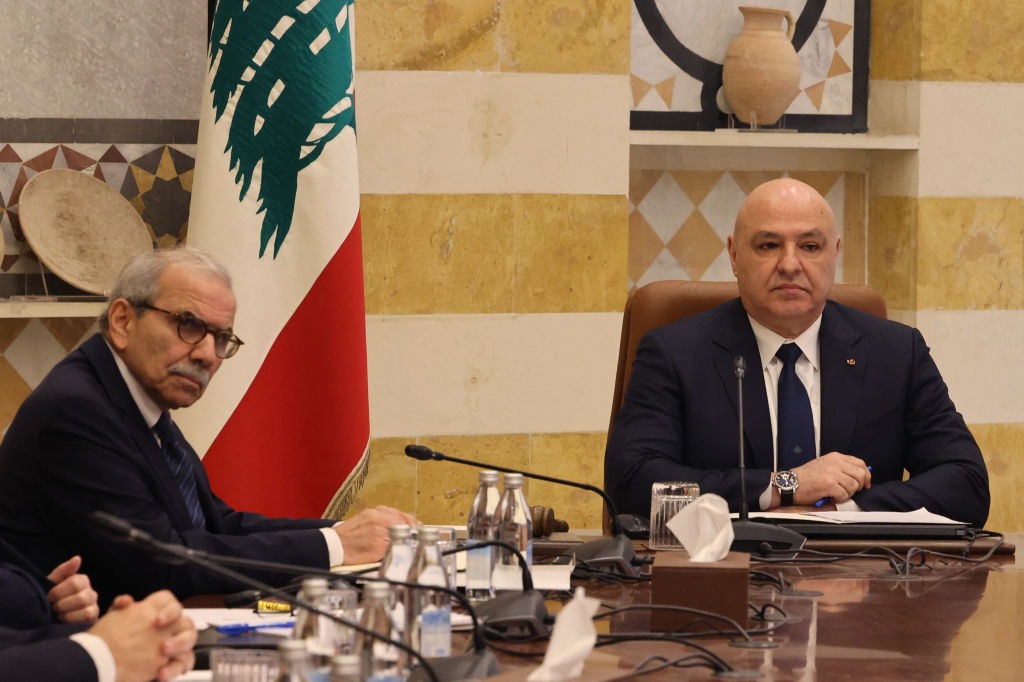
Aoun and Prime Minister Nawaf Salam are openly acknowledging that Iran, through its proxy Hezbollah, has hijacked Lebanon’s sovereignty, transformed the country into a battlefield, and dragged its people into repeated wars with Israel. Pictured: Aoun (R) and Salam at a cabinet meeting in the presidential palace near Beirut, on February 11, 2025. (Photo by Anwar Amro/AFP via Getty Images)

For years, many Lebanese politicians avoided publicly confronting the obvious truth: Iran, through its proxy Hezbollah, has hijacked Lebanon’s sovereignty, transformed the country into a battlefield, and dragged its people into repeated wars with Israel.

Now, perhaps for the first time in such direct and uncompromising language, Lebanon’s President Joseph Aoun and Prime Minister Nawaf Salam are openly acknowledging what many Lebanese have known for decades.

Their statements are significant because they expose the central role played by the Iranian regime and Hezbollah in destroying what was once one of the most prosperous and stable countries in the Middle East.

Aoun accused Iran of using Lebanon as a “bargaining chip” in its conflict with the United States and demanded that Tehran stop interfering in Lebanese affairs. Addressing the Iranian regime directly, Aoun declared:

“You are not trying to help us; the people of Lebanon are paying the price for your own interests…. Our interests do not align with yours…. This is not your country, it is our country.”

Aoun also rejected Hezbollah’s claim to speak on behalf of Lebanon and said that Hezbollah Secretary-General Naim Qassem “does not represent the Lebanese people.”

The Lebanese president emphasized that his people are exhausted by the endless conflict initiated by Hezbollah: “The Lebanese are fed up with the war between Israel and Hezbollah.”

He revealed that Lebanese from various religious communities, including Shiites, had told him they were tired of Hezbollah’s wars.

Aoun’s remarks amount to a public admission that Hezbollah has effectively created a state within a state, one that decides when Lebanon goes to war and when it agrees to a ceasefire, regardless of the wishes of the elected government of the Lebanese people.

Salam was equally blunt.

Speaking at the launch of a United Nations humanitarian appeal, Salam called on Iran to stop exploiting Lebanon for its own regional ambitions:

“Spare our South, and cease treating it and its people as mere bargaining chips to improve your negotiation terms. We are a nation that refuses to become a mailbox for others’ messages or an open arena for their wars. Lebanon is no one’s pawn on a table, and the South is no one’s reserve front.”

Perhaps most remarkably, Salam openly acknowledged that Iran’s rejection of a ceasefire agreement exposed the true nature of the conflict:

“[T]he Lebanese were stunned yesterday to find the Iranian Revolutionary Guard as the first to reject it, before any other party. This is yet another confirmation that this war is not ours, that it is not fought for us, but on our soil and at the expense of our people.”

Those words represent a devastating indictment of Hezbollah and its Iranian sponsors.

For years, Hezbollah has justified its military activities by claiming to “defend Lebanon.” Yet Lebanon’s own prime minister is now effectively saying publicly that Hezbollah’s war serves foreign interests, not Lebanese ones.

The Lebanese leaders are finally saying publicly what many observers have argued for years: Hezbollah is not defending Lebanon. It is defending Iran’s regional interests.

The consequences have been catastrophic.

Once known as the “Switzerland of the Middle East,” Lebanon has become a failed state plagued by economic collapse, political paralysis, corruption, and recurring warfare.

Hundreds of thousands of Lebanese civilians have paid a heavy price for Hezbollah’s decisions. Entire communities have been displaced. Homes have been destroyed. Businesses have collapsed. Families have lost loved ones.

“The Lebanese people,” Aoun noted, “have placed on me the task of ending the war, and they do not deserve to see their homes destroyed every five or ten years.”

The tragedy of Lebanon closely resembles the tragedy of the Gaza Strip.

Just as Hezbollah serves as Iran’s proxy in Lebanon, Hamas serves as Iran’s proxy among the Palestinians. Like Hezbollah, Hamas receives funding, weapons, training, and political backing from Tehran. Like Hezbollah in Lebanon, Hamas launched a war that brought devastation upon its own people in the Gaza Strip.

After Hamas’s October 7, 2023 massacre in Israel, the Gaza Strip suffered unimaginable destruction and humanitarian hardship. The Palestinians in Gaza are paying the price for decisions made by Hamas, another Islamist terrorist organization acting in accordance with Iran’s broader regional agenda.

All terrorist roads lead first to Tehran.

Without Iran’s interference in Lebanese and Palestinian affairs, both peoples would likely be focused on building their economies, strengthening their institutions, and improving the lives of their citizens instead of enduring endless cycles of war and destruction.

The Iranian regime has consistently used its proxies to spread instability throughout the Middle East: Hezbollah in Lebanon, Hamas and Palestinian Islamic Jihad in the Gaza Strip, the Houthis in Yemen, and Shiite militias in Iraq and Syria.

The goal is always the same: expand Iranian influence while keeping the region in a permanent state of confrontation.

The statements of Aoun and Salam, however, raise a serious question. If Lebanon’s leaders recognize that Iran and Hezbollah are responsible for much of their country’s suffering, why have they not acted decisively against Hezbollah?

United Nations Security Council resolutions have long called for the disarmament of all militias in Lebanon.

The ceasefire agreements brokered by the Trump Administration were also supposed to strengthen Lebanese sovereignty and curb Hezbollah’s military power.

Why, then, is Hezbollah still armed? Why does it continue to decide matters of war and peace? Why is the Lebanese government still unable, or unwilling, to assert full authority over its territory?

The same questions apply to Hamas. Why is Hamas still in control of large parts of the Gaza Strip? Why is the Trump Administration’s “Board of Peace” still talking about the disarmament of Hamas instead of insisting upon it? Why do mediators continue to negotiate with terrorist organizations that openly reject disarmament?

Complaining about Iranian interference alone will not restore Lebanon’s sovereignty or bring stability to the Gaza Strip.

The Trump Administration would do itself a great service if it could recognize that the source of much of the region’s instability remains the Iranian regime and its proxies. Washington needs to demand the immediate and unconditional disarmament of Hezbollah and Hamas — terrorist organizations that seek Israel’s destruction. The Trump Administration would greatly help its agenda if it insisted that the Lebanese government alone exercise control over decisions of war and peace. It would help to stress that no sovereign state can tolerate an armed militia operating outside government authority.

Aoun is right when he says that Lebanon does not belong to Iran. The challenge now is to translate these words into action.

So long as Hezbollah and Hamas remain armed and in power, and the Islamic Revolutionary Guard Corps remains ruling Iran, there will be no lasting peace or stability in the Middle East. All three remain deeply committed to their jihad (holy war) against Israel and are prepared to pursue it indefinitely.

Lebanon’s leaders have finally identified the problem. The question is whether they have the courage and the whole-hearted, committed support of the United States to back it up.


Khaled Abu Toameh is an award-winning journalist based in Jerusalem.


Zawartość publikowanych artykułów i materiałów nie reprezentuje poglądów ani opinii Reunion’68,
ani też webmastera Blogu Reunion’68, chyba ze jest to wyraźnie zaznaczone.
Twoje uwagi, linki, własne artykuły lub wiadomości prześlij na adres:
webmaster@reunion68.com


Iran ‘Opens New Chapter in Its Defense Policy’ With Attack on Israel: Top Official


Iran ‘Opens New Chapter in Its Defense Policy’ With Attack on Israel: Top Official

Ailin Vilches Arguello


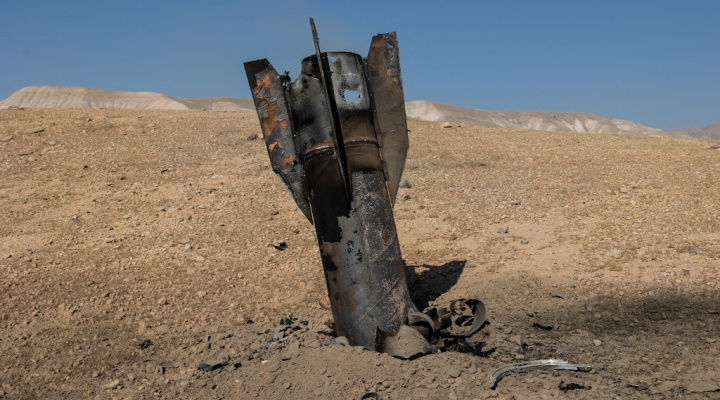
Part of a missile protrudes from the ground, following strikes from Iran, in the central West Bank, June 8, 2026. Photo: REUTERS/Naama Stern

Iran’s latest attack against Israel on Monday marked the start of a “new chapter” in the Islamist regime’s defense policy, according to a top Iranian official, who warned that Tehran would respond with military force to any strikes against its network of terrorist proxies across the Middle East.

Sadeq Amoli Larijani, chairman of Iran’s Expediency Discernment Council — a powerful advisory body to Supreme Leader Ayatollah Mojtaba Khamenei — said Tehran’s attack on Israel, carried out in support of the Lebanese terrorist group Hezbollah, was “not merely a military response” but the launch of a new “strategic doctrine.”

“Should an attack occur against any pillar of the axis of resistance, the response will extend beyond geographic borders and reshape regional equations,” Larijani wrote in a post on X. “The Islamic Republic has shown that any expansion of the conflict or strike on Iran’s vital infrastructure will be met with a comprehensive and deterrent response.”

“Tehran has opened a new chapter in its defense policy — one in which the preservation of regional power is no longer a reactive stance in the face of threats but is instead pursued through proactive initiative and offensive capability,” he continued.

The Iranian official further warned that any future military response could broaden to encompass all actors supporting or facilitating confrontation with the regime.
.

On Monday, Iran’s military announced that its initial wave of strikes against Israel — the first since the April ceasefire took hold — was now over, while warning that operations could resume if the Jewish state continued attacks on the regime’s chief proxy force, Hezbollah, in Lebanon.

Iranian officials said Tehran had “delivered a painful response” to Israel over its strikes on its northern neighbor, including Sunday’s attacks on the outskirts of Beirut.

So far, Israel has not publicly responded after launching retaliatory strikes on Iran following Tehran’s missile barrage.

Israeli officials said the country is prepared for a range of military options against Iran — from operations lasting several days to “as long as it takes” — adding that Israeli strikes had already hit Iranian air-defense systems being rebuilt after earlier attacks, as well as a petrochemical facility.

Earlier, US President Donald Trump demanded that Israel and Iran “immediately stop ‘shooting,’” after the latest wave of attacks sent oil prices surging nearly 4 percent and threatened to undermine US-led efforts to secure a broader ceasefire agreement.

In one of several posts on social media, Trump said Israel and Iran both wanted “an immediate CEASEFIRE!”

“Final negotiations on ‘Peace’ are proceeding, subject to ignorance or stupidity getting in its way,” he wrote in a post on TruthSocial.

Trump also said the US blockade on Iranian ports would remain in effect until a final agreement is secured.

According to Iranian Foreign Ministry spokesperson Esmaeil Baghaei, Tehran remains in contact with Washington in an atmosphere of “extreme suspicion” as diplomatic efforts continue amid fears of a broader regional war.

Baghaei said Israel’s operations in Lebanon — whether conducted with direct US coordination or not — were intended to sabotage ongoing negotiations and push the region closer to wider conflict.

“The United States bears direct responsibility for any action the Zionist regime [Israel] takes in relation to violating regional peace and security against Iran,” the Iranian official said.

Hezbollah, which like the Iranian regime openly seeks Israel’s destruction, has been firing rockets and drones at northern Israeli communities daily since early March, when the terrorist group first opened fire on the Jewish state in response to the joint US-Israel attack on Iran days earlier.

Iran has attempted to make an Israeli ceasefire in Lebanon, where Hezbollah exerts significant political and military influence, part of any deal to stop fighting with the US.


Zawartość publikowanych artykułów i materiałów nie reprezentuje poglądów ani opinii Reunion’68,
ani też webmastera Blogu Reunion’68, chyba ze jest to wyraźnie zaznaczone.
Twoje uwagi, linki, własne artykuły lub wiadomości prześlij na adres:
webmaster@reunion68.com


Odnalezione zapiski Osieckiej z lat 70., czyli nieudana próba udomowienia poetki

Warszawa 01.1965. Poetka, autorka tekstów piosenek Agnieszka Osiecka w swoim mieszkaniu na Saskiej Kępie. Fot. PAP/Erazm Ciołek


Odnalezione zapiski Osieckiej z lat 70., czyli nieudana próba udomowienia poetki

Agata Szwedowicz (PAP)


„Kochany Misiu! O sobie, piciu i całej reszcie” to odnalezione zapiski Agnieszki Osieckiej z lat 70. Panorama życia imprezowego tamtych czasów zawiera także opis próby ustatkowania się, założenia rodziny przez bohaterkę. Próby nieudanej, poetka sama o sobie pisała jako o kobiecie „nieudomawianej”.

„Kochany Misiu” to nigdy niewysłane listy do przyjaciela, Janusza Minkiewicza. Przypuszczalnie Osiecka nigdy nie zamierzała ich wysyłać, wyobrażanie sobie adresata zapisków po prostu ułatwiało ich prowadzenie. „To zaskakujący formą, wyjątkowy w historii polskiej literatury polskiej zapis 16 lat życia towarzyskiego, uczuciowego, twórczego i zawodowego. Adresując komunikat do Janusza Minkiewicza, zdobywa się autorka na pewien rodzaj szczerości, który można nazwać autoterapią – nie tylko zdaje sprawę z podróży, spotkań, ale też analizuje własne przeżycia, stosunek do rozmaitych sytuacji, nierzadko wyznanie winy wobec bliskich. Być może taka strategia literacka była Osieckiej potrzebna do podjęcia rozrachunków, przyjęcia odpowiedzialności za podjęte decyzje” – pisze w przedmowie Radosław Młynarczyk, badacz życia Osieckiej.

Adresat listów Janusz Minkiewicz, poeta i satyryk, to bliski przyjaciel Osieckiej, stały bywalec SPATiF-u. Łączyło ich podejście do życia, zarazem „sentymentalne i cyniczne” – jak pisała Osiecka. W 1969 roku, gdy powstał pierwszy list, poetka jest już dojrzałą kobietą dobiegającą czterdziestki. Robi karierę, nie brak jej pieniędzy ani przyjaciół. Ciągle mieszka z mamą, co lubi, ale potrzeba własnego domu, samodzielności i dorosłości staje się coraz ważniejsza. Życie Osieckiej jest wypełnione miłością, ale jej obiekty ciągle się zmieniają. Ma za sobą dwa małżeństwa i kilka poważnych związków, m.in. z Markiem Hłaską, Andrzejem Jareckim, Jeremim Przyborą. Teraz flirtuje z Andrzejem Wajdą, ale najpoważniejszy okazuje się związek z Danielem Passentem. Dziennikarz długo zabiegał o miłość Agnieszki, ale gdy ją zdobył, zaczął się spełniać znany już Osieckiej scenariusz – im bardziej ona się angażuje, tym bardziej nieuchwytny okazuje się obiekt uniesień.

„To zaskakujący formą, wyjątkowy w historii polskiej literatury polskiej zapis 16 lat życia towarzyskiego, uczuciowego, twórczego i zawodowego. Adresując komunikat do Janusza Minkiewicza, zdobywa się autorka na pewien rodzaj szczerości, który można nazwać autoterapią …”

„Kim właściwie był Daniel? Chłopak, którego nie chciałam, od którego się opędzałam. Chłopak, który właściwie wytupał, wykrzyczał i wybłagał mnie sobie. Chłopak, który mnie złościł, nużył i śmieszył. I chłopak, któremu wreszcie powiedziałam »tak« i byłam gotowa rodzić dziecko. I przymierzałam się do wspólnego życia. (…) Ale cierpię i cierpiałam przez niego jak przez nikogo na świecie” – pisze o Passencie.

„Możesz bredzić… Pleść bzdury… Androny…/ Tylko błagam cię: nie mów, nie mów, tylko nie mów do mnie jak do żony” – głosi refren jednej z piosenek Osieckiej, która całe życie uciekała od tradycyjnego „udomowienia”. Mawiała, że role żony i matki nie pasują do jej natury, artystyczna i osobista wolność jest jej konieczna do życia, podobnie jak nomadyczny tryb oraz spontaniczność zamiast stabilizacji. Około czterdziestki poetka zauważyła jednak zalety życia rodzinnego, poczucia przynależności, bezpieczeństwa, zwłaszcza że dawni przyjaciele emigrują, umierają albo też skupiają się na swoich małżonkach. Osiecka zaczyna doświadczać samotności.

„Może i plącze się to wszystko przy mnie tak mocno, bo tak mi strasznie wymiera i wykrusza się nasze pokolenie. Śmierć, Tworki, choroba… Jestem jak wdowa po powstaniu styczniowym, chociaż mamy za sobą same zwycięstwa. Zbyszek, Bobek, Marek. Pustawo jak w karneciku staruszki. Nie mieliśmy krzepy Kolumbów. Jakieś wieczne dzieci, marzyciele. Wierzyliśmy w swoją nieśmiertelność. (…) Infantylność. Lęk przed dorosłością. Ucieczka w bycie wiecznym chłopaczkiem, wieczną dziewczyną” – pisze Osiecka. Najwyraźniej i dla niej formuła wiecznej młodości okazała się niewystarczająca. Daniel Passent – uporządkowany, odpowiedzialny – wydaje się człowiekiem, który ma szansę wprowadzić poetkę na drogę życia rodzinnego. Także matka Agnieszki widzi w Passencie obiecującego kandydata na zięcia. Pod koniec 1973 roku podejmują kolejną próbę wspólnego życia w nowym mieszkaniu Osieckiej w Falenicy.

Poetka zachodzi w ciążę i godzi się na poświęcenia wynikające z procesu tworzenia rodziny. Najbardziej zapalnym punktem okazuje się alkohol. Daniel najwyraźniej widzi problem Agnieszki i próbuje nad nim zapanować – ogranicza jej wyjścia i zakrapiane spotkania, obserwuje i krytykuje. Jednak to nie wszystko. Osiecka nie umie i nie chce prowadzić domu, sprawy codzienności są dla niej wielkim ciężarem. Już po dwu latach wspólnego życia poetka, czekając na powrót partnera z podróży, spekuluje, co stanie się przedmiotem awantury – dobranie się do ukrytych zapasów kawy, picie wódki z koleżankami, zbyt głośne przełykanie herbaty, włos na kołnierzu. „Śmieszne jest to, że ten mój Pantofel ponury, pod którym siedzę, potrafi być często całkiem miły i zabawny, gdy rozmawia z innymi. A w domu wychodzi z niego ta piła bez wdzięku. Zastanawiam się, jak ja mogłam tak Pantofla rozpuścić. (…) W każdym razie jest rozpuszczony, a może się też trochę mści za to, że młodość spędziłam na frykowiskach, że jestem siwa, że stracił przeze mnie swoje mieszkanie z antykami, że nie jestem Żydówką i diabli wiedzą za co. A może jest po prostu niesympatycznym starym gówniarzem i dla wszystkich byłby taki?” – zastanawia się Osiecka.

Im dalej, tym gorzej. Kilka miesięcy później pisze: „W domu – awantury porządkowe: że pożyczyłam niani radio zagraniczne, że chleba suchego za dużo się marnuje, że talerz niedomyty odstawiłam, że włos mam na klapie, że wody ciepłej za dużo wypaprałam i że kołnierzyki od bluzek mam brudne. Czasem awantury nie ma, więc tylko widzę, jak się Danek na twarzy z wściekłości mieni i już rozprawiania mego o aplolinerach nie słucha, i rozumiem, że znów coś jest nie tak, że pewnie zlew zatkałam. Nie jesteśmy na siebie źli, ale to nie jest przyjaźń, tylko porozumienie” – pisze Osiecka i zaczyna rozmyślania, jak odzyskać wolność, zwłaszcza że zakochała się znowu, w redakcyjnym koledze Passenta z „Polityki”. Azylem Osieckiej znów stał się jej dziecięcy pokój przy ulicy Dąbrowieckiej 25 na warszawskiej Saskiej Kępie. Poetka odczuwa zarazem ulgę i ma poczucie przegranej.

Ale dawne radości, przyjaźnie, cały tryb życia, który kochała w młodości – wszystko to już się wyczerpało. Charakterystyczny jest zapis wieczoru z jesieni 1973 roku, który Osiecka spędzała w warszawskich knajpach z Elżbietą Czyżewską, przyjaciółką, która przyjechała na chwilę po latach emigracji. Oczywiście obie piją jak za młodu i idą z kolegami do sławnego Ścieku. Tam Agnieszka dostrzega, jak czas zmienił jej dawna partnerkę towarzyskich szaleństw. „Ta Elka, taka kiedyś cudowna i rozchwytywana, miotała się po jakimś pożal się Boże dansingu, żebrząc o litość i tańczenie – między jakimiś pożal się Boże drugorzędnymi facetami, z których każdy czegoś żałował: a to godziny snu, a to nóg do tańca, a to gęby do strzępienia. Oddawaliście ja sobie z rąk do rąk jak pieska niechcianego. (…) Włosy miała sklejone i spodnie pęknięte na pupie, a buzię przecież całkiem dziecinną. Może to i dobrze, że Zbyszek i Marek wycofali się wcześniej, jeśli wszyscy mamy tak skończyć” – wspomina Osiecka śmierć Cybulskiego i Hłaski, dawnych towarzyszy imprezowania. Ale widać, że identyfikuje się z Czyżewską i widzi w jej zagubieniu i samotności swoją przyszłość.


Książka „Kochany Misiu! O sobie, piciu i całej reszcie” ukazała się nakładem wydawnictwa Prószyński i S-ka.


Zawartość publikowanych artykułów i materiałów nie reprezentuje poglądów ani opinii Reunion’68,
ani też webmastera Blogu Reunion’68, chyba ze jest to wyraźnie zaznaczone.
Twoje uwagi, linki, własne artykuły lub wiadomości prześlij na adres:
webmaster@reunion68.com

Is Saving Europe Still Possible?


Is Saving Europe Still Possible?

Guy Millière


  • The massacre of thousands of Israelis by the terrorist group Hamas on October 7, 2023 triggered an explosion of attacks on Jews in the United Kingdom.
  • “London has become a no-go zone for Jews….” — UK Commissioner for Countering Extremism Robin Simcox, BBC, March 8, 2024.
  • After every attack, the British government, along with other political leaders, take great care to condemn antisemitism. They also take great care each time to avoid saying who the perpetrators are. Their condemnations therefore amount to empty words. If you do not identify the source of the Jew-hate, how can you combat it?
  • In July 2025, on behalf of the United Kingdom, Starmer agreed to the publication of a communiqué — also signed by 28 other countries — falsely accusing Israel of depriving Palestinians of “human dignity” and perpetrating the “inhumane killing of civilians.” The communiqué was – no surprise — exploited by all of Israel’s enemies, particularly those also falsely accusing Israel of genocide.
  • Starmer was just warming up. As if that were not odious enough, Starmer went on, in the name of the UK, officially to recognize a non-existent “State of Palestine.”
  • Starmer recognized this fictitious “State of Palestine” even as Hamas still held power and hostages in Gaza. His weakness cannot be overstated.
  • He was — along with the current leaders of France, Belgium, Ireland, Spain, Norway and Sweden — just among the too many countries also recognizing an imaginary Palestinian State.
  • “The Palestinian people does not exist. The creation of a Palestinian state is only a means for continuing our struggle against the state of Israel for our Arab unity. In reality, today there is no difference between Jordanians, Palestinians, Syrians and Lebanese. Only for political and tactical reasons do we speak today about the existence of a Palestinian people, since Arab national interests demand that we posit the existence of a distinct Palestinian people to oppose Zionism. For tactical reasons, Jordan, which is a sovereign state with defined borders, cannot raise claims to Haifa and Jaffa, while as a Palestinian, I can undoubtedly demand Haifa, Jaffa, Beer-Sheva and Jerusalem. However, the moment we reclaim our right to all of Palestine, we will not wait even a minute to unite Palestine and Jordan.” — Zoheir Mohsen, senior official of Palestine Liberation Organization, Trouw, March 31, 1977.
  • Meanwhile, Muslims continue to enter the UK, both legally and illegally. As their population continues to grow, they have been integrating less and less. Many appear to have come not only for employment opportunities and welfare benefits, but also to transform Great Britain into a country indistinguishable from the ones they left.
  • Some people might call that imperialism. The Portuguese and Spanish displaced the cultures of South America; England tried to bring its customs to its colonies, and so on. At the time, the countries overtaken did not have the means to stop these invasions. Today’s Britons are not Aztecs.
  • Hatred of Israel and Jews, doctrinally imposed by the Qur’an and the hadith, is deeply entrenched within Muslim communities in Western Europe, and accommodated by much of non-Muslim society there.

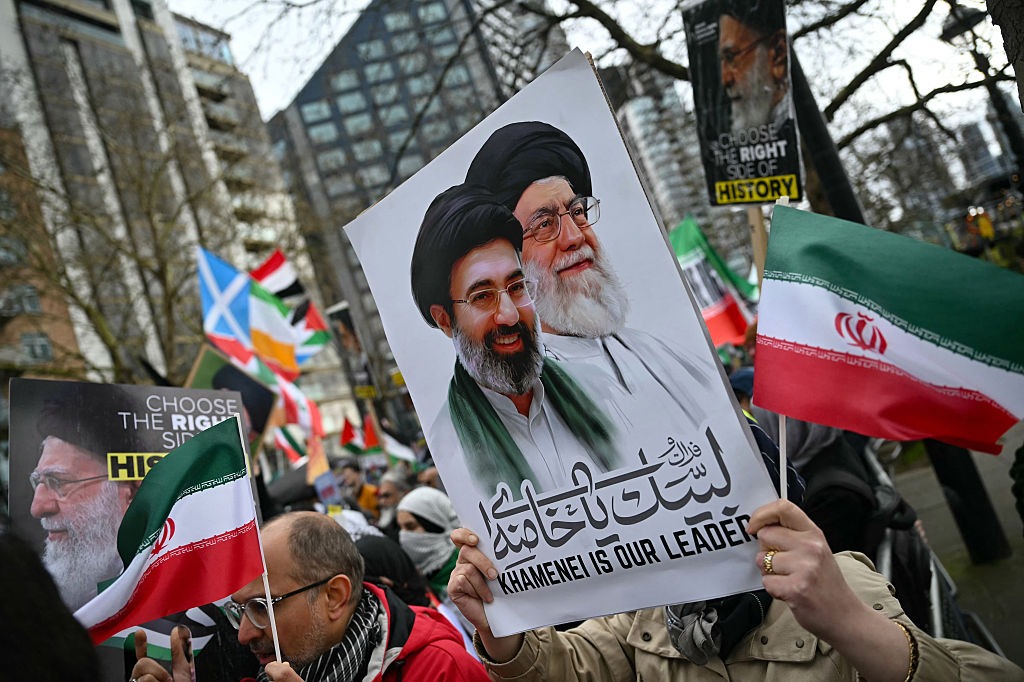
Hatred of Israel and Jews, doctrinally imposed by the Qur’an and the hadith, is deeply entrenched within Muslim communities in Western Europe, and accommodated by much of non-Muslim society there. Almost all antisemitic acts in Britain are carried out by radicalized Muslims, yet it has become a problem to state that openly. Britons who question Muslim antisemitism are accused of “stirring up racial or religious hatred.” Pictured: A demonstration supporting the Iranian regime in its war against Israel and the US, in central London on March 15, 2026. (Photo by Justin Tallis/AFP via Getty Images)

London. Sunday, May 10. A protest against rising anti-Semitism is organized in front of the prime minister’s residence. About 20,000 people are present, mostly Jews. Secretary of State for Work and Pensions Pat McFadden, who addressed them, was jeered and booed. “I feel your pain,” he told the crowd. The reply was, “Action, no more words.”

When British Prime Minister Keir Starmer, a few days before the protest, visited Golders Green, a heavily Jewish area of London where two Jews had been stabbed on April 29, he was greeted with chants of “Keir Starmer, Jew Harmer.”

Jews in the United Kingdom are no longer safe. The year 2025 saw 3,700 anti-Semitic incidents recorded — approximately ten a day. By the end of 2026, it looks as if the figures will be at least as high. In 2023, the figures were even higher. The massacre of thousands of Israelis by the terrorist group Hamas on October 7, 2023 triggered an explosion of attacks on Jews in the United Kingdom.

Violent attacks against Jews and Jewish institutions in London are on the rise. On March 23, an arson attack destroyed four ambulances belonging to a Jewish volunteer emergency medical service, Hatzola Northwest. On April 18, the Kenton United Synagogue in northwest London was firebombed. On April 29, there were the stabbings in Golders Green.

Jewish children are harassed on their way to school. It is dangerous to display any Jewishness. Men hide their skullcaps and women conceal the Star of David pendants they wear.

“London has become a no-go zone for Jews,” UK Commissioner for Countering Extremism Robin Simcox said on March 8.

What is happening in London is happening throughout the UK, wherever Jewish communities exist. On October 2, 2025 — during the Yom Kippur holiday — a 35-year-old Syrian, Jihad Al-Shamie, plowed his car into a gathering of Jews who had come to pray at a synagogue in Manchester, then began slashing and stabbing them, and finally tried to force his way into the synagogue. He left two dead and three wounded.

Almost all antisemitic acts in Britain are carried out by radicalized Muslims, yet it has become a problem to state that openly. Britons who question Muslim antisemitism are accused of “stirring up racial or religious hatred.”

After every attack, the British government, along with other political leaders, take great care to condemn antisemitism. They also take great care each time to avoid saying who the perpetrators are. Their condemnations therefore amount to empty words. If you do not identify the source of the Jew-hate, how can you combat it?

Hatred of Jews, of course, goes hand in hand with hatred of Israel. It is a sentiment shared by a large segment of the UK population.

Starmer, who, a few years ago, claimed to have purged antisemites and anti-Israel elements from the Labour Party – and for five minutes appeared to be a friend of Israel — now sharply criticizes country as well as its democratically elected government.

In July 2025, on behalf of the United Kingdom, Starmer agreed to the publication of a communiqué — also signed by 28 other countries — falsely accusing Israel of depriving Palestinians of “human dignity” and perpetrating the “inhumane killing of civilians.” The communiqué was – no surprise — exploited by all of Israel’s enemies, particularly those also falsely accusing Israel of genocide.

Starmer was just warming up. As if that were not odious enough, Starmer went on, in the name of the UK, officially to recognize a non-existent “State of Palestine.”

In the words of Zoheir Mohsen, wo was a senior Palestine Liberation Organization official from 1971-1979:

“The Palestinian people does not exist. The creation of a Palestinian state is only a means for continuing our struggle against the state of Israel for our Arab unity. In reality, today there is no difference between Jordanians, Palestinians, Syrians and Lebanese. Only for political and tactical reasons do we speak today about the existence of a Palestinian people, since Arab national interests demand that we posit the existence of a distinct Palestinian people to oppose Zionism.

“For tactical reasons, Jordan, which is a sovereign state with defined borders, cannot raise claims to Haifa and Jaffa, while as a Palestinian, I can undoubtedly demand Haifa, Jaffa, Beer-Sheva and Jerusalem. However, the moment we reclaim our right to all of Palestine, we will not wait even a minute to unite Palestine and Jordan.”

Starmer recognized this fictitious “State of Palestine” even as Hamas still held power and hostages in Gaza. His weakness cannot be overstated.

He was — along with the current leaders of France, Belgium, Ireland, Spain, Norway and Sweden — just among the too many countries also recognizing an imaginary Palestinian State.

Stamer was also quick to declare on April 1, “This is not our war” — as if Iran’s pursuit of nuclear weapons and the threats through terrorism that the Iranian regime poses to the West are not matters of concern to the UK. Starmer must surely be aware that at least one Iranian group — Harakat Ashab al-Yamin al-Islamia (HAYI) — is directly responsible for numerous antisemitic attacks in the country. Starmer has never publicly condemned HAYI or any similar group.

Starmer further sought to deny the U.S. Air Force access to the joint US-UK airbase on Diego Garcia and RAF Fairford in Gloucestershire. His consent included the pitiful stipulation that the bases should be used for “defensive” missions only.

Several countries in Europe — Spain, Italy, France, and Austria — also barred U.S. Air Force aircraft from using their bases and airspace.

Many in the UK now see that unless a course correction is undertaken — and fast –, the country is facing an extremely bleak future. British civilization itself appears positioned to perish.

On March 10, 2025, a protest march was organized by political activist Tommy Robinson — one of the very few people in England consistently to speak out on behalf of the tens of thousands of British children who have been raped and trafficked by gangs of “Asian” migrants (a euphemism for Pakistani as well as others).

On May 16, 2026, Robinson organized a “Unite the Kingdom” march, which drew another massive crowd — tens of thousands. Starmer claimed that Robinson and those who work with him peddle “hatred and division.”

The day before the march, Starmer announced that “We’ve already blocked visas for far-right agitators who want to come here to spew their extremist views,” — but not, of course, for potential rapists.

The local elections on May 7 — described in several British newspapers as an unofficial referendum on Starmer — were a disaster for Starmer’s Labour Party — and a huge victory for Reform UK, the anti-immigration party created in 2018 as the “Brexit Party” by Nigel Farage. Labour lost more than 1,100 of the 2,300 council seats it had held. It also lost control of 35 councils it had held for decades. Reform UK won more than 1,400 council seats and gained control of 14 councils.

After such a rout, it was expected that Starmer would resign. So far, he has chosen to remain in his post. Four members of the British government, however, did resign; more than 80 Labour MPs urged him to quit.

The next elections for parliament are scheduled for 2029. If the government falls before then, elections would be held sooner. If they were held today, Reform UK would likely win, accompanied by a recovery of the endlessly mismanaged country (such as herehere and here).

Meanwhile, Muslims continue to enter the UK, both legally and illegally. As their population continues to grow, they have been integrating less and less. Many appear to have come not only for employment opportunities and welfare benefits, but also to transform Great Britain into a country indistinguishable from the ones they left.

Some people might call that imperialism. The Portuguese and Spanish displaced the cultures of South America; England tried to bring its customs to its colonies, and so on. At the time, the countries overtaken did not have the means to stop these invasions. Today’s Britons are not Aztecs.

There are now officially almost four million Muslims in the UK (6% of the population). In 2001, there were only 1.59 million Muslims in the country (2.7% of the total population).

A Pew Research Center study estimated that under just a “medium” migration scenario, the Muslim population in the UK by 2050 could be around 16.7%–17.2%, approximately 13–13.5 million people.

Jews continue to leave Britain. According to the Institute for Jewish Policy Research, there are 313,000 Jews left in the UK (0.4% of the population), and the number falls every year.

The problem, in addition to the sharp shift in demographics, is also one of determination. In 404 BCE, it took only 30 men working on behalf of Sparta to bring down Athens, one of the great foundational civilizations of Western culture.

Even among non-radicalized Muslims, there is widespread acceptance of Sharia practices, such as the continual cover-up of sexual abuse crimes. There has been a consistently permissive attitude toward rape gangs by the police, the government and the judiciary — all of whom are apparently terrified of being labeled racist. There has also been an increasing suppression of free speech — the cousin of blasphemy laws — as well as the rejection of Judeo-Christian traditions, such as Christmas, and a subversion of common law (such as finding that terrorists just have “mental health” problems. All this has been accompanied by a rise in hatred of Jews, of Israel, and of the culture of the West.

Meanwhile, the British economy continues to fall. The official unemployment rate is low, 4.9%. Mostly people seem to be exiting the labor market and becoming economically inactive, apparently content to live off welfare benefits and “free stuff.” Almost 14 million British citizens (21% of the population) live in poverty, have an income below 60% of the national median, and struggle to afford food, housing and essential services.

As in the UK, the economies of most Western European countries are in decline. In 2000, the member states of the European Union collectively accounted for 20% of global GDP. By 2024, they represented only 15.2 %.

The birthrate among Muslim women everywhere in Western Europe is far higher than the birth rate among non-Muslim women.

In France, the birthrate is 1.56. In Germany, 1.35. In Italy, 1.14, and in Spain, 1.10.

The birthrate in the United Kingdom has also been falling. It is now 1.41 children per woman, well below the replacement level of 2.1. The birthrate among Muslim women is far higher. In the UK, even if polygamy is not allowed, a Muslim man’s extra wives receive extra welfare benefits. If the polygamous marriage took place overseas, you see, that makes it all right. There are reports that sometimes each of the four wives has her own house — presumably at the British taxpayers’ expense.

What is happening in the United Kingdom is also happening throughout Western Europe — and has established a foothold in the United States.

In France, antisemitic acts may not be as frequent as in the United Kingdom, yet they remain common: 1,320 incidents recorded in 2025—more than 3.5 each day. Jews in France make up slightly less than 1% of the population, yet, year after year, they are the victims of more than 50% of all anti-religious hate crimes.

In Belgium, the Jewish population is even smaller — fewer than 30,000 — but the number of antisemitic incidents nevertheless jumped from 57 in 2022 to 277 in 2024, a more than fourfold increase. A survey conducted in 2024 for the European Jewish Congress showed that many Belgians apparently do not even consider it antisemitic to scrawl graffiti on a synagogue, or to insult or threaten a Jew or person thought to be a “Zionist”: 22% of respondents said they regarded such acts to be understandable, acceptable and legitimate.

In Germany, the Jews account for less than 0.2 percent of the total population, yet suffer a disproportionate number of anti-religious attacks – also on an upward trend: from 1,824 antisemitic attacks recorded in 2024 to 2,267 in 2025.

The same pattern can be seen across all of Western Europe. For years, virtually all antisemitic acts — as in the United Kingdom – have been perpetrated by radicalized Muslims. Again, most Western European politicians condemn “antisemitism” but without mentioning who the perpetrators are.

Hatred of Israel and Jews, doctrinally imposed by the Qur’an and the hadith, is deeply entrenched within Muslim communities in Western Europe, and accommodated by much of non-Muslim society there.

Every current Western European leader, just like Starmer, has stated — in varying terms —that the war in Iran is “not their war.”

Lately in Western Europe, political parties with platforms like that of the right-of-center Reform UK are gaining ground. Several appear poised to win elections. They see — and say aloud — that in Europe, Western civilization could die. They are calling for national renewal.

The governments of some Central European countries — Poland, Hungary, the Czech Republic, Slovakia — have adopted a firm stance against immigration — for which the European Union thoroughly excoriated them. Hungary experienced being occupied by the Ottoman Empire for nearly 200 years. Former Prime Minister Viktor Orbán — who just lost an election — did not want to see another Islamic occupation.

Central Europe still has one of the world’s lowest Muslim populations (roughly between 0.1% and 1% of the total population). Jews living there face virtually no violent antisemitic attacks. Central Europe, however, is also seeing declining birthrates. In the Czech Republic, it fell to 1.28 children per woman. In Hungary, it now stands at 1.31; in Poland, the figure is 1.1.

Is saving Europe still possible? If the political parties that are seeking to preserve Western civilization prevail, probably yes — but time is just about up.


Dr. Guy Millière, a professor at the University of Paris, is the author of 27 books on France and Europe.


Zawartość publikowanych artykułów i materiałów nie reprezentuje poglądów ani opinii Reunion’68,
ani też webmastera Blogu Reunion’68, chyba ze jest to wyraźnie zaznaczone.
Twoje uwagi, linki, własne artykuły lub wiadomości prześlij na adres:
webmaster@reunion68.com


Arab Israeli Terrorist Kills One, Wounds Five in Multi-Site Shooting Attack Across Central Israel


Arab Israeli Terrorist Kills One, Wounds Five in Multi-Site Shooting Attack Across Central Israel

Debbie Weiss


Israeli emergency personnel work at the scene of what Israeli police say was a series of shooting attacks in central Israel, June 7, 2026. Photo: REUTERS/Ronen Zvulun

An Arab Israeli terrorist killed a 35-year-old man and wounded five others in a rolling shooting attack across several central Israeli communities on Sunday before security forces shot him dead and police arrested another man suspected of helping him, Israeli authorities and first responders said.

The attacker identified by security officials, Omar Yassin, 21, opened fire near Kochav Yair, Tzur Yitzhak, and Tzur Natan, a cluster of communities north of Tel Aviv and close to the security barrier separating Israel from the West Bank. Police and the military said he used a makeshift “Carlo” submachine gun and drove a vehicle with Israeli plates that was on the road illegally.

Emergency medics reported six casualties across three shooting scenes: a man of about 35 who was fatally wounded on the road near Tzur Natan. Another man in his 40s, a reservist who was also the community’s security coordinator, was seriously hurt at the same location. A third man was seriously wounded at a gas station near Kochav Yair, and three people were listed in moderate condition, including a second man at the gas station and a 31-year-old man and 61-year-old woman shot at the entrance to Tzur Yitzhak. 

The victim was named as Haim Kalomiti, 55, a Tzur Natan resident and regional defense reservist in the Ephraim Regional Brigade.

A picture of Haim Kalomiti.

As the attack unfolded, sirens sounded in nearby communities warning residents of a possible terrorist infiltration. People in Tzur Natan and Tzur Yitzhak were instructed to lock themselves inside their homes while police, soldiers, and local security teams searched the area

The terrorist then drove toward Sal’it, an Israeli community in the West Bank, and fired at the entrance. The community’s security coordinator returned fire, and the attacker fled. No injuries were reported there. 

Security forces later caught up with the attacker in his hometown of Taibeh nearby and shot him dead. Police said they recovered the vehicle and weapon used in the attack. The Israel Defense Forces reported troops were deployed to the scenes of the shootings and nearby areas, while forces also carried out searches and imposed closures around several Palestinian villages near the attack zone.

Police initially said the terrorist appeared to have acted alone, but later announced the arrest of a second suspect, a man in his 20s from the same city as the attacker. According to police, officers received intelligence that the man had allegedly admitted involvement in the attack while looking for help hiding from law enforcement. Police said he tried to stab detectives with a broken glass bottle during the arrest and was subdued without any officers being wounded.

Prime Minister Benjamin Netanyahu held a security assessment after the attack.

“This morning, a heinous terrorist went out, reached Kochav Yair, and unfortunately managed, before being eliminated, to murder an Israeli citizen and injure others,” Netanyahu said, praising the officers who stopped the attacker.

President Isaac Herzog said he was “shocked by the horrific terror attack,” and offered condolences to the family of the murdered man and prayers for the wounded.

The attack drew immediate political response in Israel, particularly because the terrorist was an Arab Israeli citizen. Police Commissioner Danny Levy said the attacker had a criminal record but was not known to the security establishment as a terror suspect. Israeli media reported that security forces carried out raids in Taibeh, an Arab Israeli town, as part of the investigation.

Kochav Yair council head Hila Hakmon said the attack underscored the demands of Israeli communities along the security barrier for more funding since Hamas’s Oct. 7, 2023, massacre in southern Israel.

“Unfortunately, the changes in the security elements over the past two years are relatively marginal,” she told Army Radio. “We got some kind of funding from the army, but it’s a drop in the bucket compared to what is needed here, and the proof is what happened today.”

Hamas praised the shooting but did not claim responsibility. The terrorist group described the attack as a response to Israel’s “crimes of Judaization, extrajudicial killings, settlement expansion and raids,” in Gaza and the West Bank, according to Israeli reports.

The attack came amid heightened Israeli security concerns along the security barrier and in mixed Arab-Jewish areas inside Israel, where police have also been contending for years with widespread illegal weapons tied to organized crime.

Israeli officials said the investigation was continuing, including whether the arrested suspect had an operational role in the attack or helped the terrorist after the shootings began.


Zawartość publikowanych artykułów i materiałów nie reprezentuje poglądów ani opinii Reunion’68,
ani też webmastera Blogu Reunion’68, chyba ze jest to wyraźnie zaznaczone.
Twoje uwagi, linki, własne artykuły lub wiadomości prześlij na adres:
webmaster@reunion68.com