Archive | July 2026

ICC Chief Prosecutor Removed From Office Amid Sexual Misconduct Scandal


ICC Chief Prosecutor Removed From Office Amid Sexual Misconduct Scandal

Corey Walker


International Criminal Court Prosecutor Karim Khan speaks during an interview with Reuters in The Hague, Netherlands, Feb. 12, 2024. Photo: REUTERS/Piroschka van de Wouw

Member states of the International Criminal Court voted on Friday to remove chief prosecutor Karim Khan from office after finding that he had committed serious misconduct and a serious breach of duty, an unprecedented decision that comes as the court faces mounting scrutiny over its handling of the Israel-Hamas war and its internal governance.

Eighty-two of the court’s 125 member states voted to dismiss Khan during a special session of the ICC’s governing body, the Assembly of States Parties, at United Nations headquarters in New York. It marked the first time in the court’s history that a sitting chief prosecutor had been removed from office.

Khan, who has denied wrongdoing and said he will challenge the decision, was accused of engaging in an inappropriate sexual relationship with a junior lawyer in his office and attempting to prevent her from pursuing allegations against him. The disciplinary proceedings followed an 18-month UN investigation into allegations of sexual misconduct involving the aide.

“The assembly decided by a majority of 82 states parties that the elected official, prosecutor Karim Khan, committed serious misconduct and a serious breach of duty … and to remove … Karim Khan from office,” Päivi Kaukoranta, president of the Assembly of States Parties, said after the vote.

Khan’s lawyers described the proceedings as unlawful and unfair and said he would contest his dismissal through all available legal mechanisms.

The unprecedented decision comes as the ICC remains at the center of an international controversy over its pursuit of Israeli leaders. The court has faced intense criticism from Israel and the United States, neither of which is a party to the Rome Statute, over allegations that it has unfairly singled out the Jewish state while applying inconsistent standards to other conflicts.

On Nov. 21, 2024, an ICC pretrial chamber issued arrest warrants for Israeli Prime Minister Benjamin Netanyahu and then-Defense Minister Yoav Gallant for alleged war crimes and crimes against humanity in Gaza. The judges said there were reasonable grounds to believe the two Israeli leaders bore criminal responsibility for the war crime of starvation as a method of warfare and the crimes against humanity of murder, persecution, and other inhumane acts.

Israel has vehemently rejected the allegations, arguing that the court lacks jurisdiction, that Israel has facilitated large quantities of humanitarian assistance into Gaza, and that the warrants distort the conduct of a democratic country defending itself against a terrorist organization.

The court also issued a warrant that day for Hamas military commander Mohammed Diab Ibrahim al-Masri, better known as Mohammed Deif, over alleged crimes committed during and after the Hamas-led massacre across southern Israel on Oct. 7, 2023. The court withdrew Deif’s warrant in February 2025 after receiving evidence that he had been killed.

US and Israeli officials fiercely condemned the warrants, accusing the court of drawing a false moral equivalence between Israel’s democratically elected leaders and the commanders of Hamas, the Palestinian terrorist organization that launched the war with its Oct. 7 attack.

Although Khan’s removal represents a major institutional setback for the court, it will not invalidate its existing cases or arrest warrants. Warrants are issued and withdrawn by ICC judges, not by the prosecutor acting alone, meaning those against Netanyahu and Gallant remain in force unless the judges decide otherwise.

“Khan thought his political witch hunt against Israel and outrageous arrest warrants would distract from serious sexual misconduct allegations. He was wrong,” Danny Danon, Israel’s ambassador to the United Nations, wrote on social media following the vote.

The scandal has intensified broader questions about the ICC’s credibility and governance. Critics argue that the court’s work has become increasingly politicized and that its pursuit of officials from democratic US allies has undermined confidence in its impartiality. Supporters maintain that the court must investigate alleged war crimes regardless of the identity or political alignment of those accused.

The United States has sharply criticized the ICC’s actions, arguing that the court threatens national sovereignty by asserting authority over citizens of countries that have not joined the Rome Statute.

Earlier this month, US Secretary of State Marco Rubio announced a sweeping diplomatic campaign aimed at dismantling the ICC, accusing it of “waging a war against our country, not with bullets or missiles,” but through “the force of so-called international law.”

The State Department said the initiative would involve a “whole-of-government response” intended to systematically impair the court’s ability to operate. It also said countries that reject US objections to the ICC while relying on American assistance could face heightened scrutiny.

Following Khan’s removal, State Department spokesperson Tommy Pigott welcomed the outcome but said it would not alter the administration’s broader campaign against the court.

“He is only one small cog in this irredeemably corrupt institution,” Pigott said. “Today’s outcome will have no impact on the United States’ plans to dismantle the ICC.”

In a separate development on Friday, Venezuela formally notified the United Nations of its decision to withdraw from the ICC, alleging that the court has displayed a geographical bias against countries in the Global South.

“Venezuela considers that the court’s actions reflect a demonstrated geographical bias, which has disproportionately concentrated its work on African and Latin American countries, to the detriment of the Global South,” Venezuelan Foreign Minister Félix Plasencia said in a statement.

Venezuela’s withdrawal will not take effect immediately. Under the Rome Statute, it becomes effective one year after the United Nations receives formal notification. Withdrawal also does not terminate a country’s obligations concerning investigations or proceedings that began before its departure took effect.

Khan’s dismissal leaves the court confronting two major challenges simultaneously: restoring confidence in its leadership following the misconduct findings and defending its legitimacy amid growing international opposition to some of its most politically sensitive investigations. The removal also immediately begins the process of choosing a new prosecutor, although a successor is not expected to be elected until next year.


Zawartość publikowanych artykułów i materiałów nie reprezentuje poglądów ani opinii Reunion’68,
ani też webmastera Blogu Reunion’68, chyba ze jest to wyraźnie zaznaczone.
Twoje uwagi, linki, własne artykuły lub wiadomości prześlij na adres:
webmaster@reunion68.com


Trump do Saudyjczyków: Umowa nuklearna tylko jeśli uznacie Izrael

Prezydent USA Donald Trump (Fot. REUTERS/Jonathan Ernst)


Trump do Saudyjczyków: Umowa nuklearna tylko jeśli uznacie Izrael

Marta Urzędowska


Donald Trump doprecyzował, że porozumienie nuklearne zawarte w ostatnich dniach z Saudami zależy od uznania przez Rijad państwa Izrael. Jednocześnie w regionie nie ustaje eskalacja – Amerykanin zagroził właśnie Iranowi kolejnym “masywnym atakiem”

Porozumienie nuklearne Waszyngton-Rijad w ostatnią środę (22.07) zostało podpisane przez ministrów ds. energii obu krajów – Chrisa Wrighta i Abd al-Aziza bin Salmana. W dalszej kolejności miało trafić do zatwierdzenia przez Kongres.

Biały Dom: Trump powtarzał Saudom, że muszą uznać Izrael

Następnego dnia Trump dorzucił nowy warunek ostatecznego zatwierdzenia dealu, stwierdzając w swoim serwisie społecznościowym Truth Social, że porozumienie „totalnie zależy od tego, czy Arabia Saudyjska przyłączy się do szanowanych i bardzo udanych Porozumień Abrahama”, czyli serii układów z 2020 r., w których kraje arabskie – Bahrajn, Zjednoczone Emiraty Arabskie, Maroko i Sudan – uznały państwo Izrael.

Ogłaszając zawarcie porozumienia w ostatnią środę, Trump nie wspomniał o takim warunku, choć samo jego postawienie stawia cały układ pod znakiem zapytania. Saudyjczycy wykluczają dziś nawiązanie relacji z Izraelem bez sformułowania jasnego planu utworzenia w przyszłości państwa palestyńskiego.

Jak opisuje „New York Times”, Karoline Leavitt, rzeczniczka Białego Domu spytana na konferencji prasowej dlaczego wcześniej nie wspomniano o tak kluczowym warunku, odpowiedziała, że to prezydent „ostatecznie podejmuje decyzje”. Dodała, że Trump „przy wielu okazjach” wspominał, że Saudowie powinni przystąpić do Porozumień Abrahama.

– Jeśli tego nie zrobią, dealu nie będzie – dodała.

Trump wraca do stanowiska Bidena? Wcześniej deal budził kontrowersje

Choć Biały Dom do dziś nie opublikował treści nuklearnego porozumienia z Saudami, „Wall Street Journal” i „New York Times” pisały jeszcze przed podaniem informacji o jego podpisaniu, że wart dziesiątki miliardów dolarów deal, zawarty na 30 lat, daje Rijadowi możliwość wzbogacania paliwa do reaktorów, a w dalszej perspektywie – rozpoczęcia prac nad bronią nuklearną.

Choć kluczowym punktem porozumienia jest możliwość zbudowania ośrodka wzbogacania uranu, w swoim wpisie w Truth Social Trump dorzucił – nie wyjaśniając szczegółów – że „nie będzie żadnego wzbogacania!”. Kontrowersje w sprawie umowy budził fakt, że do monitorowania realizacji porozumienia i ośrodka wzbogacania nie mieli być dopuszczeni inspektorzy Międzynarodowej Agencji Energii Atomowej.

Informacja o porozumieniu, które wydawało się ostatecznie zatwierdzone, nie spodobała się Izraelczykom. Poprzednio dyskusje o porozumieniu nuklearnym z Saudami, prowadzone jeszcze przez administrację Joe Bidena, zawsze były uzależnione od uznania Izraela. Choć kilka lat temu wydawało się, że nie jest to wykluczone, w 2023 r. w regionie wybuchła wojna rozpoczęta atakiem Hamasu na izraelskie terytoria, w którym zginęło 1,2 tys. osób. W odwecie Izrael zabił ponad 70 tys. Palestyńczyków, co mocno popsuło wizerunek tego kraju w krajach arabskich i uniemożliwiło wszelkie dyskusje o nawiązywaniu z nim relacji.

Dziś, stawiając warunek uznania Izraela przez Saudów, Trump wyraźnie wraca do polityki Bidena.

Netanjahu: Uznanie przez Saudów Izraela byłoby krokiem w stronę pokoju

Doniesienia o nowym warunku postawionym przez Trumpa chwalą Izraelczycy. „Jak wspomniał prezydent Trump, przystąpienie Arabii Saudyjskiej do Porozumień Abrahama byłoby historycznym krokiem naprzód dla pokoju na Bliskim Wschodzie” – stwierdził w oświadczeniu izraelski premier Benjamin Netanjahu.

Izraelczyk nawiązał też do trwającej na Bliskim Wschodzie wojnie USA i Izraela z Iranem, rozpoczętej izraelsko-amerykańską agresją pod koniec lutego b. roku.

„Połączona operacja wojskowa Ameryki i Izraela wymierzona w ludobójczy reżim w Teheranie i stłamszenie przez Izrael irańskiej osi terroru, stworzyły możliwość poszerzenia koła pokoju” – zapewnia Netanjahu.

Jeszcze zanim opublikowano doniesienia, że umowa USA-Arabia Saudyjska nie jest pewna, pojawiały się głosy, że dyskutowanie o ważnym nuklearnym porozumieniu w sytuacji, kiedy Bliski Wschód pogrążony jest w konfliktach, to błąd.

Wojna USA – Iran. Irańczycy odrzucają propozycję rozejmu

Póki co nie zanosi się na uspokojenie sytuacji w regionie. Po rozejmie zawartym w kwietniu i przedłużonym o dwa miesiące w czerwcu, już nie ma śladu. Amerykanie już trzynastą noc z rzędu bombardowali cele wojskowe w Iranie.

Jak podaje amerykańskie dowództwo w regionie, zaatakowano m. in. magazyn dronów na wybrzeżu, by utrudnić Irańczykom atakowanie cywilnych statków płynących cieśniną Ormuz – korytarza transportu ropy naftowej blokowanego przez Iran w ramach odwetu na USA i Izraelu.

Irańskie media podają, że amerykańskie pociski uderzyły też w prowincji Chuzestan, w południowo-zachodnim Iranie.

Jednocześnie pojawiła się informacja, że Irańczycy odrzucili przekazaną za pośrednictwem premiera Iraku Alego az-Zajdiego, nową propozycję zawieszenia broni. Główny negocjator Iranu Mohammad Bagher Galibaf, cytowany w lokalnych mediach, stwierdził, że „nie są potrzebni kolejni mediatorzy”.

– Problemem nie jest przekazywanie wiadomości, problemem jest podejście Ameryki – skwitował.

Trump: Rozważam masywny atak na Iran

Prezydent USA nie kryje frustracji. W czwartkowej rozmowie z portalem Axios ponownie sypie pogróżkami pod adresem Irańczyków.

– Rozważam masywny atak, większy niż kiedykolwiek wcześniej. Jestem blisko podjęcia decyzji, jesteśmy na to gotowi – zapowiedział Trump.

Dodał też, że „Izrael przyłączy się w dwie minuty, jeśli o to poprosi”, ale uściślił jednocześnie, że Amerykanie „nikogo nie potrzebują”.

Sytuacją w regionie niepokoi się ONZ. Sekretarz Generalny Antonio Guterres przestrzegł w czwartek Radę Bezpieczeństwa, że Bliski Wschód spychany jest „na krawędź tego, co niewyobrażalne”.

– Sytuacja wymyka się spod kontroli, region wciągany jest w poszerzający się cykl konfrontacji, jeden kryzys napędza kolejne, jedna eskalacja następną – wyliczał.


Zawartość publikowanych artykułów i materiałów nie reprezentuje poglądów ani opinii Reunion’68,
ani też webmastera Blogu Reunion’68, chyba ze jest to wyraźnie zaznaczone.
Twoje uwagi, linki, własne artykuły lub wiadomości prześlij na adres:
webmaster@reunion68.com


Hamas’s New Leader, Same Old Jihad


Hamas’s New Leader, Same Old Jihad

Khaled Abu Toameh


  • The election is… evidence that efforts to remove Hamas from power have failed.
  • Instead of discussing disarmament, Hamas is discussing succession. Instead of preparing to relinquish power, it is choosing who will govern.
  • Terrorist organizations do not negotiate themselves out of existence.
  • Al-Hayya was Sinwar’s closest associate. He served as Sinwar’s deputy. He helped shape Hamas policy before and after October 7. After the massacre, al-Hayya praised October 7 as “a source of pride for our people… to be passed down from generation to generation.”
  • The election sends a clear message throughout the Middle East: The Iran-led “Axis of Resistance” remains intact.
  • It also explains why al-Hayya’s first public remarks as Hamas leader included thanks to Iran, Hezbollah, the Houthis in Yemen, and the Iraqi Shiite militias. His loyalties are clear.
  • The continued protection afforded to Hamas leaders by terrorist-sponsoring “friends” of Trump, such as Qatar, Turkey and Pakistan, undermines international efforts to combat terrorism.
  • The people paying the highest price remain the Palestinians living in the Gaza Strip. Instead of rebuilding homes, reconstructing schools, restoring hospitals, and creating jobs, Hamas is holding leadership elections. Its priorities could not be clearer. Its leaders are busy securing their own political future while ordinary Palestinians continue living amid destruction.
  • The election of al-Hayya should finally end the fantasy that Hamas may evolve into a political movement willing to coexist peacefully with Israel. It should also end the illusion that negotiations alone will persuade Hamas to disarm.
  • Allowing Hamas to survive politically after October 7 would send a message to terrorist organizations and the Iranian regime: that committing mass murder carries no lasting consequences, and that even after one of this century’s worst terrorist atrocities, its perpetrators can simply elect a new leader and carry on as before.

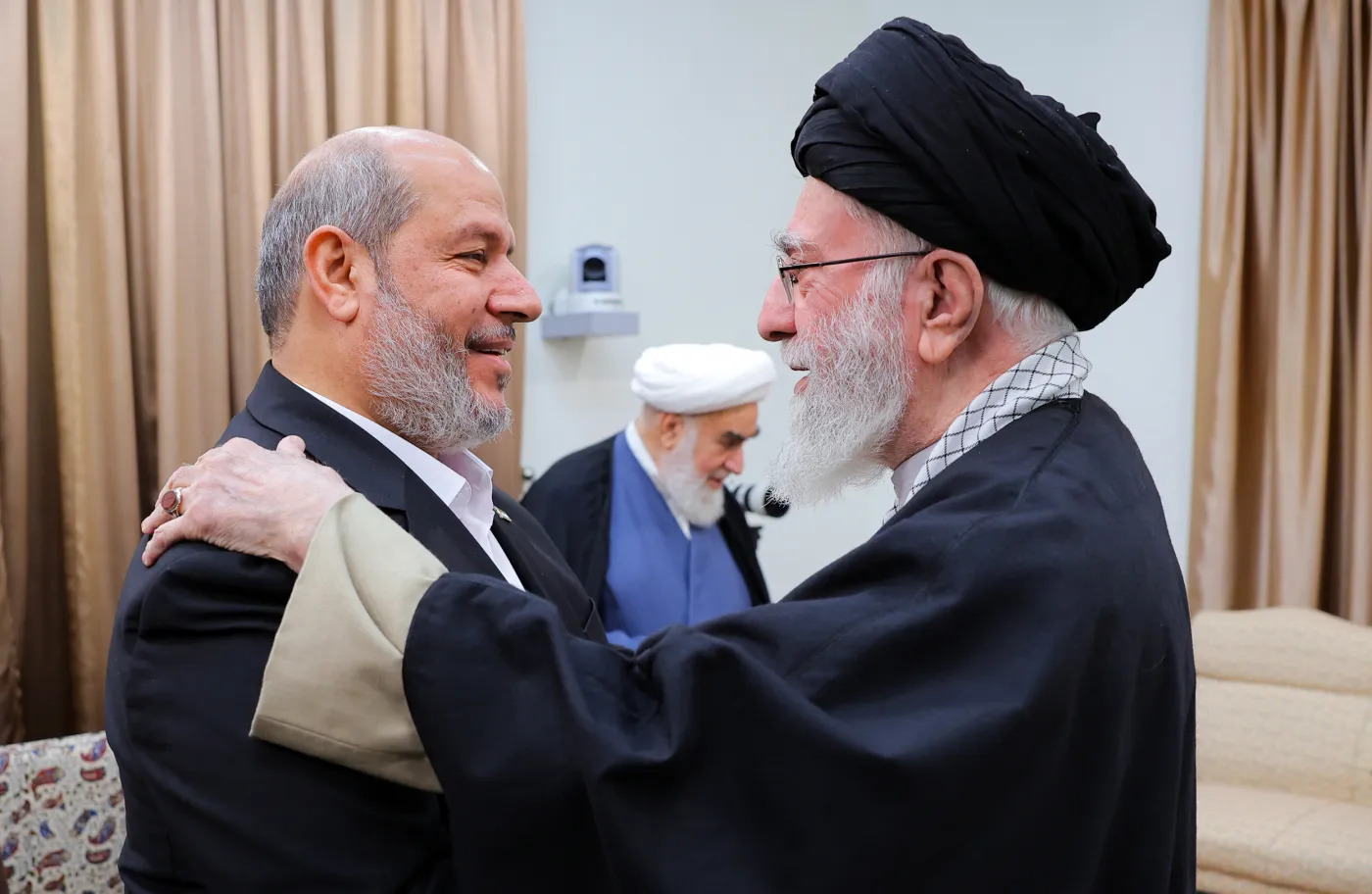
Hamas’s election of Khalil al-Hayya demonstrates that the terrorist group remains sufficiently organized to manage internal political affairs while continuing to rule much of the Gaza Strip and dictate the lives of more than two million Palestinians. Pictured: Al-Hayya meets with Iran’s then Supreme Leader Ayatollah Ali Khamenei in Tehran on February 8, 2025. (Image source: Office of the Iranian Supreme Leader)

Nearly three years after the October 7, 2023 massacre – the deadliest attack against Jews since the Holocaust – the Iran-backed terrorist group Hamas has calmly elected a new head of its “Political Bureau.”

This simple fact should alarm everyone who believed that the terrorist organization had been defeated or dismantled.

Organizations that have been defeated do not hold orderly leadership elections. Organizations that have ceased to exist do not choose successors, debate candidates, and prepare for the future. Hamas does.

Its election of Khalil al-Hayya demonstrates that the terrorist group remains sufficiently organized to manage internal political affairs while continuing to rule much of the Gaza Strip and dictate the lives of more than two million Palestinians.

The election is therefore not merely an internal Hamas matter. It is evidence that efforts to remove Hamas from power have failed.

Instead of preparing to surrender its weapons or dissolve itself after the atrocities of October 7, Hamas is preparing for its future. Holding internal elections means that Hamas expects to remain a permanent player in Palestinian politics.

This completely contradicts any expectation that Hamas will eventually disappear from the Gaza Strip. More than seven months after US President Donald J. Trump’s 20-point peace plan called for the demilitarization of the Gaza Strip, the terrorist group remains intact.

Instead of discussing disarmament, Hamas is discussing succession. Instead of preparing to relinquish power, it is choosing who will govern.

The election of al-Hayya also exposes the failure of current American strategy. For months, the Trump Administration and its “Board of Peace” have continued believing that negotiations could somehow persuade Hamas to disarm voluntarily. What has happened is the opposite.

Hamas never intended to disappear. It never intended to surrender its weapons. It never, as its internal election proves, intended to leave the Gaza Strip. Terrorist organizations do not negotiate themselves out of existence.

The assumption that al-Hayya is more pragmatic than his predecessor, the late Yahya Sinwar (the mastermind of the October 7 massacre) is dangerously misleading. Changing from military fatigues to a business suit does not transform a terrorist into a statesman.

Al-Hayya was Sinwar’s closest associate. He served as Sinwar’s deputy. He helped shape Hamas policy before and after October 7. After the massacre, al-Hayya praised October 7 as “a source of pride for our people… to be passed down from generation to generation.”

Those are not the words of a moderate. Al-Hayya has never renounced Hamas’s 1988 charter calling for Israel’s elimination. He also never apologized for the murder, rape, torture and kidnapping of Israeli civilians – and he has consistently rejected demands that Hamas disarm.

His election signals not change but continuity.

Perhaps the biggest winner is Iran’s regime. Al-Hayya has long maintained close relations with the Iranian regime and the Islamic Revolutionary Guard Corps (IRGC). His victory over Khaled Mashaal consolidates the influence of Hamas’s most pro-Iran faction.

Iran, despite repeated declarations that Hamas had been weakened, therefore retains one of its most valuable terrorist proxies. The election sends a clear message throughout the Middle East: The Iran-led “Axis of Resistance” remains intact.

It also explains why al-Hayya’s first public remarks as Hamas leader included thanks to Iran, Hezbollah, the Houthis in Yemen, and the Iraqi Shiite militias. His loyalties are clear.

Another troubling question: Why is al-Hayya still living safely in Qatar? Why do senior Hamas officials continue enjoying sanctuary in Qatar and Turkey? At least 43 American citizens were among those murdered on October 7, while another 12 were taken hostage to the Gaza Strip. Al-Hayya was one of the leaders of Hamas on October 7. Why has Washington not demanded his extradition? If Hamas leaders planned attacks that killed Americans, why are they still free?

The continued protection afforded to Hamas leaders by terrorist-supporting “friends” of Trump, such as Qatar, Turkey and Pakistan, undermines international efforts to combat terrorism.

The people paying the highest price remain the Palestinians living in the Gaza Strip. Instead of rebuilding homes, reconstructing schools, restoring hospitals, and creating jobs, Hamas is holding leadership elections. Its priorities could not be clearer. Its leaders are busy securing their own political future while ordinary Palestinians continue living amid destruction.

Hamas repeatedly insists that Palestinian suffering is a necessary sacrifice. Its leaders celebrate martyrdom while living comfortably abroad. This is precisely the mentality that Sinwar embraced. Al-Hayya has recently echoed the same rhetoric:

“We tell the occupiers that we are the owners of a cause. Neither the killing of our children nor the martyrdom of our leaders will frighten us or instill fear in our hearts.”

The election of al-Hayya should finally end the fantasy that Hamas may evolve into a political movement willing to coexist peacefully with Israel. It should also end the illusion that negotiations alone will persuade Hamas to disarm.

Instead, the election confirms that Hamas remains committed to the same ideology, alliance with Iran, and strategy of perpetual jihad (holy war) that produced the October 7 massacre. A terrorist organization that can calmly elect a new leader nearly three years after committing one of the worst atrocities in modern history is not collapsing. It is adapting.

That is why Hamas has no place in Gaza’s future – not as a government, not as a political party, and certainly not as an armed movement.

Allowing Hamas to survive politically after October 7 would send a message to terrorist organizations and the Iranian regime: that committing mass murder carries no lasting consequences, and that even after one of this century’s worst terrorist atrocities, its perpetrators can simply elect a new leader and carry on as before.


Khaled Abu Toameh is an award-winning journalist based in Jerusalem.


Zawartość publikowanych artykułów i materiałów nie reprezentuje poglądów ani opinii Reunion’68,
ani też webmastera Blogu Reunion’68, chyba ze jest to wyraźnie zaznaczone.
Twoje uwagi, linki, własne artykuły lub wiadomości prześlij na adres:
webmaster@reunion68.com


‘It Was An Honor to Play for Y’all’: NBA Champion Karl-Anthony Towns Attends Jewish Fundraiser


‘It Was An Honor to Play for Y’all’: NBA Champion Karl-Anthony Towns Attends Jewish Fundraiser

Shiryn Ghermezian


New York Knicks NBA player Karl-Anthony Towns speaks during the “Kings of New York’ discussion panel on day 3 of the Fanatics Fest NYC 2026, held at the Javits Center, New York, NY, July 18, 2026. Photos: by Anthony Behar/SipaUSA

New York Knicks center Karl-Anthony Towns attended a fundraiser on Monday night in New York City in support of the Jewish organization Chazaq, which aims to provide Jewish children, particularly those from the Bukharian community, the opportunity to have a Torah education.

The NBA champion and Dominican American athlete addressed attendees and told them it was “an honor to be able to play for y’all and represent what this city is.” He thanked the crowd for welcoming him and allowing him to share a meal with them, and also mentioned his late mother, who died in 2020 from COVID-19, and the values of love that she taught him. At the fundraiser, which took place at Reserve Cut in Manhattan, the Chazaq organization gave Towns a gift promoting its “speak no evil” anti-bullying campaign.

A native of Edison, New Jersey, the athlete’s appearance at the Chazaq fundraiser comes a little more than a month after the Knicks’ NBA championship win on June 13 against the San Antonio Spurs.

In 2023, Towns posted a message on social media in honor of International Holocaust Remembrance Day.


Zawartość publikowanych artykułów i materiałów nie reprezentuje poglądów ani opinii Reunion’68,
ani też webmastera Blogu Reunion’68, chyba ze jest to wyraźnie zaznaczone.
Twoje uwagi, linki, własne artykuły lub wiadomości prześlij na adres:
webmaster@reunion68.com


Cywilne przebranie terroru: Podwójne życie, które media wciąż ignorują


Cywilne przebranie terroru: Podwójne życie, które media wciąż ignorują

Sharon Levy


Od 7 października 2023 roku media niestrudzenie oskarżają Izrael o celowe atakowanie ludności cywilnej.

Tymczasem mimo szeroko zakrojonych działań Izraela mających na celu ograniczenie strat wśród cywilów organizacje terrorystyczne, z którymi walczy, systematycznie dążyły do osiągnięcia odwrotnego skutku. Hamas, Palestyński Islamski Dżihad i Hezbollah głęboko przeniknęły struktury społeczeństwa cywilnego, zawyżając liczbę ofiar i jednocześnie ukrywając wojskową tożsamość wielu zabitych.

Zarówno w Strefie Gazy, jak i w Libanie strategia ta doprowadziła do powstania tego, co badacze określają mianem „społeczeństwa oporu” – systemu, w którym członkowie organizacji terrorystycznych jednocześnie wykonują zawody cywilne, zapewniające im zarówno legitymizację, jak i osłonę operacyjną.

Jednym z najbardziej widocznych przykładów jest dziennikarstwo.

Według doniesień od 7 października w samej Strefie Gazy Siły Obronne Izraela (IDF) zabiły ponad 100 terrorystów działających pod przykrywką dziennikarzy. Tymczasem osoby związane z mediami powiązanymi z Hezbollahem w Libanie są regularnie przedstawiane przez międzynarodowe media jako niewinni cywile lub niezależni reporterzy.

Dowody nie pochodzą jednak wyłącznie od Izraela.

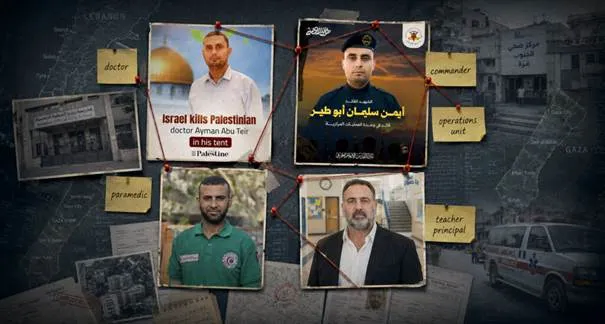
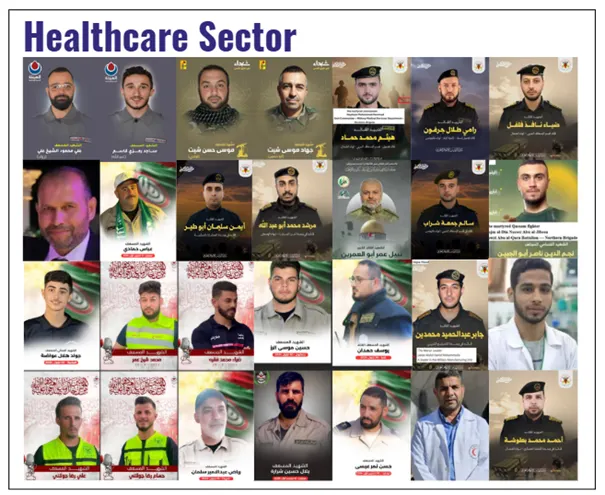
Raz po raz Hamas, Palestyński Islamski Dżihad i Hezbollah publikują plakaty upamiętniające swoich „męczenników”, identyfikując zmarłych nie tylko poprzez ich przynależność wojskową, lecz także wykonywany zawód cywilny. Schemat jest uderzający: terroryści pełniący jednocześnie funkcje lekarzy, nauczycieli, ratowników medycznych, policjantów, prawników, muzyków i dziennikarzy.

Szpitale jako osłona działalności operacyjnej

Relacje międzynarodowych mediów konsekwentnie przedstawiają izraelskie operacje wojskowe prowadzone w pobliżu szpitali jako ataki na cywilną infrastrukturę medyczną. Jednak Hamas i Palestyński Islamski Dżihad wielokrotnie umieszczali swoich członków w tych placówkach, pozbawiając je chronionego statusu cywilnego wynikającego z prawa konfliktów zbrojnych.

Według tych doniesień szpitale w Strefie Gazy funkcjonowały nie tylko jako ośrodki leczenia, lecz także jako centra operacyjne, magazyny broni i osłona dla działalności terrorystycznej. Wiele osób publicznie przedstawianych jako „pracownicy służby zdrowia” zostało później zidentyfikowanych przez same organizacje terrorystyczne jako ich członkowie.

Jednym z najbardziej znanych przykładów jest Marwan Al-Hams, określany jako członek Hamasu, zatrzymany w lipcu 2025 roku w związku z podejrzeniem posiadania wiedzy na temat miejsca przetrzymywania ciała poległego oficera IDF, por. Hadara Goldina. Palestyńskie i propalestyńskie media początkowo przedstawiały jego zatrzymanie jako „uprowadzenie” pracownika medycznego – relacje te w dużej mierze zniknęły, gdy ujawniono jego związki z Hamasem.

Inne udokumentowane przypadki obejmują:

  • Aymana Abu Teira, zidentyfikowanego jako dowódca Palestyńskiego Islamskiego Dżihadu.
  • Khaleda Al-Rakieiego, który kierował strukturami Palestyńskiego Islamskiego Dżihadu w zachodniej części Strefy Gazy, pracując jednocześnie jako lekarz w Szpitalu Dziecięcym Al-Nasr.
  • Murshida Abu Abdullaha, zidentyfikowanego jako dowódca Brygady Chan Junus Palestyńskiego Islamskiego Dżihadu, dyrektora zarządzającego Specjalistycznego Centrum Zdrowia Al-Baraka oraz technika radiologii w szpitalu Al-Szifa w Gazie.
  • Ramiego Talala Mohammeda Jarghouna, dowódcę Jednostki Wsparcia Batalionu Al-Balad Brygady Chan Junus Palestyńskiego Islamskiego Dżihadu oraz kierownika administracyjnego Szpitala Europejskiego w Chan Junus.
  • Najma Abu al-Jibeena, dowódcę Brygad Al-Kassam pracującego jako pielęgniarz.
  • Salema Jumę Ishaqa Sharaba, dowódcę Wojskowej Jednostki Ambulansowej Palestyńskiego Islamskiego Dżihadu w Brygadzie Chan Junus, pielęgniarza w Szpitalu Nasera oraz skarbnika Palestyńskiego Stowarzyszenia Pielęgniarek.
  • Diaę Nafeza Abdulhadiego Felfela, dowódcę Wojskowej Jednostki Ambulansowej Palestyńskiego Islamskiego Dżihadu w Brygadzie Północnej, pielęgniarza i kierownika izby przyjęć w Szpitalu Indonezyjskim na północy Strefy Gazy.

Karetki pogotowia i służby ratunkowe

Ten sam schemat dotyczy ratowników medycznych i służb ratownictwa.

Hezbollah prowadzi własną infrastrukturę medyczną za pośrednictwem Islamskiego Zarządu Zdrowia, którego personel był identyfikowany jako członkowie Hezbollahu.

Według przedstawianych dowodów karetki były wykorzystywane do dyskretnego transportu terrorystów między różnymi lokalizacjami. IDF opublikowały również nagrania przedstawiające broń znajdującą się w ambulansach.

Hamas miał w podobny sposób wykorzystywać karetki. Ibrahim Abu Tzakar, terrorysta powiązany z Hamasem, który uczestniczył w porwaniu izraelskiego cywila, pracował również jako ratownik medyczny.

Od szkolnej ławki do terroryzmu

Podczas gdy Izrael oskarżany jest o „scholastocide” (niszczenie systemu edukacji), coraz więcej materiałów wskazuje na głębokie zakorzenienie organizacji terrorystycznych w infrastrukturze edukacyjnej Strefy Gazy.

Nauczyciele i wykładowcy akademiccy byli wielokrotnie identyfikowani jako członkowie Hamasu, Palestyńskiego Islamskiego Dżihadu lub Hezbollahu. Według doniesień niektórzy nauczyciele związani z UNRWA mieli nawet uczestniczyć w atakach z 7 października.

Do udokumentowanych przykładów należą:

  • Muhammad Ghafour, nauczyciel języka arabskiego w szkole UNRWA i członek Hamasu.
  • Fathi al-Sharif, dowódca Hamasu w Libanie, który jednocześnie przewodniczył tamtejszemu związkowi zawodowemu nauczycieli UNRWA.
  • Dr Riyad Abu Hashish, profesor historii na uniwersytecie, oraz Mahmoud Ahmed Abu Shamala, nauczyciel fizyki – obaj byli wysokimi rangą terrorystami Palestyńskiego Islamskiego Dżihadu.
  • Ali Jaafar Marji, członek Hezbollahu, pracujący również jako nauczyciel fizyki w niezależnym systemie edukacyjnym tej organizacji.

Konsekwencje wykraczają jednak poza samą kadrę.

Według doniesień dzieci w wieku zaledwie 13 lat pojawiały się w szeregach Hamasu i Palestyńskiego Islamskiego Dżihadu, co ma świadczyć o stopniu, w jakim ideologia ekstremistyczna przeniknęła system edukacji i struktury społeczne.

Hamas i aparat bezpieczeństwa Strefy Gazy

Integracja Hamasu z instytucjami cywilnymi sięga również głęboko struktur policji i bezpieczeństwa wewnętrznego Strefy Gazy.

Według doniesień organizacja dąży do włączenia 10 000 policjantów do przyszłych struktur zarządzania Strefą Gazy, mimo że wielu z nich utrzymuje związki z Hamasem lub innymi organizacjami terrorystycznymi.

To nakładanie się struktur pomaga wyjaśnić, dlaczego Izrael wielokrotnie atakował infrastrukturę policyjną podczas wojny.

Wśród przytaczanych przypadków znajdują się:

  • Ahmed Hanafi Ahmed Abu Tarabish, dowódca Palestyńskiego Islamskiego Dżihadu w Jednostce Rozpoznania Brygady Północnej, pełniący jednocześnie funkcję kapitana policji.
  • Muhammad Abdul Rahman, członek innej formacji bezpieczeństwa działającej pod auspicjami Ministerstwa Spraw Wewnętrznych Hamasu.
  • Sabri Mutawaq i Mohannad Tafesh, którzy uczestniczyli w atakach z 7 października 2023 roku i byli funkcjonariuszami policji.

Terroryzm zakorzeniony w całym społeczeństwie

Zjawisko to nie ogranicza się do służby zdrowia, edukacji czy policji.

Organizacje terrorystyczne czerpią korzyści również z umieszczania swoich członków w zawodach cieszących się społecznym zaufaniem lub wpływem kulturowym.

Przykłady obejmują:

  • Husseina Osamę Husseina Nasira, dowódcę polowego Hamasu i prawnika.
  • Ahmeda Akrama Saeeda al-Haithama oraz Mahmouda Mohammeda Shehadeha Khattaba, dowódców plutonów Palestyńskiego Islamskiego Dżihadu i prawników.
  • Ahmada Allawiyę, członka Hezbollahu i prawnika.
  • Hamzę Abu Qenasa, muzyka i terrorystę Brygad Al-Kassam.
  • Alego al-Mahooziego, bahrajńskiego szejka walczącego jako członek Hezbollahu.

Te podwójne tożsamości pomagają organizacjom terrorystycznym zacierać granicę między cywilem a kombatantem, jednocześnie wzmacniając ich zakorzenienie w społeczeństwie.

Jak zniekształca to przekaz medialny

Jeżeli organizacje terrorystyczne systematycznie przenikają do infrastruktury cywilnej, fakt ten nie jest jedynie poboczną okolicznością – ma zasadnicze znaczenie dla zrozumienia tego konfliktu.

Znaczna część materiału dokumentującego te powiązania pochodzi bezpośrednio od samego Hamasu, Palestyńskiego Islamskiego Dżihadu i Hezbollahu. Publikowane przez nich nekrologi i komunikaty o „męczennikach” wielokrotnie ujawniają, że wiele osób później opisywanych na arenie międzynarodowej jako „cywile” było aktywnymi członkami organizacji terrorystycznych prowadzącymi podwójne życie w strukturach społeczeństwa cywilnego.

Pytanie brzmi, czy międzynarodowe media są gotowe uznać istnienie tego schematu, czy też nadal będą przedstawiać jedynie połowę tej historii.


Link do oryginału: https://honestreporting.com/terrors-civilian-disguise-the-double-lives-the-media-keeps-ignoring/?utm_source=substack&utm_medium=email

Honest Reporting, 12 maja 2026


Zawartość publikowanych artykułów i materiałów nie reprezentuje poglądów ani opinii Reunion’68,
ani też webmastera Blogu Reunion’68, chyba ze jest to wyraźnie zaznaczone.
Twoje uwagi, linki, własne artykuły lub wiadomości prześlij na adres:
webmaster@reunion68.com