 Obama, Rabin, Arafat got Nobels without peace, Trump delivers and gets denied – comment
ZVIKA KLEIN
US President Donald Trump did not receive the 2025 Nobel Peace Prize despite being a catalyst for major shifts towards peace in the Middle East.
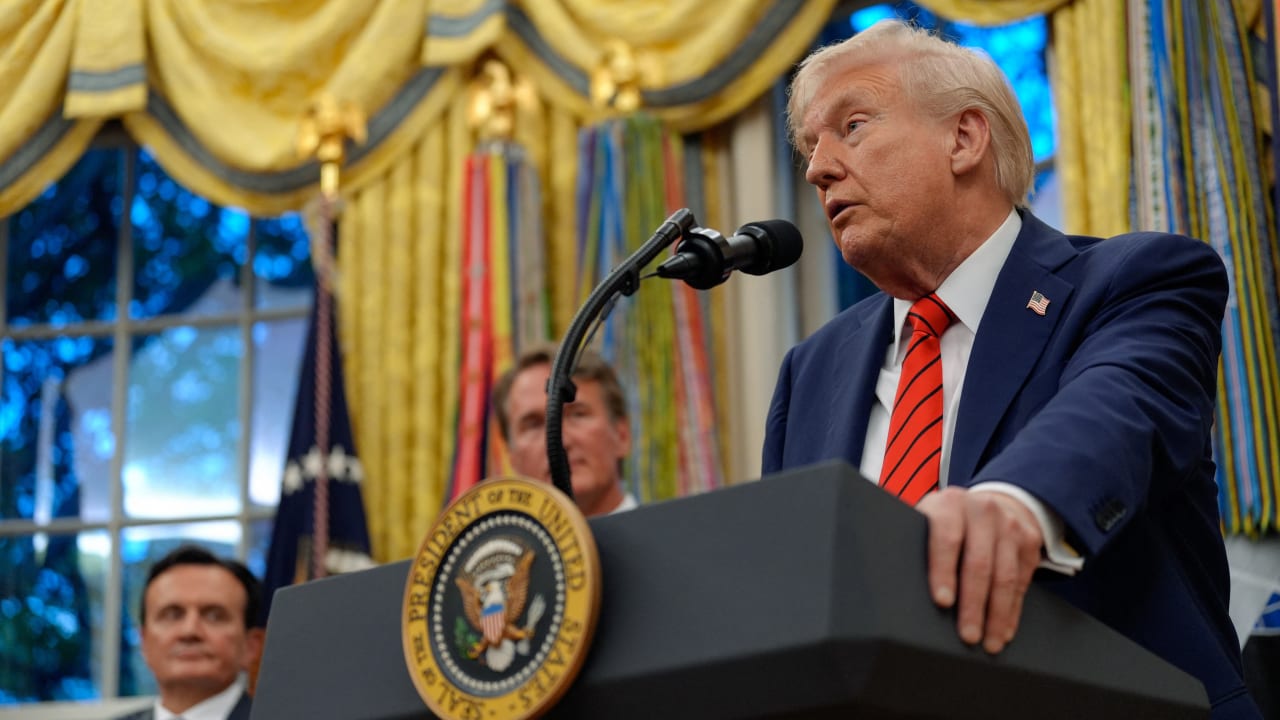
Let’s be honest for a moment. The Nobel Peace Prize has never been a strict “mission accomplished” medal. Time and again, the committee has rewarded leaders for direction, momentum, and promise, long before peace was actually secured. That is why the outrage machine cuts both ways. If it was legitimate to hand the medal to architects of incomplete or fragile processes in the past, then by the committee’s own precedent Donald Trump should have been eligible this year, following the Gaza ceasefire and hostage framework he pushed over the line.
Start with the canonical example. The late Yitzhak Rabin, Shimon Peres, and Yasser Arafat received the 1994 prize for the Oslo Accords. Oslo was hope, for some, not harvest. It was a handshake, a framework, a bet on tomorrow. The region did not wake up to peace in 1994, or 1995, or 1996. Yet the committee said the early, imperfect breakthrough mattered and deserved recognition, precisely to encourage its continuation. If that logic holds, a ceasefire that begins freeing hostages after two years of underground horror and sets a mechanism to stop the bloodletting also qualifies as “work for peace,” even if it is unfinished.
Or take 2009. Barack Obama received the prize less than a year into his presidency. The committee was explicit. It was not crowning a completed peace, it was validating a shift in posture, diplomacy, and tone. Critics called it premature. The committee said encouragement matters. That is the very definition of an aspirational award. If the prize can be used to bless a change of direction, then a deal that halts rockets, starts releases, and creates a path to de-escalation in Gaza qualifies by the same yardstick.
There is more. In 2019, Ethiopia’s Abiy Ahmed was honored for making peace with Eritrea. The committee knew the settlement was fragile, that the hard parts were ahead. It gave the prize anyway, to lock in gains and pressure spoilers. In 2016, Colombia’s Juan Manuel Santos won even after voters rejected his first FARC deal in a referendum. Again, the message was clear. The Nobel often rewards incomplete peace to help it survive. Go further back. In 1973, Henry Kissinger shared the prize for an agreement in Vietnam that unraveled almost immediately. Le Duc Tho refused the medal, but the committee stood by its logic. Reward the attempt, the pause in war, the architecture of an exit, even when the future is uncertain.

So spare us the procedural pearl-clutching. We are told the Gaza deal arrived “after the deadline,” that the committee could not consider it this calendar year. That is a bureaucrat’s refuge. The same committee has repeatedly shown it can recognize momentum, not just milestones. If the prize can lean forward when it wants to encourage a political project, it could have leaned forward here as well, or at minimum acknowledged the framework’s architects as part of a shared citation. Hiding behind the calendar now, after decades of aspirational awards, looks selective.
Let us name the hipocrisy
And yes, let us name the hypocrisy. Many of the same voices who defended Nobel decisions that were deliberately early, symbolic, or aspirational are suddenly legalists when the candidate is Trump. They insist that nothing counts until everything is perfect, and that timelines are sacred, but only this time. Conversely, some who derided Obama’s prize as premature now demand identical treatment for Trump without admitting the standard they mocked is exactly the standard they want applied. Both camps cannot have it both ways. If you believe in the “encouragement” theory of the Nobel, say so consistently. If you believe the prize must wait for end-state peace, say that consistently too.
Here is the simple editorial judgment. By the committee’s own long practice, incomplete peace has been worthy of a Nobel when it breaks a deadlock, saves lives, or reframes a conflict. The Gaza ceasefire and hostage mechanism does all three. If Rabin, Peres, and Arafat could be honored while peace was still a sketch, if Obama could be honored for a posture, if Abiy and Santos could be honored to shore up fragile processes, then Trump’s role this year met that precedent. The committee has every right to be consistent or to change its rules. What it cannot be is selective. Calling this anything else is not principle, rather politics.
Zawartość publikowanych artykułów i materiałów nie reprezentuje poglądów ani opinii Reunion’68,
ani też webmastera Blogu Reunion’68, chyba ze jest to wyraźnie zaznaczone.
Twoje uwagi, linki, własne artykuły lub wiadomości prześlij na adres:
webmaster@reunion68.com