Archive | January 2026

Don’t invoke the Holocaust in debate about ICE


Don’t invoke the Holocaust in debate about ICE

Jonathan S. Tobin


Liberal Jews are rallying behind the partisan effort to use the death of Renee Good to end the enforcement of immigration laws. That isn’t defending Jewish interests or values.
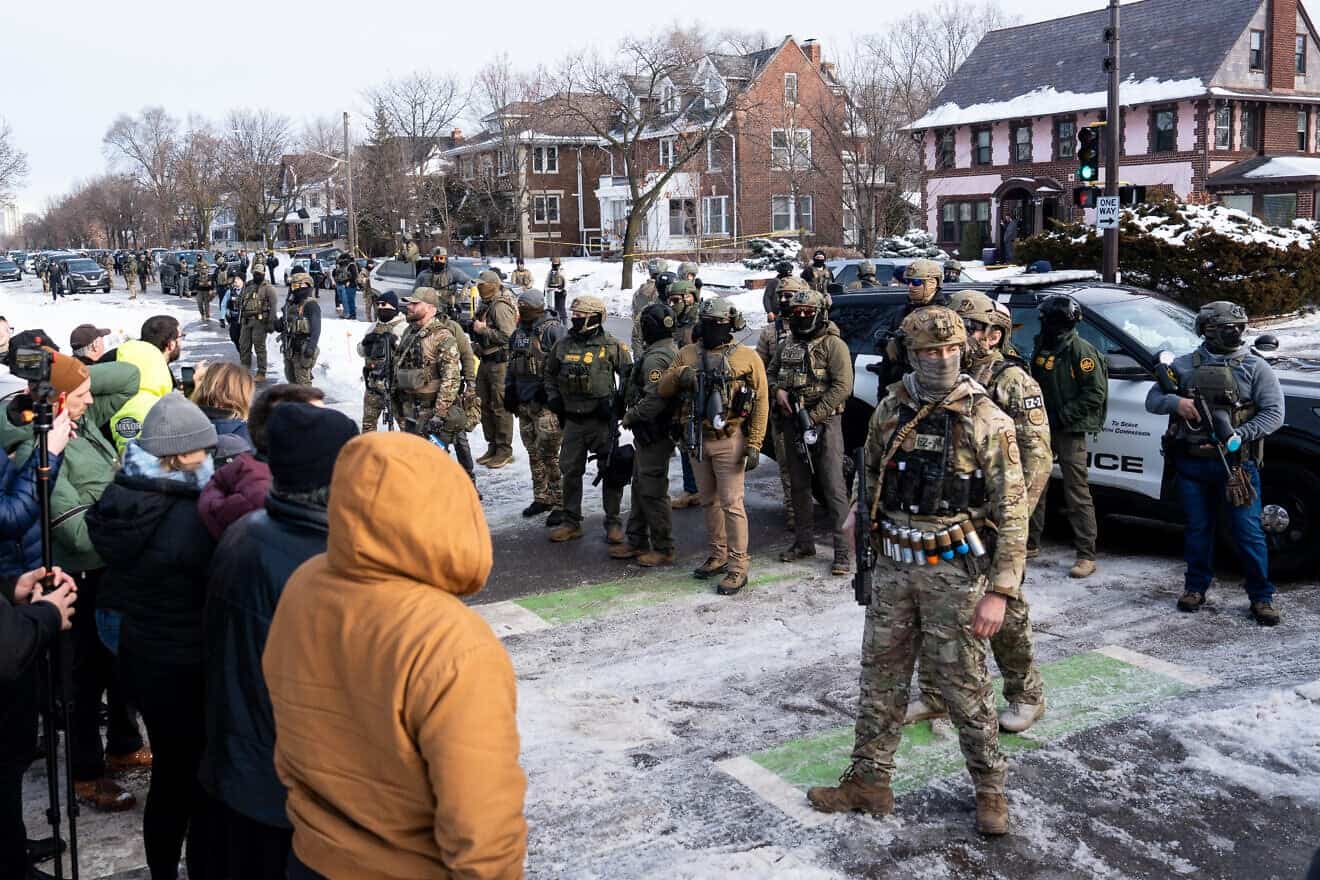
Portland Avenue and 34th Street in South Minneapolis, where an ICE agent shot a woman leaving an immigration protest by car, later identified as 37-year-old Renee Good, Jan. 7, 2026. Credit: Chad Davis Photography/Flickr via Wikimedia Commons.

Is it 2020 in America all over again? To some extent, the fatal shooting of Renee Good in Minneapolis by an agent of the U.S. Immigration and Customs Enforcement (ICE) on Jan. 7 has become a rerun of the events that followed the killing of George Floyd by a police officer in the same city on May 25, 2020. While the cases are very different, both tragic deaths almost immediately became fodder for an emotional national argument that transcends or even obscures the particular details of the incidents.

What happened to Good on a street in Minneapolis has fomented an angry dispute not only about whether the agent who fired on her had a reason to shoot, but also has become a referendum on President Donald Trump’s determination to use ICE to enforce immigration laws. As such, reactions to the incident are a Rorschach test about opinions on not just Trump, but whether the agency’s arrests of illegal immigrants are sound public policy. Inevitably, liberal and left-wing Jewish groups have been weighing in on the controversy in the wake of Good’s death, joining the calls for the abolition of ICE and ending the enforcement of immigration laws.

Demonizing ICE

This position is a reminder of the demands for defunding the police that were widespread after Floyd’s killing. But while the national reaction to the death of a 37-year-old mother has not reached the same level of hysteria as it did over Floyd, it has provoked a loud and divisive politicized debate. Since last year, pundits, politicians and protesters have used language to describe ICE’s conduct to bolster the argument that the policy being pursued by the government was not just misguided but something far worse.

The issue of what to do about illegal immigration is one about which reasonable people can differ. The problem is that many on the political left now treat any concern about the issue as illegitimate or proof of racism and xenophobia.

The massive flood of several million migrants into the United States without permission during the four years of the Biden administration had seemed to shift the discussion on the issue. The harmful impact of what amounted to an invasion of illegals lowered working-class wages, raised housing costs and overwhelmed the social service agencies of many communities. As such, it was a major factor in Trump’s 2024 re-election and caused many Democrats to mute their previous support for amnesty for illegals and/or support for government benefits for them.

The spectacle of ICE agents carrying out raids since Trump returned to the White House a year ago, however, has been portrayed in much of the liberal media as not only an abuse of government power but an authoritarian policy aimed at arresting innocent people.

The agency’s actions are part of an effort to make good on Trump’s promise to deport at least some of what may be as many as 20 million to 30 million people, rather than the 11 million to 14 million figure usually cited in the media (a 2018 Yale University study showed that the number then was more than 22 million—a number undoubtedly boosted by the invasion of illegals that happened on President Joe Biden’s watch).

Inappropriate analogies

Democratic politicians like Minnesota Gov. Tim Walz have called ICE “Trump’s modern-day Gestapo.” Gov. JB Pritzker of Illinois, who is Jewish and ought to know better, told NPR last September that due to ICE’s actions, the United States is “essentially” becoming “Nazi Germany.” The use of this kind of inflammatory rhetoric has only gotten worse since Good’s death, as, among others, various New York Times columnists have called the agency a “secret police,” as well as a fascist force whose main intent is to silence political dissent against Trump.

This is being echoed by a collection of leftist Jewish groups not merely to condemn Good’s killing, but to call for the abolition of ICE and a return to Biden’s lawless “open borders” policy. Not coincidentally, some of these same groups, like T’ruah, have been in the forefront of those attacking Israel’s efforts to defend itself since the Hamas-led Palestinian Arab attack on Oct. 7, 2023. The Jewish Council on Public Affairs, a coalition of liberal community-relations councils, has not only joined the ranks of those mourning Good but attacked ICE for encouraging racism and militarizing communities.

This is hardly surprising, given the way that liberal Jews and some of their organizations have treated the issue of illegal immigration. Most American Jews, like most Americans, in general, are the descendants of immigrants. Still, the effort to portray the current dilemma as no different from the situation in the early or mid-20th century is both unpersuasive and disrespectful to the past.

For several years, the use of inappropriate analogies between illegal migrants in the United States and Holocaust victims has become commonplace. Actress Natalie Portman, who portrayed Anne Frank on Broadway as a teenager, compared the Holocaust diarist to those seeking to evade American law enforcement. She wasn’t alone. In 2023, Biden also spoke of the flood of illegals coming into the country on his watch as akin to the victims of the Shoah.

Such analogies are both outrageous and divorced from the facts. While conditions in Central America or other nations, whose citizens have sought to cross into the United States without going through the legal process, may not be good, very few of these millions of illegals are in the position Jews were in the Europe of the 1930s and ’40s, literally fleeing for their lives because they were members of a group marked for death.

While sympathy for immigrants may be understandable, no matter how they entered, it’s not an issue where order should be tossed aside; that only shows contempt for the rule of law and for Americans harmed by this policy.

The Reform movement came perilously close to counseling its congregations not to cooperate with federal agents if they sought to search synagogues for lawbreakers, while still claiming that they were not giving legal advice. The Conservative movement joined in a lawsuit brought by a variety of liberal faith groups that sought to make their institutions the moral equivalent of medieval European cathedrals, where those on the run from the law could claim “sanctuary.”

This effort to demonize ICE seems to be rooted in a viewpoint that regards laws against illegal immigration as invalid—in essence, an effort to declare that the United States, alone among the nations, has no right to determine who may or may not enter and under what circumstances. It also reflects a highly selective and hypocritical attitude toward the question of whether it is appropriate to harass or even attack law-enforcement officers when they are carrying out their duties.

When police shoot protesters

One day before the Minneapolis shooting was the anniversary of the Capitol riot on Jan. 6, 2021. Those events five years ago quickly morphed from a disgraceful incident into one in which Trump acted recklessly, turning it into a political weapon his opponents then tried to employ to discredit all who had voted for him and to brand half of the country as opponents of democracy. Politics aside, Jan. 6 was an example of what happens when activists think that they have the right to ignore or abuse law enforcement.

The beatings of Capitol Police who attempted to stop the rioters from entering the halls of Congress are frequently cited as a great crime that should not be forgotten. But it’s also important to remember that, misleading news reports notwithstanding, the only person actually killed that day was not one of the policemen but one of the rioters, 35-year-old Air Force veteran Ashli Babbitt. A conspiracy theorist, she was in the process of breaking the law by illegally entering the Capitol and deserved to be punished for that.

Babbitt was unarmed, though, and posed no immediate physical threat to the Capitol Police officer who shot her dead. Had that officer killed a BLM protester under such circumstances, he would probably have been prosecuted and convicted of murder, like Floyd’s killer. Instead, he evaded accountability and was praised for carrying out his duties by the same people now comparing the agent who killed Good to Hitler’s murderers.

The circumstances of Good’s death are also highly controversial, and the question of whether the ICE agent broke the law has not been clarified by the various videos of the incident that have been released. Even if he was wrong to fire his weapon at her, that doesn’t mean he had no reason to fear for his life. Nor does it obscure the fact that she and others had been actively seeking to prevent ICE agents from obeying lawful orders to arrest illegals.

That ought not to be interpreted as a license by officers to fire when they should not. That’s true even if the officer in question had previously been the victim of an incident in which he was dragged by a felon—seeking to avoid arrest—behind the wheel of a car. Yet the notion that she was merely an innocent bystander or protester who was murdered by Trump’s “Gestapo” is to ignore both the facts and the context of the situation. Whatever their motives or intentions, when people impede law enforcement, it’s bound to lead to unfortunate results, no matter what government agents do.

Just as Floyd’s killing became fodder for a national moral panic about race that was largely unjustified, Good’s death is also being inappropriately employed for political purposes.

However horrific Floyd’s death was, the incident was seized upon as proof that the unjustified killings of blacks in America by police were a routine event and that the United States was still an irredeemably racist nation more than half a century after the triumph of the civil-rights movement. That was a myth rooted in falsehoods. But it didn’t stop many on the political left from using this widespread belief, fueled by media misinformation, as justification for advocacy for defunding the police. It led to a summer of demonstrations that rocked major cities, with millions participating, as well as hundreds of “mostly peaceful” riots that led to the deaths of at least 19 people and as much as $2 billion in damage to property, including federal, state and municipal buildings.

The response to Good’s death has not been as extreme. But it is also being interpreted as justifying the rhetoric about Trump being a fascist and ICE as his Storm Troopers.

That, too, is unjustified.

The images coming from ICE raids may disturb anyone sympathetic to illegal immigrants. But the reason for them is that for decades, under both Democratic and Republican presidents, illegal immigration was allowed to continue, and millions evaded the law with impunity. As with any act of law enforcement, the case of each individual can be argued on its own. Nevertheless, the notion that it is wrong for officials to arrest those who have evaded deportation orders or are flouting the law is simply untenable. It would not be applied to any other form of law-breaking. The reason in this case is that the issue has become a political football for Trump’s opponents.

The rule of law is a Jewish value

Those who say that the efforts of ICE violate Jewish values are misinterpreting those beliefs. Sympathy for the stranger is part of the Jewish tradition. So, too, is the concept of obeying the laws of the nation where Jews reside.

There is nothing in Judaism or Jewish history that ought to dictate whether the United States should have open borders or that those who enter it illegally should do so with impunity, regardless of the deleterious impact this has on most Americans. Illegal immigration does not harm corporations that rely on it to depress working-class wages. Nor does it bother members of the country’s credentialed elites (Jews among them) who rely on such workers to perform menial tasks at wages lower than they would have to pay U.S. citizens. But that is not a reason to view those living outside the law as being no different from those who fled the Nazis.

That said, non-enforcement of immigration laws does harm Jews in other ways.

The unregulated torrent of people over the border (before Trump effectively halted the flood of illegals) raised questions about the flow of not merely illegal drugs and sex trafficking but also terrorists, especially at a time of rising antisemitism. Similarly, ICE’s efforts to arrest those who had violated the terms of their visas by taking part in illegal pro-Hamas protests and acts of intimidation aimed at Jews are also part of Trump’s campaign against campus antisemitism. Abolishing ICE wouldn’t just mean open borders; it would facilitate the way Marxist and Islamist mobs seek to make it an open season on American Jews.

Left-wing Jews are, like everyone else, free to advocate for a return to Biden’s lax policies or to change the laws to give amnesty for illegals or to make it easier for migrants to enter the country. But what happened to Renee Good is no reason to end efforts to enforce existing laws. Nor should anyone rush to judgment about the circumstances of her death in a way that creates a precedent that legitimizes efforts to obstruct law enforcement that no sensible person should wish to set.

Equally important, it is wrong to treat this issue as one even remotely comparable to what happened in Nazi Germany to 6 million Jews, who were legal, productive citizens of the European countries in which they lived. Doing so doesn’t just dishonor the Holocaust. It undermines the rule of law, which is, in America and elsewhere, essential to Jewish security.


Jonathan S. Tobin is editor-in-chief of the Jewish News Syndicate, a senior contributor for The Federalist, a columnist for Newsweek and a contributor to many other publications. He covers the American political scene, foreign policy, the U.S.-Israel relationship, Middle East diplomacy, the Jewish world and the arts. He hosts the JNS “Think Twice” podcast, both the weekly video program and the “Jonathan Tobin Daily” program, which are available on all major audio platforms and YouTube. Previously, he was executive editor, then senior online editor and chief political blogger, for Commentary magazine. Before that, he was editor-in-chief of The Jewish Exponent in Philadelphia and editor of the Connecticut Jewish Ledger. He has won more than 60 awards for commentary, art criticism and other writing. He appears regularly on television, commenting on politics and foreign policy. Born in New York City, he studied history at Columbia University.


Zawartość publikowanych artykułów i materiałów nie reprezentuje poglądów ani opinii Reunion’68,
ani też webmastera Blogu Reunion’68, chyba ze jest to wyraźnie zaznaczone.
Twoje uwagi, linki, własne artykuły lub wiadomości prześlij na adres:
webmaster@reunion68.com


China Warns Against Foreign ‘Interference’ in Iran as Trump Mulls Response to Regime Crackdown


China Warns Against Foreign ‘Interference’ in Iran as Trump Mulls Response to Regime Crackdown

Algemeiner Staff


A demonstrator lights a cigarette with fire from a burning picture of Iran’s Supreme Leader Ayatollah Ali Khamenei outside the Iranian embassy during a rally in support of nationwide protests in Iran, in London, Britain, Jan. 12, 2026. Photo: REUTERS/Toby Melville

China on Monday expressed hope that the Iranian regime would “overcome” the current anti-government protests sweeping the country, warning against foreign “interference” as US President Donald Trump considered how to respond to Iran’s deadly crackdown on nationwide protests.

“China hopes the Iranian government and people will overcome the current difficulties and uphold stability in the country,” Chinese foreign ministry spokesperson Mao Ning told reporters during a press conference.

“China always opposes interference in other countries’ internal affairs, advocates that all countries’ sovereignty and security should be fully protected by international law, and opposes the use or threat of force in international relations,” she continued. “We call on parties to act in ways conducive to peace and stability in the Middle East.”

The comments came as Iran continued to face fierce demonstrations, which began on Dec. 28 over economic hardships but escalated into large-scale protests calling for the downfall of the country’s Islamist regime.

If the regime in Tehran was seriously weakened or potentially collapsed, it would present a problem for a strategic partner of Beijing.

China, a key diplomatic and economic backer of Tehran, has moved to deepen ties with the regime in recent years, signing a 25-year cooperation agreement, holding joint naval drills, and continuing to purchase Iranian oil despite US sanctions.

China is the largest importer of Iranian oil, with nearly 90 percent of Iran’s crude and condensate exports going to Beijing. Traders and analysts have said that Chinese reliance on Iranian oil will likely increase and replace Venezuelan oil after US forces captured Venezuela’s President Nicolas Maduro earlier this month.

Iran’s growing ties with China come at a time when Tehran faces mounting economic sanctions from Western powers, while Beijing itself is also under US sanctions.

According to some media reports, China may be even helping Iran rebuild its decimated air defenses following the 12-day war with Israel in June.

The extent of China’s partnership with Iran may be tested as the latter comes under increased international scrutiny over its violent crackdown on anti-regime protests.

US-based rights group HRANA said by late Monday it had verified the deaths of 646 people, including 505 protesters, 113 military and security personnel, and seven bystanders. The group added that it was investigating 579 more reported deaths and that, since the demonstrations began,10,721 people have been arrested.

Other reports indicated the number of protesters killed by the regime numbers were well into the thousands, but with the regime imposing an internet blackout since Thursday, verification has been difficult.

Trump has said he will intervene against the regime if security forces continue killing protesters. Adding to threats of military action, Trump late on Monday announced that any country doing business with Iran will face a new tariff of 25 percent on its exports to the U.S.

“This order is final and conclusive,” he said in a social media post.

According to reports, Trump was to meet with senior advisers on Tuesday to discuss options for Iran, including military strikes, using cyber weapons, widening sanctions, and providing online help to anti-government sources.

Iran has warned that any military action would be met with force in response.

“Let us be clear: in the case of an attack on Iran, the occupied territories [Israel] as well as all US bases and ships will be our legitimate target,” Iranian parliament speaker Mohammad Baqer Qalibaf told a crowd in Tehran’s Enqelab Square on Monday, adding that Iranians were fighting a four-front war: “economic war, psychological warfare, military war against the US and Israel, and today a war against terrorism.”

However, the White House stressed that Trump hopes to find a diplomatic resolution.

“Diplomacy is always the first option for the president,” White House press secretary Karoline Leavitt told reporters on Monday.

“What you’re hearing publicly from the Iranian regime is quite different from the messages the administration is receiving privately, and I think the president has an interest in exploring those messages,” she said.

Iranian Foreign Minister Abbas Araqchi told Al Jazeera that he and US envoy Steve Witkoff have been in contact.

Trump said on Sunday the US could meet Iranian officials and he was in contact with Iran’s opposition.


Zawartość publikowanych artykułów i materiałów nie reprezentuje poglądów ani opinii Reunion’68,
ani też webmastera Blogu Reunion’68, chyba ze jest to wyraźnie zaznaczone.
Twoje uwagi, linki, własne artykuły lub wiadomości prześlij na adres:
webmaster@reunion68.com


Pułapka nieśmiertelności

Bożeną Keff / archiwum prywatne


Pułapka nieśmiertelności

DAM PLUSZKA


Rozmowa z Bożeną Keff

Kultura polska jest kulturą okaleczonych ludzi, co widać także po tym współczesnym „chamstwie”, głuchym na innych, zawsze owiniętym wokół swojej krzywdy. Co to jest, dlaczego tak trwa i trwa?


ADAM PLUSZKA: Anonsując twoją książkę, wydawca pisze, że to twój debiut beletrystyczny. Po wszystkich książkach, które do tej pory napisałaś, czujesz się debiutantką?

BOŻENA KEFF: I tak, i nie. Z pochodzenia jestem poetką, napisałam trzy książki dyskursywne, trzy poetyckie, ale fikcji literackiej, prozy, faktycznie nie. Pisania prozy naprawdę się uczyłam. Uczyłam się, pisząc, i nie ukrywam, że z jednych rzeczy byłam zadowolona, inne zwyczajnie wyrzucałam. Uczyłam się konstrukcji postaci, czego nie wymaga poezja. W poezji operujesz na poziomie słów i zdań, masz przed oczami przestrzeń kartki czy strony ekranu. W prozie to zupełnie inne przestrzenie, rzeczy dzieją się dużo dłużej, człowiek się pojawia w iluś tam odsłonach i trzeba zadbać o to, żeby była to spójna osoba. Na tym mi szczególnie zależało – chociaż nie uważam, że piszę prozę psychologiczną, to strasznie cierpię od braku umiejętności psychologicznej w polskiej prozie. I uważam, że to jakiś kulturowy problem.

W czym to się przejawia?

W dość płytkich postaciach albo w ogóle w odpływaniu od wszelkiej problematyki, gdzie trzeba by pogłębić psychologię. Zastanawiam się, czy polska proza psychologiczna obecnie w ogóle istnieje. Może to nie jest odpowiedni moment. Może nie musi jej być. Jest to jednak coś, co inni mają na wyposażeniu warsztatu jako rzecz niezbędną i konieczną. Pamiętam, że kiedyś otworzyłam jakiś podręcznik amerykański do pisania scenariuszy filmowych jednego ze znanych reżyserów i on zaczynał od polecenia lektury podstawowej. Była to lektura psychologiczna, Karen Horney chyba, jako podstawa do uczenia się budowania postaci. Chodziło o to, żeby zdobyć podstawy wiedzy psychologicznej, prócz własnych umiejętności. Żeby sytuacja wynikała z postaci, nie zaś żeby postać pasowała do sytuacji.

W takim razie który z polskich pisarzy odrobił lekcję?

Spore wyczucie psychologiczne miały Zapolska, Nałkowska, Kuncewiczowa. Moja ukochana trójka, czyli Gombrowicz, Schulz, Witkacy, są z zupełnie innej parafii. W Polsce jednak nie ma głosu psychologicznego na poziomie wielkiego realizmu, a potem Virginii Woolf, Joyce’a czy pisarzy rosyjskich. Nie twierdzę, że proza psychologiczna to moje powołanie, ale podczas pisania musiałam pilnować motywacji swoich bohaterów, ich konsekwencji. Krótko mówiąc, musisz się nauczyć tego wszystkiego, do czego cię obliguje długość trwania i głębia trwania opowieści, którą tkasz. Jeśli mówimy o dzisiejszej prozie, to nie umiem na to odpowiedzieć. Może ona w ogóle jest w innej sprawie. Moja też.

Zastanawiam się, czy polska proza psychologiczna w ogóle istnieje. Może nie musi jej być. To jednak coś, co inni mają na wyposażeniu warsztatu

Nieśmiertelny to pierwsza beletrystyczna książka Bożeny Keff – autorki znanej z poezji i esejów. W tych opowiadaniach centralną postacią, pojawiającą się w większości utworów, jest Marzanna, która niczym w powieści zmienia się i starzeje, a wraz z nią ewoluują historyczne okoliczności. Jesteśmy świadkami wciąż żywej pamięci po Zagładzie, obserwujemy rok 1968, ale też karnawał Solidarności, wreszcie tworzenie się nowego, liberalnego porządku. Każdy z tych kontekstów jest dla bohaterki Keff na swój sposób nie do zniesienia.


Podczas lektury „Nieśmiertelnego”, zwłaszcza tytułowego opowiadania, zastanawiałem się, na ile kreujesz postaci, a na ile opierasz się na osobach istniejących.

To jest dla mnie samej zaskoczenie już od „Utworu o Matce i Ojczyźnie” – zawsze uważałam, że jeśli będę pisać fikcję, to postaci wymyślę, skonstruuję. I czasem tak jest w „Nieśmiertelnym”. Ale okazało się, że mój talent idzie w inną stronę i nie ma się co z nim spierać. W „Utworze o Matce…”, który jest niewątpliwie biograficzny, osłoniłam się jako postać poematu językiem, który stworzył warstwę ochronną, bohaterka dzięki niemu nie jest w pełni tożsama ze mną. Marzanna, postać z „Nieśmiertelnego”, jest tożsama w tym znaczeniu, że jej życie to fragmenty, migawki z mojego bardzo minionego życia, a postać pisana jest z wewnętrznie ironicznego dystansu. W gruncie rzeczy jest to proza egzystencjalna. Jest w niej i politowanie, i zrozumienie, i pretensja.

Swoją drogą, to bardzo ciekawe, na ile dziś w ogóle oczekujemy – jako pisarze i czytelnicy – postaci wykreowanych w sposób tradycyjny, bo sporo wiemy na temat tego, czym jest społeczeństwo, jak funkcjonuje, co to za twór, tylko że wiemy to bardziej na poziomie abstrakcyjnym. Na poziomie konkretnym mamy opowieść pisarza o samym sobie, tak jak chciał Gombrowicz. Z pewnym zdziwieniem czytałam „Ciała” Annie Ernaux. To nie jest pisarstwo mi bliskie – nie z powodu tematu, tylko temperamentu – ale stwierdziłam, że w gruncie rzeczy robię coś podobnego: na tle historii opowiadam własną historię indywidualną i społeczną, tę, w której żyję i żyłam i która mnie tworzy. Wprawdzie nie tworzę z siebie obiektu społeczno-historycznej analizy, jak Ernaux, lecz poddaję swoją bohaterkę analizie egzystencjalnej. Sama czuję się insiderką-outsiderką, wewnętrzną użytkowniczką polskiej kultury, a jednocześnie zewnętrzną wobec niej osobą, bo nie mam chęci utożsamiać się z nią, z jej wieloma treściami.

Przy wielu puentach odnosiłem wrażenie, że twoi bohaterowie nie mają ruchu, tkwią w ślepym zaułku. Bohaterka „Erica” może wyjechać, ale boi się zostawić matkę i w zasadzie wszystko. Przyjaciółki z „Podróży z Mojrami” jadą nad morze, tyle że cel wyprawy nie ma najmniejszego znaczenia.

Tyle naszej wygranej, na ile umiemy ten ślepy zaułek opisać. Jeśli już możesz to zrobić, pojawia się możliwość ruchu. W pierwszym opowiadaniu Marzanna wie, że nie da rady, jest tchórzem i wykręca się sama przed sobą. Nie dojrzała do tego, żeby porzucić życie, którego nie lubi, ale jeszcze o tym nie do końca wie. Eric ją zaprasza do siebie, do Belgii, a nie do zmiany życia, to ona tak słyszy jego zaproszenie. Albowiem „na złodzieju czapka gore”. Nie żyje w dobrej wierze, w zgodzie ze sobą, w propozycji wyjazdu słyszy coś innego, jak w pomyłce freudowskiej. W „Podróży z Mojrami”, które też lubię, mamy dwie dorosłe kobiety, trójkę dzieci, Syrenkę Bosto, która się psuje, i psa. Jedna z nich, Marzanna, gra dorosłą wobec dzieci. Ale nie jest zbyt dorosła wobec siebie. Podobnie druga. Obie są zanurzone w swoim nieszczęściu. Tak naprawdę to opowiadanie o wesołej podróży, lekturach, przygodach i o tym, jak oszukać śmierć bardzo prostym sposobem, deklamując wierszyki, jedząc pierogi, mimo że ta spirala się zwija i coraz bliżej jesteśmy nieszczęścia i śmierci. Na końcu tego opowiadania Marzanna w nocy słyszy morze, a to żywioł, który otwiera. Ona mówi zresztą, że chce innego życia, a skoro już wiesz, że chcesz innego życia, to jest jakaś diagnoza, może dać czemuś początek. W innym opowiadaniu, „Jolka, Jolka”, Marzanna, wciąż ta sama bohaterka, tylko doroślejsza albo starsza, jest już rozwiedziona, ma inne życie, stoi na własnych nogach, które się jej trzęsą, ale jakoś stoją. Nam wszystkim egzystencjalnie nogi się często trzęsą.

Z czułością traktujesz swoich bohaterów i bohaterki.

A ja mam wrażenie, że raczej ich lubię. Ale czułość? To jest lubienie, do którego wkrada się coś lirycznego, zmysłowego, czasem niespokojnego, a to chyba dostaje u mnie tylko bohaterka o imieniu Ada. Lubię ich, bo są ze sobą bezpieczni i lubią się nawzajem, przynajmniej niektórzy, niektóre raczej. I przynajmniej Marzanna dorośleje.

Powiedziałaś, że Marzanna dorośleje, jest starsza. A ja się zastanawiam, na ile można dojrzeć. I czy można w ogóle zmądrzeć na czas.

Też się nad tym zastanawiam, jednakowoż załącza się pytanie: czy jakakolwiek uniwersalna mądrość istnieje? Podejmuję ten wątek w „Nieśmiertelnym”, pada tam zdanie: „Czy jestem mniej osadzona w istnieniu niż mistrz zen, który medytuje oddechem, osadzony w chwili, w tu i teraz; czy bardziej umrę?”. Krótko mówiąc, co jest tą mądrością? Khalil Gibran napisał kiedyś książkę pod tytułem „Prorok”, z prawdami uniwersalnymi, mądrą, ale nieużyteczną dla tych, którzy sami nie doszli do tych zasad, do tych prawd. Możemy założyć, że ktoś powie: „No, głupia narratorka. Mówi, żeby się buntować przeciwko śmierci, bo z punktu widzenia świadomości my sobie z nią nie radzimy, też coś”. Ktoś inny powie, że trzeba być dojrzałym jak stoik. Stoicy w końcu byli w zgodzie z tym, co się wydarza, i wiedzieli, że nie ma co fikać. Ale myśmy przerabiali już różne romantyzmy i awangardy i po prostu fikanie nam weszło w nawyk. I fikamy. Nie jesteśmy pokorni wobec wspaniałości Boga i istnienia, bo brak tej wspaniałości wielokrotnie był przerabiany i tylko ludzie bezrefleksyjni mogą być wdzięczni i zachwyceni, nawet ci religijni.

W całej swojej twórczości skupiasz się na nietolerancji, na jej różnych odcieniach. Twoja nowa książka również opowiada o wyobcowaniu i zaszczuciu. Dlaczego podjęłaś ten sam temat, tylko w innej formie?

Bo to jest mój temat. Żyję w nietolerancyjnej polskiej kulturze. Jeśli spojrzeć na prawa kobiet, to właściwie można tylko sobie wydrzeć włosy z głowy, nie mówiąc o prawach osób LGBTQ+. A wykluczenie ekonomiczne, a bieda? A polski rasizm? A jak spojrzeć na to, co dotyczy Żydów, a właściwie antysemityzmu, bo Żydów jako istotnej mniejszości w Polsce nie ma, to wtedy rzeczywistość, w której żyjesz, raz za razem wybucha kwiatami z drutów kolczastych i rani cię, podobnie jak uchodźców na granicy. W opowiadaniach pojawia się to mimochodem: a tu jakiś przezroczysty język antysemityzmu, że jakiś Żydek coś namalował, a to „Rzydy” napisane na drzwiach, a to pan, któremu Waleria otworzyła bagażnik samochodu, on zaś z wdzięczności opowiedział tę piękną historię, na dnie której byli Żydzi, którzy wszystkim rządzą. To jest przerażające. Bo to nie pojawia się przelotnie ani nie manifestuje się lekko. Nie. To jest głęboko wryte, ukorzenione w wiekach średnich polskiej katolickiej kultury, to być może hemoglobina krwiobiegu naszej kultury lub potas czy cynk i potas potrzebny do jej funkcjonowania.

W trzecim moim ulubionym opowiadaniu, „Córczance”, bohaterką jest lesbijka, która trafiła do szpitala i musi ukrywać swoją tożsamość płciową po to, żeby nikt nie zrobił jej krzywdy. Czy twoim zdaniem Polska jest krajem niebezpiecznym?

Jeżeli ludzie nie czują się bezpieczni, i to z jakiegokolwiek powodu – że mają jakąś cechę, która ich odróżnia, albo cechę, która ich piętnuje – to jest to niebezpieczny kraj. Kiedyś uczestniczyłam w panelu, którego temat brzmiał: Czy pochodzenie z mniejszości w Polsce jest sportem ekstremalnym? Był tam między innymi młody rabin z Łodzi. Powiedział: „Oczywiście, jest to sport ekstremalny, tylko że ja jestem chłopak z Bałut, umiem skląć tak, jak tu się klnie, i w razie czego przyłożę”, a był kwadratowy. I dodał: „Ja to mogę podjąć, ale to wcale nie znaczy, że polecam wszystkim”. Więc tak, jest to sport ekstremalny, bo dopóki nie masz ustawowo zagwarantowanych praw i ochrony, dopóki nie będąc na przykład członkinią Kościoła katolickiego, płacisz na niego i żyjesz w orbicie jego wpływu, to żyjesz w szarej strefie. To kraj niebezpieczny dla twojej wrażliwości, na przykład dla poczucia tego, co się ludziom należy. Albo gdy patrzysz na to, co się dzieje na polsko-białoruskiej granicy. Bo patrzysz i myślisz: ile już osób leży w tej ziemi, w tym lesie? Sto? Sto pięćdziesiąt? Obok tych kości żydowskich? Czy dla podtrzymania tradycji trzeba dołożyć nowe? A tu jeszcze rząd ogłasza powrót do strefy buforowej. Jest to kraj niebezpieczny również dlatego, że rozumie bezpieczeństwo jako dodawanie siły tym, którzy ją mają, i odbieranie jej tym, którzy są jej pozbawieni.

Ile już osób leży w tej ziemi, w tym lesie? Obok tych kości żydowskich? Czy dla podtrzymania tradycji trzeba dołożyć nowe? A tu jeszcze rząd ogłasza powrót do strefy buforowej

W tym kontekście wypisałem sobie cytat z twojej książki. „Kiedy tyka w nim Polak, to jest to bomba zegarowa i w końcu nastąpi długa nacjonalistyczna eksplozja”. Pojawia się ono w opowiadaniu „Bruno”, a sam tytułowy bohater to fascynująca postać: student filozofii, gej, Żyd, który zmienia się w katolicki beton. Widzisz go jako alegorię Polski?

Alegorię? Mam ochotę powiedzieć „nie”, ale po chwili wcale nie jestem pewna. Dla wielu (z tych niewielu) Żydów z tak zwanej opozycji demokratycznej był konieczny jakiś rodzaj stopienia się, zlania się z większością. Na katolicyzm ruchu Solidarność mogli odpowiedzieć powrotem do judaizmu, bo Żyd religijny wskazuje na to, że nie ma nic wspólnego z „żydokomuną”. Można też było zostać katolikiem lub chrześcijaninem. Rzadko lewicową osobą żydowską, bo to jednak budzi podejrzenie co do kontynuacji jakichś tradycji podejrzanych, bolszewickich, a niechby i mieńszewickich. I to nadal wskazuje na to, jakim Polska jest straszliwym skansenem. Jak bardzo nie ma tu miejsca dla tych, którzy idą „własną drogą / zawsze obok”, że zacytuję Marię Peszek.

Żydokomuna jest rozumiana jako synonim wszelkiego zła, jakiegoś prześladowczego radykalizmu, katów AK i innych patriotów, bardziej wyklętych. Ale przecież nie wiemy dziś, o czym mówimy, kiedy mówimy o „komunizmie”: czy o PRL-u, czy o jakimś momencie PRL-u, o takiej dekadzie, kwakiej dekadzie, a może o ideologii? O czym, do cholery, mówimy, gdy mówimy o „złym komunizmie”? Tak mi niedawno powiedział pewien gość, gdy mówiliśmy o rozporządzeniu Trzaskowskiego, by przestrzeni publicznej przywrócić świeckość: „Zdejmujemy krzyże, a przecież tak robiono za komunizmu, a komunizm był zły”. Był zły i koniec. Początek, środek i koniec. Och, jak mało ambitnie. Wracając do „Bruna” – to historia o tym, że pod koniec XX wieku w Polsce, w której jest Żydów tyle co kot napłakał, nadal obowiązuje wzorzec asymilacyjny z przełomu XIX i XX wieku. Upodobnij się, nie upieraj się przy lewicowości swoich przodków, zaznacz tym lojalność, to może cię przyjmiemy. No i dobrze. Budzą cię w środku nocy i pytają, kim jesteś – no, ja to ja, Bożena Keff, a ty pewnie – Adam Pluszka. Jeśli najpierw kojarzysz siebie jako tożsamego z pewną zbiorowością, a nie ze sobą, to jest to bardzo niepokojące, to właśnie ta tykająca bomba. Z tożsamością jak to z tożsamością: ludzie chcą przede wszystkim być w porządku lub jeszcze więcej: dobrzy, szlachetni, rzadko chcą być zbirami. „Polak” to raczej sztywna tożsamość. Może eksplodować, zwłaszcza kiedy się ją skrytykuje. Ale cóż, ten znajomy opierał się o tego „Polaka”, którym czuł się zawsze, nawet we śnie. A o kogo ma się oprzeć Bruno? O ojca komunistę, co nikomu nic złego nie zrobił i zginął w powstaniu w getcie, ale o którym nie można powiedzieć całej prawdy?

Dlaczego nie można?

No właśnie ja także zadaję takie głupie pytania. Dlaczego nie? Bo ojciec był komunistą, a to znaczy, że był po złej stronie! Nie mógł być patriotą! Do starych stereotypów doszły nowsze i klops, nie wolno, bo będzie napaść, podejrzenia. W polskim dyskursie publicznym jest tyle tabu. Pamiętam, że raz zgłupiałam, kiedy w rozmowie z odwieczną przyjaciółką feministką powiedziałam, że w PRL-u było niezłe prawo pracy i kobiety były dobrze chronione, miały pełne prawo do aborcji, na co ona mówi do mnie: „Ty byś chciała, żeby PRL wrócił?”. Feministka. A to przecież nie o to chodzi. Nie można, bo pewne słowa, pojęcia obłożone są tabu. Powiesz, że ojciec był komunistą, to może spytają: A jakiego ty chcesz komunizmu? A może nie chcesz żadnego, chcesz tylko powiedzieć prawdę o ojcu czy matce.

Do starych stereotypów doszły nowsze i klops, nie wolno, bo będzie napaść, podejrzenia. W polskim dyskursie publicznym jest tyle tabu

O czym jeszcze nie możemy mówić?

O tradycjach lewicowych. O swoim ciele, o seksie, o uczuciach, tych osobistych, o ambicjach, zwłaszcza dużych. Już nie chodzi o „żydokomunę”, twór mitologiczny uważany powszechnie za realny, ale w ogóle o polskie lewicowe tradycje. O tym, że na przykład Sendlerowa była raczej komunistką niż świętą katolicką (patrz: Bikont). Część rzeczy, których nie można było wyartykułować lub które były zbyt sztampowo, użytkowo artykułowane, wraca, i bardzo dobrze. Wracają chłopi i chłopki. Koszmarna pańszczyzna. Bardzo bym chciała, żeby tych chłopów i chłopki pokazać jeszcze w kontekście długich konsekwencji tego okaleczonego wzorca, okaleczonego przez to człowieka. Kultura polska jest kulturą okaleczonych ludzi, co widać także po tym współczesnym „chamstwie”, głuchym na innych, zawsze owiniętym wokół swojej krzywdy, chamstwie macho, mizoginicznym, antysemickim, ono ma związki z tym historycznym, chłopskim chamstwem (patrz: „Chamstwo” Kacpra Pobłockiego). Co to jest, dlaczego tak trwa i trwa?

Jedna z twoich bohaterek mówi, że ma alergię na słowa Bóg, Kościół, ojczyzna, patriotyzm i honor. Dla jednych są to rzeczy ważne, w innych wzbudzają co najmniej nieufność albo niepokój.

No tak, ponieważ one po 1989 roku są używane jako wykluczające. Siedziałam kiedyś w okolicach kina Muranów na skwerku Pamięci Ofiar Stalinizmu. Może z powodu nazwy nie jest to jakieś bardzo fajne miejsce do siedzenia, ale jest zielono, ładnie, są ławki, i stoi tam kamień, a na tym kamieniu jest napisane, że jest to skwer ofiar stalinizmu wiernych hasłu Bóg – Honor – Ojczyzna. Ale innych nie. I dlatego Marzanna mówi, że ma alergię na te hasła. One są jak wierszyk: „Kim ty jesteś? Polak mały” – rymowanka, która definiuje dziecko i wiąże je tymi definicjami jak baleron sznurkami. I od razu włącza mi się dalszy ciąg, ale z „Dnia świra” Marka Koterskiego. „Polak mały, mały zawistny i podły” – proszę, i jemu się tak kojarzy. I między innymi dlatego, pośród tej niechęci do analizy własnej, nieskorygowanej politycznie historii, używam takich pojęć jak choćby „żydokomuna” neutralnie, opisowo, w proteście przeciwko temu, że zanim tym pojęciom, tej żydokomunie zajrzy się w zęby, to zapyta, o co w tym chodziło, jakieś racje może miała? Już jest wykluczona, wykopana, oskarżona, zesłana i ogólnie wiadomo, że zabiła Chrystusa, zrobiła rewolucję francuską i bolszewicką.

Myślisz, że dokąd to zmierza? Twoi bohaterowie nie są szczęśliwi, nie są bezpieczni i są w punkcie, w którym woleliby nie być. I Polska jest w takim punkcie.

Pewnie tak jest, że zazwyczaj jesteś w punkcie, w którym wolałbyś nie być. Nawet Goethe’owskie „chwilo, trwaj” może przyprawić o ból głowy, bo ileż ona może trwać? Nawet jeśli będę się napawać tym i owym, to wszystko ma swoje granice. Ja w ogóle, o czym zresztą piszę, jestem sartrystką, jestem człowiekiem w projektach, jak nie mam planu, projektu na jutro i na za rok, to jestem przygnębiona. Nie za bardzo umiem żyć tu i teraz, no, teraz bardziej, ale to już kwestia wieku, weszłam w starość. Przy czym nie jestem chyba skrajną pesymistką i nie uważam, że moi bohaterowie nie mają przyszłości, bo ona jest wiadoma, nazywa się Nieśmiertelny! Ha, ha! A poza tym jest sieć powiązań pomiędzy ludźmi i zwierzętami, i ta sieć jest siecią egzystencji. Co do Polski, to było widać przez osiem lat, w jakim jest punkcie, a dzisiejszy punkt też jest chybotliwy. Ale cały świat tak ma. Nie wiemy, w jakim jesteśmy punkcie, bo nasze projekty na dziś i jutro są za słabe. Planeta się pali, a my nie za bardzo wiemy, czy w ogóle chcemy ją gasić.

Nie wiemy, w jakim jesteśmy punkcie, bo nasze projekty na dziś i jutro są za słabe. Planeta się pali, a my nie za bardzo wiemy, czy w ogóle chcemy ją gasić

Ja z kolei tutaj widzę optymizm, w relacjach ze zwierzętami. Podoba mi się postać chłopca, któremu dorosły podpowiada, żeby przypalił robaka lupą, a on odpowiada: „Robalowi włos z głowy nie spadnie”. Albo gdy Marzanna i Waleria starają się uwolnić psa z łańcucha. Albo gdy w tytułowym opowiadaniu trwa bunt przeciwko śmierci najbliższej osoby, z którą spędziło się za mało czasu. I pojawia się pytanie, czy zwierzęta są od tego, żebyśmy stali się ludźmi?

Myślę, że w dużym stopniu tak. Tylko oczywiście należałoby je uwolnić także od nas. Nie mam na myśli oczywiście psów czy kotów, tylko zwierzęta hodowane jako mięso. Jako. Bo to jest straszne.

Ale pochodzimy wszyscy z kultury – nieważne, czy jesteśmy religijni czy niereligijni – w której funkcjonuje bardzo archaiczny, głęboko osadzony w mentalności i w języku podział na duszę i ciało, ducha i materię. I jest jasne, że po stronie duszy i ducha jest człowiek, a zwierzę po stronie ciała, materii. Chodziło o to, że człowiek musiał się lokować dużo wyżej od zwierząt – to dla teologów było niesłychanie istotne, w końcu mamy duszę nieśmiertelną, a zwierzęta na pewno jej nie mają. Może to pomsta za te czasy, kiedy dzikie zwierzęta miały nad hominidami kolosalną przewagę, nie wiem. Teraz trzeba zyskać – nie odzyskać, ale zyskać – to śmiertelne ciało, które się ma wspólne ze zwierzętami, dzięki czemu rodzi się nadzieja na poszerzenie naszego świata. Może gdybyśmy myśleli od dziecka, że natura jest także wewnątrz nas, że nie jest ani brzydka, ani ładna, a może tylko ładna, bylibyśmy jakimiś innymi stworzeniami.

Opowiadanie zamykające zbiór, „Twoje serce”, nie jest napisane z perspektywy istoty pozaludzkiej, ale empatycznie przemodelowałaś w nim język: nie ma pana, pani ani opiekuna, jest małpa Ady. Czy to też odpowiedź na pytanie, jak człowieka uwrażliwić?

Chodzi bardziej o równość, która ma wiele wspólnego z uwrażliwieniem. Nie myślałam o tym teoretycznie, pisałam na odruchu, bo pies Ada była psem niesłychanie zindywidualizowanym i moją kochaną przyjaciółką. I ja wcale nie czułam się specjalnie inna od niej, w zasadzie jakoś podobna. Być może mają tak ludzie, którzy żyją blisko ze zwierzętami, że gdy patrzą na kota albo gdy ja patrzę na mordę mojego psa, to nie czuję, że to jest inny gatunek. Owszem, wygląda inaczej niż ja, ale zasadniczo jesteśmy w pryncypiach tacy podobni.

Mnie jako osobę dorosłą wychował kot Łysy. Pokazał, co jest w życiu najważniejsze – że on jest na pierwszym miejscu, na drugim też on i na trzecim. On i jego potrzeby. Pokazał mi, że nie jestem pępkiem świata i że liczy się to, co mogę dla niego zrobić, czyli, jak się okazało, co mogę zrobić dla innych.

To, co mówisz, jest dla mnie przejmujące, ale też znaczy, że ty mogłeś przyjąć tę jego naukę. Ktoś inny mógłby zlekceważyć. W „Twoim sercu” małpa Ady zostaje ze strasznym wyrzutem sumienia: nie zrozumiała, że pies poprosił o ratunek, że gdy Ada weszła do łóżka, chciała być razem ze wszystkimi, bo się źle czuła, a małpa zachowała się jak paniusia i powiedziała: „Adusiu! Adusiu, chyba wiesz, gdzie kto śpi”. Bo nic nie pojęła. Z drugiej strony myślę, że nie wiemy takich rzeczy z góry. Sami się uczymy i sami żałujemy. I mówię to jako osoba, która długie lata w nosie miała istoty pozaludzkie, rośliny i zwierzęta, ja byłam czysto miejskim człowiekiem. Dopiero z czasem, dzięki przyjaciołom, którzy dawali mi na lato swoje siedziby wśród przyrody, i dzięki zwierzętom, pomyślałam, że sami się wymazujemy ze świata, do którego należymy.

Może gdybyśmy myśleli od dziecka, że natura jest także wewnątrz nas, że nie jest ani brzydka, ani ładna, a może tylko ładna, bylibyśmy jakimiś innymi stworzeniami

Bo człowiek nie jest nieśmiertelny.

No, nieśmiertelność jest anomalią, tak jak bohater filmu „Nieśmiertelny” był anomalią. Czy bym nią pogardziła, gdyby była oferta? Sama nie wiem. Wampir jest nieśmiertelny, a to straszna anomalia, jak zresztą wszystkie upiory i demony. Nie sposób się z tym mierzyć, tak jak bardzo trudno mierzyć się z własnym nieistnieniem, skoro mamy świadomość, która funkcjonuje tylko i jedynie w istnieniu. Kiedy bohaterka tytułowego opowiadania idzie do łazienki, tam sobie robi lekki makijaż, żeby wyglądać lepiej – wszystko to robi pod czujnym okiem Nieśmiertelnego, bo gdyby tego oka nie było, to czy by nas tak bardzo przejmowało, że mamy zmarszczkę albo coś nam obwisło? Starość dotyczy wszystkich, a jest tak obciążona estetycznie. Dlaczego? Może właśnie z powodu idei tych zawsze pięknych herosów, tych nieśmiertelnych właśnie, tych babilońskich, greckich, hinduistycznych bogiń i bogów, tego Szkota z filmu. To ona sama, bohaterka, na siebie tak patrzy, tym spojrzeniem Nieśmiertelnego, młodego boga, ideału, który dręczy nas naszą niższością w każdej mitologii. A może gdybyśmy się z naturą trochę zbliżyli, to byśmy się z tej pułapki zaczęli wydostawać?


Bożena Keff – Uprawia poezję, prozę, twórczość akademicką i publicystykę. Jest również wykładowczynią. Pisze nieustająco, ale dość rzadko publikuje, bo choć szuka, to nieczęsto znajduje ten rodzaj refleksji i formę, które uważa za godne utrwalenia. Tłumaczy (z angielskiego) i bywa tłumaczona. Jest autorką wszechstronną. Opublikowała tom wierszy „Nie jest gotowy” (2000), esej „Postać z cieniem” (nominacja do Nagrody Nike 2000), esej „Barykady”. Kroniki obsesyjne (2006), książkę poetycką „Utwór o Matce i Ojczyźnie” (nominacja do Nagrody Nike 2008), studium naukowe „Antysemityzm. Niezamknięta historia” (2013), esej „Strażnicy fatum” (nominacja do Nagrody Nike 2021). Wydany w roku 2024 „Nieśmiertelny” jest zbiorem tekstów zarówno beletrystycznych, jak i eseistycznych


logo

Tekst powstał we współpracy z miastem stołecznym Warszawą, fundatorem i organizatorem Nagrody Literackiej m.st. Warszawy.


Adam Pluszka – Ur. 1976, poeta, prozaik, tłumacz, redaktor, krytyk literacki i filmowy. Autor książki „Wte i wewte. Z tłumaczami o przekładach” (Gdańsk 2016). Redaktor prowadzący w Wydawnictwie Marginesy. Mieszka w Warszawie z żoną i trzema kotami. Stale współpracuje z dwutygodnik.com.


Zawartość publikowanych artykułów i materiałów nie reprezentuje poglądów ani opinii Reunion’68,
ani też webmastera Blogu Reunion’68, chyba ze jest to wyraźnie zaznaczone.
Twoje uwagi, linki, własne artykuły lub wiadomości prześlij na adres:
webmaster@reunion68.com


After synagogue arson, Mississippi mayor decries bias based on faith, race, ethnicity, sexual identity


After synagogue arson, Mississippi mayor decries bias based on faith, race, ethnicity, sexual identity

JNS Staff, Larry Brook, Southern Jewish Life


“Acts of antisemitism, racism and religious hatred are attacks on Jackson as a whole and will be treated as acts of terror against residents’ safety and freedom to worship,” the Jackson mayor stated.

The sanctuary of Beth Israel Congregation, a Reform synagogue in Jackson, Miss., which reportedly was not damaged in a fire on Jan. 10, 2026. Credit: Courtesy of Southern Jewish Life magazine.

John Horhn, mayor of Jackson, Miss., stated on Sunday that a fire had “occurred” at Beth Israel Congregation, a Reform synagogue, and the city’s lone Jewish house of worship, which traces its origin to 1860.

The city’s fire department responded “quickly” to the fire, which broke out at about 3 a.m., and “contained the blaze and extinguished the fire,” the mayor said, describing the attack on a Jewish house of worship in broad terms.

No one was injured in the fire, reportedly.

“Acts of antisemitism, racism and religious hatred are attacks on Jackson as a whole and will be treated as acts of terror against residents’ safety and freedom to worship,” the mayor stated. “Targeting people because of their faith, race, ethnicity or sexual orientation is morally wrong, un-American and completely incompatible with the values of this city.”

The mayor added that the city stands with “Beth Israel and the Jewish community, and we’ll do everything we can to support them and hold accountable anyone who tries to spread fear and hate here.”

The work of the fire department, including its arson investigation division, and local representatives from federal agencies, including the FBI and the Bureau of Alcohol, Tobacco, Firearms and Explosives, “led to the swift arrest of a suspect,” the mayor said.

The city’s fire department echoed the mayor’s remarks. Tyree Jones, chief of the Jackson Police Department and sheriff of Hinds County, stated that “what happened at Beth Israel is unacceptable.”

“When a place of worship is targeted, it affects more than one congregation. It shakes the entire community,” he said.

The American Jewish Committee stated that it is “outraged by the arson attack that severely damaged Beth Israel Congregation, the largest synagogue in Mississippi.”

“While no one was hurt, the synagogue was extensively damaged, several Torah scrolls were destroyed, and the congregation—the only synagogue in Jackson—was forced to cancel services indefinitely,” the AJC said. “This hateful act is only the most recent symptom of the dangerous rising antisemitism facing Jewish communities across the country and around the world.”

Library at Beth Israel Congregation, a Reform synagogue in Jackson, Miss., which was damaged in a fire on Jan. 10, 2026. Credit: Courtesy of Beth Israel Congregation.

‘Unusable at this time’

In an email to the congregation on Saturday morning, Zach Shemper, president of the synagogue, wrote that there was “significant” soot and smoke throughout much of the building.

Some two hours before the unnamed suspect was arrested on Saturday evening, the synagogue sent an email to its congregation urging that everyone refrain from speculating about the cause of the fire. After the announcement of the arrest, Beth Israel wrote to congregants that the “building has been secured but is unusable at this time and will have to have extensive assessment, clean up and repair.”

Beth Israel also houses the offices of the Goldring/Woldenberg Institute of Southern Jewish Life, which provides services to Jewish communities in 13 states, with a focus on smaller communities.

Michele Schipper, CEO of the institute and a past Beth Israel president, said the institute’s offices and the sanctuary were not damaged, and the Torah scrolls were removed for safekeeping.

Two Torah scrolls, which were in the library’s ark, were destroyed. A Torah that was saved during the Holocaust and displayed in a glass case in a hallway was not damaged.

According to reports, a drone flown over the building during the investigation determined that the source of the fire wasn’t a lightning strike during thunderstorms that night.

On Friday night, the congregation held its board installation at the 6:15 p.m. service, with a reception following. There is usually a service and Torah study on Shabbat morning at the synagogue, but the one scheduled for that day had been canceled ahead of time. The congregation also holds Sunday school classes.

Next Shabbat, the congregation has an adult bat mitzvah scheduled for Tamar Sharp.

The building, dedicated in March 1967, has a diamond-shaped layout with offices and a library on one end, classrooms and other rooms along the sides, and the sanctuary and social hall in the center of the building, with a movable wall in between.

The lobby area near the library and office, one of the points of the diamond, was completely burned out.

Ben Russell, a congregant serving as student rabbi while attending rabbinical school, said that “words cannot adequately express the grief and anguish we feel.”

He cited the community’s strength. “This is a moment for our entire community,” he said, “to come together in mutual love and support.”

Russell reported a “profound outpouring” of care from the wider Jewish world, with donations, gifts of books, and “words of prayer and encouragement” that “remind us that we do not stand alone.”

Beth Israel was the site of a Klan bombing on Sept. 18, 1967, damaging the office of Rabbi Perry Nussbaum and part of the library.

In April 2020, Gates of Prayer in New Iberia, La., had a fire after a lightning strike.

By coincidence, the next day, in nearby Lafayette, the former Yeshurun Synagogue building burned down. That congregation had merged and closed that building in the 1990s, and the church that took over the building moved out in 2016. The building had been abandoned since then and often attracted squatters.


Zawartość publikowanych artykułów i materiałów nie reprezentuje poglądów ani opinii Reunion’68,
ani też webmastera Blogu Reunion’68, chyba ze jest to wyraźnie zaznaczone.
Twoje uwagi, linki, własne artykuły lub wiadomości prześlij na adres:
webmaster@reunion68.com


Cuba Defiant After Trump Says Island to Receive No More Venezuelan Oil or Money


Cuba Defiant After Trump Says Island to Receive No More Venezuelan Oil or Money

Reuters and Algemeiner Staff


A view shows part of Havana as U.S.-Cuba tensions rise after U.S. President Donald Trump vowed to stop Venezuelan oil and money from reaching Cuba and suggested the communist-run island to strike a deal with Washington, in Havana, Cuba, January 11, 2026. REUTERS/Norlys Perez

US President Donald Trump on Sunday said no more Venezuelan oil or money will go to Cuba and suggested the Communist-run island should strike a deal with Washington, ramping up pressure on the long-time US nemesis and provoking defiant words from the island’s leadership.

Venezuela is Cuba’s biggest oil supplier, but no cargoes have departed from Venezuelan ports to the Caribbean country since the capture of Venezuelan President Nicolas Maduro by US forces in early January amid a strict US oil blockade on the OPEC country, shipping data shows.

Meanwhile, Caracas and Washington are progressing on a $2 billion deal to supply up to 50 million barrels of Venezuelan oil to the US with proceeds to be deposited in US Treasury-supervised accounts, a major test of the emerging relationship between Trump and interim President Delcy Rodriguez.

“THERE WILL BE NO MORE OIL OR MONEY GOING TO CUBA – ZERO! I strongly suggest they make a deal, BEFORE IT IS TOO LATE,” Trump wrote on his Truth Social platform on Sunday.

“Cuba lived, for many years, on large amounts of OIL and MONEY from Venezuela,” Trump added.

Cuban President Miguel Diaz-Canel rejected Trump’s threat on social media, suggesting the US had no moral authority to force a deal on Cuba.

“Cuba is a free, independent, and sovereign nation. Nobody dictates what we do,” Diaz-Canel said on X. “Cuba does not attack; it has been attacked by the US for 66 years, and it does not threaten; it prepares, ready to defend the homeland to the last drop of blood.”

The US president did not elaborate on his suggested deal.

But Trump’s push on Cuba represents the latest escalation in his move to bring regional powers in line with the United States and underscores the seriousness of the administration’s ambition to dominate the Western Hemisphere.

Trump’s top officials, including Secretary of State Marco Rubio, have made no secret of their expectation that the recent US intervention in Venezuela could push Cuba over the edge.

US officials have hardened their rhetoric against Cuba in recent weeks, though the two countries have been at odds since former leader Fidel Castro’s 1959 revolution.

CUBA DEFENDS IMPORT RIGHTS

Cuban Foreign Minister Bruno Rodriguez said in another post on X on Sunday that Cuba had the right to import fuel from any suppliers willing to export it. He also denied that Cuba had received financial or other “material” compensation in return for security services provided to any country.

Thirty-two members of Cuba’s armed forces and intelligence services were killed during the US raid on Venezuela. Cuba said those killed were responsible for “security and defense” but did not provide details on the arrangement between the two long-time allies.

Cuba relies on imported crude and fuel mainly provided by Venezuela, and Mexico in smaller volumes, purchased on the open market to keep its power generators and vehicles running.

As its operational refining capacity dwindled in recent years, Venezuela’s supply of crude and fuel to Cuba has fallen. But the South American country is still the largest provider with some 26,500 barrels per day exported last year, according to ship tracking data and internal documents of state-run PDVSA, which covered roughly 50 percent of Cuba’s oil deficit.

Havana produce vendor Alberto Jimenez, 45, said Cuba would not back down in the face of Trump’s threat.

“That doesn’t scare me. Not at all. The Cuban people are prepared for anything,” Jimenez said.

It’s hard for many Cubans to imagine a situation much worse. The island’s government has been struggling to keep the lights on. A majority live without electricity for much of the day, and even the capital Havana has seen its economy crippled by hours-long rolling blackouts.

Shortages of food, fuel and medicine have put Cubans on edge and have prompted a record-breaking exodus, primarily to the United States, in the past five years.

MEXICO BECOMES KEY SUPPLIER

Mexico has emerged in recent weeks as a critical alternative oil supplier to the island, but the supply remains small, according to the shipping data.

Mexican President Claudia Sheinbaum last week said her country had not increased supply volumes, but given recent political events in Venezuela, Mexico had turned into an “important supplier” of crude to Cuba.

US intelligence has painted a grim picture of Cuba’s economic and political situation, but its assessments offer no clear support for Trump’s prediction that the island is “ready to fall,” Reuters reported on Saturday, citing three people familiar with the confidential assessments.

The CIA’s view is that key sectors of the Cuban economy, such as agriculture and tourism, are severely strained by frequent blackouts, trade sanctions and other problems. The potential loss of oil imports and other support from Venezuela could make governing more difficult for Diaz-Canel.

Havana resident and parking attendant Maria Elena Sabina, a 58-year-old born shortly after Castro took power, said it was time for Cuba’s leaders to make changes amid so much suffering.

“There’s no electricity here, no gas, not even liquefied gas. There’s nothing here,” Sabina said. “So yes, a change is needed, a change is needed, and quickly.”


Zawartość publikowanych artykułów i materiałów nie reprezentuje poglądów ani opinii Reunion’68,
ani też webmastera Blogu Reunion’68, chyba ze jest to wyraźnie zaznaczone.
Twoje uwagi, linki, własne artykuły lub wiadomości prześlij na adres:
webmaster@reunion68.com