Archive | 2026/01/26

Dlaczego Zachód jest podzielony w kwestii islamu politycznego

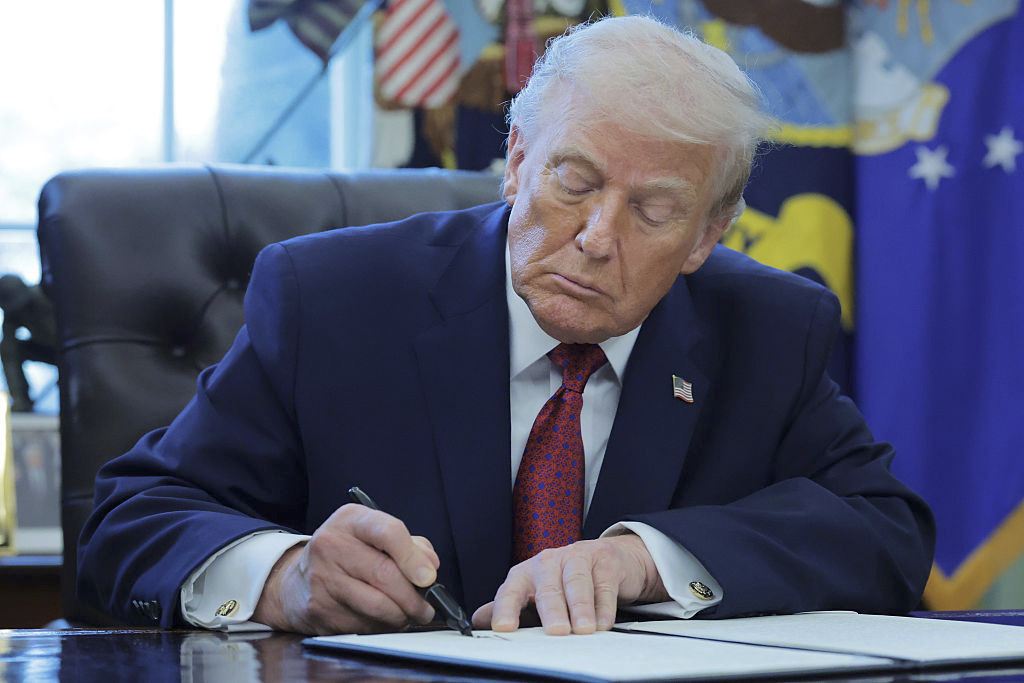
Na zdjęciu: Prezydent USA Donald J. Trump podpisuje rozporządzenie wykonawcze w Białym Domu, 15 grudnia 2025 r., w Waszyngtonie. (Zdjęcie: Anna Moneymaker/Getty Images)

Dlaczego Zachód jest podzielony w kwestii islamu politycznego

Pierre Rehov
Tłumaczenie: Andrzej Koraszewski


24 listopada 2025 r. prezydent USA Donald J. Trump podpisał rozporządzenie wykonawcze, które rozpoczęło formalny proces uznania niektórych oddziałów Bractwa Muzułmańskiego za zagraniczne organizacje terrorystyczne (FTO) oraz globalnych terrorystów specjalnie oznaczonych (SDGT). Rozporządzenie nakazuje sekretarzom stanu i skarbu ocenę oddziałów Bractwa w krajach takich jak Egipt, Jordania i Liban oraz podjęcie działań na podstawie amerykańskiego prawa antyterrorystycznego, by odebrać im zasoby i zdolności operacyjne — posunięcie to zostało wprost powiązane z priorytetami bezpieczeństwa narodowego po inwazji Hamasu na Izrael 7 października 2023 r. i jej konsekwencjach na Zachodzie. Nakreślono harmonogram przedstawienia rekomendacji w sprawie konkretnych oddziałów.

W ten sposób Trump podjął najbardziej zdecydowaną próbę od dekad zmierzenia się z islamistycznymi sieciami politycznymi, które w Waszyngtonie długo były traktowane jako element debaty politycznej, a nie jak śmiertelne zagrożenie dla bezpieczeństwa.

Tymczasem po drugiej stronie Atlantyku reakcja na ten sam nurt ideologiczny nie mogła być bardziej odmienna. W Unii Europejskiej i wielu jej głównych stolicach islam polityczny — często reprezentowany przez organizacje powiązane z Bractwem Muzułmańskim — nadal stanowi element szerszego podejścia opartego na “dialogu z islamistami”. Czy można sobie wyobrazić “dialog z bolszewikami” albo “dialog z III Rzeszą”? Islamscy ekstremiści są traktowani jako uprawniony głos w społeczeństwie obywatelskim i w debacie publicznej. Europejscy decydenci na ogół odrzucają twarde środki prawne, zamiast tego angażując ekstremistyczne sieci muzułmańskie jako interesariuszy w ramach “multikulturowych” modeli rządzenia. Ten kontrast między konfrontacyjnym stanowiskiem Waszyngtonu a ugodowym podejściem Brukseli odzwierciedla głęboki strategiczny rozdźwięk w sposobie, w jaki Zachód postrzega islam polityczny.

To wyraźnie kontrastuje z amerykańską strategią konfrontacji. Administracja Trumpa postrzega Bractwo Muzułmańskie nie jako partnera reform politycznych, lecz jako zagrożenie dla bezpieczeństwa narodowego. Rozporządzenie z listopada 2025 r. podkreśla związki Bractwa z działalnością terrorystyczną, w tym z Hamasem i innymi organizacjami terrorystycznymi. Dyrektywa prezydenta zobowiązuje administrację do zgromadzenia dowodów, które umożliwią uznanie tych struktur za organizacje terrorystyczne, co pozwoliłoby na penalizację wspierania ich oraz ograniczenie ich działalności międzynarodowej.

Ten krok jest efektem wieloletnich debat w administracji i Kongresie USA na temat tego, czy Bractwo spełnia kryteria organizacji terrorystycznej. Historycznie rzecz biorąc, USA odróżniały ugrupowania dżihadystyczne (takie jak Al-Kaida czy ISIS) od islamistycznych ruchów politycznych, jak Bractwo Muzułmańskie, które uczestniczyły w wyborach lub działały w społeczeństwie obywatelskim. Jednak narastająca przemoc islamistyczna i globalna sieć Bractwa skłoniły Waszyngton do zmiany podejścia. Równolegle Kongres USA prowadzi nowe działania ustawodawcze zmierzające do wprowadzenia ram prawnych dla takiego uznania.

W Europie sytuacja wygląda inaczej. UE i stolice państw członkowskich nadal angażują się w dialog z organizacjami powiązanymi z Bractwem Muzułmańskim, oferując im finansowanie, miejsce w konsultacjach obywatelskich i udział w programach polityki multikulturalnej. Przykładem może być Forum Europejskich Organizacji Młodzieży i Studentów Muzułmańskich, które działa w instytucjach unijnych i choć zaprzecza powiązaniom z Bractwem, to niektóre raporty wskazują na takie związki.

Organizacje afiliowane przy Bractwie są obecne w całej Europie — nie tylko wśród studentów. Federacja Organizacji Islamskich w Europie, założona w 1989 roku i mająca siedzibę w Brukseli, stanowi parasol dla dziesiątek ugrupowań islamskich i jest uznanym partnerem instytucji unijnych. Choć przedstawia się jako reprezentantka głównego nurtu muzułmanów, badania akademickie i polityczne wykazują jej głębokie powiązania z Bractwem Muzułmańskim i globalną ideologią islamistyczną.

Europejska polityka “dialogu” wynika z szeroko rozpowszechnionego przekonania, że włączanie “różnorodnych głosów” w struktury społeczne i polityczne ogranicza radykalizację. Krytycy uważają jednak, że angażowanie grup o ideologicznych powiązaniach z islamizmem normalizuje nurty odrzucające wartości liberalne i relatywizuje ekstremizm.

Belgii, zwłaszcza w Brukseli — siedzibie instytucji UE — ta dynamika jest szczególnie widoczna. Raporty parlamentarne ujawniły znaczne fundusze z programów unijnych przekazywane organizacjom powiązanym z Bractwem, co wzbudziło niepokój niektórych eurodeputowanych.

We Francji, rządowy raport z 2025 roku stwierdzał, że sieci Bractwa rozszerzają wpływy przez szkoły, meczety i NGO-sy, kamuflując cele ideologiczne integracją i pomocą społeczną. Prezydent Emmanuel Macron zwołał posiedzenie rządu, by przedyskutować tezy raportu jako zagrożenie dla laickiej republiki. Mimo to pojawiły się oskarżenia o stygmatyzację i upolitycznienie diagnozy.

Podobne napięcia widoczne są w Niemczech, gdzie Wspólnota Islamska Niemiec (IGD) działa legalnie mimo uznania przez służby za centralną strukturę Bractwa. W Szwecji, po publikacji francuskiego raportu, minister Mats Persson powołał zespół ekspertów, ale napotkał silny sprzeciw ze strony socjaldemokratów.

Na całym kontynencie ekstremistyczne organizacje muzułmańskie tworzą sieci edukacyjne i młodzieżowe. We Francji zidentyfikowano setki takich stowarzyszeń, powiązanych z ideologią Bractwa.

Zjawisko “entryzmu“, czyli taktyki infiltracji struktur demokratycznych przez grupy ekstremistyczne, umożliwia islamistom zdobywanie wpływów, kształtowanie debaty publicznej i normalizowanie skrajnych poglądów. W efekcie Zachód asymiluje się do islamu, a nie odwrotnie.

Krytycy wskazują, że europejskie zaangażowanie w sieci Bractwa ma też wpływ na politykę wobec Izraela, gdzie niejednoznaczność UE w ocenie islamu politycznego przyczyniła się do wzrostu radykalizacji i antyizraelskich nastrojów wśród młodych muzułmanów i nie tylko muzułmanów.

Podsumowanie:
Rozporządzenie Trumpa redefiniuje debatę strategiczną — priorytetem staje się bezpieczeństwo narodowe, a nie miraż “dialogu” czy “akomodacji”. Różnice między Europą a USA ukazują głębokie pęknięcie w rozumieniu islamu politycznego: Europa stawia na integrację i inkluzywność, USA — na konfrontację z ideologiami zagrażającymi demokracji.


Pierre Rehov, prawnik (Uniwersytet Paris-Assas), jest francuskim reporterem, powieściopisarzem i dokumentalistą. Autor sześciu powieści, m.in. Beyond Red Lines, The Third Testament i Red Eden. Jego najnowszy esej 7 octobre – La riposte stał się bestsellerem we Francji. Reżyser 17 filmów dokumentalnych kręconych m.in. w strefach wojennych Bliskiego Wschodu, koncentruje się na terroryzmie, uprzedzeniach medialnych i prześladowaniach chrześcijan. Ostatni film Pogrom(s) analizuje wielowiekową nienawiść do Żydów w cywilizacji muzułmańskiej jako główną przyczynę masakry z 7 października.


Zawartość publikowanych artykułów i materiałów nie reprezentuje poglądów ani opinii Reunion’68,
ani też webmastera Blogu Reunion’68, chyba ze jest to wyraźnie zaznaczone.
Twoje uwagi, linki, własne artykuły lub wiadomości prześlij na adres:
webmaster@reunion68.com

Concern about antisemitism on the right isn’t a plot against Vance


Concern about antisemitism on the right isn’t a plot against Vance

Jonathan S. Tobin


The vice president won’t distance himself from a dogmatic faction of Jew-haters led by Tucker Carlson. That’s why some Republicans are drawing conclusions about him.

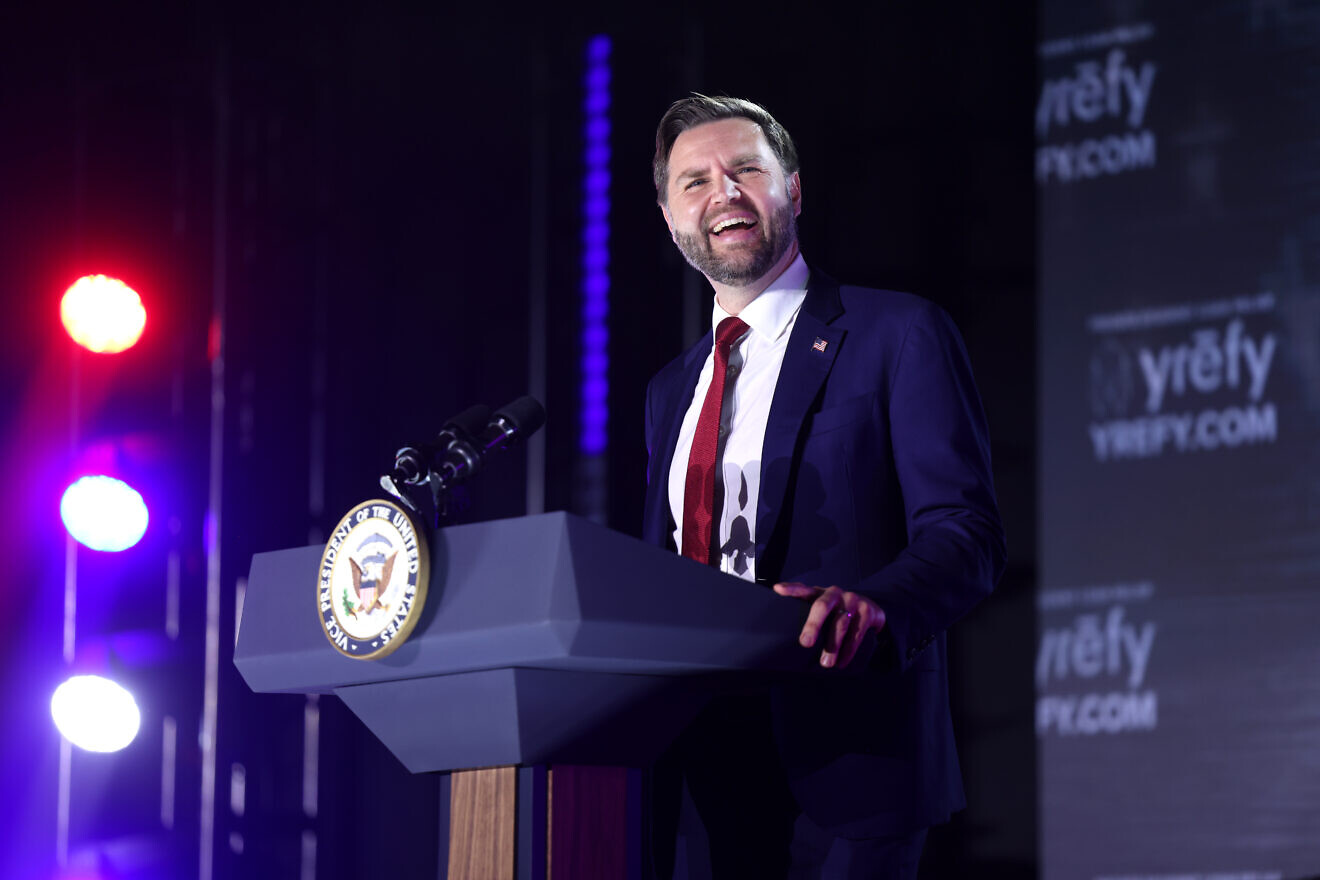
U.S. Vice President JD Vance speaks with attendees at the University of Mississippi tour stop of the “This Is The Turning Point” tour at the SJB Pavilion in Oxford, Miss., Oct. 29, 2025. Credit: Gage Skidmore via Creative Commons.

Believe it or not, 18 months from now, the 2028 presidential race will already have begun. And, assuming that there will actually be a real contest for the Republican nomination, some of Vice President JD Vance’s fans aren’t waiting until the summer of 2027 to begin laying the groundwork for his campaign.

Apparently, their goal is to frame the battle as one between the 41-year-old man who is currently a heartbeat away from the presidency and the former discredited GOP establishment. By that, they refer to those who used to run Washington along with the Democrats before President Donald Trump came down the escalator in Trump Tower in June 2015 and into the country’s political life.

An unwelcome discussion

They are also claiming that those who have noticed the rise of antisemitism inside the Republican Party and the conservative movement in the past year are doing so only to discredit Vance. That was the argument of a recent column in The Spectator by Daniel McCarthy, the editor of the paleoconservative journal Modern Age. It was more or less the same argument made by John Henry Davidson in The Federalist last November as a way to dismiss the criticism of Kevin Roberts, the president of the Heritage Foundation, for his defense of far-right podcaster Tucker Carlson. It also seemed to be the vice president’s explanation for the controversy with comments that he has made about the trouble revolving around whether some people “don’t like Israel.”

That Vance realizes the importance of the issue was made clear last month in his much-anticipated address to the Turning Point USA AmericaFest. There, he declared that the entire discussion about antisemitism among conservatives was not merely unwelcome, but something that was being used to create unnecessary divisions and to distract the right from its main job of defeating the political left.

In his speech, he made it clear that he saw the issue as one of freedom of expression. In this way, he depicted those who are angry about the surge of Jew-hatred around the globe and in the United States as trying to “cancel” conservatives. Following the lead of Carlson and others on the far right, he opposes the backlash against the former Fox News host’s platforming of antisemitism and Holocaust denial. Vance seems to view anger about this as no different from the deplorable manner in which leftists silenced dissent against their toxic doctrines during the moral panic about race following the death of George Floyd over the course of the Black Lives Matter summer of 2020.

The problem with this is more than the fact that this is an utterly disingenuous evaluation of the controversy that has divided the right in the months since the assassination of Turning Point USA founder Charlie Kirk. Since then, Carlson hosted neo-Nazi “groyper” leader Nick Fuentes in a chummy interview on his podcast. In the past year since hosting faux historian and Holocaust denier Daryl Cooper, Carlson’s show has been largely devoted to platforming virtually anyone who will bash Israel and promote the idea that Jews are controlling American foreign policy and the media, all classic tropes of Jew-hatred. He has also become an uncompromising defender of Qatar, the country that is funding Islamist propaganda and terrorism.

Candace Owens, another popular though thoroughly unhinged right-wing podcaster, has gone even further down the rabbit hole of antisemitism and conspiracy theories. She alleges that the Jews and Israelis are guilty of Kirk’s murder on the Utah Valley University campus and various other crimes while also seeking to promote age-old hard-core tropes about the Jews, such as depicting the Talmud as a hate tract.

Vance thinks that he ought not to be asked to condemn these lunatics or even to distance himself from Carlson, a friend who did a lot to foster his political career. Indeed, he remains close to him, reportedly having lunch with the podcaster in the White House on Jan. 9, after which Carlson was allowed to sit in on a meeting between Trump, Vance and oil executives when Venezuela was being discussed.

Megyn Kelly’s temper tantrum

He’s not alone. Megyn Kelly, another heretofore responsible conservative voice who has condemned antisemitism and supported Israel, now believes that it is unreasonable to ask her to do the same when it comes to her friends Carlson and Owens. Indeed, she is so angered by these requests that she has turned on both Jews and Israel.

In what can only be described as a childish tantrum aired in an appearance on Carlson’s show this week, she has declared that she would “rather die” than condemn the anti-Jewish hate flowing from that program or that of Owens. Furthermore, she says she now believes that the media is controlled by Jews “who are not telling the truth about Israel,” as if the overwhelming majority of corporate legacy media hasn’t been mainstreaming Hamas propaganda ever since the terrorist attacks on Oct. 7, 2023. Echoing Carlson, she repeats that the issue isn’t Muslim antisemitism and support for Islamist terror, but that Jews and friends of Israel are responsible for promoting hatred of Muslims in America.

It’s important to remember that Carlson and Kelly are not insignificant figures on the far right but influential media personalities with vast followings on social media, as well as millions of viewers and listeners of their shows. Though Owens and Fuentes don’t have the veneer of respectability that Carlson and Kelly acquired during their stints as prime-time Fox News hosts, they have audiences that number in the millions. More to the point, among them are a sizable percentage of the many young Republicans and conservatives currently working in official Washington.

While Kirk was a strong believer in debate with anyone on anything, he labored to keep his organization free of the influence of Fuentes and the groypers. Now that he’s gone, there is no one to guard the gates of conservatism. Indeed, Vance and others on the right seem to be taking the position that in the post-BLM era, any sort of gatekeeping, even to keep out the most vicious hate-mongers, is wrong.

Is Trump a ‘neoconservative’?

For Vance and his media cheerleaders, any efforts to get him to take a side in the debate about whether there is room in the conservative movement for antisemites are not merely a distraction from the right’s main task of taking on the left. They feel that it’s all just a trick by neoconservatives to win back control of the Republican Party by thwarting the ambitions of Vance.

This is ludicrous for a number of reasons.

Neoconservatism, per se, was a movement that was deeply important and indeed crucial to moving on from the dominant liberalism of the mid-20th century and to winning the Cold War against the Soviet Union. Since then, it has become identified with the failed wars in Iraq and Afghanistan. But to the extent that it actually means anything in 2026, it is merely a way for some on the right to refer to what they think are Jews and others who support Israel. It is a boogeyman with which they can link to any cause they don’t like. It’s also the way they refer to opposition to the kind of extreme isolationism promoted by the likes of Carlson, who more often than not can be found speaking up for any opponent of the United States, whether in Moscow, Tehran or Caracas. That includes not merely Russian President Vladimir Putin, the Qataris and the Iranians (who have started broadcasting Carlson on the Islamic Republic’s state propaganda network). It also includes former Venezuelan president and narco-terrorist Nicolás Maduro, whom Carlson praised for his opposition to gay marriage.

What makes all this even crazier is that there is no differentiation between what these defenders of Vance label as neoconservatism or Bush-era Republican establishmentarians and the actual foreign policy of the Trump administration in which he is serving. As Trump has repeatedly made clear, there is no real daylight between the positions of the United States and Israel on the key issues of Gaza and Iran, which is completely at odds with what Carlson, Kelly and their groyper fans are supporting. Trump’s definition of “America First” is nothing like the “America Only” doctrine that Carlson backs.

Moreover, the administration has prioritized the battle against antisemitism, as was illustrated by the tough tactics that the president has employed against elite universities that tolerated and encouraged the pro-Hamas mobs that targeted Jewish students since Oct. 7.

Moral obfuscation

Yet when asked by CNN’s Scott Jennings to declare that the conservative movement has no room for antisemitism on his radio show, as with every previous opportunity he has been given to put himself on the right side of the issue, Vance prevaricated. While condemning Jew-hatred, he did it in the same manner that many on the left do so—by coupling it to other issues, thereby denying the very real and growing problem.

As writer Liel Liebovitz noted, his response was “malicious moral obfuscation” and not the kind of moral clarity that Americans have a right to expect from a vice president, let alone someone who aspires to the presidency.

Bringing this up is inconvenient for those who see Vance as the future of the Republican Party, as well as the man who can shift the GOP away from the stalwart pro-Israel policies and implacable opposition to anti-Jewish positions that Trump has brought it. 

But doing so is not part of a plot to derail Vance’s 2028 candidacy. To the contrary, as the current frontrunner to succeed Trump, conservatives of all stripes want Vance to take stands that are not just moral but also popular, and thus likely to help Republicans hold onto the White House.

Carlson and now Kelly may think a neo-Nazi like Fuentes is smart and represents views that everyone should listen to. But those individuals who think being soft on antisemitism is smart politics don’t really know anything about the American people. Mimicking the left’s hatred for Israel and alliance with Islamists that has been evident since Oct. 7 is not a winning formula for a party, the vast majority of whose voters are supporters of the Jewish state.

It’s not unfair to ask Vance to take a stand on what is clearly one of the great moral issues of our time, as well as one linked to the defense of Western civilization, against those on the left who wish to tear it down. His failure to do so—and his determination to stick with his buddy Carlson—isn’t a distraction or an attempt to force him into a struggle session in which he does the bidding of a mythical all-powerful Israel lobby. It’s a test of his character. Unfortunately, much like Megyn Kelly, he’s currently failing it.


Jonathan S. Tobin is editor-in-chief of the Jewish News Syndicate, a senior contributor for The Federalist, a columnist for Newsweek and a contributor to many other publications. He covers the American political scene, foreign policy, the U.S.-Israel relationship, Middle East diplomacy, the Jewish world and the arts. He hosts the JNS “Think Twice” podcast, both the weekly video program and the “Jonathan Tobin Daily” program, which are available on all major audio platforms and YouTube. Previously, he was executive editor, then senior online editor and chief political blogger, for Commentary magazine. Before that, he was editor-in-chief of The Jewish Exponent in Philadelphia and editor of the Connecticut Jewish Ledger. He has won more than 60 awards for commentary, art criticism and other writing. He appears regularly on television, commenting on politics and foreign policy. Born in New York City, he studied history at Columbia University.


Zawartość publikowanych artykułów i materiałów nie reprezentuje poglądów ani opinii Reunion’68,
ani też webmastera Blogu Reunion’68, chyba ze jest to wyraźnie zaznaczone.
Twoje uwagi, linki, własne artykuły lub wiadomości prześlij na adres:
webmaster@reunion68.com


UK Home Secretary Says She ‘Lost Confidence’ in Police Chief Following Ban on Maccabi Tel Aviv Soccer Fans


UK Home Secretary Says She ‘Lost Confidence’ in Police Chief Following Ban on Maccabi Tel Aviv Soccer Fans

Shiryn Ghermezian


British Home Secretary Shabana Mahmood speaks on stage at Britain’s Labour Party’s annual conference in Liverpool, Britain, Sept. 29, 2025. Photo: REUTERS/Hannah McKay

British Home Secretary Shabana Mahmood told Parliament on Wednesday that she has lost confidence in the chief constable of the West Midlands Police (WMP) and will push for a new law that will give her power to fire him, after it was revealed that intelligence used by the police force to justify a ban against fans of the Israeli soccer team Maccabi Tel Aviv was “exaggerated or simply untrue.”

Mahmood’s comments came on the same day that her office announced new plans to give the home secretary the power to fire “failing chief constables.”

Speaking to UK lawmakers, Mahmood said that WMP Chief Constable Craig Guildford “no longer has my confidence” and that he should have ensured “more professional and thorough work was done” by police before the ban was implemented late last year. She claimed it has been over 20 years since a home secretary has made such comments about a chief constable.

West Midlands Police had a “failure in leadership” which “harmed the reputation and eroded public confidence in West Midlands police and policing more broadly” across the country, the UK’s home secretary explained in front of the House of Commons.

Maccabi supporters were banned from attending a soccer game at Villa Park in Birmingham on Nov. 6 last year, a decision made by Birmingham City Council in October following advice from a safety advisory group, which acted on a recommendation by West Midlands Police. Traveling Israeli fans were banned from the soccer game between Maccabi and Aston Villa due to “public safety concerns.”

“I do believe all of us in this country need to be able to trust the police when they come forward and they say they have risk assessed an upcoming event; they have come to a professional judgment as to whether an event can take place safety or not,” Mahmood said. “We all need to be able to trust that they have gone about making that risk assessment in a way that is robust, consistent, in line with the law, and just plain old truthful. That is not what’s happened in this case … It’s why I set out what I said about losing confidence in the chief constable.”

Mahmood does not have the power to fire a chief constable because of law changes implemented in 2011. Guildford would have to be dismissed by Simon Foster, the West Midlands Police and crime commissioner. However, Mahmood’s office announced on Wednesday she will push new legislation that will once again restore power to the home secretary to “force the retirement, resignation, or suspension of chief constables on performance grounds.”

Mahmood said she came to the conclusion about Guildford after receiving a “damning” and “devastating” report by His Majesty’s Inspectorate of Constabulary and Fire and Rescue Services, Sir Andy Cook, that “catalogues failures that did not just affect traveling fans” but also “let down our entire Jewish community in West Midlands and across the country.”

Cook’s report provides evidence that WMP only sought evidence to support what Mahmood called the police force’s “desired position” to ban Maccabi fans. The report also elaborates on a series of “misleading” public statements made by the police force, including Guildford, and “misinformation” promoted by the police. Cook’s report showed police “overstated the threat posed by Maccabi fans while understating the risk that was posed to the Israeli fans if they traveled to the area,” according to Mahmood.

“What is clear from this report [is] that on an issue of huge significance to the Jewish community in this country and to us all, we have witnessed a failure of leadership that has harmed the reputation and eroded public confidence in West Midlands Police and policing more broadly,” the home secretary said.

When the ban against Maccabi supporters was first announced in October, Mahmood and British Prime Minister Keir Starmer were among those who voiced concerns about the decision and said Israeli soccer fans should be allowed to attend the game.

Mahmood said police forces across the country should learn a “lesson” from the mistakes of WMP. Police around the UK should remember “they are called to their profession to serve truth and the law, to police our streets without fear or favor, and that community trust and cohesion depends upon them doing that above all else,” she said.


Zawartość publikowanych artykułów i materiałów nie reprezentuje poglądów ani opinii Reunion’68,
ani też webmastera Blogu Reunion’68, chyba ze jest to wyraźnie zaznaczone.
Twoje uwagi, linki, własne artykuły lub wiadomości prześlij na adres:
webmaster@reunion68.com