Archive | 2026/01/18

7 października był największym błędem Iranu


7 października był największym błędem Iranu

Brendan O’Neill


„Reżim syjonistyczny topnieje na oczach świata” – chełpił się ajatollah Chamenei po pogromie Hamasu z 7 października 2023 roku. Jego upojona przepowiednia śmierci narodu żydowskiego odbiła się echem na całym świecie pełnym izraelofobii. Upadek Izraela to „kwestia kiedy, a nie czy” – twierdzili islamscy fanatycy z portalu 5 Pillars. Lewicowi radykałowie zgodnie uznali, że inwazja na Izrael przeprowadzona przez irańskie marionetki oznaczała początek końca „projektu syjonistycznego”.

Przeskoczmy do roku 2026 – i jedyne, co naprawdę „topnieje na oczach świata”, to Islamska Republika.

Wszystko to, co Chamenei przewidział jako los Izraela, w rzeczywistości spotkało jego własny reżim. „Izrael wszedł w ślepą uliczkę, z której nie będzie w stanie się wydostać” – przechwalał się. Komicznie, być może rzeczywiście siedzi teraz w jakimś ciasnym korytarzu lub nędznym pomieszczeniu, dobrze zabarykadowanym, ukrywając się przed bezlitosnym gniewem irańskiej rewolty.

Islamska Republika myślała, że 7 października 2023 roku podpisała wyrok śmierci Izraela – w rzeczywistości mogła podpisać własny. Coraz bardziej wygląda na to, że ta orgia rasistowskiej przemocy była nie tylko największym aktem przemocy wobec Żydów od czasu Holokaustu, ale też największym aktem samobójczym, jakiego dopuścili się radykalni islamiści. Po kolei, ci, którzy zorganizowali lub wspierali tę napaść – Hamas, Hezbollah, Huti – zostali zdziesiątkowani. A teraz główny patron ich barbarzyństwa chwieje się na krawędzi unicestwienia – ofiara własnej pychy i nienawiści.

Warto przypomnieć sobie egzystencjalne przechwałki reżimu po 7 października.

To „potężny cios dla Izraela” – mówił Chamenei. Atak z 7 października pozostawi „czarną plamę” na „syjonistycznym bycie” – powiedział lider Hamasu Chalid Meszal. „Zwycięstwo jest blisko” – twierdził. Porażka była bliżej. Każdy, kto zbyt wcześnie tańczył na grobie państwa żydowskiego, musiał patrzeć, jak jego własne ruchy i ideologie zostają pochłonięte przez konsekwencje brutalnego ataku na Żydów.

Hamas został zdławiony. Jego liderzy, w tym Jahja Sinwar – główny architekt 7 października – nie żyją. Ta armia antysemitów może nie została całkowicie zlikwidowana, ale jest wyraźnie osłabiona. Poniosła „znaczne straty” – zarówno kadrowe, jak i finansowe – po tym, jak została „upokorzona” przez IDF. Hezbollah, jeśli to w ogóle możliwe, wypadł jeszcze gorzej. Dołączył do fanatycznej sprawy Hamasu po 7 października, zasypując północ Izraela rakietami, by „zniszczyć byt syjonistyczny”. Zniszczył jednak samego siebie.

Zabójstwo przywódcy duchowego Hezbollahu, Hassana Nasrallaha, było dla tej organizacji ciosem śmiertelnym.

W tym samym miesiącu – we wrześniu 2024 – Izrael wyeliminował praktycznie całą strukturę dowódczą Hezbollahu podczas uderzenia w Bejrucie. Nadzwyczajna operacja „pagerowa”, w której tysiące pagerów eksplodowało jednocześnie w kieszeniach spodni członków Hezbollahu, dopełniła ich upokorzenia. Operację nazwano „Grim Beeper” (Ponury Pikanie). Obecnie rząd Libanu rozbraja Hezbollah. Co za ulga dla ludzkości: Islamska Republika na deskach, a jedna z jej najbardziej bezwzględnych bojówek oddaje broń ze spuszczoną głową.

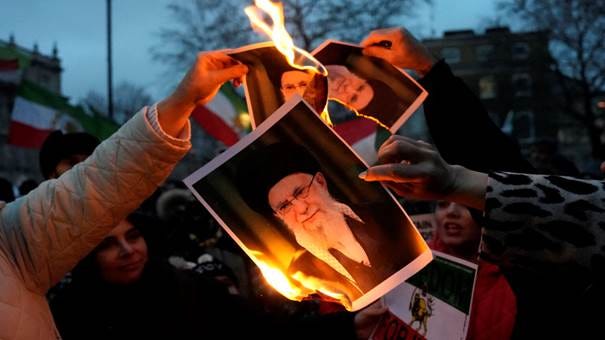
A teraz sam reżim irański – stoi nad przepaścią, dzięki niewiarygodnie odważnym mężczyznom i kobietom, którzy się przeciwko niemu buntują.

Ci bojownicy o wolność to prawdziwi sprawcy kłopotów ajatollahów – dowód na to, że nawet najbardziej bezwzględne reżimy mogą zostać rozliczone przez tych, których uciskają. A jednak to właśnie śmiertelna głupota 7 października, jej faszystowska próżność, utorowała drogę do obecnego kryzysu reżimu. Obsesyjne nękanie państwa żydowskiego przez mullahów doprowadziło cierpliwość irańskiego społeczeństwa do granic wytrzymałości.

Marnotrawna wojna reżimu z Żydami doprowadzała część Irańczyków do furii.

Podczas gdy rial nadal tracił na wartości względem dolara, pogłębiając biedę, reżim lekką ręką wydawał miliardy na swoje antysemickie marionetki. Szacuje się, że od 2012 roku Iran wydał 20 miliardów dolarów na Hezbollah i Hamas. Koszty ataków rakietowych na Izrael – zwłaszcza dla samego Iranu – były wręcz niewiarygodne. Przykład: 1 października 2024 roku, w ciągu jednego dnia, reżim wystrzelił salwę pocisków balistycznych w kierunku Izraela. Kosztowało to Iran 2,3 miliarda dolarów. To sześciokrotnie więcej niż wyniosły izraelskie koszty obrony przed tym atakiem.

12-dniowa wojna między Iranem a Izraelem w czerwcu ubiegłego roku przyniosła Iranowi ogromne straty.

W odwecie za ataki Iranu Izrael uderzył w infrastrukturę krytyczną w 27 irańskich prowincjach – w tym w lotniska, magazyny ropy i gazu oraz oczywiście infrastrukturę nuklearną. Straty Iranu sięgnęły miliardów. Odpowiedź rakietowa na Izrael – kolejne miliardy. Wojna 12-dniowa „nadzwyczajnie obciążyła już i tak zrujnowaną gospodarkę Iranu”, jak ujął to jeden z obserwatorów. A mówimy o kraju, w którym ok. 80 proc. populacji „nie było w stanie zaspokoić podstawowego dziennego zapotrzebowania kalorycznego na poziomie 2 100 kalorii”.

Kosmiczna nienawiść mullahów wobec państwa żydowskiego bardzo drogo kosztowała irańskie społeczeństwo. Irańscy kupcy i studenci patrzyli, jak ich pieniądze tracą wartość, podczas gdy teokraci przelewają miliardy do kieszeni bogatych rasistów z Hamasu i Hezbollahu. Nic dziwnego, że jednym z haseł skandowanych na ulicach jest: „Ani Gaza, ani Liban – moje życie dla Iranu!” Innymi słowy: żadnych więcej kosztownych i pełnych nienawiści wojen gdzie indziej – czas zająć się sprawami tu, u nas.

Po 12-dniowej wojnie zachodnia lewica twierdziła, że ataki Izraela na Iran doprowadzą do konsolidacji poparcia społeczeństwa dla reżimu. Stało się odwrotnie. Miliony ludzi były zdegustowane rozrzutnym militaryzmem rządzących i dziś otwarcie domagają się, by porzucić „Gazę i Liban”. To sytuacja naprawdę niezwykła – uprzywilejowane zachodnie środowiska kefijowe pragną kolejnych ataków na państwo żydowskie, podczas gdy irańscy buntownicy mówią: „Dość.” Nasza rodzima islamo-lewica instynktownie pragnie przetrwania irańskiego reżimu, naiwnie wierząc, że to przeciwwaga dla Zachodu, kapitalizmu i Izraela. Irańscy demonstranci chcą jego śmierci – w przekonaniu prawdziwym, bolesnym, że jest to przeciwwaga dla ich własnej wolności i dla samego rozumu.

Niektórzy na fałszywej lewicy twierdzą, że za buntem w Iranie stoi „syjonistyczne lobby”. To przejaw ich orientalizmu i rasizmu – tak beztrosko odbierać irańskim rebeliantom sprawczość i sprowadzać ich do roli marionetek Żydów. Prawda jest taka, że jeśli 7 października rzeczywiście postawił w centrum pytanie o przyszłość Iranu, to odpowiedzi udzielą sami Irańczycy. I miliony już dziś mówią: „Nigdy więcej islamizmu, nigdy więcej teokracji, nigdy więcej wojny w Gazie i Libanie.” Chcą, by Iran porzucił islamofaszystowski eksperyment i znów zajął należne mu miejsce wśród wielkich cywilizacji. Wszyscy przyzwoici ludzie tego chcą.


Link do oryginału: https://www.spiked-online.com/2026/01/12/7-october-was-the-biggest-mistake-iran-ever-made/

Spiked, 12 stycznia 2026

Brendan O’Neill jest głównym publicystą politycznym portalu Spiked oraz gospodarzem podcastu The Brendan O’Neill Show. Podcast można subskrybować tutaj. Jego najnowsza książka – After the Pogrom: 7 October, Israel and the Crisis of Civilisation – jest już dostępna na Amazon UK i Amazon US. Brendana można znaleźć na Instagramie pod nazwą: @burntoakboy.


Zawartość publikowanych artykułów i materiałów nie reprezentuje poglądów ani opinii Reunion’68,
ani też webmastera Blogu Reunion’68, chyba ze jest to wyraźnie zaznaczone.
Twoje uwagi, linki, własne artykuły lub wiadomości prześlij na adres:
webmaster@reunion68.com

Where Are the So-Called Human Rights Defenders for the People of Iran?


Where Are the So-Called Human Rights Defenders for the People of Iran? The Nauseating Double Standards of the Human Rights Industry

Majid Rafizadeh


  • When it comes to Iran… where ordinary, unarmed people demanding freedom are being beaten, tortured, imprisoned, and gunned down in the streets by their own leaders, this high-minded moral chorus has all but disappeared.
  • The same institutions and voices that were so shrill and relentless when condemning Israel in the name of Palestinian rights are, when courageous Iranian lives are at stake, spectacularly non-existent. This double standard only exposes the bottomless hypocrisy at the heart of much contemporary human rights activism.
  • The Iranian people, after weeks of being massacred in the streets, are still waiting for that “locked and loaded” promise that Trump keeps making but never delivers. To them, once again, as during the term of President Barack Hussein Obama, it must look as if their deaths do not matter, and do not trigger the same “moral reflex” as other conflicts.
  • Is Trump really going to thwart the efforts of these unimaginably courageous people trying to rid themselves of a brutal despotism that has been attacking them for 47 years?
  • The silence tells them that the human rights of the global liberal and leftist establishment are not truly universal at all — but conditional, applied extremely selectively based on being paid and transported by professional organizers, as well as on often fabricated anti-American and anti-Jewish geopolitical narratives.
  • Instead, what we see is — nothing. A few indignant statements are released, carefully worded to be stripped of urgency. There are no mobilizations, no sense that what is happening in Iran represents a deadly emergency. This passivity contrasts with the manufactured energy poured into other causes. The moment outrage is selective, it is no longer moral; it is just political puffery.
  • Women who resist are harassed, tortured, raped in detention or even killed. In recent uprisings, women have openly defied the regime. They have removed their headscarves and called for freedom while daring to imagine a life without fear. Many are today paying with their lives for their courage while the loud, fearless, sanctimonious “defenders of human rights” just shop at the supermarket.
  • These protests are not just about Iran. They are about whether human rights are truly universal or just rhetorical twaddle deployed when one has nothing better to do.

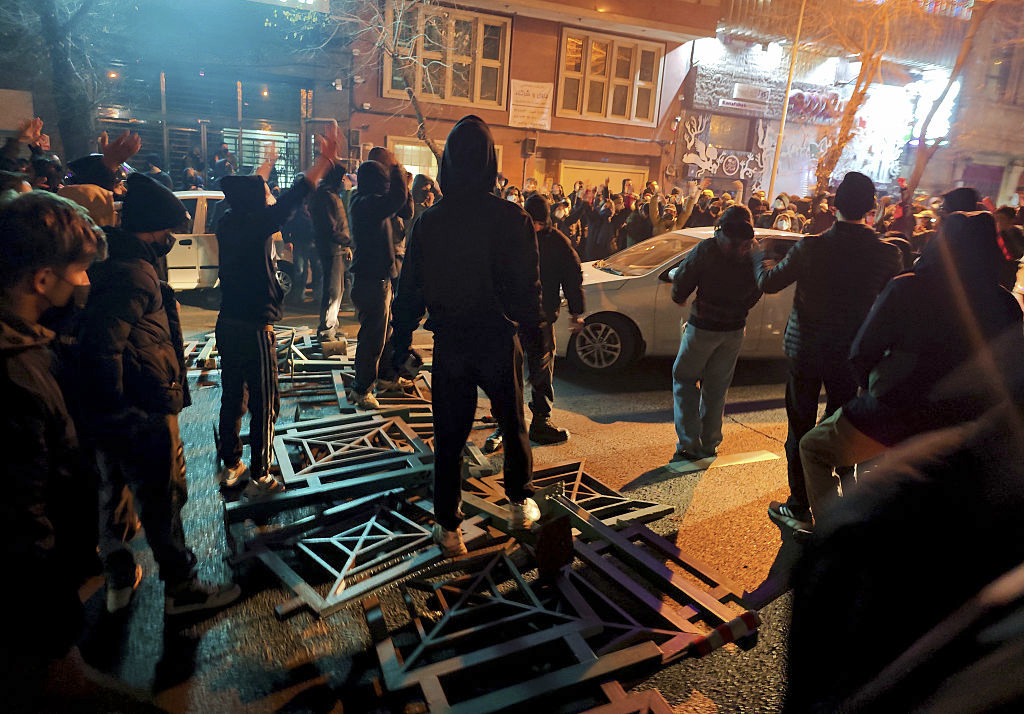
The United Nations, prominent NGOs, liberal politicians, and left-leaning activist networks seemingly love to frame themselves as some kind of elevated moral conscience for the international system. When it comes to Iran, however, where ordinary, unarmed people demanding freedom are being beaten, tortured, imprisoned, and gunned down in the streets by their own leaders, this high-minded moral chorus has all but disappeared. Pictured: Iranians protest against their regime on January 8, 2026 in Tehran, Iran. (Photo by Anonymous/Getty Images)

The United Nations, prominent NGOs, liberal politicians, and left-leaning activist networks seemingly love to frame themselves as some kind of elevated moral conscience for the international system. They speak the language of “justice,” “dignity,” and “universal human rights,” and insist — sometimes with threats and violence — that silence in the face of oppression is “complicity.”

When it comes to Iran, however, where ordinary, unarmed people demanding freedom are being beaten, tortured, imprisoned, and gunned down in the streets by their own leaders, this high-minded moral chorus has all but disappeared.

If the slaughter has stopped, it is reportedly “only because residents are being held hostage in their homes by machine gun-wielding security forces that have flooded the streets.”

The same institutions and voices that were so shrill and relentless when condemning Israel in the name of Palestinian rights are, when courageous Iranian lives are at stake, spectacularly non-existent. This double standard only exposes the bottomless hypocrisy at the heart of much contemporary human rights activism.

Across Iran, protests have erupted in a desperate struggle for survival. People are not marching because they are paid, bored or seeking attention. They are marching because they are being suffocated by an authoritarian system that controls nearly every aspect of their lives. The regime has responded in the only way it knows how: with unremitting brute force. Security forces fire live ammunition into crowds, raid homes at night, arrest protesters, beat detainees behind closed doors, and for all we know, hang them in secret.

Internet access has been deliberately cut to isolate the population, both to prevent images of bloodied streets and grieving families from reaching the outside world and to prevent demonstrators from communicating with one another. Bless Elon Musk for his Starlink. We are witnessing repression in its most classic and savage form. Where is the sustained outrage? Where are the mass demonstrations in Western capitals? Where are the daily headlines, the emergency UN sessions, the endless panel discussions, the moral urgency?

The silence tells Iranians that their suffering is negotiable, as the ayatollahs tried to convince US President Donald J. Trump. He first sounded delighted but then, to his unending credit, backtracked.

The Iranian people, after weeks of being massacred in the streets, are still waiting for that “locked and loaded” promise that Trump keeps making but never delivers. To them, once again, as during the term of President Barack Hussein Obama, it must look as if their deaths do not matter, and do not trigger the same “moral reflex” as other conflicts.

Is Trump really going to thwart the efforts of these unimaginably courageous people trying to rid themselves of a brutal despotism that has been attacking them for 47 years?

The silence tells them that the human rights of the global liberal and leftist establishment are not truly universal at all — but conditional, applied extremely selectively based on being paid and transported by professional organizers, as well as on often fabricated anti-American and anti-Jewish geopolitical narratives.

For people risking their lives — risking literally everything — in the streets of Tehran, Mashhad, Shiraz, and countless smaller cities, this silence means abandonment.

For years now, Iranians have been fighting for their most basic rights: to speak freely, to hear music, to dance, to feel their hair blown by the wind, to choose their leaders freely, to live without fear of arbitrary arrest, and to have a future that is not dictated by a sadistic, sociopathic elite.

The uprisings have come in waves. Each time, the regime has responded with intimidation, mass killings, torture, prison sentences, and countless atrocities. Many thousands, over the years, have been killed unjustly, with nothing even resembling due process. Thousands have disappeared into prisons where torture is routine and confessions are extracted through pain, humiliation, and ferocity.

Every uprising is followed by executions meant to instill terror and crush hope. Even so, each time, the people return to the streets. This persistence alone should command respect and solidarity from anyone who claims to stand for even the tiniest human right.

Instead, what we see is — nothing. A few indignant statements are released, carefully worded to be stripped of urgency. There are no mobilizations, no sense that what is happening in Iran represents a deadly emergency. This passivity contrasts with the manufactured energy poured into other causes. The moment outrage is selective, it is no longer moral; it is just political puffery.

For decades, women in Iran have lived under laws that regulate their bodies, clothing, movement and behavior. Mandatory hijabs are not a cultural choice; they are enforced through surveillance, intimidation and sometimes murder. Women who resist are harassed, tortured, raped in detention or even killed. In recent uprisings, women have openly defied the regime. They have removed their headscarves and called for freedom while daring to imagine a life without fear. Many are today paying with their lives for their courage while the loud, fearless, sanctimonious “defenders of human rights” just shop at the supermarket.

Where are the feminist organizations, the massive street protests, the celebrity campaigns, the nonstop advocacy? The same groups that mobilize instantly for women’s issues such as “glass ceilings” have reduced Iranian women to footnotes, if they mention them at all. The same holds true for all women doctrinally told they are inferiors. The silence is insulting. Iranian women apparently do not fit neatly into preferred narratives, or their struggle is inconvenient, or condemning a theocratic tyranny conflicts with other ideological alignments.

The message this disdain sends to Iran’s regime is that repression has no international cost. When authoritarian rulers see that mass murder provokes only muted pieties, how can they not feel emboldened? Silence is the green light that allows viciousness to continue, normalized and unchecked.

What is striking is that some of the few voices speaking out forcefully have come from unexpected places, such as Trump and leaders of Israel. Regardless of one’s views on their broader politics, their words on Iran have been unambiguous and blunt. They have openly condemned the regime’s violence and framed the protests as a legitimate struggle for freedom. While many so-called human rights defenders hedge their language on Iran and Jews, Trump and pro-Israel voices have shown a willingness to call regimes what they are and to supply consequences.

If the West truly wants to stand with the Iranian people, the continued presence of Iranian embassies and diplomats in Western capitals sends a message of the regime’s legitimacy and acceptance. Closing these embassies and expelling regime representatives would notify the Iranian people and everyone else that the world will no longer recognize or tolerate governments that massacre their own people.

Restoring and protecting internet access to Iranians is also critical. When the regime shuts down communications, it not only prevents coordination — it is hiding crimes. Providing Iranians with tools to stay connected, to share their stories, and to document abuses would be a hugely effective form of support. Amplifying Iranian voices in international media, giving protesters a platform to speak for themselves, and refusing to let their struggle fade from public attention are equally vital.

Finally, authoritarian regimes respond to pressure only when it is real and credible. The possibility of intervention has already somewhat changed the mullahs’ calculations. Pressure consists of making clear that red lines exist, and that crossing them will not be free of cost. Without credibility, no bloodshed will ever stop.

The Iranian people will remember who spoke up, who acted, and who did not. If these so-called human rights defenders, liberals, and leftists who claim to champion justice remain silent now, their credibility may deservedly be gone.

It is time to speak up clearly and consistently and stand with the Iranian people. These protests are not just about Iran. They are about whether human rights are truly universal or just rhetorical twaddle deployed when one has nothing better to do. Supporting the Iranians in their struggle for freedom is supporting freedom itself.


Dr. Majid Rafizadeh, is a political scientist, Harvard-educated analyst, and board member of Harvard International Review. He has authored several books on the US foreign policy. He can be reached at dr.rafizadeh@post.harvard.edu


Zawartość publikowanych artykułów i materiałów nie reprezentuje poglądów ani opinii Reunion’68,
ani też webmastera Blogu Reunion’68, chyba ze jest to wyraźnie zaznaczone.
Twoje uwagi, linki, własne artykuły lub wiadomości prześlij na adres:
webmaster@reunion68.com


Employees of Popular NYC Bakery Move to Unionize Over Company’s Support for Israel, ‘Zionist Projects’


Employees of Popular NYC Bakery Move to Unionize Over Company’s Support for Israel, ‘Zionist Projects’

Shiryn Ghermezian


A Breads Bakery location in New York City. Photo: ZUMA Press Wire via Reuters Connect

Staff members at the extremely popular New York City establishment Breads Bakery announced they are unionizing over working conditions, unfair wages, and the company’s support for Israel.

Over 30 percent of workers across the company’s locations in New York have signed authorization cards to join the newly formed Breaking Breads Union, which will be represented by United Auto Workers. They compared their hardships as staff members of the company to so-called “genocide” taking place in the Middle East and are demanding that the bakery sever all ties with Israel.

In a statement issued on Tuesday, the workers said they refuse to participate “in Zionist projects” such as fundraisers that support what they claim is Israel’s “occupation of Palestine.”

“We demand a future with a redistribution of profits, safer working conditions, more respect, and an end to this company’s support of the genocide happening in Palestine,” they previously said in statement released on Jan. 2. “We cannot and will not ignore the implicit and explicit support this bakery has for Israel. We see our struggles for fair pay, respect, and safety as connected to struggles against genocide and forces of exploitation around the world. There are deep cultural changes that need to happen here, and we need to see accountability from upper management.”

Staff members supporting the union said they delivered the same statement as a speech in front of the bakery’s owner and Israeli founder Gadi Peleg as well as its CEO, fellow Israeli Yonatan Floman, inside the bakery’s Union Square flagship location and also outside of the establishment.

The New York City bakery produces artisan, handmade breads and pastries, but is most famous for its babka. It has five locations across Manhattan, has been featured on television, and has done collaborations with high-profile figures including chefs and cookbook authors Martha Stewart, Padma Lakeshmi, Katie Lee Biegel, and Molly Yeh, as well as Israeli chef Ben Siman-Tov. The bakery regularly sells pastries or breads inspired by the Jewish holidays, such as Passover, Rosh Hashanah, Hanukkah, and Purim. It is reportedly a spinoff of a Tel Aviv bakery, and its menu includes challah, bourekas, and other traditional Jewish foods.

Following the deadly Hamas-led terrorist attack in Israel on Oct. 7, 2023, Breads Bakery launched a project called “Strand With Us,” in which they sold special heart-shaped challahs on Fridays and sent all profits to support Magen David Adom emergency medical services in Israel. The bakery raised more than $20,000 as part of the project. The company also donated its signature black-and-white cookies to a bake sale fundraiser that raised $27,000 to help a Tel Aviv-based organization preparing meals for displaced families and hospital workers in Israel. The bakery additionally sold cookies featuring the Israeli flag, according to Breaking Breads, and annually participates in the Great Nosh, a Jewish food festival on Governor’s Island that is supported by some pro-Israel groups that donate to the Israel Defense Forces (IDF).

In November 2023, one location of Breads Bakery in Manhattan was vandalized after someone spray-painted with red graffiti the message “Free Gaza” on the store’s window.

In a statement on Wednesday, Breads Bakery said it is concerned about “divisive political issues” in its bakeries.

“Breads Bakery is built on love and genuine care for our team. We make babka, we don’t engage in politics. We celebrate peace and embrace people of all cultures and beliefs,” the company said. “We’ve always been a workplace where people of all backgrounds and viewpoints can come together around a shared purpose, the joy found at a bakery, and we find it troubling that divisive political issues are being introduced into our workplace.”


Zawartość publikowanych artykułów i materiałów nie reprezentuje poglądów ani opinii Reunion’68,
ani też webmastera Blogu Reunion’68, chyba ze jest to wyraźnie zaznaczone.
Twoje uwagi, linki, własne artykuły lub wiadomości prześlij na adres:
webmaster@reunion68.com