Archive | 2026/01/22

Kobane znów staje się ofiarą naszych grzechów

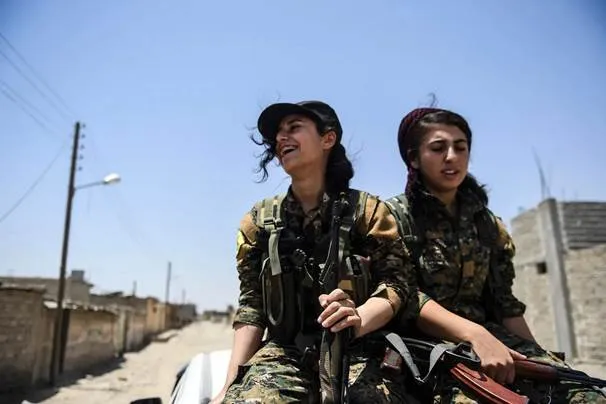
Photo via AFP


Kobane znów staje się ofiarą naszych grzechów

Nervana Mahmoud


Miasto Kobane, zamieszkane głównie przez Kurdów, trafiło na pierwsze strony międzynarodowych mediów w 2014 roku, gdy bojownicy ISIS — świeżo po błyskawicznej kampanii w Iraku i Syrii — przez miesiące oblegali miasto. Oblężenie to skłoniło koalicję pod przewodnictwem Stanów Zjednoczonych do rozpoczęcia nalotów na pozycje ISIS oraz do udzielenia wsparcia naziemnego i logistycznego Syryjskim Siłom Demokratycznym (SDF).

W tamtym czasie napisałam artykuł o Kobane zatytułowany „Ofiara naszych grzechów”.

Nie wyobrażałam sobie, że dwanaście lat później miasto stanie w obliczu podobnego scenariusza — z jednym, tak ważnym wyjątkiem.

Tym razem Kurdowie są sami.

Stany Zjednoczone postanowiły ich porzucić na rzecz postasadowskiego, islamistycznego rządu w Damaszku, pod hasłem „zjednoczenia Syrii”.

Amerykański wysłannik do spraw Syrii, Tom Barrack, napisał na platformie X, że sytuacja „fundamentalnie się zmieniła”, twierdząc, iż Damaszek „jest teraz gotów i jest w stanie przejąć odpowiedzialność za bezpieczeństwo, w tym kontrolę nad ośrodkami detencyjnymi ISIS i obozami”.

To twierdzenie rozpada się w zderzeniu z rzeczywistością.

Siły rządowe Syrii nie tylko walczą z kurdyjskimi bojownikami — one ich zabijają. Co gorsza, pojawiły się nagrania wideo, na których widać, jak syryjscy żołnierze wypuszczają członków ISIS i innych zatwardziałych dżihadystów z więzień kontrolowanych wcześniej przez Kurdów, po przejęciu tych placówek. To nie jest stabilizacja. To recykling terroru.

Podczas gdy kurdyjskie siły desperacko próbują odeprzeć ataki prorządowych milicji z południa Kobane, pytanie nie brzmi już „czy” miasto upadnie — lecz „kiedy”. Szanse są brutalnie nierówne. Ich wrogowie są bezwzględni, rozzuchwaleni i wspierani przez regionalne potęgi, takie jak Turcja i Katar. Ich dawny sojusznik — Stany Zjednoczone — zniknął, gdy byli najbardziej potrzebni.

Nie sposób nie zastanawiać się, czy prezydent Trump w ogóle rozumie, co dzieje się w Syrii. Złożoność pola walki, charakter zaangażowanych aktorów i konsekwencje wzmacniania islamistycznych sił — wszystko to zdaje się ginąć w natłoku intensywnego lobbingu ze strony Turcji, Kataru i Arabii Saudyjskiej w Waszyngtonie. Wizerunek „zreformowanego” syryjskiego rządu centralnego został starannie wykreowany i chętnie zaakceptowany.

Ale ci, którzy uważnie śledzili sytuację w Syrii, znają prawdę: nic fundamentalnego się nie zmieniło.

Dwanaście lat temu Kobane krwawiło, podczas gdy świat debatował.

Dziś krwawi ponownie — tym razem porzucone, odizolowane i zdradzone.

Kobane wciąż jest ofiarą naszych grzechów, a historia zapamięta, kto się odwrócił.

Każde słowo, które napisałam w 2014 roku, pozostaje aktualne

„Miasto Kobane upada na naszych oczach. Czarne flagi tak zwanego Państwa Islamskiego Iraku i Syrii (ISIS) powoli rozciągają się nad budynkami tego nieszczęsnego kurdyjskiego miasta w północnej Syrii. Prędzej czy później opór kurdyjskich bojowników, którzy obecnie heroicznie próbują bronić Kobane, załamie się pod naporem średniowiecznego barbarzyństwa ISIS, dodatkowo wzmocnionego nowoczesną bronią. Tragedia Kobane może wydawać się nieistotna w szerszym kontekście burzliwego Bliskiego Wschodu, jednak jasno ukazuje błędne myślenie wielu w świecie arabskim, a co niepokojące — również w Turcji.

Wybiórcze oburzenie

Porównajmy przytłumioną reakcję na dekapitacje kurdyjskich bojowniczek czy gwałty i przymusowe małżeństwa jazydzkich kobiet z bojownikami ISIS do głośnych, gniewnych reakcji, jakie wywołały ostatnia izraelskie działania w Gazie. Zdumiewająca cisza jest tym bardziej problematyczna, że zarówno muzułmańskie reżimy, jak i opinia publiczna zgodnie twierdzą, iż ISIS nie reprezentuje islamu, a jego chore działania są sprzeczne z religią. Wyobraźmy sobie, że to Izrael ściąłby głowy trzem palestyńskim zamachowczyniom. Reakcje prawdopodobnie przerosłyby wszelkie oczekiwania: od protestów na ulicach miast Zachodu po akty przemocy wobec izraelskich celów na całym świecie. Zrozumiałe? Tak — niewinna śmierć ludzi i oblężenie Gazy są godne potępienia. Ale dlaczego nie oburzamy się równie mocno w sprawie Kurdów? Odpowiedź tkwi w naszej egoistycznej dwulicowości: troszczymy się tylko o współplemieńców, ale potępiamy innych, gdy oni nie troszczą się o nas.

Brak empatii wobec mniejszości

Źródła naszej wybiórczości i uprzedzeń sięgają głęboko w pokolonialny nacjonalizm i islamizm, które rozprzestrzeniły się na Bliskim Wschodzie od połowy XX wieku. Arabskość (arabizm) promowała wizję jednego zjednoczonego świata arabskiego — tygla, który mniejszości etniczne miały zaakceptować. Islamiści z kolei głosili ideę „Ummy” — utopijnej jedności muzułmańskiej, której inne grupy religijne muszą się podporządkować. W poszukiwaniu tych iluzorycznych tożsamości zbiorowych, mniejszości (czy to etniczne, czy religijne) często postrzegano z podejrzliwością. Każde dążenie do separatyzmu lub federalizmu uznawano za atak na wspólną wizję.

Gdy Saddam Husajn ostrzelał Kurdów bronią chemiczną w Halabdży, nie brakowało arabskich apologetów, którzy przedstawiali Kurdów jako agentów sił zewnętrznych, częściowo winnych własnemu losowi. Podobnie rzecz miała się z syryjskimi Kurdami, których — zwłaszcza w tureckich prorządowych mediach — ukazuje się jako terrorystów lub zwolenników reżimu Asada. Dzieje się tak mimo że Kurdowie od 2004 roku mają długą historię buntów przeciwko Asadowi. To odczłowieczanie mniejszości, takich jak Kurdowie, ma na celu zrzucenie z siebie odpowiedzialności za okrucieństwa dokonywane w imię naszej religii lub naszych państw.

Wąsko pojęty interes własny

Flirtowanie z grupami islamistycznymi ma długą historię na Bliskim Wschodzie. Reżimy i przywódcy wielokrotnie błędnie zakładali, że korzystanie z islamistów jako taniego narzędzia do realizacji celów politycznych jest łatwe i powoduje kosztów. I za każdym razem ta iluzja kończyła się krwawo. Sadat w Egipcie uwolnił wielu islamistów z więzień jako taktyczny ruch przeciwko naseryzmowi. Później obrócili się przeciwko niemu i zamordowali go w 1981 roku. Ostatnio arabskie państwa Zatoki, takie jak Katar i Arabia Saudyjska, uznały Arabską Wiosnę za okazję do obalenia wrogich reżimów, takich jak Asad w Syrii. Naiwnie sądziły, że finansowanie radykalnych dżihadystów doprowadzi do jego upadku. Tak się nie stało, ponieważ szejkowie z Zatoki nie docenili skali wsparcia, jakie Iran i Hezbollah były gotowe udzielić reżimowi Asada. Zamiast pokonać Asada, Katar i inni przyczynili się do stworzenia radykalnych potworów, takich jak ISIS. Kobane to tylko jedna z wielu tragicznych konsekwencji endemicznej politycznej krótkowzroczności, która skłoniła autokratów do igrania z ogniem radykalizmu. Rola Kataru jest dziś ujawniona, ale emirat tego kraju wciąż cieszy się luksusowym pałacem w Dosze, w przeciwieństwie do biednych Syryjczyków (Kurdów i Arabów), śpiących w prowizorycznych namiotach jako uchodźcy w Turcji — wskutek jego lekkomyślnych decyzji.

Myślenie życzeniowe

Turcja Erdogana jest równie winna jak wielu przedstawicieli świata arabskiego. Jego otwarte oburzenie z powodu sytuacji w Gazie i zamachu stanu w Egipcie kontrastuje z lekceważeniem losu Kurdów w Kobane. Do niedawna Turcja — mimo oficjalnych zaprzeczeń — udzielała cichego wsparcia antyasadowskim grupom, w tym ISIS. Tureckie władze nie postrzegają walki o Kobane jako tragedii, lecz jako szansę polityczną na wyrównanie rachunków z kurdyjskimi partyzantami, takimi jak Partia Pracujących Kurdystanu (PKK) — lub przynajmniej jej syryjską odnogą, którą Turcja uznaje za organizację terrorystyczną.

Największym błędem Ankary jest jednak założenie, że obalenie reżimu Asada zakończy radykalizm i rozwiąże tragedię Syrii. Może był to sensowny argument w 2012 roku, zanim rewolucja w Syrii uległa radykalizacji i fragmentacji, ale dziś już nie. Upadek syryjskiego reżimu teraz wywołałby tylko kolejne walki pomiędzy antyasadowskimi milicjami i ugrupowaniami. Krwawa jatka po Asadzie z łatwością przyćmiłaby dotychczasowe okrucieństwa. A nawet jeśli do niej nie dojdzie, osłabiona, wyczerpana Syria będzie nową, koszmarną wersją Libii — tyle że bez ropy — z niewyobrażalnymi konsekwencjami dla bezpieczeństwa narodowego Turcji. Taka Syria nie przejmie odpowiedzialności za sojuszników, nie poradzi sobie z resztkami reżimu Asada, ani nie stawi czoła zemście Hezbollahu. Czy Erdogan w ogóle pomyślał o tym, co będzie po Asadzie? Prawdopodobnie nie. Jest tak zafiksowany na jego pokonaniu, że nie widzi niczego poza tym.

Sukces ISIS nie wynika z jego brutalności czy barbarzyństwa, lecz z głębokiego zrozumienia powyższych bolączek świata arabskiego i tureckiego. Doskonale rozumieją, że wybiórczy gniew zapewni im parasol przed powszechnym oburzeniem, a obojętność wobec mniejszości pozwoli im bezkarnie wykorzystywać Kurdów. ISIS to pasożyt, który żywi się chorobami, egoizmem i polityczną krótkowzrocznością Bliskiego Wschodu. Nie miejmy złudzeń: ISIS rozumie Arabów i Turków lepiej, niż oni rozumieją samych siebie.


Link do oryginału: https://substack.com/home/post/p-185231343

Nervana Mahmoud Substack, 20 stycznia 2026

Nervana Mahmoud – Egipska lekarka, komentatorka i publicystka. Na swoim blogu prezentuje cotygodniowe informacje z Egiptu, pisze artykuły o liberalnym islamie, o prawach kobiet, o muzułmańskim radykalizmie i ogólnie, o sytuacji na Bliskim Wschodzie. Jej artykuły publikowane są w prasie arabskiej, ale również w prasie brytyjskiej. Od kilku lat przeniosła się na stałe do Wielkiej Brytanii.


Zawartość publikowanych artykułów i materiałów nie reprezentuje poglądów ani opinii Reunion’68,
ani też webmastera Blogu Reunion’68, chyba ze jest to wyraźnie zaznaczone.
Twoje uwagi, linki, własne artykuły lub wiadomości prześlij na adres:
webmaster@reunion68.com

Will Trump order a military strike to overthrow Khamenei?


Will Trump order a military strike to overthrow Khamenei?

Alex Traiman


The indicators are there, though military action takes foresight, timing and precision because success must be the result—once the definition of success is made by governments and their armed forces.

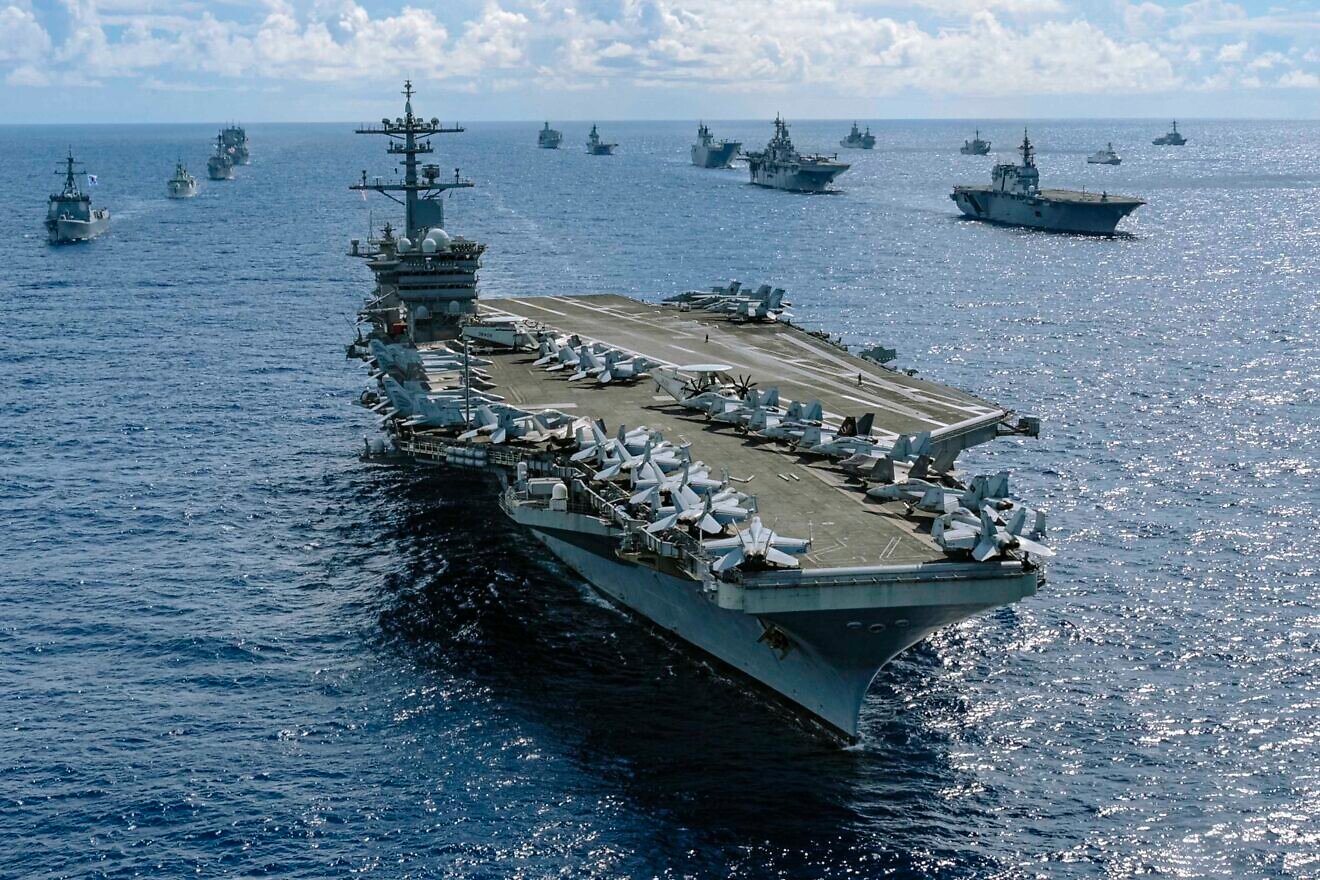
The “USS Abraham Lincoln” sails in formation with other vessels in the Pacific Ocean, July 28, 2022, in support of Rim of the Pacific, the world’s largest international maritime exercise. Credit: Canadian Armed Forces Cpl. Djalma Vuong-De Ramos, via U.S. Department of Defense.

As protests shake Iran, U.S. military assets move into place and media coverage intensifies, the absence of action may reflect preparation—not restraint.

Over the past weeks, a growing claim has taken hold that the United States missed its opportunity to strike Iran militarily. According to this line of thinking, the moment passed, the iron cooled, and Washington hesitated.

But that conclusion is premature. It rests on a familiar but flawed assumption: that geopolitical windows are brief, that decisive leaders must act immediately, and that if something does not happen in real time—on social-media timelines or cable-news panels—it will not happen at all. That framing misunderstands how American decision-making works, particularly when it comes to war.

Numerous considerations go into whether the United States will opt to use military force, and just as importantly, when that force might be used and what it all entails.

This is not a short story. Yet it is unfolding inside a 24/7 media echo chamber that demands instant results and definitive answers. Revolutions, however, do not develop on cable-news timelines.

Rising visibility inside America

As U.S. President Donald Trump continues to make public declarations, Iran is moving back toward the center of the American conversation.

U.S. television coverage of events inside the country has increased markedly compared to just a few weeks ago. American coverage—particularly, on Fox News—shows that the shift is unmistakable. Iran is no longer treated as background noise or a dormant file. It is once again being discussed as an active strategic question, with serious attention paid to internal unrest, regime stability and U.S. options to grapple with the quandary.

If pressure mounts and public support inside the United States for military intervention grows, and if political and military conditions align, it will become easier for the president to act. Public opinion does not dictate strategy, but it shapes the environment in which strategic decisions are made.

Trump’s warnings to Tehran have become more explicit. In public statements, interviews and social-media posts, he has repeatedly warned the Iranian regime against violently suppressing protesters. He has emphasized that the United States is “watching very closely” and that continued killings in the streets would not be ignored. In interviews, he has gone further, suggesting that if the regime continues to murder its own people, the United States would defend the protesters.

The language has been deliberately calibrated, though stops short of declaring war and avoids binding commitments for now. But it is also not neutral. It signals that violent repression carries consequences and that Washington is not indifferent to what is happening on the ground.

That ambiguity is not weakness. It is leverage. At the same time, rhetoric has been matched by preparation.

Military assets move to Mideast

Washington has been moving significant military assets into the region, including aircraft carriers and carrier strike groups. These deployments are not symbolic gestures designed for headlines. They are classic indicators of contingency planning.

This is how the United States prepares for war: Assets are positioned first. Capabilities are established. Flexibility is preserved. Only then do political decisions follow. The administration won’t decide to act before the necessary forces are in place.

Seen in that context, the movement of U.S. military hardware should not be read as a signal that a strike is imminent, but neither should it be dismissed. It signals readiness and keeps options alive.

And it reinforces the credibility of presidential warnings.

One central question continues to shape Washington’s thinking: whether military force is even required. From a U.S. perspective, the optimal outcome remains regime change without direct American intervention. The United States wants this to be an Iranian people’s revolution, not a U.S.-led overthrow.

A long and complicated history exists between Iran and the United States, with the Islamic Republic spending decades building its legitimacy on the narrative of foreign interference. Whether that narrative is accurate is almost beside the point. It exists. It resonates. And it continues to shape Iranian politics.

If the Iranian people can bring down the regime themselves—through sustained protest, elite defections and internal pressure—such an outcome is clearly preferable for Washington. It avoids reinforcing the regime’s propaganda and reduces the risk of prolonged regional war. If military action does occur, recent history suggests it will not be impulsive.

American operations, especially under Trump, are typically the result of years of planning, rehearsal and weapons development. They are designed to be decisive, limited and conclusive.

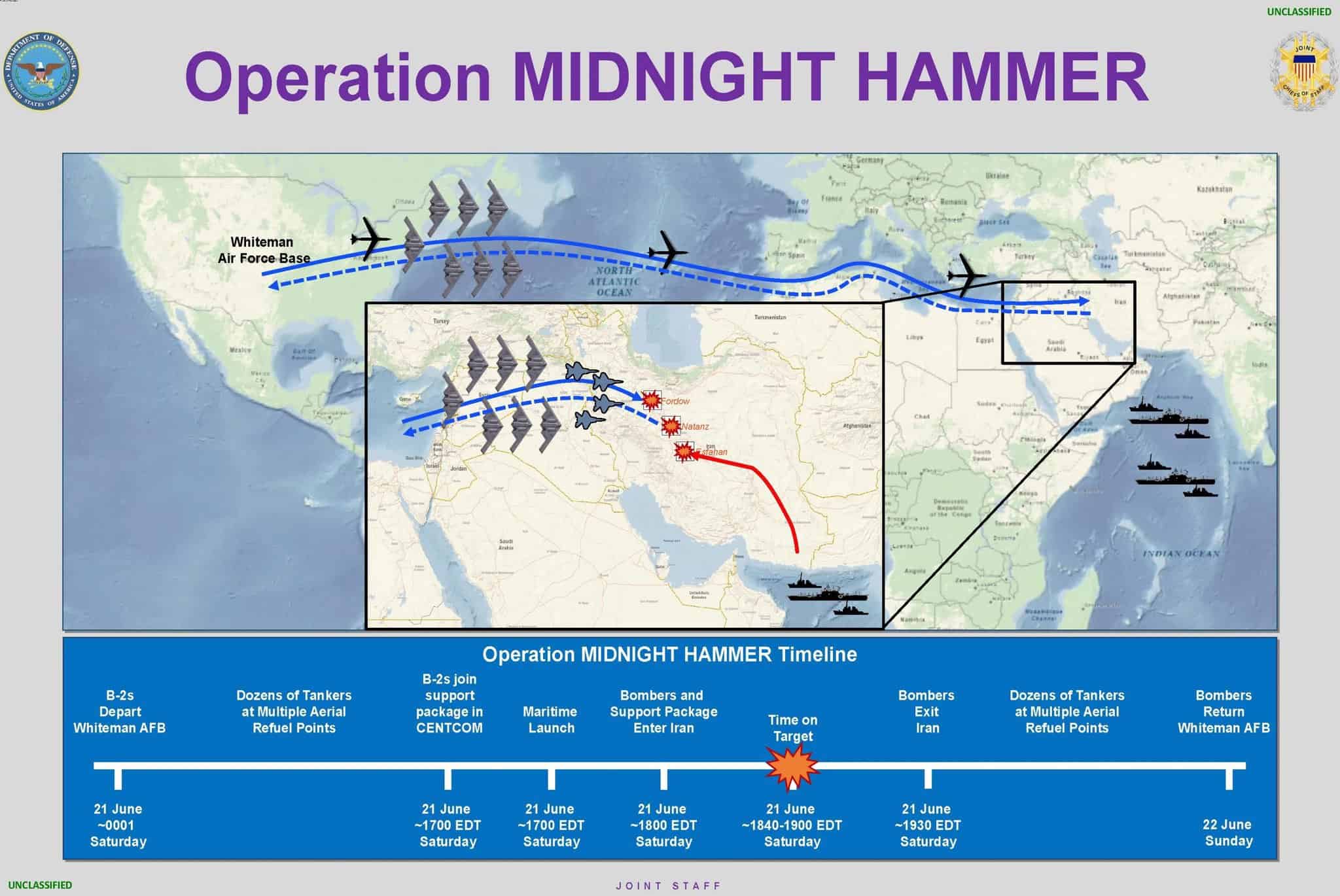
Timeline of “Operation Midnight Hammer,” June 22, 2025. Credit: U.S. Department of Defense via Wikimedia Commons.

That was evident in “Operation Midnight Hammer,” the U.S. strike last summer on Iran’s nuclear infrastructure, including the Fordow enrichment facility. That operation was not drawn up on short notice; it had been planned and practiced for years.

The Massive Ordnance Penetrator—the 30,000-pound bunker-buster used in the strike—was developed specifically to destroy deeply buried facilities like Fordow, which sits beneath a mountain and was engineered to withstand conventional attack. Those weapons existed precisely because planners anticipated such a scenario long in advance.

Equally important, the operation did not occur in isolation. Israel had already created the precise battlefield conditions required for achievement, including degrading Iranian air defenses and establishing near-complete aerial superiority. Only once the likelihood of success was exceptionally high did the United States proceed.

The strike was decisive and limited. It was designed to end the military phase, not expand it.

A similar pattern applied to “Operation Absolute Resolve,” the U.S. effort to remove Nicolás Maduro from Caracas.

That mission was prepared for at least six months. U.S. forces rehearsed it repeatedly, gathered intelligence and waited for very specific conditions to align, including weather conditions, before executing. Action followed preparation, not media pressure.

And on Jan. 3, the move was put into place with decisive results seen worldwide.

The lesson is straightforward: The absence of immediate action does not indicate indecision. It often reflects patience. Seen through that lens, the fact that a strike on Iran did not happen this week says little about what may happen next week or next month.

The retaliation question and Israel’s role
Another major consideration is retaliation—particularly, against Israel. If the United States were to strike Iran, the Jewish state would almost certainly be a primary target. Iran would likely fire whatever ballistic missiles it has left, potentially in large salvos, under the assumption that this is a final confrontation.

Estimates suggest that while Israel has degraded a significant portion of Iran’s missile arsenal in recent conflicts, Tehran may still retain more than 1,000 ballistic missiles. In such a scenario, Tehran would likely attempt to fire as many as possible, as quickly as possible.

As such, Israel has been preparing accordingly. In recent days, many Israelis believed that war with Iran was imminent. The home front was readied. Civil-defense awareness increased. That sense of preparedness has not disappeared.

Missile defense remains a very serious issue, even if Israel believes it has prepared extensively for such a scenario.

Recent reports suggested that Israeli Prime Minister Benjamin Netanyahu urged the United States not to strike Iran at this juncture. These reports rely on anonymous sources and fit a familiar pattern.

If Washington strikes, the narrative might certainly be that Israel pushed Trump into war. If Washington does not strike, the alternative narrative will be that Israel restrained him. Either way, the story becomes about Israel, regardless of the facts.

This framing, however, is misleading. From Israel’s strategic perspective, total victory ultimately requires the fall of the regime in Tehran—the head of what has often been described as the terror octopus. Hamas, Hezbollah, the Houthis and other proxies are tentacles. Cutting off tentacles without addressing the head doesn’t end the threat.

Even if Israel expects retaliation, this is a war. And wars involve absorbing costs in pursuit of strategic outcomes.

The protests and the regime’s deflection

Meanwhile, the Iranian regime continues to claim that the protests are the joint work of Israel and the United States.

Yet it is Iranian security forces holding the guns and aiming the bullets at unarmed citizens.

That alone undermines the regime’s narrative. If the protesters were foreign agents, the regime would be targeting foreign enemies, not its own people. The violence itself is evidence that this movement is coming from within Iranian society.

The Iranian people are suffering. Their currency has collapsed. Basic resources, including water, are scarce in many areas. Regime funds are spent on nuclear weapons, ballistic missiles, Hezbollah, Hamas, the Houthis and foreign conflicts while ordinary Iranians see no benefit.

They crave normalcy. They seek a future. They want to be part of the world again. All of this brings the discussion back to the central question: Will Trump order a military strike to overthrow Khamenei?

Even if it has not happened yet, the indicators remain. Reports suggest that senior Iranian figures are moving money out of the country. Readiness remains high on all sides. The absence of a strike today is not a verdict. It is a pause.

And that pause—combined with rising pressure, expanding media coverage, visible military preparations and sustained protests—may itself be a strategic tool. The belief that a strike is possible matters, as does that kind of pressure.

It may also be giving wind to the sails of the Iranian protesters themselves.

For now, the story is not over. It may only be entering its next phase.


Alex Traiman is the CEO and Jerusalem bureau chief of the Jewish News Syndicate (JNS) and host of “Jerusalem Minute.” A seasoned Israeli journalist, documentary filmmaker and startup consultant, he is an expert on Israeli politics and U.S.-Israel relations. He has interviewed top political figures, including Israeli leaders, U.S. senators and national security officials with insights featured on major networks like BBC, Bloomberg, CBS, NBC, Fox and Newsmax. A former NCAA champion fencer and Yeshiva University Sports Hall of Fame member, he made aliyah in 2004, and lives in Jerusalem with his wife and five children.


Zawartość publikowanych artykułów i materiałów nie reprezentuje poglądów ani opinii Reunion’68,
ani też webmastera Blogu Reunion’68, chyba ze jest to wyraźnie zaznaczone.
Twoje uwagi, linki, własne artykuły lub wiadomości prześlij na adres:
webmaster@reunion68.com


French Publisher Recalls School Textbooks That Describe Oct. 7 Victims as ‘Jewish Settlers’


French Publisher Recalls School Textbooks That Describe Oct. 7 Victims as ‘Jewish Settlers’

Shiryn Ghermezian


An aerial view shows the bodies of victims of an attack following a mass infiltration by Hamas gunmen from the Gaza Strip lying on the ground in Kibbutz Kfar Aza, in southern Israel, Oct. 10, 2023. Photo: REUTERS/Ilan Rosenberg

The largest publishing company in France announced on Wednesday its decision to immediately recall three high school textbooks that describe the victims of the Palestinian terrorist group Hamas’s Oct. 7, 2023, invasion of and massacre across southern Israel as “Jewish settlers” following outrage in the country.

Hachette Livre said it recalled copies of the textbooks that feature the “erroneous content” from booksellers and its other partners. The company also launched an internal investigation to determine how the error could have occurred.

The publisher apologized and said the books will only be sold again once they are corrected, while unsold books will be destroyed. An estimated 2,000 copies were reportedly recalled.

The textbooks read, “In October 2023, following the death of more than 1,200 Jewish settlers in a series of Hamas attacks, Israel decided to tighten its economic blockade and invade a large part of the Gaza Strip, triggering a large-scale humanitarian crisis in the region.”

The text appears in books for final year students preparing for the baccalaureate exam.

Hachette Livre’s chairman, Arnaud Lagardere, apologized “to all those who may rightly have felt hurt, to the teaching staff, to the parents of students, and to the students themselves.” He added that the publisher will “put in place the necessary procedures to ensure that this does not happen again.”

In a post on X, French President Emmanuel Macron said historical revisionism and school textbooks that “falsify the facts” are “intolerable,” especially regarding the “terrorist and antisemitic” massacre on Oct. 7, 2023. “Revisionism has no place in the Republic. I have asked the government to take measures,” he added.

The French Embassy in Israel said it was “deeply outraged” by Hachette’s distortion of facts.

“Any biased presentation of the terrorist and antisemitic attacks carried out by Hamas on Oct. 7 is unacceptable,” it wrote in a post on X. “France is committed to the truth of the facts, to historical rigor, and to the fight against terrorism and antisemitism. The French government has been informed, and immediate measures have been taken to ensure that these shortcomings are corrected without delay.”

Yonathan Arfi, head of the French Jewish group Crif, said the false narrative promoted in the textbooks “constitutes a falsification of history and an unacceptable form of legitimization of Hamas terrorism, which this book fails to explicitly label as a terrorist organization.”

“The justification of the Oct. 7 terrorism has no place in school textbooks,” he wrote on X. “It is not acceptable for this text to continue serving as an educational resource in the schooling of young French people. Hate has no place in school textbooks.”


Zawartość publikowanych artykułów i materiałów nie reprezentuje poglądów ani opinii Reunion’68,
ani też webmastera Blogu Reunion’68, chyba ze jest to wyraźnie zaznaczone.
Twoje uwagi, linki, własne artykuły lub wiadomości prześlij na adres:
webmaster@reunion68.com