Archive | 2026/01/03

Dzieci Hamasu… Zagrożenie Jutra

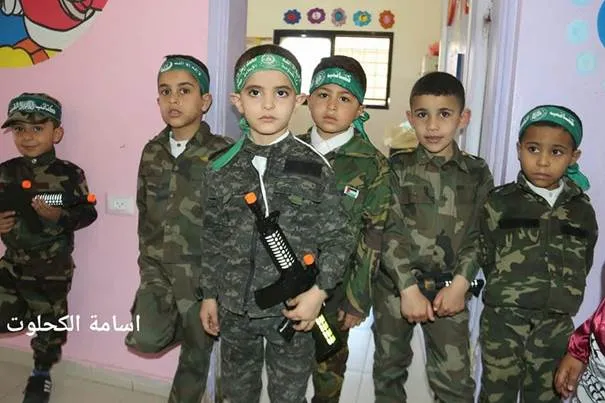
Podczas gdy dzieci w Izraelu szukały schronienia przed ostrzałem rakietowym z Gazy, te dzieci w Gazie ukończyły przedszkole.Hamas pozbawia dzieci z Gazy ich przyszłości i próbuje pozbawić dzieci z Izraela ich przyszłości. Nie pozwolimy im. Żaden kraj by na to nie pozwolił.


Dzieci Hamasu… Zagrożenie Jutra

Pierre Rehov


Gdy izraelskie dzieci biegną do schronów, chroniąc się przed rakietami wystrzeliwanymi ze Strefy Gazy, inne dzieci – te z Gazy – kończą przedszkola. Hamas okrada dzieci Gazy z ich przyszłości i przekształca je w narzędzie wojny.

W zniszczonych gruzach miast i obozów uchodźców Strefy Gazy dokonuje się mroczna przemiana — jedna z tych, którym świat wciąż nie stawił czoła. Podczas gdy Izrael i jego sojusznicy próbują odpowiedzieć na brutalną przemoc ostatnich lat, równolegle rozgrywa się inna bitwa: o umysły i przyszłość młodych Palestyńczyków. W ostatnim czasie media ujawniły, że Hamas nie tylko rekrutuje nastolatków do swojej struktury terrorystycznej, ale również manipuluje nimi za pomocą pieniędzy, jedzenia i presji.

W jednym z poruszających świadectw opisano, jak Hamas zaoferował nastolatkowi około 1500 szekli i racje żywnościowe dla rodziny, jeśli ten zgodzi się dla nich pracować — albo w strukturach „quasi-policyjnych”, albo biorąc udział w aktach przemocy. To nie był incydent jednostkowy. To część szerszej strategii: wychowania nie tylko dzisiejszych bojowników, ale też ideologów, żołnierzy i egzekutorów jutra.

Dzieciństwo jako program nauczania wojny

Gdy świat mówi o „dzieciach-żołnierzach”, najczęściej myśli o afrykańskich dżunglach lub milicjach Azji Południowo-Wschodniej. Tymczasem w Gazie przemiana zaczyna się długo przed sięgnięciem po broń. Od niemowlęctwa po wiek nastoletni, palestyńskie dzieci żyjące pod rządami Hamasu są kształtowane przez starannie zaprojektowany system indoktrynacji, który gloryfikuje przemoc, męczeństwo i antysemityzm. Proces ten rozgrywa się na wielu płaszczyznach: w szkołach, na obozach letnich, w mediach i życiu społecznym.

Szkoły nienawiści

Hamas kontroluje znaczną część infrastruktury edukacyjnej Gazy. Zgodnie ze szczegółowymi analizami, podręczniki wykorzystywane w wielu szkołach nie uznają istnienia Izraela, przedstawiają zamieszki jako bohaterskie czyny i opowiadają historię przez pryzmat cierpienia, poświęcenia i walki przeciwko „wrogowi”. Już od najwcześniejszych lat dzieci uczą się nie pokoju czy współistnienia, lecz krzywdy i odwetu. Program nauczania regularnie podkreśla wartość męczeństwa i przedstawia konflikt jako walkę o przetrwanie, bez miejsca na kompromis. W ten sposób dzieci stają się nosicielami narracji wiecznej wojny.

Obozy i przygotowanie paramilitarne

Szkoły to tylko część układanki. Hamas organizuje letnie obozy i programy młodzieżowe, które — co szokujące — funkcjonują jak ośrodki rekrutacyjne. To nie są niewinne kolonie — to kuźnie mentalności bojownika. W ramach „zajęć” dzieci biorą udział w ćwiczeniach wojskowych, musztrze, szkoleniu z kontroli tłumu, a nawet ćwiczeniach w tunelach i symulacjach użycia broni. Te obozy to strategiczna inwestycja Hamasu — ich celem jest wychowanie pokolenia nie tylko wierzącego w przemoc jako formę oporu, ale ją w pełni akceptującego.

Media podszywające się pod rozrywkę dla dzieci

Najbardziej przerażającym przejawem systemowej indoktrynacji jest propaganda medialna wymierzona w najmłodszych. Przykładem może być magazyn dziecięcy Al-Fateh, krytykowany za treści gloryfikujące śmierć, dżihad i męczeństwo. Jeszcze bardziej znany był program Pionierzy Jutra, emitowany przez telewizję Al-Aqsa kontrolowaną przez Hamas. Stylizowany na dziecięcy show, z maskotkami i muzyką, program ten głosił otwarcie ekstremizm i przemoc. Postacie przypominające bajkowe zwierzęta zachęcały do nienawiści wobec Żydów i Izraelczyków, zaszczepiając ją już najmłodszym widzom. Wielu analityków widzi bezpośrednie przełożenie tej propagandy z lat 2000. na brutalne ataki z 7 października 2023 roku — których sprawcami byli często młodzi dorośli, wychowani właśnie w tej atmosferze.

Uzbrajanie potrzeby przetrwania

Manipulacja Hamasu nie kończy się na edukacji i mediach — sięga też potrzeb podstawowych. Kontrolując dostęp do żywności i pomocy humanitarnej, Hamas tworzy perwersyjny system motywacyjny. W obliczu upadku gospodarki, braku edukacji i ciągłych zniszczeń wojennych, propozycja Hamasu: gotówka i racje żywnościowe — staje się dla wielu rodzin nie do odrzucenia. Niezależne źródła donoszą, że Hamas nie tylko przechwytuje pomoc, ale wykorzystuje ją jako narzędzie szantażu i rekrutacji. W ten sposób buduje uzależnienie — i normalizuje współpracę z organizacją, której celem nie jest dobrobyt, lecz przemoc.

Ślepota międzynarodowa i moralne bankructwo

Reakcja społeczności międzynarodowej na tę systemową indoktrynację dzieci była — w najlepszym wypadku — letnia. Organizacje takie jak UNICEF krytykowano za skupianie się niemal wyłącznie na domniemanych nadużyciach ze strony Izraela, z jednoczesnym pomijaniem dobrze udokumentowanych przypadków rekrutacji i ideologicznego wykorzystywania dzieci przez Hamas. Organizacje monitorujące, takie jak UN Watch, wskazują wprost: palestyńskie media, szkoły i kultura naruszają prawa dziecka, zachęcając do przemocy i nienawiści od najmłodszych lat — co jest jawnym złamaniem konwencji międzynarodowych.

To moralna porażka. Świat broni praw dziecka — ale jedynie tam, gdzie pasuje to do politycznej narracji.

Pokolenie zranione na zawsze

Nie wystarczy traktować użycia dzieci przez Hamas jako tragicznego skutku ubocznego wojny. To przemyślana strategia — zamieniająca młodzież w broń ideologiczną i fizyczną. Świat zna takie przypadki. Reżim Czerwonych Khmerów w Kambodży. ISIS. Systematyczne szkolenie polityczne w Korei Północnej. Wspólny mianownik? Gdy społeczeństwo uzbraja swoje dzieci, rezygnuje z pokoju.

Sukces Hamasu w rekrutacji młodych ludzi — poprzez brutalność, media i szantaż ekonomiczny — tworzy najniebezpieczniejsze dziedzictwo: pokolenie, które postrzega przemoc jako cnotę.

Apel do sumienia Zachodu

Jeśli liberalne demokracje mają pozostać wierne swoim wartościom, muszą zrozumieć, że bitwa o dzieci Gazy toczy się nie tylko na froncie wojennym, ale i ideologicznym. Pokonanie Hamasu militarnie nie wystarczy, jeśli nie zostanie zakwestionowana jego narracja.

Musimy domagać się rozliczenia międzynarodowych instytucji, które ignorują tę indoktrynację. Musimy wspierać alternatywną edukację promującą pokojowe współistnienie. Musimy odrzucać narracje, które wybielają lub usprawiedliwiają celowe radykalizowanie dzieci.

Strategiczna rekrutacja dzieci przez Hamas — pieniędzmi, propagandą i przymusem — to nie tylko palestyński problem. To problem globalny. Każde społeczeństwo, które ceni wolność bardziej niż fanatyzm, musi przeciwstawić się tresurze przyszłych terrorystów. Bo dziecko uczące się dziś nienawiści, jutro stanie się zagrożeniem nie tylko dla pokoju — lecz dla całej cywilizacji.


Link do oryginału:

https://pierrerehov.substack.com/p/hamas-kids-tomorrows-threat?utm_source=substack&utm_campaign=post_embed&utm_medium=web

Zawartość publikowanych artykułów i materiałów nie reprezentuje poglądów ani opinii Reunion’68,
ani też webmastera Blogu Reunion’68, chyba ze jest to wyraźnie zaznaczone.
Twoje uwagi, linki, własne artykuły lub wiadomości prześlij na adres:
webmaster@reunion68.com


Israel Must Increase Its Advocacy — and Jews Must Continue Speaking Up


Israel Must Increase Its Advocacy — and Jews Must Continue Speaking Up

Anya Gillinson


Trucks carrying aid move, amid a ceasefire between Israel and Hamas, in Rafah in the southern Gaza Strip, Feb. 13, 2025. Photo: REUTERS/Hussam Al-Masri

When will Israel answer the decades-long smear campaign against it? How can a nation known for breakthroughs in medicine, science, and agriculture — and home to the most ethical military and the Middle East’s only democracy — struggle with self-advocacy?

As a Soviet Jew raised in Moscow, I saw Israel as the guardian of my identity. After millennia of persecution and the Holocaust, Israel became a beacon of freedom and safety for the Jewish people. I excused Israel’s public-relations failures as the cost of survival. Surrounded by hostility and judged by the harshest standards, Israel focused on defending land, people, and principles — not narratives. Key conflicts shaped this posture — from 1948, 1967, and 1973, to the Intifadas, wars in Lebanon and Gaza, and the October 7, 2023, Hamas massacre.

The deepest wound is internal: too many Jews refuse to stand together against evil. Unity and principled advocacy are imperative. After three decades in New York, I’m devastated by Zohran Mamdani’s victory; he is a Social Democrat, an anti-Zionist, and an antisemite. Yet 33% of New York’s Jewish community voted for him. I cannot comprehend voting for a mayor who is an antisemite.

Since October 7, Israel has failed to communicate why it had to wage war on Hamas and prevent Hamas’ plan to destroy Israel. The opposing side advanced a narrative, amplified by the media and anti-Israel and anti-Jewish propaganda — casting Palestinians as victims of “Israeli colonialism” and branding Israel’s war as a genocide.

Hamas massacred 1,200 people and took 251 hostages — and vowed to repeat the massacre again and again. Israel’s goals: return the hostages and eradicate Hamas to prevent future attacks. Yet the IDF and Netanyahu are cast as murderers, and a campaign to eliminate a terrorist organization is labeled as genocide.

Israel’s story is factual and moral. Israel’s war is not genocide; it targets Hamas terrorists, not Gazans. This is legitimate self-defense under international law. The IDF’s morality is rooted in courage, justice, and protection of the weak; Hamas attacks civilians and uses civilians as human shields, while the IDF takes extensive precautions to protect civilians. Hamas embeds its terrorists among civilians, seeking their deaths to feed a media campaign. The casualty story is distorted: the IDF estimates that two civilians are killed per Hamas terrorist — among the lowest ratios in recent warfare. Civilian deaths, tragic in any war, do not constitute genocide. If Israel sought genocide, the toll would be vastly higher.

The world must know that Hamas obstructs aid — attacking workers, firing on distribution sites, and blocking aid — while the IDF strains to deliver it. These tactics sow chaos and spawn false reports blaming the IDF for deaths and famine, even as Hamas hoards fuel and medical supplies.

Israel cites extensive aid deliveries, daily pauses, secure corridors, and controlled entry to challenge famine assessments. This data gets scant media coverage. Israel hasn’t failed deliberately; it neglected to adjust to the change in political choreography.

Israel must remind its people of their history, and clarify that it fights to defends all Jews, not only Israelis. It should use the media to change the narrative about the Middle East, ground claims in data, and pair them with images of Israeli victims from October 7.

An antisemitic mob gathered outside a Manhattan synagogue, chanting “Death to the IDF,” “Death to Israel,” and “We need to make them scared,” during a Nefesh B’Nefesh event. Assemblyman Zohran Mamdani issued a perfunctory note “discouraging the language,” then effectively blamed the synagogue, claiming that houses of worship must be free from intimidation and should not promote activities that “violate international law.”

First of all, promoting the rights of Jews to live in Israel does not violate international law (unless you believe Israel shouldn’t exist, which Mamdani does). Second, what about the rights and freedom of the congregants? Mamdani’s posture is as hollow as Putin’s desire for peace. Emboldened by elected antisemitic leadership, the mobs blur protest, hate, and violence.

Yet fault also lies with us Jews: freedom is our faith’s core, and with that, comes responsibility. Instead of urging Israel to communicate the facts, too many Jews stayed passive — or boosted Zohran Mamdani, who believes Israel, not Hamas, is responsible for the massacres.

“Am Yisrael Chai!” is a Jewish cry of an uncompromising will to live — “The People of Israel live.” Rabbi Stephen S. Wise proclaimed it in 1933 in defiance of Hitler; survivors heard it after Bergen-Belsen’s liberation; Shlomo Carlebach made it the anthem of the Soviet Jewry movement. Across the years, the cry affirms Jewish resilience and frames a narrative: “The People of Israel live.” Our story starts and ends with this cry. In between, lie the facts — and without facts, history turns to fiction and democracies become dictatorships.


Anya Gillinson is an immigration lawyer and author of the new memoir, Dreaming in Russian. She lives in New York City. More at www.anyagillinson.com.


Zawartość publikowanych artykułów i materiałów nie reprezentuje poglądów ani opinii Reunion’68,
ani też webmastera Blogu Reunion’68, chyba ze jest to wyraźnie zaznaczone.
Twoje uwagi, linki, własne artykuły lub wiadomości prześlij na adres:
webmaster@reunion68.com


Global Antisemitism Sparks Surge in Aliyah From Western Countries as Jews Leave US, UK, France for Israel


Global Antisemitism Sparks Surge in Aliyah From Western Countries as Jews Leave US, UK, France for Israel

Ailin Vilches Arguello


New olim disembark at Tel Aviv’s Ben Gurion Airport on the first charter aliyah flight after he Oct. 7, 2023, Hamas attacks, arriving to begin new lives in Israel. Photo: The Algemeiner

As global antisemitism continues to skyrocket, Israel recorded a surge in Jewish immigration from Western nations specifically in 2025, despite an overall decline in Jews abroad moving to their ancient homeland.

Israel welcomed over 21,900 Jews from more than 100 countries this year amid ongoing hostility abroad. The figure represented a drop of about one-third from last year’s numbers, due largely to a steep dip in Russian emigration.

However, aliyah – the process of Jews immigrating to Israel – from the United States, France, the United Kingdom, and other Western countries surged sharply this year, according to data released Monday by Israel’s Immigration and Absorption Ministry.

This growing migration pattern comes as Jewish communities around the world, especially in Europe, have faced a troubling surge in antisemitic incidents and anti-Israel sentiment since the Hamas-led invasion of and massacre across southern Israel on Oct. 7, 2023.

Jewish leaders have consistently called on authorities to take swift action against the rising wave of targeted attacks and anti-Jewish hate crimes, ranging from the vandalism of murals and businesses to violent physical assaults, that their communities continue to face. 

“Aliyah to Israel in 2025 is a moving testament to Jewish resilience and the strength of the Zionist spirit, even amid security and national challenges,” Jewish Agency chairman Maj. Gen. (res.) Doron Almog said in a statement.

“In the shadow of the war, thousands of young people and families chose to bind their fate with Israel and build a shared future here,” he continued. “Aliyah is Israel’s growth engine, demographically, socially, economically, and morally.”

Continuing a steady upward trend, arrivals from France jumped 45 percent this year to 3,300, up from 2,200 in 2024, while immigration from the UK rose almost 20 percent to 840 immigrants. 

Ministry data also showed 420 newcomers from Canada, 220 from South Africa, and 180 from Australia.

These latest figures come as Jewish communities worldwide warn of escalating threats in the wake of a deadly attack on a Hanukkah celebration at Sydney’s Bondi Beach that left 15 dead and at least 40 injured.

Earlier this year, a string of deadly terrorist attacks also targeted Jewish communities abroad, including the Yom Kippur assault in Manchester that killed two Jewish men, the firebombing of a march for Israeli hostages in Boulder, Colorado – which killed one and injured 13 – and the murder of two Israeli Embassy staffers in Washington, DC.

According to Nefesh B’Nefesh (NBN), a nonprofit that promotes and facilitates aliyah from the US and Canada, overall North American immigration rose about 12 percent this year to 4,150 new arrivals, the highest annual total the organization has seen in four years.

“These olim [or new immigrants] underscore that aliyah is not solely a personal milestone, but a national and historic endeavor,” NBN executive director Rabbi Yehoshua Fass said in a statement.

“Together, these new olim are already helping to address Israel’s national needs and strengthen its future, and we recognize the significance of their decision to establish their lives in the State of Israel at this pivotal moment in the country’s history,” he continued.

Among all countries, Russia accounted for the largest number of immigrants in 2025, with about 8,300 arriving, continuing a trend seen every year since the 1990s. Yet, this figure represents nearly a 60 percent decline from 19,500 last year and is only a fraction of the 74,000 immigrants who arrived in 2022 following Russia’s invasion of Ukraine.

The ministry also showed that about a third of all new immigrants during the year were aged 18–35, highlighting a continued trend of younger Jews making aliyah.

Since the start of the war in Gaza, the Israeli government has been working to boost the country’s capacity to attract and absorb rising numbers of new arrivals, introducing initiatives such as partnering with Israeli companies to provide immediate employment and offering a zero percent income tax rate for immigrants arriving in 2026.

Earlier this year, the government also unveiled a $46.4 million program to support immigrant integration and attract skilled Jewish candidates with in-demand expertise, including a reform to expedite professional licensing for new arrivals.

According to Jewish Agency data, roughly 30,000 Jews worldwide began the immigration process in 2025, with particularly significant increases seen in the UK and Australia.

Despite these figures, Israel still faces a net migration deficit, with more people leaving than arriving — a trend experts warn is expected to continue next year.

In 2024, approximately 80,000 Israelis left the country while only 24,000 returned, creating an unprecedented negative migration balance of almost 58,000 people, according to the Israeli Bureau of Statistics.


Zawartość publikowanych artykułów i materiałów nie reprezentuje poglądów ani opinii Reunion’68,
ani też webmastera Blogu Reunion’68, chyba ze jest to wyraźnie zaznaczone.
Twoje uwagi, linki, własne artykuły lub wiadomości prześlij na adres:
webmaster@reunion68.com