Archive | 2026/01/30

Największym pomnikiem Holokaustu jest Izrael.


Największym pomnikiem Holokaustu jest Izrael.

Joshua Hoffman


Czas ucieka.

Szacuje się, że obecnie żyje już tylko około 196 600 ocalałych z Holokaustu. Za kilka lat niemal połowa z nich odejdzie.

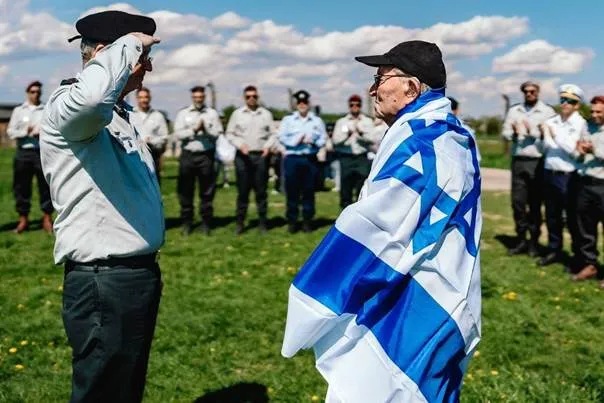
Okno, w którym możemy jeszcze usłyszeć ich głosy, uścisnąć ich dłonie, spojrzeć im w oczy — szybko się zamyka. Wkrótce pamięć o Holokauście całkowicie przejdzie do sfery historii. Ale nasz obowiązek upamiętniania ofiar, zarówno tych, które zginęły, jak i tych, które przetrwały, nie kończy się wraz z ich życiem.

Aby prawdziwie uczcić ofiary Holokaustu — szczególnie w Międzynarodowy Dzień Pamięci o Holokauście — samo wspomnienie nie wystarczy. Współczucie nie wystarczy. Nawet edukacja nie wystarczy.

Największym aktem pamięci, jaki możemy im ofiarować — odpowiedzią nie tylko na ich cierpienie, ale i na historyczny stan rzeczy, który to cierpienie umożliwił — jest przyjęcie tego, co mogło wszystko zmienić: żydowskiej siły, żydowskiej tożsamości narodowej, żydowskiego prawa do samostanowienia, syjonizmu.

Tak, syjonizmu. Nie obelgi, nie oszczerstwa, nie karykatury, które zbyt wielu na świecie zaakceptowało, ale syjonizmu w jego najczystszej postaci: przekonania, że Naród Żydowski, jak każdy inny naród, ma prawo do samostanowienia w swojej ojczyźnie.

Holokaust nie był wyłącznie zbrodnią niewyobrażalnego okrucieństwa. Był zbrodnią możliwą z powodu bezpaństwowości Żydów. Z powodu ich bezsilności. Z powodu sytuacji, w której Żydzi byli rozproszeni, niechronieni i zdani na łaskę innych — łaskę, która zawiodła ich w komorach gazowych, lasach, gettach i dołach śmierci. „Nigdy więcej” to nie modlitwa, kazanie, naklejka na zderzaku ani hashtag. To bezkompromisowa polityka. A tą polityką jest współczesne Państwo Izrael.

Dla Żydów Izrael nie jest po prostu kolejnym krajem; to odpowiedź. To największy projekt dekolonizacyjny, jaki kiedykolwiek widział świat: lud tubylczy — wygnany, rozproszony i prześladowany przez tysiąclecia — powraca do domu i odzyskuje suwerenność. Podczas gdy znaczna część Zachodu łamie sobie głowę nad prawami ludów rdzennych, Izrael jest ich żywym wcieleniem. Podczas gdy aktywiści skandują hasła o wyzwoleniu, współcześni Izraelici urzeczywistnili je w całej pełni.

Nie czcimy ofiar Holokaustu poprzez rozbijanie żydowskiej tożsamości na denominacje i podziały, lecz przez potwierdzenie żydowskiej wspólnotowości. Nazistowskie Niemcy, ich kolaboranci i sympatycy nie pytali swoich ofiar, czy zapalają świece szabatowe, czy wierzą w Boga albo czy popierają syjonizm. Zabijano ich jako Żydów. A zatem i my musimy żyć jako Żydzi — zjednoczeni w tożsamości, wspólni w przeznaczeniu, suwerenni we własnej ojczyźnie.

Obsesja na punkcie denominacyjnych etykietek — reformowani, konserwatywni, rekonstrukcjoniści, ortodoksyjni „na pół etatu”, tradycyjni, ale niereligijni — w tym kontekście to forma drobnomieszczaństwa. Duchowy luksus bezpieczeństwa.

Gdy życie żydowskie jest bezpieczne, spieramy się o liturgię i halachę. Ale gdy życie żydowskie jest zagrożone, nic z tego nie ma znaczenia. W Auschwitz nie było oddzielnych grup modlitewnych. W getcie warszawskim nikt nie pytał, z jakim seminarium rabinicznym się utożsamiasz, zanim zapędzono cię do bydlęcego wagonu. Getta, doły, komory gazowe — zburzyły iluzję podziałów. Świat widział jedną kategorię: Żyda.

I my również musimy odzyskać tę jasność widzenia — nie dlatego, że religijna praktyka i duchowość nie mają znaczenia. (Mają.) Nie dlatego, że wiara nie ma znaczenia. (Ma.) Ale dlatego, że wspólnota narodowa ma równie wielkie, jeśli nie większe znaczenie.

W gruncie rzeczy wspólnota narodowa poprzedza wszystko inne. Żyd, który nie chodzi do synagogi, nadal należy do Am Israel. Żyd, który nie pości w Jom Kipur, nadal nosi etykietę, której świat mu nie pozwala zapomnieć. A Żyd w Tel Awiwie, nawet jeśli nigdy nie postawił stopy w jesziwie, ma większe znaczenie dla żydowskiej ciągłości niż komitet rabinów spierających się o rytuały w Manhattanie.

Nie ma „Izraela reformowanego”, „Izraela konserwatywnego” czy „Izraela ortodoksyjnego”. Jest tylko Medinat Jisrael — suwerenne państwo Narodu Żydowskiego. I istnieje ono nie z powodu teologicznego konsensusu, lecz z historycznej konieczności. To odpowiedź na Hitlera, na pogromy, na wygnanie.

To samo dotyczy polityki. Nie ocalimy przyszłości Narodu Żydowskiego, udając, że wszyscy głosujemy tak samo — lub że powinniśmy. Zarówno w Izraelu, jak i w diasporze Żydzi reprezentują pełne spektrum polityczne. Są żydowscy progresywiści i konserwatyści, Żydzi machający tęczowymi flagami i Żydzi noszący czarne kapelusze, Żydzi maszerujący za klimatem i Żydzi broniący osiedli w Judei i Samarii. To nie jest słabość — to dowód na to, że jesteśmy narodem, nie partią.

Domaganie się politycznej jednolitości w imię żydowskiej tożsamości oznacza całkowite niezrozumienie żydowskiej tożsamości. Świat żydowski nigdy nie był monokulturą. Zawsze się spieraliśmy. Zawsze się różniliśmy. Sam Talmud jest księgą sporów. Ale tym, co nas utrzymało przy życiu, była głębsza prawda pod powierzchnią tych sporów: że pomimo wszelkich podziałów jesteśmy jednym narodem. Am echad b’lev echad — jednym ludem, jednym sercem.

Nie musimy rozcieńczać naszej polityki, by trzymać się razem. Musimy jedynie pamiętać, że nasze wspólne przetrwanie — i pamięć o tych, którzy nie przetrwali — ma większe znaczenie niż jakikolwiek polityczny spór.

Tak więc — spierajmy się o reformę sądownictwa. Spierajmy się o osiedla. O relacje diaspory z Izraelem. O Netanjahu. Ale róbmy to w rodzinie. Nie odchodząc od stołu. Z pokorą tych, którzy wiedzą, że gdyby żyli w 1939 roku, świat nie interesowałby się tym, na kogo głosowali.

Aby naprawdę uczcić ofiary Holokaustu, musimy wznieść się ponad nasze wąskie definicje plemienia, wyznania i partii. Musimy żyć zgodnie z lekcją, jaką przyniosła ich śmierć: że to, co nas łączy, musi być ważniejsze niż to, co nas dzieli. Jeśli to zdołamy — jeśli potwierdzimy pierwszeństwo wspólnoty nad polityką, narodu nad niuansami — nie tylko zapamiętamy ofiary. Ocalimy ich sens.

Jeśli w imię ofiar Holokaustu uczynimy z żydowskiej tożsamości bufet, w którym każdy wybiera, co chce, i nazywa to autentycznością — zdradzimy jedność, którą już dawno narzuciła nam historia. Właściwa odpowiedź na sześć milionów zamordowanych to nie więcej etykietek. To mniej. A może tylko jedna: Żyd.

Aby zbudować przyszłość godną tych, którzy zginęli, musimy przestać kłócić się o to, kto jest „wystarczająco żydowski” albo czyje żydostwo jest „bardziej autentyczne”. Potrzebujemy mniej brandingu, więcej przynależności. Mniej kłótni, więcej budowania. Stawka jest zbyt wysoka, pamięć zbyt święta, odpowiedzialność zbyt wielka.

Żydowska wspólnota narodowa nie jest opcją — to obowiązek. To dar opłacony krwią. A jeśli o tym zapomnimy — jeśli przedłożymy nasze plemienne spory nad nasze przetrwanie — zawiedziemy ofiary Holokaustu nie tylko w pamięci, lecz również w znaczeniu.

Aby je uczcić, nie możemy przepraszać za to, że przeżyliśmy. Nie możemy się umniejszać, by przypodobać się światu, który patrzył, jak płoniemy. Nie możemy powierzać naszego bezpieczeństwa, kultury ani istnienia dobrej woli narodów, które zbyt często nie okazywały ani dobrej woli, ani pamięci.

Musimy wychowywać dzieci, które mówią po hebrajsku, znają swoją historię, wiedzą, że bezpieczeństwo Żydów nie podlega negocjacjom, uczą się, że niezachwiana żydowska duma to jedyna odpowiedź na antysemityzm we wszystkich jego formach — i rozumieją, że — jak trafnie powiedział słynny ocalały z Holokaustu Elie Wiesel — „nie można być Żydem bez Izraela”.

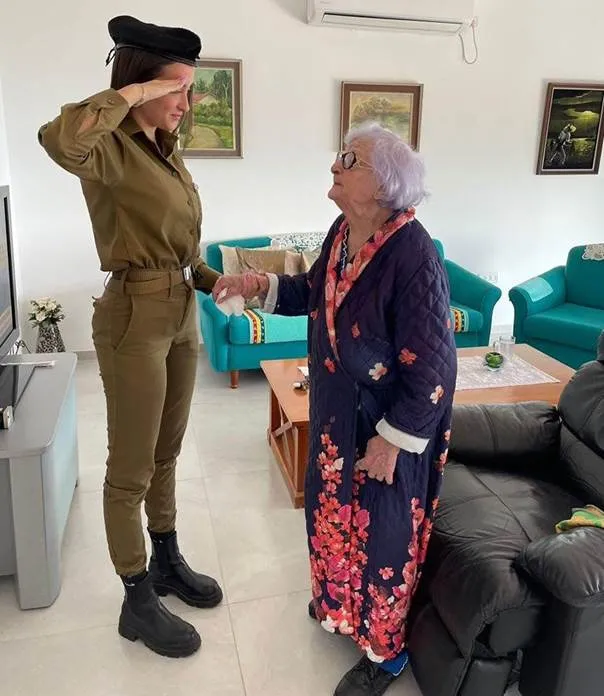
Musimy bronić i wspierać izraelskich żołnierzy przed fałszywymi etykietkami „ciemiężców” i „kolonizatorów”, bo to oni są strażnikami żydowskiej ciągłości. Musimy mówić prawdę o naszej przeszłości, by zabezpieczyć naszą przyszłość. Nie tylko dla siebie, ale dla tych, którzy nie dostali tej szansy.

.
A nade wszystko — by uczcić ofiary Holokaustu — nie możemy nigdy przepraszać za Izrael ani za syjonizm. Nie teraz. Nigdy. Ani w czasie pokoju, ani w czasie wojny. Ani gdy lecą rakiety, ani gdy ulice są spokojne. Ani gdy świat patrzy, ani gdy udaje, że nie widzi.

Syjonizm nie jest zbrodnią, za którą trzeba się tłumaczyć. To sprawiedliwość, która zbyt długo była odwlekana i wreszcie została wymierzona. To nie kolonializm, to odwrócenie kolonializmu. To nie ekstremizm, to prosta konstatacja, że Żydzi zasługują na to, co inni uznają za oczywiste: dom, armię, flagę, przyszłość.

Naród Żydowski nie jest nikomu winien wyjaśniania swojego istnienia. Nie jesteśmy winni tłumom internetowym czy ulicznym. Nie musimy uzasadniać naszej ojczyzny nieskazitelnym zachowaniem ani negocjować naszej suwerenności pod warunkiem globalnej aprobaty. Legitymizacja Izraela nie została nam podarowana przez ONZ. Została zdobyta: walką, krwią i powrotem.

Pamięć o Holokauście bez żydowskiej siły to tylko turystyka tragedii. Jeśli świat chce pamiętać o martwych Żydach, a jednocześnie krytykuje żywych za to, że się bronią — to nie jest pamięć, to moralna perwersja. Lekcja Holokaustu nie brzmiała: „bądźmy milsi dla mniejszości”. Brzmiała: Nigdy nie pozwól nikomu innemu decydować o naszym przetrwaniu. Za żadną cenę.

Gdy więc mówią nam, że musimy być „antysyjonistami”, by zostać przyjętymi — musimy odmówić. Gdy żądają, by dopuszczać tylko „dobrych Żydów” — musimy odmówić. Gdy nalegają, by żydowska tożsamość była akceptowana tylko wtedy, gdy żydowska siła zostanie odrzucona — musimy wyprostować się jeszcze bardziej. Bo jedyną rzeczą groźniejszą od żydowskiej siły jest żydowska bezsilność.

A jeśli mamy uczcić pamięć o sześciu milionach zamordowanych za to, że nie mieli państwa — naszym zadaniem nie jest być skruszonymi spadkobiercami tej pamięci, lecz bezkompromisowymi strażnikami jej lekcji. Nie pochylamy głów ze wstydu za to, że mamy państwo. Unosimy głowy z dumą, że przeżyliśmy na tyle długo, by je zbudować.

Syjonizm nie jest naszym wstydem. Jest naszą zemstą — na tych, którzy chcieli nas wymazać, i im się nie udało. Na świecie, który zamknął drzwi, a teraz musi pukać do naszych. Na ciszy roku 1942, której odpowiedzią są syreny roku 1948.

Największym pomnikiem Holokaustu nie jest tablica. Jest paszport. Izraelski. Trzymany przez żydowskie dziecko, urodzone w żydowskiej ziemi, pod żydowskim niebem, które nigdy nie zazna, co to znaczy być bezpaństwowcem.
To w ten sposób czcimy ofiary: nie przeprosinami, lecz trwałością.

Nadejdzie dzień, gdy ostatni ocalały z Holokaustu wyda ostatni oddech. W tym dniu święta pałeczka zostanie przekazana w całości nam.
Nie bądźmy biernymi żałobnikami. Bądźmy budowniczymi. Bądźmy obrońcami. Bądźmy nieprzejednanymi Żydami i Syjonistami.


Future of Jewish
The greatest memorial for the Holocaust is Israel.
Future of Jewish is the ultimate newsletter by and for people passionate about Judaism and Israel. Subscribe to better understand and become smarter about the Jewish world…
Read more

Zawartość publikowanych artykułów i materiałów nie reprezentuje poglądów ani opinii Reunion’68,
ani też webmastera Blogu Reunion’68, chyba ze jest to wyraźnie zaznaczone.
Twoje uwagi, linki, własne artykuły lub wiadomości prześlij na adres:
webmaster@reunion68.com


Suspect in car-ramming at Chabad headquarters faces multiple hate-crime charges


Suspect in car-ramming at Chabad headquarters faces multiple hate-crime charges

Mike Wagenheim, JNS Staff


“The attacks are only intensifying in New York, and the response requires more than a statement,” the Israeli consul general in New York stated.

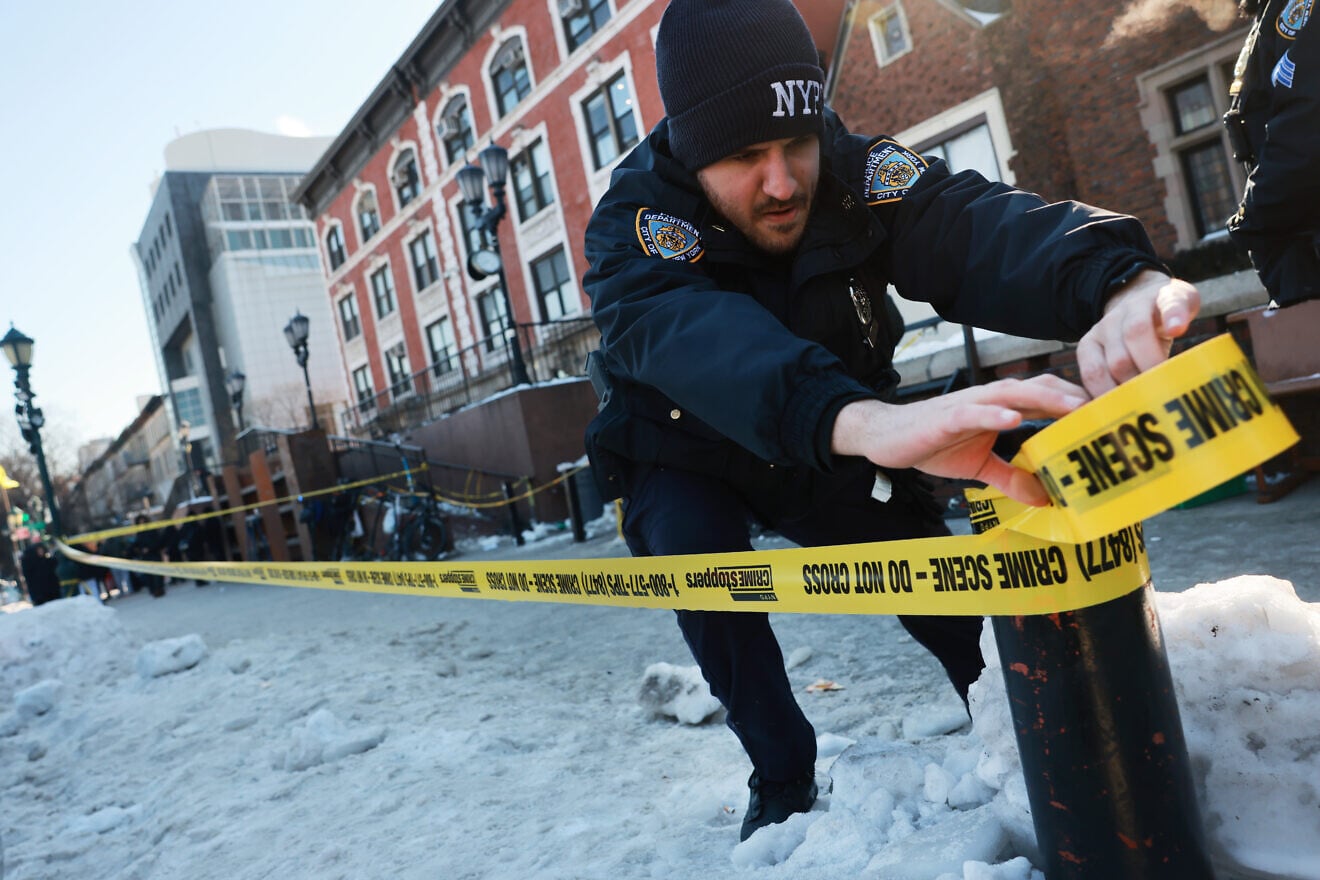
Police put up crime scene tape as members of the Chassidic Jewish community gather outside of the Chabad Lubavitch world headquarters, where a man was arrested Wednesday evening after repeatedly crashing his car into a door of the building, Jan. 29, 2026 Credit: Spencer Platt/Getty Images.

Dan Sohail, 36, is suspected of driving a car five times into the doors to a synagogue at Chabad-Lubavitch world headquarters in the Crown Heights neighborhood of Brooklyn, N.Y., on Wednesday evening, Joseph Kenny, chief of detectives at the New York City Police Department, said at a press conference.

The suspect, of Carteret, N.J., “had recently connected with the Lubavitch community,” and removed blockades from the same site the prior day, Kenney said.

“This incident is being investigated as a hate crime, and the NYPD’s hate crime task force took the lead on this case,” Kenny said. “We are collaborating with our state and federal partners.”

He added that Sohail has been charged with “attempted assault one and two as a hate crime, reckless endangerment two as a hate crime, criminal mischief two and three as a hate crime and aggravated harassment as a hate crime.”

The suspect claimed he lost control of the car because he was wearing clunky boots, the chief of detectives said. “It’s a hate crime based on his attack on the synagogue,” Kenny said, noting that the suspect knew it was a synagogue.

Ofir Akunis, Israeli consul general in New York, stated that “this is the new reality in New York for Jews.”

“We are seeing one antisemitic attack followed by the next on houses of worship, targeting Jews simply because they are Jewish,” he stated. “The attacks are only intensifying in New York, and the response requires more than a statement. We warned that changing the definition of antisemitism and lifting the ban on boycott initiatives against Israel could lead to an increase in attacks, and regrettably, that is what is happening.”

Zohran Mamdani, mayor of New York City, axed all of his predecessors’ recent executive orders, including those designed to protect Jews in the city, within hours of taking over control of City Hall. Mamdani, who has said he would have the Israeli prime minister arrested in New York, has also said that he is interested in divesting the city with the largest Jewish population outside of the Jewish state from Israel Bonds.

“This attack is part of a growing wave of antisemitic incidents driven by an organized, long-running campaign to dehumanize Jews and delegitimize the existence of the Jewish state,” Akunis stated. “Toxic and violent rhetoric is a central component of this propaganda. Antisemitism must be confronted decisively.”

‘A living, breathing thing’

Video footage that has emerged appears to show the suspect removing barricades and telling bystanders to move before he began ramming his vehicle into the entrance doors to Chabad’s global headquarters in Brooklyn.

The suspect was at the location weeks prior, reportedly claiming that he was Jewish, and young students were said to have offered him religious services.

The NYPD said that no one was injured in the attack and that the driver was arrested without incident. The department told JNS that it responded at about 8:45 p.m. to 770 Eastern Parkway, where officers saw a gray Honda sedan, which “collided into entrance doors at the bottom of a sloped driveway in front of 770 Eastern Parkway.”

Wednesday, the 10th of Shevat, is one of the most important days of the calendar for Chabad, with tens of thousands from around the world converging on the site to mark the 75th anniversary of the Lubavitcher Rebbe assuming the leadership role in 1951.

New York Gov. Kathy Hochul and Mamdani were among those who issued comments on Wednesday night. The governor said that “for the second day in a row, Jewish New Yorkers were the targets of antisemitic violence” and that “an attack against the Jewish community is an attack against all New Yorkers.”

The mayor, who has released several statements decrying antisemitism that has not related to anti-Zionism, said that the ramming at Chabad “is deeply alarming, especially given the deep meaning and history of the institution to so many in New York and around the world.”

“Any threat to a Jewish institution or place of worship must be taken seriously,” added the mayor, who is reportedly considering two people, who are said to be anti-Chassidic, to run the city office to combat Jew-hatred. “Antisemitism has no place in our city, and violence or intimidation against Jewish New Yorkers is unacceptable.”

Dan Mannarino, of PIX11 News, asked Mamdani about the incident on Thursday.

“I was there on the scene last night at 770 Chabad world headquarters, and it was a horrifying incident where a man repeatedly and intentionally crashed his car into the building,” the mayor said. “I am so thankful that no one was hurt, and we know that this is a building that has immense meaning to so many Jewish New Yorkers and those across the world.”

The mayor said that the attack “took place on the yahrzeit of Rabbi Schneerson and the leadership of Rabbi Menachem Mendel Schneerson, and this is just a day after the day when we remember the victims of the Holocaust.”

“We know that antisemitism is not simply something of the past to be learned about. It is a living, breathing thing that we have to combat every day,” he told PIX11.

‘A deeply disturbing act of violence’

Asked, in light of the New York City Council’s scheduled announcement of a task force to fight Jew-hatred, when he would name a leader to the mayoral office to combat antisemitism, Mamdani said that “we are actually in our final interviews for that position.”

“That is going to be a key position that delivers on our commitment to root out antisemitism across the five boroughs and make this a city where Jewish New Yorkers are not just safe but frankly celebrated and cherished,” the mayor said.

“Sometime next week?” Mannarino asked.

“We’re working on the timeline, but it is in the final stages,” Mamdani said.

The Orthodox Union stated that it stands “with the Chabad community and is thankful to the Almighty that there were no injuries in the disturbing car-ramming incident outside 770 Eastern Parkway, a place that holds deep meaning for many Jews around the world.”

“This incident is the latest reminder of the sacred responsibility of those in positions of authority to prioritize the safety and security of the Jewish community, especially during this time of unprecedented threats,” the OU said.

Yaacov Behrman, a Chabad spokesman, stated that the driver had trespassed previously at a Chabad house in New Jersey. CBS News reported that Sohail told people at the Chabad that he was homeless and wanted to convert to Judaism. Counselors called to the scene reportedly recommended that he seek mental health counseling.

Additional media reports suggested that Sohail was denied access to a yeshiva in the Garden State.

Motti Seligson, a spokesman for the Chabad movement, stated that the site where the ramming took place is “perhaps the most replicated building in the world because of the light, joy, Torah and a confident Judaism that emanates from it to all corners of the world.”

Both New York senators weighed in.

Senate Minority Leader Chuck Schumer (D-N.Y.) said that “770 is not simply a religious institution. It’s an important spiritual home for the Chabad Jewish community, and this antisemitic attack against it is deeply disturbing.”

“This blatant act of antisemitism is not only an attack on this one building but an attack on Jewish people across New York and the world,” stated Sen. Kirsten Gillibrand (D-N.Y.). “Chabad headquarters is a faith home for so many, and this is a deeply disturbing act of violence.” 

Harmeet Dhillon, U.S. assistant attorney general for civil rights, said that she initiated a civil-rights investigation of the incident.


Zawartość publikowanych artykułów i materiałów nie reprezentuje poglądów ani opinii Reunion’68,
ani też webmastera Blogu Reunion’68, chyba ze jest to wyraźnie zaznaczone.
Twoje uwagi, linki, własne artykuły lub wiadomości prześlij na adres:
webmaster@reunion68.com


BBC Apologizes for Not Mentioning Jews During Holocaust Remembrance Day Coverage


BBC Apologizes for Not Mentioning Jews During Holocaust Remembrance Day Coverage

Shiryn Ghermezian


The BBC logo is displayed above the entrance to the BBC headquarters in London, Britain, July 10, 2023. Photo: REUTERS/Hollie Adams

The BBC apologized on Tuesday night after at least four of its presenters failed to mention the murder of Jews in the Holocaust during the national broadcaster’s coverage of International Holocaust Remembrance Day.

“BBC Breakfast” presenter Jon Kay said on air Tuesday morning that Holocaust Remembrance Day was “for remembering the six million people murdered by the Nazi regime over 80 years ago.” Several BBC broadcasts by some of its most well-known presenters included similar comments that omitted the mention of Jewish victims when discussing the Holocaust.

In one broadcast, “BBC News” presenter Martine Croxall also said Holocaust Remembrance Day is a day “for remembering the six million people who were murdered by the Nazi regime over 80 years ago.”

BBC World News presenter Matthew Amroliwala introduced a bulletin on his show with the same scripted line.

On the BBC Radio 4 program “Today,” presenter Caroline Nicholls discussed plans to mark Holocaust Remembrance Day and said in part: “Buildings across the UK will be illuminated this evening to mark Holocaust Memorial Day, which commemorates the six million people murdered by the Nazi regime more than 80 years ago.”

“Is the BBC trying to sever all ties with their Jewish listeners? Even on Holocaust Memorial Day, the BBC cannot bring itself to properly address antisemitism,” the Campaign Against Antisemitism posted on X. “This is absolutely disgraceful broadcasting. BBC, we demand an explanation for how this could have happened.”

The BBC addressed the mishap in a statement released late Tuesday.

“The ‘Today’ program featured interviews with relatives of Holocaust survivors, and a report from our religion editor. In both of these items we referenced the six million Jews murdered during the Holocaust,” the statement read in part, as cited by GB News. “‘BBC Breakfast’ featured a project organized by the Holocaust Educational Trust in which a Jewish survivor of the Holocaust recorded her memories. In the news bulletins on ‘Today’ and in the introduction to the story on ‘BBC Breakfast’ there were references to Holocaust Memorial Day which were incorrectly worded, and for which we apologize. Both should have referred to ‘six million Jewish people’ and we will be issuing a correction on our website.”

Karen Pollock, chief executive of the Holocaust Educational Trust, said in a post on X that the BBC’s not mentioning Jews during its coverage of Holocaust Remembrance Day is “hurtful, disrespectful, and wrong.”

“The Holocaust was the murder of six million Jewish men, women, and children. Any attempt to dilute the Holocaust, strip it of its Jewish specificity, or compare it to contemporary events is unacceptable on any day,” she added.

Danny Cohen, the BBC’s former director of television, said the mistake, especially on Holocaust Remembrance Day, “marks a new low point” for the broadcaster. He said the mishap will surely be hurtful to many in the Jewish community “and will reinforce their view that the BBC is insensitive to the concerns of British Jews.”

“It is surely the bare minimum to expect the BBC to correctly identify that it was six million Jews killed during the Holocaust,” said Cohen, as cited by the Daily Mail. “To say anything else is an insult to their memory and plays into the hands of extremists who have desperately sought to rewrite the historical truth of history’s greatest crime.”

This year’s Holocaust Remembrance Day marks the 81st anniversary of the liberation of the Auschwitz-Birkenau Nazi concentration camp in 1945. On Tuesday, King Charles and the Queen Camilla lit candles at Buckingham Palace in honor of the annual commemoration and hosted a reception for Holocaust survivors and their families. Last year, King Charles, who is patron of the Holocaust Memorial Day Trust, became the first British monarch to visit Auschwitz on the 80th anniversary of its liberation.

Tuesday was not the first time that the BBC has come under fire for its coverage of issues concerning the Jewish community or Israel.

In February 2025, the BBC apologized for “unacceptable” and “serious flaws” in its documentary about Palestinian children living in the Gaza Strip, after it was revealed that the documentary’s narrator was the son of a senior Hamas official. An internal review by the British public broadcaster also revealed that the documentary breached the BBC’s editorial guidelines on accuracy.

In July, the BBC apologized for streaming a live performance by the British punk rap duo Bob Vylan at the Glastonbury Festival, during which the band’s lead singer led the audience in chanting “Death to the IDF,” referring to the Israel Defense Forces.

Also last year, the host of “Good Morning Britain” apologized on-air for failing to mention Jewish victims of the Holocaust during her coverage of International Holocaust Remembrance Day.


Zawartość publikowanych artykułów i materiałów nie reprezentuje poglądów ani opinii Reunion’68,
ani też webmastera Blogu Reunion’68, chyba ze jest to wyraźnie zaznaczone.
Twoje uwagi, linki, własne artykuły lub wiadomości prześlij na adres:
webmaster@reunion68.com