Archive | 2026/01/08

“Czy sztuka może przekazywać prawdę?”

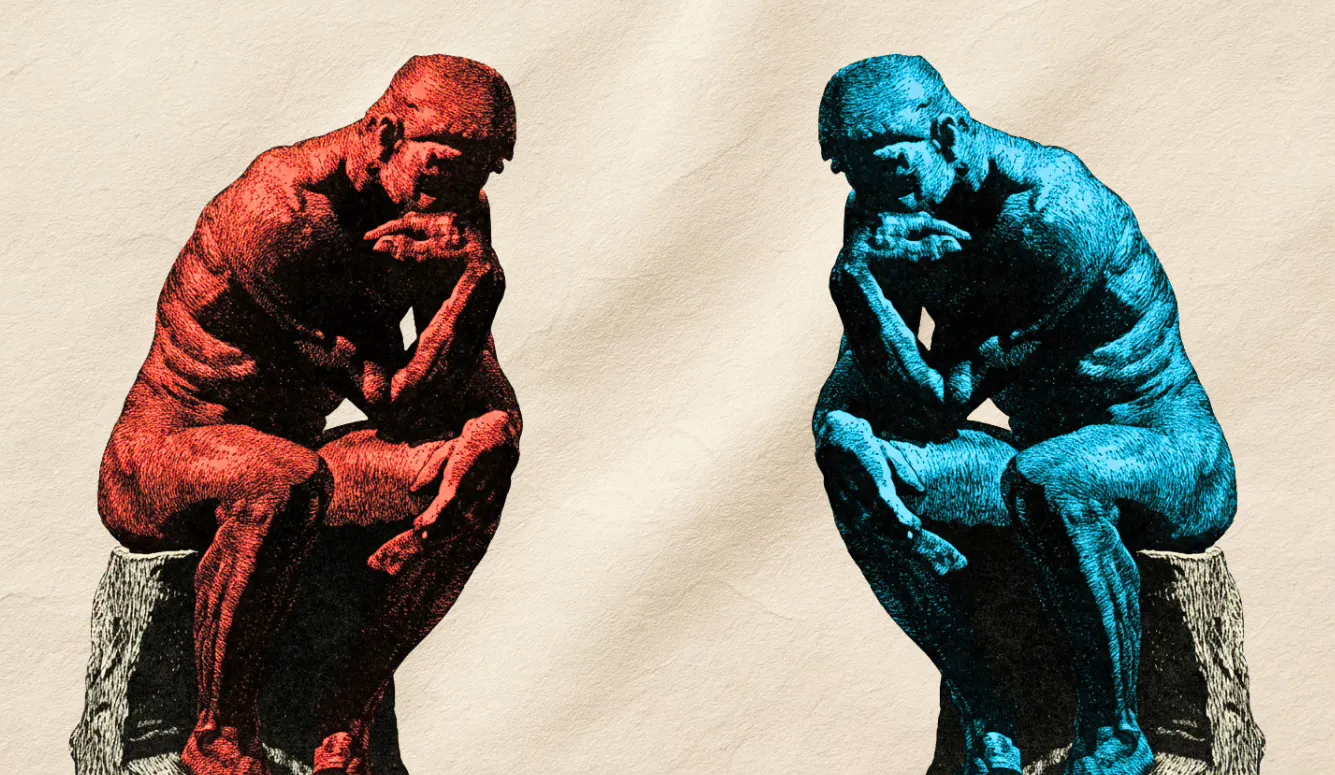
Czerwone i niebieskie, lustrzane postacie Myśliciela. Canva.


“Czy sztuka może przekazywać prawdę?”

Jerry A. Coyne


Ubiegłego roku w czerwcu uczestniczyłem w dorocznym spotkaniu Heterodox Academy, które tym razem odbyło się w Brooklynie, w Nowym Jorku. Zostałem zaproszony do udziału w panelu zatytułowanym „Obowiązki i odpowiedzialność uczonych”, którego członkami – oprócz mnie – byli Jennifer Frey, Louis Menand i John McWhorter. Wprowadzenia do panelu dokonali Alice Dreger i Colleen ErenU

Znałem wcześniej dwóch uczestników: Menanda (profesora anglistyki na Uniwersytecie Harvarda, uznanego autora i publicystę „New Yorkera”) oraz McWhortera (językoznawcę z Uniwersytetu Columbia, pisarza i felietonistę „New York Timesa”, regularnie pojawiającego się także na mojej stronie). To wystarczyło, by poczuć się onieśmielonym, więc przez kilka miesięcy zgłębiałem temat, koncentrując się na wolności akademickiej i wolności słowa. Część moich przemyśleń na ten temat zawarłem we wcześniejszych wpisach, które być może już czytaliście. Po drodze uświadomiłem sobie, że „zderzenie idei”, które często uznaje się za niezbędny (a może i wystarczający) warunek ujawniania się prawdy, w rzeczywistości nie prowadzi do żadnej prawdy. (To zderzenie, omawiane przez Johna Stuarta Milla i Olivera Wendella Holmesa, bywa podawane jako główny powód konieczności wolności słowa). Jednakże samo ścieranie się idei nie pozwala zbliżyć się do prawdy, chyba że dodamy do tego dowody empiryczne, niezbędne do odkrywania „prawd propozycjonalnych”, o których piszę w artykule poniżej.

To doprowadziło mnie do wniosku, że powszechnie przyjmowany cel istnienia uniwersytetów jest niepełny. Jak piszę w moim nowym tekście w Quillette (kliknij na link pod w zrzutem z ekranu):

Podobnie błędne jest powszechne twierdzenie, że najważniejszym celem uczelni wyższych jest poszerzanie, zachowywanie i szerzenie nowej wiedzy – czyli dążenie do „prawd uzgodnionych”. Znajdowanie prawdy nie jest celem literatury czy poezji, ani sztuk pięknych i graficznych, takich jak film, malarstwo, animacja, fotografia, ani sztuk performatywnych – teatru, tańca czy muzyki. Te dziedziny nie są stworzone do odkrywania prawdy i nie po to są nauczane. (Inne obszary, jak ekonomia czy socjologia, często zaliczane do „nauk humanistycznych”, mogą odkrywać prawdę, o ile opierają się na empirycznym badaniu rzeczywistości).

Prawd nie odkrywa bez dowodów nie tylko sztuka, ale również filozofia. (Matematyką się tu nie zajmuję – wciąż się nad nią zastanawiam). Nie rozwijam tematu filozofii w artykule, ale jak dotąd nie natknąłem się na przypadek, w którym filozofia sformułowałaby testowalną prawdę propozycjonalną bez odwoływania się do dowodów empirycznych. To jednak nie znaczy, że uważam, iż filozofii (ani szerzej – nauk humanistycznych) nie powinno się nauczać na uniwersytetach. Jak piszę w swoim artykule:

Najpierw powinienem odnieść się do zarzutu uprzedzeń wobec sztuki. To, że postrzegam sztukę jako źródło czegoś innego niż prawda w sensie naukowym, w żadnym razie nie oznacza, że ją lekceważę. Podczas studiów licencjackich uczęszczałem na zajęcia z tragedii greckiej, staroangielskiego (wciąż potrafię czytać Beowulfa w oryginale), literatury współczesnej, etyki filozoficznej i sztuk pięknych – i to właśnie one obudziły we mnie pragnienie dalszej nauki, ciągłej inspiracji i odkrywania sztuki. Dzięki sztuce i naukom humanistycznym czerpałem – i nadal czerpię – ogromną przyjemność i poczucie osobistego rozwoju. Nauka dała mi karierę, ale sztuka dała mi co najmniej tyle samo. Tyle że nie była to prawda.

Reszta artykułu, której tutaj nie streszczam tłumaczy – przynajmniej pośrednio – dlaczego wciąż uważam, że nauki humanistyczne (w tym wszystkie formy sztuki) powinny być nauczane w szkołach wyższych, bo celem takiej edukacji, choć nie jest odkrywanie prawdy, jest rozbudzanie w nas głodu doświadczenia.

Prawdziwa wartość sztuki nie polega na tym, że dostarcza wiedzy, której nie da się zdobyć inaczej, lecz na tym, że wywołuje emocjonalne i poznawcze reakcje u odbiorcy, często dając doświadczenie piękna. Sztuka może wzbogacać nasz sposób myślenia o nas samych i innych ludziach i – co istotne – pozwala patrzeć na świat cudzymi oczami. Poprzez refleksję to poszerzenie doświadczenia może pogłębiać naszą wiedzę o nas samych. Tyle że jest to wiedza subiektywna, a nie propozycjonalna.

Dziś rano pokazałem ten tekst znajomej, która zapytała mnie:

„Twoim głównym argumentem jest: ‘humanistyka ma inne zalety, więc powinniśmy ją utrzymać na uniwersytetach.’ Ale czy to wystarczające uzasadnienie? Sugerujesz, że humanistyka pozwala ludziom czuć i myśleć inaczej. Czy taki rozwój osobisty to coś, czemu uczelnie powinny poświęcać zasoby? Wielu administratorów i polityków dziś odpowiada: nie.”

Ale ja odpowiadam, że tak. Odpisałem jej:

Tak, to dobre pytanie i powinienem był się do niego odnieść. W pewnym sensie odpowiedź jest zawarta w tekście, gdy piszę, jak wiele dała mi osobiście nauka o sztuce – pobudziła we mnie chęć poznawania. Sztuka to jedno z największych dokonań człowieka i już z tego powodu powinna być nauczana na uniwersytetach. Jak napisałem – pozwala myśleć o sobie i innych z różnych perspektyw. I chociaż nie jest to prawda w sensie naukowym, to już samo to jest wartością edukacyjną. Podobnie z filozofią. Etyka była jednym z najważniejszych przedmiotów, jakie miałem na studiach – bez niej nie znałbym historii ludzkich poglądów na temat moralności, choć moralność, jak sądzę, jest czymś subiektywnym.

Uważam więc, że uniwersytety powinny pozostać takie, jakie są, z wyjątkiem nauczania religijnych dogmatów – jak ma to miejsce w niektórych szkołach teologicznych. Cel edukacji akademickiej wykracza poza poszerzanie, tworzenie, zachowywanie i szerzenie wiedzy (propozycjonalnej). Gdzie indziej mielibyśmy się uczyć o sztuce i humanistyce, jeśli nie na uniwersytetach?

Dodałem też, że choć filozofia – jak uważam – sama w sobie nie jest w stanie odkrywać prawd, to jest jednym z najcenniejszych narzędzi do oddzielania sensu od nonsensu w debacie i pomaga nam zbliżyć się do prawdy poprzez logiczne myślenie. Filozofia moralna była dla mnie szczególnie ważna, bo zmusiła mnie do zastanowienia się, dlaczego właściwie uważam pewne rzeczy za moralne lub niemoralne – i z jakiego powodu. To poszukiwanie, w którym wciąż trwam. Dlatego oczywiście uważam, że filozofia powinna pozostać w programie studiów. Jedyną rzeczą, którą należałoby usunąć, jest nauczanie religijnych dogmatów (a nie historii religii czy jej treści), które często są propagowane na wydziałach teologicznych.

Nagranie dyskusji panelowej trwa 75 minut, ale jeśli chcecie posłuchać fragmentu o prawdzie w humanistyce i zobaczyć, jak McWhorter i Menand próbują mnie symbolicznie „wysmarować smołą i wytarzać w pierzu”, zacznijcie od 22. minuty i słuchajcie przez około sześć minut. To właśnie w tej części – jak sądzę – McWhorter wypowiedział się w sposób, który podważył zarówno jego, jak i Menanda argumentację – co zaznaczam w ostatnim akapicie mojego tekstu:

Co ciekawe, uważam, że moje stanowisko „sztuka to nie prawda” nie jest tak skrajne i nierozsądne, jak sugerują moi przewracający oczami i wzruszający ramionami znajomi z humanistyki. Jak wspomniałem, to Menand i McWhorter zachowywali się w ten sposób podczas panelu, ale zauważam, że oni również zmagają się w swoim rozumowaniu z kwestią obiektywności i subiektywności. Na przykład w dyskusji o tym, czy symfonie Leonarda Bernsteina są lepsze niż jego musicale, McWhorter ostatecznie przyznał:
„Nie ma jednej prawdy: to kwestia wyrobionej opinii i tego, co sam uznałeś za wartościowe w sztuce.”

McWhorter wypowiada te słowa od 27:55. Nie musicie oglądać nagrania, ale przeczytajcie proszę cały tekst – to tylko około 2000 słów.


Link do oryginału: https://whyevolutionistrue.com/2025/12/26/my-article-in-quillette-can-art-convey-truth/

Why Evolution Is True, 26 grudnia 2025

Jerry A. Coyne – Emerytowany profesor na wydziale ekologii i ewolucji University of Chicago, jego książka “Why Evolution is True” (Polskie wydanie: “Ewolucja jest faktem”, Prószyński i Ska, 2009r.) została przełożona na kilkanaście języków, a przez Richarda Dawkinsa jest oceniana jako najlepsza książka o ewolucji.  Jerry Coyne jest jednym z najlepszych na świecie specjalistów od specjacji, rozdzielania się gatunków. Jest również jednym ze znanych “nowych ateistów” i autorem (wydanej również po polsku przez wydawnictwo “Stapis”) książki “Faith vs Fakt”. Jest wielkim miłośnikiem kotów i osobistym przyjacielem redaktor naczelnej.


Zawartość publikowanych artykułów i materiałów nie reprezentuje poglądów ani opinii Reunion’68,
ani też webmastera Blogu Reunion’68, chyba ze jest to wyraźnie zaznaczone.
Twoje uwagi, linki, własne artykuły lub wiadomości prześlij na adres:
webmaster@reunion68.com


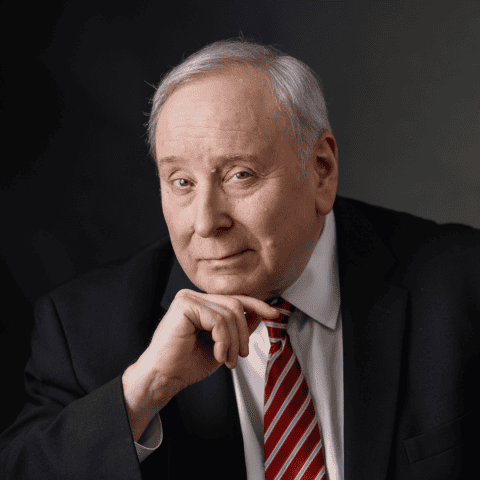
Has time finally run out for Tehran’s Islamist tyrants?


Has time finally run out for Tehran’s Islamist tyrants?

Jonathan S. Tobin


The country is falling apart, pushed to the brink by failing resources and a nuclear defeat last summer. But as long as its minions are ready to slaughter dissidents, the ayatollahs will remain in power.

Rocks, tree branches and a toppled charity box remain on a street during unrest amid demonstrations in Hamedan, Iran, on Jan. 1, 2026. The demonstrations erupted after shopkeepers in Tehran’s Grand Bazaar shut their businesses to protest the sharp fall of Iran’s currency and worsening economic conditions, with clashes reported in several provinces, and Iranian media and rights groups saying multiple people were killed in the violence, marking the largest protests to hit the Islamic Republic in three years. Photo by Mobina / Middle East Images / AFP via Getty Images.

For the past 16 years, the world has continued to ask the same question with respect to the Islamist regime in Iran: Is it finally time for the despotic rule of the ayatollahs to end? Yet hopes that Iran might finally free itself have continually been disappointed. That’s why even amid the heightened expectations that the breaking point has been reached, optimism about its imminent fall should remain tempered.

The theocracy imposed on the country in 1979—when the government of Shah Reza Pahlavi collapsed and was replaced by the rule of religious extremists, led by the Ayatollah Ruhollah Khomeini—has survived every previous challenge. Despite its manifest unpopularity, it has repeatedly been able to mobilize both the Islamic Revolutionary Guard Corps and the nation’s army to suppress protests with the sort of deadly force that intimidated a restive population into sullen acceptance of their fate. Nevertheless, the Islamist government’s inability to effectively run a country rich in natural resources but now facing shortages of energy and clean water, as well as having wasted massive sums of money on building a nuclear program at home and funding terrorism abroad, has once again brought it to the brink.

Trump’s threats

Speculation that the time has finally arrived for the fall of Iran’s theocratic government is centered on the latest round of protests spreading throughout the country. An Iranian dissident site, the Human Rights Activists News Agency, reported on Jan. 6 that after 10 days of demonstrations, 34 protesters had been killed and more than 2,000 had been arrested in 285 separate anti-regime rallies.

Unlike in the past, such as in 2009, when massive protests occurred, and in the fall of 2022, when women took to the streets after the death in police custody of 22-year-old Mahsa Amini, the United States isn’t signaling its passive support for the tyrants of Tehran. Under President Barack Obama, who was already planning a campaign of appeasement of the regime that would lead to the disastrous 2015 Iran nuclear deal and failed to speak out in support of the demonstrators, President Donald Trump has left no doubt about where the United States currently stands on the issue of Iran’s future.

He warned that American armed forces are “locked and loaded,” and ready to intervene. “If they start killing people, like they have in the past, I think they’re going to get hit very hard by the United States,” Trump said last week.

Given that the United States took part in a joint air campaign with Israel last June to take out Iran’s nuclear facilities, neither the Iranians nor anyone else should regard that as an idle boast or typical Trumpian braggadocio. Over the weekend, Trump sent in American forces to capture Venezuelan dictator and narco-terrorist Nicolás Maduro and bring him back to the United States to face justice.

That should have further concentrated the minds of Iran’s leaders on the prospect of what happens to deposed tyrants. If they don’t make it to safety in friendly countries, their fate could be even less pleasant than that of Maduro. While none of them are currently under an American indictment, the reports that Iran’s Supreme Leader, Ayatollah Ali Khamenei, has already planned to escape to Moscow with his family and aides should the regime’s forces fail to quell the protests. That’s a sign that they understand that their continued grasp on power is not guaranteed.

The problem, though, is that the ayatollahs and the leaders of the IRGC are acting like they do plan to hold on. And the explanation for their strategy should sober up optimists who, not for the first time, are already making bold predictions about what a new Iran would look like and who might govern it.

Iron rules of history

The Iranian regime is still dangerous for three important reasons that separate it from historical examples of past tyrannical regimes that collapsed, such as that of France’s monarchical ancien regime in 1789 or the Soviet Union in 1991. Unlike those governments, many, if not most, of those who serve Iran’s theocracy are still ardent believers in the Islamist faith that has been its guiding force for the last 46 years. It’s also true that, unlike the ayatollah, most of them don’t have anywhere that they can flee to while holding on to their assets. As a result, the regime’s henchmen—both in the IRGC and the army—seem willing to obey orders and kill as many of their compatriots as is necessary to once again stamp out hopes for freedom.

It remains an iron rule of history that tyrannies do not end because they are brutal. They collapse when they are no longer able to count on their loyalists to be brutal. They only fall when they are either conquered by external forces (i.e., Nazi Germany or Imperial Japan) and/or experience military defeat that destroys their credibility (i.e., the junta in Argentina after its failed 1982 invasion of the Falkland Islands). Or they go down after suffering a collapse of faith in a regime’s legitimacy and belief system, as in the case with France in 1789, and Moscow’s evil empire after the fall of the Berlin Wall and the dissolution of the Soviet Union.

Is such a crisis of faith happening in Tehran? It’s hard to know for sure.

Their defeat at the hands of Israel and the United States, when their planes had free rein over Iran’s skies as they sought out its nuclear and other targets, might turn out to be a tipping point. That was a body blow to a government that only a few years ago seemed well on its way to achieving regional hegemony with clients in power in Iraq, Syria, Lebanon and part of Yemen. The Israeli rout of Tehran’s Hezbollah auxiliaries in 2024 was an unexpected setback for a terrorist force that for years seemed to be invincible in Southern Lebanon. That, in turn, led to the end of the Bashar Assad regime in Syria in December 2024, a nation that seemed to be in Iran’s pocket up until then.

Add to that the growing economic collapse of the country, and it’s hard to see how a government that still sees itself as an expression of Islamist revolution can cling to power.

Yet while the casualty figures from anti-regime protests and the claims that demonstrators are prevailing in some parts of the country are a potential sign of regime collapse, the fact that army and IRGC forces are still firing on dissidents and killing dozens could indicate that the regime’s taste for blood and their ability to shed it have not slackened.

Moreover, despite the encouragement they’re getting from Washington and Jerusalem, Iran’s protesters should be under no illusion that this time, the Americans or Israelis will do their fighting for them.

Trump’s tough talk notwithstanding, implementing threats in South America, which is in Washington’s backyard, is a far cry from doing so in the Middle East. Trump might order some airstrikes on regime targets, but he’s not going to make the mistake of engaging in an invasion that might lead to American occupation of part of Iran. Trump wants to use U.S. military force to make the Iranians pay a high price for bloody repression and continuing to spread terror. He has no interest in occupying the country or replicating the mistakes made in Iraq and Afghanistan during the long wars there that Americans grew tired of.

The Iranians must do it

If the rule of the ayatollahs is to end, it will require at least some of the Iranians with guns—in either the IRGC or the army—to turn them on their rulers. Americans, and even Israelis, might be prepared to help them become free. However, they are going to have to do most, if not all, of the hard and likely bloody work of overthrowing the theocrats themselves.

As illogical as it may be for an incompetent government that turned a rich land into a failed state to be able to hold onto power, Khamenei and his followers could do so if enough of their minions are still ready to slaughter more innocents demonstrating for freedom.

So, while Americans should be doing everything possible to encourage Iranians to throw off their shackles and rejoin the international community, it’s by no means a certainty that this is going to happen or that even American assistance will make it a realistic possibility.

That’s a discouraging thought for those who recognize just how dangerous Iran has become, both because of its status as a threshold nuclear power (or, at least, it was until last June) and its being the world’s leading state sponsor of terrorism. Still, if Iranian opponents of the theocracy can’t find a way to persuade at least some of the regime’s enforcers to lay down their arms, then all the optimism about the end of the long Islamist nightmare will prove unfounded.


Jonathan S. Tobin is editor-in-chief of the Jewish News Syndicate, a senior contributor for The Federalist, a columnist for Newsweek and a contributor to many other publications. He covers the American political scene, foreign policy, the U.S.-Israel relationship, Middle East diplomacy, the Jewish world and the arts. He hosts the JNS “Think Twice” podcast, both the weekly video program and the “Jonathan Tobin Daily” program, which are available on all major audio platforms and YouTube. Previously, he was executive editor, then senior online editor and chief political blogger, for Commentary magazine. Before that, he was editor-in-chief of The Jewish Exponent in Philadelphia and editor of the Connecticut Jewish Ledger. He has won more than 60 awards for commentary, art criticism and other writing. He appears regularly on television, commenting on politics and foreign policy. Born in New York City, he studied history at Columbia University.


Zawartość publikowanych artykułów i materiałów nie reprezentuje poglądów ani opinii Reunion’68,
ani też webmastera Blogu Reunion’68, chyba ze jest to wyraźnie zaznaczone.
Twoje uwagi, linki, własne artykuły lub wiadomości prześlij na adres:
webmaster@reunion68.com


Celebrating Community and Mourning Tragedy at Brown University


Celebrating Community and Mourning Tragedy at Brown University

James M. Kaplan


The campus of Brown University in Providence, Rhode Island. Photo: Wikimedia Commons

Two recent events took place at Brown University, one of joy and one of tragedy.

Under a tent on Pembroke Field, Cantor Lizzie Shammash sang Shalom Aleichem and Rabbi Ayelet Cohen recited the Motzi and Kiddush, beginning a glorious weekend celebrating 130 years of Jewish life at Brown.

A few weeks later, a former Physics graduate student killed two Brown students, and wounded nine others, in a mass shooting event on campus.

The juxtaposition of these events demonstrated Brown’s commitment to its Jewish community, and also that community and support networks are central to campus life.

On the weekend of November 7-9, more than 1,000 Jewish students, faculty, and alumni convened on College Hill. There were hundreds more attendees than the university expected, spanning nearly eight decades of life at Brown.

Some of us attend a daily minyan; others rarely see the inside of a synagogue. The faces of today’s Jewish students demonstrate we have ancestry from every corner of the globe. For a weekend, we came together as one, emphasizing our common values and heritage.

We participated in lectures, panels, and religious services, celebrating alumni and our school’s accomplishments in business, academia, and the arts.

Even before the shooting tragedy on our campus, we knew America’s college students were struggling with a fractured environment. Mental health is a serious issue in our country, but especially among our young people. Three-fifths of younger adults reported serious loneliness in the past month, compared to 24 percent of people 55-65.

Younger adults are no longer anchored in their families, but still must grapple with decisions about relationships and career paths. They spend more time on their phones and alone in their dorm rooms, and 40 percent less time in group venues like the gym, library, or cafeteria.

Contrary to initial fears, the Brown shooting does not appear to have a political or religious dimension. Still, being a Jewish college student is harder now than it was just a few years ago.

Between 2019 and 2024, cases of antisemitic assault, harassment, and vandalism rose by over 300 percent, with college campuses seeing an 84 percent increase between 2023 and 2024.

People who subscribe to a dichotomy about oppressors and the oppressed common on university campuses are especially likely to hold antisemitic views.

Our “J130” event demonstrated the vibrancy and resilience of Brown’s Jewish community. Brown sprang from the tolerant and ecumenical traditions of Rhode Island. From its founding, Brown foreswore religious tests in admitting students. And there is no historical evidence that Brown used the formal Jewish quotas common at other elite institutions.

The weekend also highlighted how Jewish faith and community are not only essential to Jewish students, but also a force for good at the university. In one of the event’s faculty seminars, Judaic Studies scholar Professor Michael Satlow explained the relevance of religious wisdom. Jewish texts teach gratitude, patience, personal connection, the dignity of the individual, and the combination of purpose with humility — all somewhat counter-cultural when college students often focus on ideological conflict or careerism. That guidance resonated in November — and it’s only more important now.

Many Jews have found inspiration in a covenantal relationship with God, in which we bear a shared responsibility with the Almighty. The Pirkei Avot tells us, “What you do, do for Heaven,” and reminds us that, “It is not your duty to finish the work, but neither are you free to desist from it.”

Since the shooting, Brown students of every faith have wrestled with confusion, rage, and grief. Jewish students have sought out rabbis to make sense of these events, as other students have received pastoral care from clergy in other denominations.

Brown RISD Hillel must be a center of gravity on campus — a place of rich community, deep meaning, intellectual rigor, and spiritual resilience, even in the face of tragedy. Close to 1,000 Jewish students (and hundreds of non-Jewish students) walk through the doors of the Hillel building each semester. We must make it even more of a destination, a welcoming, bustling hive of activity, where Jewish students know they can go to be with other Jews — and where students of every faith and background can convene in fellowship.

We can make Hillel central to the intellectual life on campus. We can extend the exciting programming we’ve done on the Jewish tradition in the visual arts to include music and theater. We can innovate in the way we provide religious education to students and we can examine the way that AI may enhance the study of Jewish religious texts. We can provide more pastoral care to young men and women seeking to make sense of their world. And we can engage our alumni to mentor students, not how to ace a job interview, but on how to build meaningful and rewarding careers they can sustain over decades.

What happens at Brown RISD Hillel (and every other Hillel on every campus) matters for the wider Jewish world and the university ecosystem.

When Jewish students are grounded, supported, and educated, they become better Jews, students, and citizens. They also can help heal a wounded campus, and represent the resilience of the Jewish tradition and community in America.


James M. Kaplan chairs the Board of Trustees for Brown-RISD Hillel. He graduated from Brown University in 1992. 


Zawartość publikowanych artykułów i materiałów nie reprezentuje poglądów ani opinii Reunion’68,
ani też webmastera Blogu Reunion’68, chyba ze jest to wyraźnie zaznaczone.
Twoje uwagi, linki, własne artykuły lub wiadomości prześlij na adres:
webmaster@reunion68.com