Archive | January 2026

Israel Must Increase Its Advocacy — and Jews Must Continue Speaking Up


Israel Must Increase Its Advocacy — and Jews Must Continue Speaking Up

Anya Gillinson


Trucks carrying aid move, amid a ceasefire between Israel and Hamas, in Rafah in the southern Gaza Strip, Feb. 13, 2025. Photo: REUTERS/Hussam Al-Masri

When will Israel answer the decades-long smear campaign against it? How can a nation known for breakthroughs in medicine, science, and agriculture — and home to the most ethical military and the Middle East’s only democracy — struggle with self-advocacy?

As a Soviet Jew raised in Moscow, I saw Israel as the guardian of my identity. After millennia of persecution and the Holocaust, Israel became a beacon of freedom and safety for the Jewish people. I excused Israel’s public-relations failures as the cost of survival. Surrounded by hostility and judged by the harshest standards, Israel focused on defending land, people, and principles — not narratives. Key conflicts shaped this posture — from 1948, 1967, and 1973, to the Intifadas, wars in Lebanon and Gaza, and the October 7, 2023, Hamas massacre.

The deepest wound is internal: too many Jews refuse to stand together against evil. Unity and principled advocacy are imperative. After three decades in New York, I’m devastated by Zohran Mamdani’s victory; he is a Social Democrat, an anti-Zionist, and an antisemite. Yet 33% of New York’s Jewish community voted for him. I cannot comprehend voting for a mayor who is an antisemite.

Since October 7, Israel has failed to communicate why it had to wage war on Hamas and prevent Hamas’ plan to destroy Israel. The opposing side advanced a narrative, amplified by the media and anti-Israel and anti-Jewish propaganda — casting Palestinians as victims of “Israeli colonialism” and branding Israel’s war as a genocide.

Hamas massacred 1,200 people and took 251 hostages — and vowed to repeat the massacre again and again. Israel’s goals: return the hostages and eradicate Hamas to prevent future attacks. Yet the IDF and Netanyahu are cast as murderers, and a campaign to eliminate a terrorist organization is labeled as genocide.

Israel’s story is factual and moral. Israel’s war is not genocide; it targets Hamas terrorists, not Gazans. This is legitimate self-defense under international law. The IDF’s morality is rooted in courage, justice, and protection of the weak; Hamas attacks civilians and uses civilians as human shields, while the IDF takes extensive precautions to protect civilians. Hamas embeds its terrorists among civilians, seeking their deaths to feed a media campaign. The casualty story is distorted: the IDF estimates that two civilians are killed per Hamas terrorist — among the lowest ratios in recent warfare. Civilian deaths, tragic in any war, do not constitute genocide. If Israel sought genocide, the toll would be vastly higher.

The world must know that Hamas obstructs aid — attacking workers, firing on distribution sites, and blocking aid — while the IDF strains to deliver it. These tactics sow chaos and spawn false reports blaming the IDF for deaths and famine, even as Hamas hoards fuel and medical supplies.

Israel cites extensive aid deliveries, daily pauses, secure corridors, and controlled entry to challenge famine assessments. This data gets scant media coverage. Israel hasn’t failed deliberately; it neglected to adjust to the change in political choreography.

Israel must remind its people of their history, and clarify that it fights to defends all Jews, not only Israelis. It should use the media to change the narrative about the Middle East, ground claims in data, and pair them with images of Israeli victims from October 7.

An antisemitic mob gathered outside a Manhattan synagogue, chanting “Death to the IDF,” “Death to Israel,” and “We need to make them scared,” during a Nefesh B’Nefesh event. Assemblyman Zohran Mamdani issued a perfunctory note “discouraging the language,” then effectively blamed the synagogue, claiming that houses of worship must be free from intimidation and should not promote activities that “violate international law.”

First of all, promoting the rights of Jews to live in Israel does not violate international law (unless you believe Israel shouldn’t exist, which Mamdani does). Second, what about the rights and freedom of the congregants? Mamdani’s posture is as hollow as Putin’s desire for peace. Emboldened by elected antisemitic leadership, the mobs blur protest, hate, and violence.

Yet fault also lies with us Jews: freedom is our faith’s core, and with that, comes responsibility. Instead of urging Israel to communicate the facts, too many Jews stayed passive — or boosted Zohran Mamdani, who believes Israel, not Hamas, is responsible for the massacres.

“Am Yisrael Chai!” is a Jewish cry of an uncompromising will to live — “The People of Israel live.” Rabbi Stephen S. Wise proclaimed it in 1933 in defiance of Hitler; survivors heard it after Bergen-Belsen’s liberation; Shlomo Carlebach made it the anthem of the Soviet Jewry movement. Across the years, the cry affirms Jewish resilience and frames a narrative: “The People of Israel live.” Our story starts and ends with this cry. In between, lie the facts — and without facts, history turns to fiction and democracies become dictatorships.


Anya Gillinson is an immigration lawyer and author of the new memoir, Dreaming in Russian. She lives in New York City. More at www.anyagillinson.com.


Zawartość publikowanych artykułów i materiałów nie reprezentuje poglądów ani opinii Reunion’68,
ani też webmastera Blogu Reunion’68, chyba ze jest to wyraźnie zaznaczone.
Twoje uwagi, linki, własne artykuły lub wiadomości prześlij na adres:
webmaster@reunion68.com



Global Antisemitism Sparks Surge in Aliyah From Western Countries as Jews Leave US, UK, France for Israel


Global Antisemitism Sparks Surge in Aliyah From Western Countries as Jews Leave US, UK, France for Israel

Ailin Vilches Arguello


New olim disembark at Tel Aviv’s Ben Gurion Airport on the first charter aliyah flight after he Oct. 7, 2023, Hamas attacks, arriving to begin new lives in Israel. Photo: The Algemeiner

As global antisemitism continues to skyrocket, Israel recorded a surge in Jewish immigration from Western nations specifically in 2025, despite an overall decline in Jews abroad moving to their ancient homeland.

Israel welcomed over 21,900 Jews from more than 100 countries this year amid ongoing hostility abroad. The figure represented a drop of about one-third from last year’s numbers, due largely to a steep dip in Russian emigration.

However, aliyah – the process of Jews immigrating to Israel – from the United States, France, the United Kingdom, and other Western countries surged sharply this year, according to data released Monday by Israel’s Immigration and Absorption Ministry.

This growing migration pattern comes as Jewish communities around the world, especially in Europe, have faced a troubling surge in antisemitic incidents and anti-Israel sentiment since the Hamas-led invasion of and massacre across southern Israel on Oct. 7, 2023.

Jewish leaders have consistently called on authorities to take swift action against the rising wave of targeted attacks and anti-Jewish hate crimes, ranging from the vandalism of murals and businesses to violent physical assaults, that their communities continue to face. 

“Aliyah to Israel in 2025 is a moving testament to Jewish resilience and the strength of the Zionist spirit, even amid security and national challenges,” Jewish Agency chairman Maj. Gen. (res.) Doron Almog said in a statement.

“In the shadow of the war, thousands of young people and families chose to bind their fate with Israel and build a shared future here,” he continued. “Aliyah is Israel’s growth engine, demographically, socially, economically, and morally.”

Continuing a steady upward trend, arrivals from France jumped 45 percent this year to 3,300, up from 2,200 in 2024, while immigration from the UK rose almost 20 percent to 840 immigrants. 

Ministry data also showed 420 newcomers from Canada, 220 from South Africa, and 180 from Australia.

These latest figures come as Jewish communities worldwide warn of escalating threats in the wake of a deadly attack on a Hanukkah celebration at Sydney’s Bondi Beach that left 15 dead and at least 40 injured.

Earlier this year, a string of deadly terrorist attacks also targeted Jewish communities abroad, including the Yom Kippur assault in Manchester that killed two Jewish men, the firebombing of a march for Israeli hostages in Boulder, Colorado – which killed one and injured 13 – and the murder of two Israeli Embassy staffers in Washington, DC.

According to Nefesh B’Nefesh (NBN), a nonprofit that promotes and facilitates aliyah from the US and Canada, overall North American immigration rose about 12 percent this year to 4,150 new arrivals, the highest annual total the organization has seen in four years.

“These olim [or new immigrants] underscore that aliyah is not solely a personal milestone, but a national and historic endeavor,” NBN executive director Rabbi Yehoshua Fass said in a statement.

“Together, these new olim are already helping to address Israel’s national needs and strengthen its future, and we recognize the significance of their decision to establish their lives in the State of Israel at this pivotal moment in the country’s history,” he continued.

Among all countries, Russia accounted for the largest number of immigrants in 2025, with about 8,300 arriving, continuing a trend seen every year since the 1990s. Yet, this figure represents nearly a 60 percent decline from 19,500 last year and is only a fraction of the 74,000 immigrants who arrived in 2022 following Russia’s invasion of Ukraine.

The ministry also showed that about a third of all new immigrants during the year were aged 18–35, highlighting a continued trend of younger Jews making aliyah.

Since the start of the war in Gaza, the Israeli government has been working to boost the country’s capacity to attract and absorb rising numbers of new arrivals, introducing initiatives such as partnering with Israeli companies to provide immediate employment and offering a zero percent income tax rate for immigrants arriving in 2026.

Earlier this year, the government also unveiled a $46.4 million program to support immigrant integration and attract skilled Jewish candidates with in-demand expertise, including a reform to expedite professional licensing for new arrivals.

According to Jewish Agency data, roughly 30,000 Jews worldwide began the immigration process in 2025, with particularly significant increases seen in the UK and Australia.

Despite these figures, Israel still faces a net migration deficit, with more people leaving than arriving — a trend experts warn is expected to continue next year.

In 2024, approximately 80,000 Israelis left the country while only 24,000 returned, creating an unprecedented negative migration balance of almost 58,000 people, according to the Israeli Bureau of Statistics.


Zawartość publikowanych artykułów i materiałów nie reprezentuje poglądów ani opinii Reunion’68,
ani też webmastera Blogu Reunion’68, chyba ze jest to wyraźnie zaznaczone.
Twoje uwagi, linki, własne artykuły lub wiadomości prześlij na adres:
webmaster@reunion68.com


Trump po spotkaniu z Netanjahu: Zrobimy Hamasowi piekło, jeżeli się szybko nie rozbroi

Prezydent USA Donald Trump rozmawia z mediami obok premiera Izraela Benjamina Netanjahu po przybyciu na spotkania do klubu Trumpa Mar-a-Lago w Palm Beach na Florydzie, 29 grudnia 2025 r. (Fot. REUTERS/Jonathan Ernst)


Trump po spotkaniu z Netanjahu: Zrobimy Hamasowi piekło, jeżeli się szybko nie rozbroi

Jakub Wencel, PAP


W poniedziałek prezydent USA Donald Trump powitał w swojej rezydencji Mar-A-Lago na Florydzie premiera Izraela Binjamina Netanjahu. Po spotkaniu w cztery oczy Trump zapowiedział, że Hamasowi zostanie wyznaczony termin na rozbrojenie się i organizacja będzie miała na to “niewiele czasu”.

– Hamas dostanie bardzo niewiele czasu na rozbrojenie i zobaczymy, jak to się sprawdzi – powiedział prezydent USA.

– Ale jeśli się nie rozbroją – a przecież się na to zgodzili – zrobimy im za to piekło. A tego nie chcemy. Ale muszą się rozbroić w stosunkowo krótkim czasie

– dodał Trump.

Prezydent USA mówił również o polityce Izraela względem Zachodniego Brzegu Jordanu, z którą “nie zgadza się w stu procentach”. Zapowiedział, że oba państwa wypracują w tej kwestii zgodne stanowisko. – [Netanjahu] postąpi właściwie – oznajmił Trump.

Prezydent USA dodał, że jego zdaniem Izrael spełnia postanowienia pierwszego etapu porozumienia pokojowego “w stu procentach” i nie jest zaniepokojony działaniami Izraela.

– Nie martwię się niczym, co robi Izrael. Martwię się tym, co robią, a może nie robią inni – ale nie martwię się. Izrael zrealizował plan. Są silni.

Według Donalda Trumpa są “państwa”, inne niż Izrael, które byłby gotowe wejść do Gazy i “zmieść Hamas z powierzchni ziemi”. Nie zdradził on jednak, jakie państwa ma na myśli. 

Reuters: Izrael chce zwrócenia szczątków wszystkich zabitych zakładników

Podczas wystąpienia przed rozpoczęciem spotkania Trump oświadczył, że chce jak najszybciej przejść do drugiej fazy porozumienia o zawieszeniu broni między Izraelem a Hamasem, ale organizacja “najpierw musi zostać rozbrojona”.

Choć rozejm zawarto już trzy miesiące temu, do tej pory udało się zrealizować tylko jego pierwszą fazę. Do domu wróciło dwudziestu ostatnich przetrzymywanych przez Hamas zakładników i ciała prawie wszystkich zabitych, w zamian Izraelczycy wypuścili setki palestyńskich więźniów. Do tego izraelska armia wycofała się z części Strefy Gazy, pozostając w jej wschodniej części, liczącej 53 proc. całej enklawy.

Nie ma zgody Izraela na proponowane przez USA utworzenie palestyńskich władz przez Autonomię Palestyńską rządzącą na Zachodnim Brzegu Jordanu. Obie strony konfliktu oskarżają się również o łamanie zawieszenia broni, a od czasu jego formalnego wprowadzenia zginęło ok. 400 Palestyńczyków.

Jak pisze agencja Reuters, Netanjahu chce, aby pierwszy etap zawieszenia broni został zakończony poprzez oddanie przez Hamas szczątków ostatniego izraelskiego zakładnika w Strefie Gazy. Ma być to warunek konieczny, by rozpocząć kolejny etap. W spotkaniu z Trumpem ma wziąć udział towarzysząca premierowi rodzina zabitego zakładnika Rana Gviliego.

Trump: Zrobimy z Iranu miazgę, jeżeli spróbują odbudować swój potencjał nuklearny

– Słyszę, że Iran znowu próbuje budować [swój potencjał nuklearny]. Jeżeli tak jest, to będziemy musieli w nich uderzyć. Zrobimy z nich miazgę. Ale mam nadzieję, że tak się nie dzieje – powiedział przed spotkaniem prezydent USA sugerując, że same Stany Zjednoczone mogą przeprowadzić taki atak.

Donald Trump odmówił jednocześnie złożenia jednoznacznej deklaracji, czy popiera obalenie irańskiego reżimu, choć zaznaczył, że mierzy się on z potężnymi problemami.

– Mają ogromną inflację. Ich gospodarka jest w kryzysie. Gospodarka jest w kiepskim stanie. Wiem, że ludzie nie są zadowoleni, ale nie zapominajcie, że za każdym razem, gdy wybuchają zamieszki albo ktoś tworzy małą czy dużą grupę, zaczynają strzelać do ludzi. Oni mają tendencję do zabijania ludzi – zaznaczył.

Trump powtórzył swoje stanowisko również po rozmowie z premierem Izraela, podkreślając swoje nadzieje co do tego, że Iran nie próbuje odbudować swoich możliwości jądrowych.

– Mam nadzieję, że Iran nie próbuje budować, jak czytałem, broni i innych rzeczy. A jeśli to robi, to nie wykorzystuje miejsc, które zniszczyliśmy, ale prawdopodobnie korzysta z innych miejsc – mówił amerykański prezydent.

Z drugiej strony rząd w Teheranie – podkreślił Trump – chce zawrzeć porozumienie. Sam Trump dodał, że przychylnie spojrzałby na pomysł dwustronnych rozmów z Iranem w tej kwestii. 

Poprzednie porozumienie nuklearne z Iranem zostało zawarte przez USA w 2015 r., przez administrację Baracka Obamy. Jeszcze przed zwycięstwem w wyborach prezydenckich w 2016 r. Trump był najostrzejszym politycznym krytykiem tego rozwiązania i w 2018 Stany Zjednoczone wyszły z porozumienia. 

Trump: Gdyby nie Netanjahu, Izraela by już nie było

Przed rozpoczęciem spotkania w cztery oczy prezydent USA pochlebnie wypowiedział się na temat izraelskiego premiera, twierdząc, że gdyby na czele rządu stał ktoś inny, to “Izraela by już nie było”.

Trump dodał również, że rozmawiał z izraelskim prezydentem Icchakiem Hercogiem na temat swojego wniosku o ułaskawienie Netanjahu w związku z ciążącymi na nim zarzutami korupcyjnymi i że Hercog wkrótce wyda akt łaski. Biuro prezydenta Izraela zaprzeczyło jednak, że taka rozmowa miała miejsce, zapewniając jednocześnie, że wszelkie działania w tym zakresie zostaną przeprowadzone zgodnie z procedurami. 


Redagowała Agnieszka Kwiatkowska 


Zawartość publikowanych artykułów i materiałów nie reprezentuje poglądów ani opinii Reunion’68,
ani też webmastera Blogu Reunion’68, chyba ze jest to wyraźnie zaznaczone.
Twoje uwagi, linki, własne artykuły lub wiadomości prześlij na adres:
webmaster@reunion68.com


Mamdani repeals order defining anti-Zionism as antisemitism


Mamdani repeals order defining anti-Zionism as antisemitism

JAMES GENN, IDAN KWELLER


New York City Mayor Zohran Mamdani revoked an executive order adopting the IHRA definition of antisemitism, including provisions linking some anti-Zionist rhetoric to antisemitism.

New York City Mayor Zohran Mamdani pictured during his first day in office, January 1, 2026.
(photo credit: Dave Sanders/Pool via REUTERS)

Newly inaugurated New York City Mayor Zohran Mamdani rescinded a series of executive orders on his first day in office on Thursday, including one that deemed anti-Zionist rhetoric as antisemitic.

His predecessor, Eric Adams, signed the order adopting the International Holocaust Remembrance Alliance‘s definition of antisemitism, which includes clauses in its definition such as “Denying the Jewish people their right to self-determination, e.g., by claiming that the existence of a State of Israel is a racist endeavor,” and “Accusing Jewish citizens of being more loyal to Israel, or to the alleged priorities of Jews worldwide, than to the interests of their own nations.”

Other clauses include “Accusing the Jews as a people, or Israel as a state, of inventing or exaggerating the Holocaust,” “Drawing comparisons of contemporary Israeli policy to that of the Nazis,” or “Holding Jews collectively responsible for actions of the state of Israel.”

According to the mayor’s office, Mamdani rescinded all executive orders signed by Adams since September 26, 2024, when the previous mayor was indicted.

Mamdani, then a state assemblyman nominated as the Democratic Party candidate, pledged in a September interview with Bloomberg News that he would rescind the acceptance of the IHRA definition of antisemitism if elected.

Zohran Mamdani is sworn in as mayor of New York City, flanked by his wife Rama Duwaji and New York Attorney General Letitia James, at Old City Hall Station, New York, US, Thursday, Jan 1st 2026. (credit: Amir Hamja/Pool via REUTERS)

During the public swearing-in ceremony on the steps of City Hall, Mamdani vowed to enact an aggressive agenda aimed at making the nation’s largest city more affordable for working people.

Mamdani’s journey to becoming mayor has not been without controversy, most notably because of his strongly anti-Israel, pro-Palestine stance and rhetoric – something that the Jewish community fears may manifest in increased antisemitism on the ground.

Two-thirds of NYC’s Jews did not vote for Mamdani, and many have expressed explicit concern about the new mayor’s actions. A November edition of JPPI’s Voice of the Jewish People Index showed that 67% of US Jews believe Mamdani’s victory will endanger New York’s Jews.

Additionally, a December ADL report found that 20% of Mamdani’s administrative appointees have ties to anti-Zionist groups. Some have even justified Hamas’s actions or celebrated the October 7 attacks. Many are members of Students for Justice in Palestine and Democratic Socialists of America, groups which Mamdani himself has long served as an organizer for.

Mamdani has accused Israel of “genocide” and “apartheid” and has promised to arrest Prime Minister Benjamin Netanyahu should he set foot in New York.

Herzog criticises Mamdani’s rhetoric as harmful to New York’s Jewish community

President Isaac Herzog sharply criticized New York City’s then-mayor-elect, Zohran Mamdani, in December, for comments he described as “outrageous” and harmful to Jewish communities during a speech at Yeshiva University in New York City.

Herzog said the mayor-elect’s remarks questioning Jews’ right to move to Israel and participate in traditional Zionist practices not only delegitimize the Jewish people’s ancient homeland but also “legitimize violence and undermine freedom of religion.” He labeled such rhetoric both anti-Jewish and anti-American.


Mathilda Heller, Pesach Benson/TPS, and Reuters contributed to this report.


Zawartość publikowanych artykułów i materiałów nie reprezentuje poglądów ani opinii Reunion’68,
ani też webmastera Blogu Reunion’68, chyba ze jest to wyraźnie zaznaczone.
Twoje uwagi, linki, własne artykuły lub wiadomości prześlij na adres:
webmaster@reunion68.com


Mamdani axes all Adams executive orders in past 15 months, including those defending Jews


Mamdani axes all Adams executive orders in past 15 months, including those defending Jews

JNS Staff


“I was elected as a Democratic socialist and I will govern as a Democratic socialist,” the mayor said in his inaugural address.

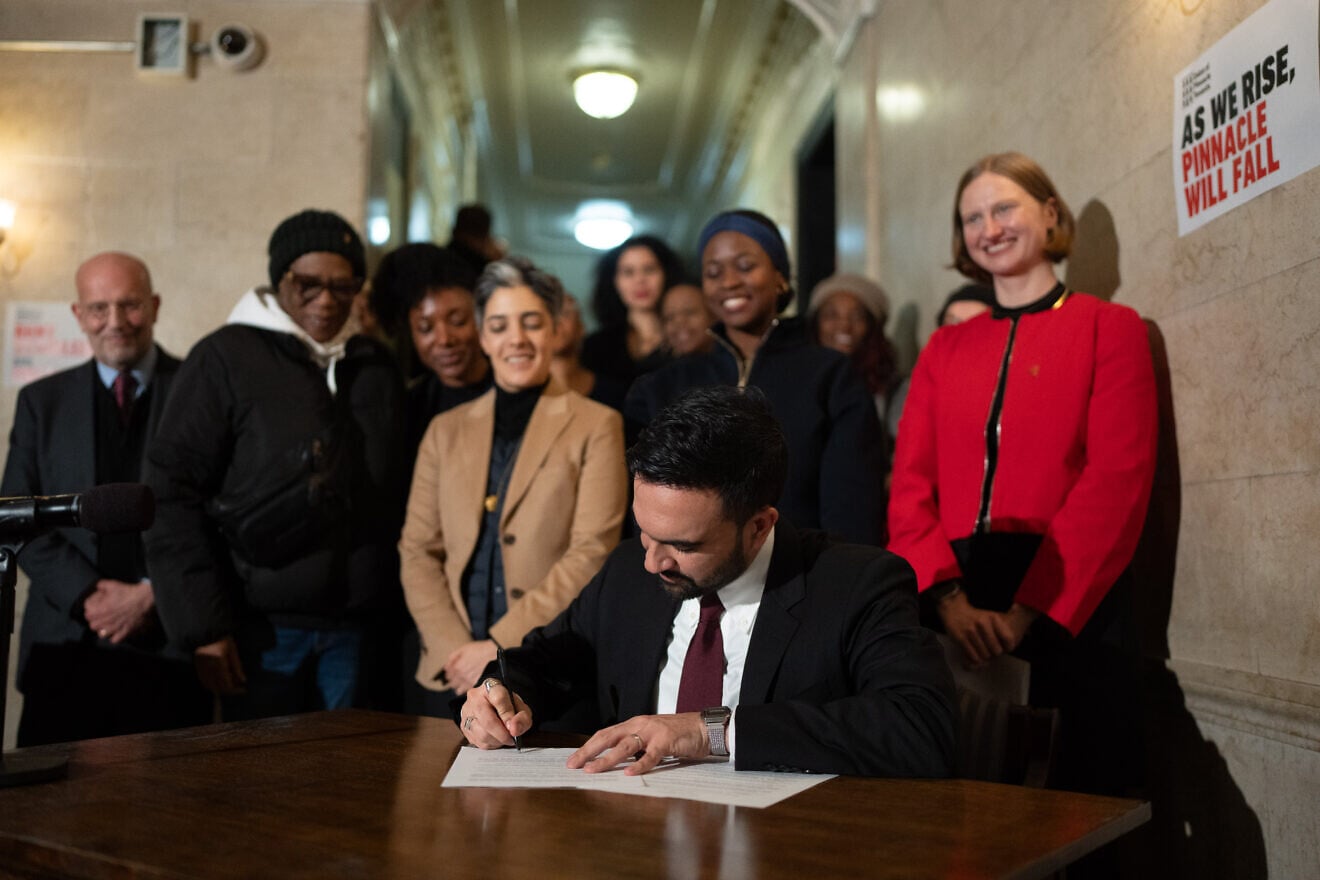
New York City Mayor Zohran Mamdani signs executive orders on Jan. 1, 2026. Credit: Michael Appleton/Mayoral Photography Office.

On his first day in office, New York City Mayor Zohran Mamdani revoked all of the executive orders that his predecessor, Eric Adams, has issued since Sept. 26, 2024, including several designed to protect Jews, in order, he said, to have a “fresh start for the incoming administration.”

The mayor, who has said he would have the Israeli prime minister arrested in New York City and who has many Jews in the city worried for their safety, didn’t say why he chose that date. But Sept. 26, 2024, was the day that Adams was indicted on federal bribery and campaign finance offense charges.

Mamdani stated at first in a release that he was revoking all order prior to Sept. 26, 2024, although the text of the order stated that it was discontinuing all of the orders post-Sept. 26, 2024. The mayor’s office sent out a second press release specifying that it was orders after that date.

In the waning hours of his mayorship, Adams and the Mayor’s Office to Combat Antisemitism released an annual report on combating Jew-hatred. Adams created that office on Jew-hatred on May 13 via executive order No. 51. Moshe Davis, its executive director, still had his title listed on LinkedIn and on X as of press time, and Mamdani told a reporter that he intended to keep the office.

A second executive order that Mamdani issued about structure and operations of his administration lists the office on antisemitism and says that the executive director is to be appointed by the mayor.

In the Dec. 30 report on Jew-hatred, Adams and the mayor’s office noted other executive orders that he issued—which Mamdani now appears to have axed. On June 8, Adams adopted the International Holocaust Remembrance Alliance’s working definition of Jew-hatred via executive order No. 52.

On Dec. 2, Adams signed executive order No. 60, which barred city entities and personnel from boycotting or divesting from Israel, and No. 61, which directs the New York City Police Department to look into creating zones around houses of worship in which protesting would be prohibited.

After protesters blocked Jews from entering a Manhattan synagogue in November, Mamdani’s spokeswoman said that synagogues shouldn’t host pro-Israel events which, she said, violated international law.

It wasn’t immediately clear if Adams had created the New York City–Israel Economic Council via executive order in May or via another means, or what its current status is.

William Daroff, CEO of the Conference of Presidents of Major American Jewish Organizations, told JNS that Mamdani’s “decision to revoke New York City’s adoption of the IHRA working definition of antisemitism, along with related executive orders aimed at confronting antisemitic discrimination, is a troubling indicator of the direction in which he is leading the city, just one day at the helm.”

“That concern is magnified by the overwhelming consensus behind the IHRA definition,” he said. “Two-thirds of U.S. states and the District of Columbia, major cities, more than 30 countries and hundreds of universities, sports organizations and governmental bodies rely on the IHRA working definition as the most authoritative and internationally accepted tool for identifying antisemitism.”

The IHRA definition doesn’t curb political debate, and it is important “particularly when hatred of Jews manifests through the denial of Jewish self-determination or the singling out of Israel,” according to Daroff.

“Repealing it diminishes New York City’s ability to recognize and respond to antisemitism at a time when incidents continue to rise,” he said. “New York City should lead with moral clarity and resolve in confronting antisemitism. This decision points in the opposite direction.”

Mark Goldfeder, director of the National Jewish Advocacy Center, stated that it is “hard to overstate how disturbing it is that one of the first acts of the new New York City mayor was to delete official tweets and executive orders addressing the protection of Jewish New Yorkers.”

Adams, the former mayor, agreed. Mamdani “promised a new era and unity today,” he stated. “This isn’t new. And it isn’t unity.”

In his inaugural address on Thursday, Mamdani referred to the beginning of a “new era.”

“I stand alongside countless more New Yorkers watching from cramped kitchens in Flushing and barbershops in East New York, from cell phones propped against the dashboards of parked taxi cabs at LaGuardia, from hospitals in Mott Haven and libraries in El Barrio that have too long known only neglect,” he said. “I stand alongside construction workers in steel-toed boots and halal cart vendors whose knees ache from working all day.”

“Beginning today, we will govern expansively and audaciously. We may not always succeed, but never will we be accused of lacking the courage to try,” he said.

Mamdani added that the authors of the city’s story will “speak Pashto and Mandarin, Yiddish and Creole” and “will pray in mosques, at shul, at church, at Gurdwaras and Mandirs and temples—and many will not pray at all.”

“They will be Russian Jewish immigrants in Brighton Beach, Italians in Rossville and Irish families in Woodhaven—many of whom came here with nothing but a dream of a better life, a dream which has withered away,” he said. “They will be young people in cramped Marble Hill apartments where the walls shake when the subway passes. They will be black homeowners in St. Albans whose homes represent a physical testament to triumph over decades of lesser-paid labor and redlining.”

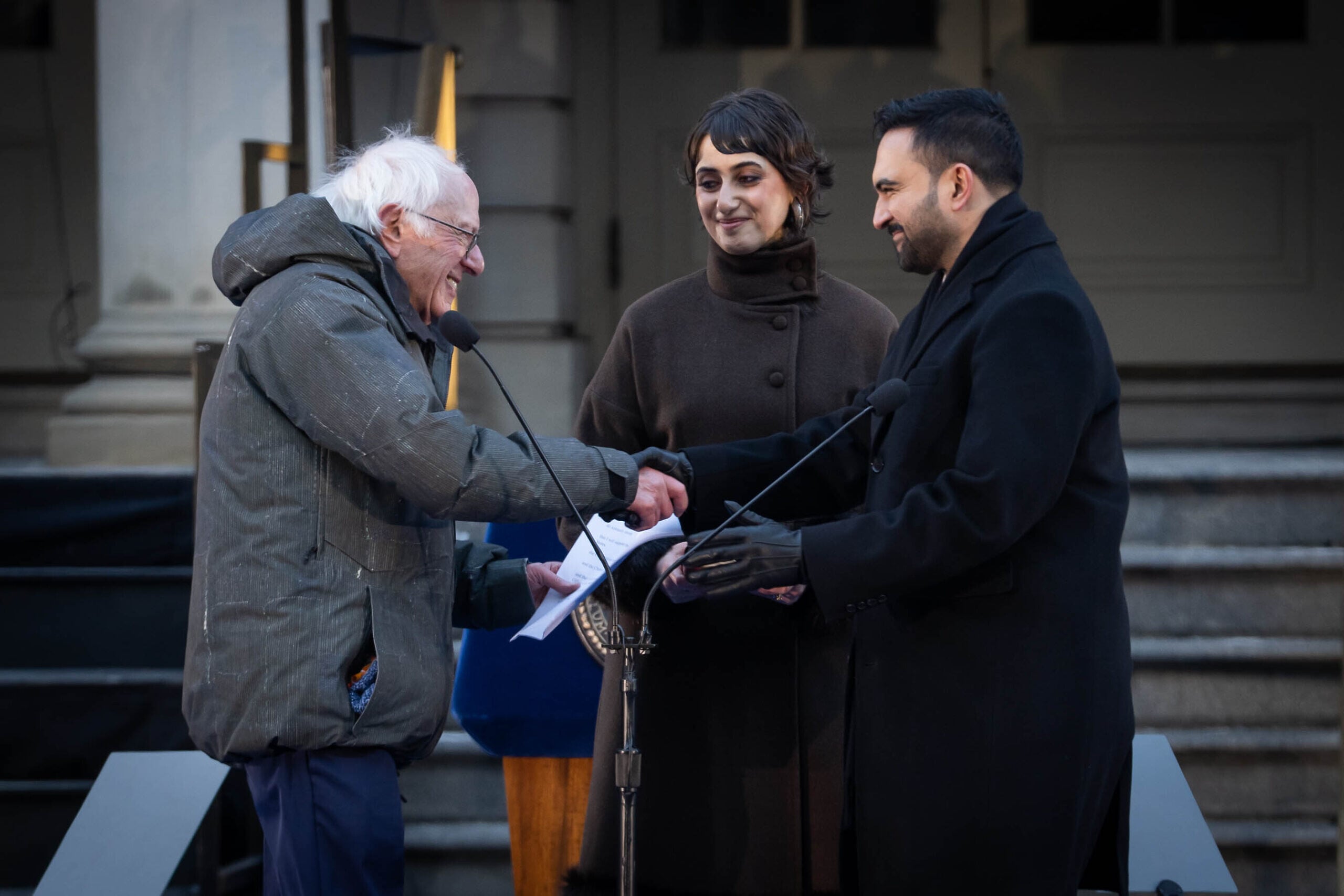
Sen. Bernie Sanders (I-Vt.) swears in New York City Mayor Zohran Mamdani, who stands alongside his wife Rama Duwaji, at City Hall, Jan. 1, 2026. Credit: Ed Reed/Mayoral Photography Office.

“They will be Palestinian New Yorkers in Bay Ridge, who will no longer have to contend with a politics that speaks of universalism and then makes them the exception,” he added.

Mamdani said that his movement was supported in part at “DSA meetings,” referring to the Democratic Socialists of America. “I was elected as a Democratic socialist and I will govern as a Democratic socialist,” he said. “I will not abandon my principles for fear of being deemed radical.”

“To live in New York, to love New York, is to know that we are the stewards of something without equal in our world. Where else can you hear the sound of the steelpan, savor the smell of sancocho and pay $9 for coffee on the same block?” he added. “Where else could a Muslim kid like me grow up eating bagels and lox every Sunday?”


Zawartość publikowanych artykułów i materiałów nie reprezentuje poglądów ani opinii Reunion’68,
ani też webmastera Blogu Reunion’68, chyba ze jest to wyraźnie zaznaczone.
Twoje uwagi, linki, własne artykuły lub wiadomości prześlij na adres:
webmaster@reunion68.com