Archive | May 2026

Hezbollah Belligerence Prompts Fears of Assassination Campaign in Lebanon


Hezbollah Belligerence Prompts Fears of Assassination Campaign in Lebanon

Ailin Vilches Arguello
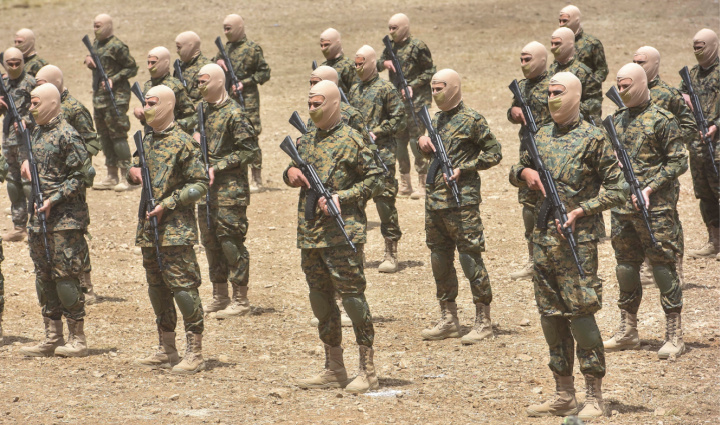

Lebanese Hezbollah fighters take part in cross-border raids, part of a large-scale military exercise, in Aaramta bordering Israel on May 21, 2023, ahead of the anniversary of Israel’s withdrawal from southern Lebanon in 2000. Photo: Fadel Itani/NurPhoto via Reuters Connect

As direct negotiations between Lebanese and Israeli officials resumed in Washington, DC on Thursday, fears continued mounting inside Lebanon that Hezbollah could unleash a new wave of political violence and destabilization efforts amid growing pressure to dismantle the Iran-backed terrorist group’s military grip.

According to a new report from the Meir Amit Intelligence and Terrorism Information Center (ITIC), an Israel-based research institute, concerns have intensified over Hezbollah’s escalating rhetoric and the prospect of internal unrest as the Lebanese government pushes to establish a state monopoly over weapons and curb the Islamist group’s influence across the country.

The Iranian proxy has accused Lebanese President Joseph Aoun and Prime Minister Nawaf Salam of betraying the “resistance” and collaborating with Israel amid ongoing direct bilateral negotiations, branding them “traitors” aligned with foreign interests.

At the same time, Lebanese officials have increasingly lashed out at Hezbollah, accusing the terrorist group, which Iran established inside Lebanon in the early 1980s, of dragging the country toward another devastating war and undermining Lebanon’s sovereignty and stability.

Against the backdrop of an increasingly hostile political climate, ITIC’s new report warns that Hezbollah could once again resort to political assassinations in an effort to block moves perceived as existential threats to the organization and restore its power.

According to Israeli intelligence assessments, the renewed direct negotiations with Israel could even place Aoun’s life at risk.

Experts point to Hezbollah’s Unit 121, a covert entity subordinate to the group’s leadership, which has been linked to a series of assassinations of Hezbollah opponents in Lebanon’s political and security arenas over the past two decades.

Given Hezbollah’s limited ability to exert broader influence within the Lebanese government — with its ministers accounting for less than a third of the cabinet — ITIC warns the group may increasingly rely on Unit 121’s operational capabilities and years of accumulated experience to drive internal destabilization and intimidate political rivals.

The terrorist group has repeatedly defied international calls to disarm, even threatening protests and civil unrest if the government tries to enforce control over its weapons.

According to a new report by the Israeli news outlet Walla, Hezbollah is now putting in place a plan of action to assert control over Beirut, the Lebanese capital, and push out more pragmatic political elements.

The group is also reportedly redistributing its forces across southern Lebanon and the Beqaa Valley, as its leadership believes Israel is preparing moves designed to divide the country, forcing a broader dispersal of its fighters accordingly.

With direct talks between Israeli and Lebanese officials resuming this week, Hezbollah has also called for a national referendum, arguing that the country’s leadership is ignoring a substantial segment of the population opposed to any future peace agreement with Israel.

“Joseph Aoun is one of the worst presidents to ever lead Lebanon because he is not a unifying figure. He ignores the concerns of a large segment of Lebanese society that rejects any peace with Israel,” senior Hezbollah official Nawaf al-Musawi told Qatari news channel Al-Arabi.

“It is a disgrace that such a handshake would be extended to someone whose hands are stained with the blood of our people while their homes are being destroyed,” he continued, referring to the possibility of a meeting between Aoun and Israeli Prime Minister Benjamin Netanyahu.

“The negotiations they are now offering are an illusion. Our roadmap is resistance on the ground that will force the enemy to retreat,” al-Musawi further said. “We are staying here, defending Lebanon, and we will not commit political suicide through direct and humiliating negotiations.”

With the third round of negotiations taking place on Thursday in Washington, Beirut is reportedly insisting that a ceasefire must precede any future talks and is even considering delaying the process unless full de-escalation is secured in advance.

Lebanese officials have also reiterated that the decision to establish a state monopoly over weapons is final, though its implementation remains contingent on securing a broader security arrangement with Israel under US guarantees.

Meanwhile, Hezbollah chief Naim Qassem reiterated on Tuesday the group’s demand for an immediate end to direct negotiations between Israel and Lebanon.

“No external party has the right to interfere in the issue of weapons or the resistance. This is an internal Lebanese matter and has nothing to do with negotiations with the enemy,” the terrorist leader said.

“We will not surrender, and we will continue defending Lebanon and its people regardless of the sacrifices required. We will not abandon the battlefield, and we will turn it into hell for Israel,” he continued.

Israel has continued its military campaign in neighboring southern Lebanon to root out Hezbollah, with strikes reaching areas roughly 20 kilometers from Beirut over the weekend in one of the deepest escalations in months.

Over the past month, more than 45 Hezbollah infrastructure sites — including weapons depots, military facilities, and rocket launchers — have been struck, with the military also reporting that around 350 operatives have been killed and approximately 1,100 affiliated targets hit.

Israeli officials are now reportedly preparing for the possibility of a major expansion of ground operations in southern Lebanon after Israeli forces crossed the Litani River last weekend and began conducting covert operations deeper inside Lebanese territory.

Hostilities between Hezbollah and Israel reignited on March 2, when the terrorist group opened fire in support of Iran two days after the start of the joint US-Israeli military campaign against the Iranian regime. 

Since then, Israeli forces have established a “buffer zone” initially extending 5 to 10 km (3 to 6 miles) into Lebanese territory, which officials say is meant to shield northern residents from Hezbollah attacks amid thousands of rockets and drones fired throughout the war.

Even though a US-backed ceasefire has sharply reduced violence, negotiations and prospects for lasting peace remain fragile, with Israeli forces still launching strikes while positioned in southern Lebanon to maintain its buffer zone and dismantle Hezbollah infrastructure.


Zawartość publikowanych artykułów i materiałów nie reprezentuje poglądów ani opinii Reunion’68,
ani też webmastera Blogu Reunion’68, chyba ze jest to wyraźnie zaznaczone.
Twoje uwagi, linki, własne artykuły lub wiadomości prześlij na adres:
webmaster@reunion68.com
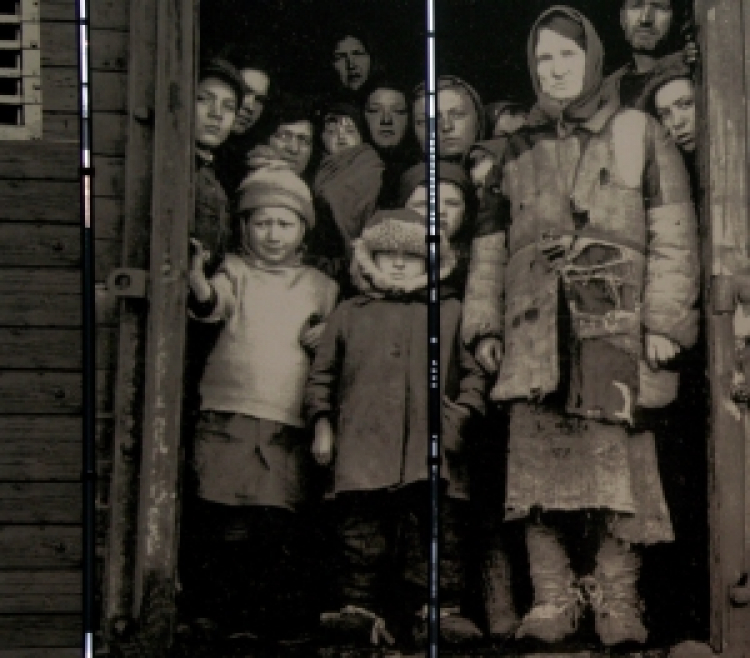

Na polecenie władz Kazachstanu z Biennale w Wenecji usunięto pracę o stalinowskim terrorze

PAP


Na polecenie władz Kazachstanu z Biennale w Wenecji usunięto pracę o stalinowskim terrorze

nrm/ kar/


Ministerstwo Kultury i Informacji Kazachstanu nakazało usunąć z pawilonu narodowego na 61. Biennale w Wenecji instalację, poświęconą stalinowskim represjom. Decyzja wywołała oskarżenia o polityczną cenzurę i debatę o pamięci lat sowieckiego terroru – informują media w Kazachstanie.

O usunięciu instalacji „Machine” Asel Kadyrchanowej poinformowało kilka portali, m.in. Fergana.News i Vlast. Dzieło przedstawia starą maszynę do pisania połączoną czerwonymi nićmi z archiwalnymi nakazami aresztowań z czasów wielkiego terroru lat 30. XX w. Praca odnosiła się do pamięci represji stalinowskich na terenach dzisiejszego Kazachstanu (formalnie Kazachska Socjalistyczna Republika Radziecka została utworzona w 1936 r.), gdzie w okresie ZSRR działały obozy GUŁłagu. Do Kazachstanu zsyłano też ludzi z całego imperium sowieckiego, w tym tysiące Polaków.

Instalacja została zdemontowana tuż przed otwarciem ekspozycji „Qonyr: Archive of Silence” w Museo Storico Navale. Artystka oświadczyła, że demontaż nastąpił na polecenie Ministerstwa Kultury i Informacji Kazachstanu po wcześniejszych naciskach, by zmienić koncepcję pracy. Według Asel Kadyrchanowej usunięcie instalacji odbyło się bez jej zgody. Ministerstwo tłumaczyło decyzję zapisami umowy z gospodarzem wystawy, zgodnie z którymi prezentowane dzieła nie mogły mieć charakteru „politycznego lub ideologicznego” oraz tym, że praca artystki ma już kilka lat i była wielokrotnie prezentowana. Argumentację tę podważyły jednak późniejsze informacje, że po stronie włoskiej nie zgłoszono formalnych zastrzeżeń wobec pracy – informuje portal Fergana.News.

Twórczość Kadyrchanowej od lat koncentruje się na traumie postsowieckiej, pamięci zbiorowej i dziedzictwie totalitaryzmu. Artystka zajmuje się badaniem „przemilczanej przeszłości” i nieprzepracowanych doświadczeń represji w Kazachstanie. Kazachstański pawilon, którego kuratorem jest Syrlybek Bekbota, miał koncentrować się na kazachskim pojęciu „qonyr” — ciszy, pamięci i ukrytych znaczeń obecnych w codziennym doświadczeniu. Usunięcie jednej z prac wywołało dyskusję na temat cenzury politycznej.

To jednak nie jedyny przejaw mieszania sztuki i polityki związany z krajami Azji Centralnej podczas weneckiego Biennale. Portal Fergana.News poinformował też, że jego redakcja otrzymała skargę z konta Agencji Informacji i Komunikacji Masowej przy Administracji Prezydenta Republiki Uzbekistanu (AIMK) na portalu X, dotyczącą opublikowanego przez to medium tekstu o zbyt dużej – zdaniem redakcji – roli Saidy Mirzijojewej, córki prezydenta Szawkata Mirzijojewa, będącej jednocześnie szefową jego administracji, przy organizacji narodowego pawilonu Uzbekistanu.

Redakcja uznała działania za próbę nacisku politycznego i przykład rosnącej kontroli elity władz nad kulturą w Uzbekistanie. Problem polega jednak na tym, że AIKM została formalnie rozwiązana w ubiegłym roku na mocy reform administracyjnych w Uzbekistanie.

61. Międzynarodowa Wystawa Sztuki – La Biennale di Venezia została otwarta 9 maja i potrwa do 22 listopada. (PAP)


Zawartość publikowanych artykułów i materiałów nie reprezentuje poglądów ani opinii Reunion’68,
ani też webmastera Blogu Reunion’68, chyba ze jest to wyraźnie zaznaczone.
Twoje uwagi, linki, własne artykuły lub wiadomości prześlij na adres:
webmaster@reunion68.com


From Wagner to Eurovision: The debate over Jews in music – opinion


From Wagner to Eurovision: The debate over Jews in music – opinion

GOL KALEV


A number of European countries have objected to Israel’s participation in the 2026 Eurovision Song Contest.

Noam Bettan will represent Israel at Eurovision 2026. / (photo credit: Tal Givoni)

In 1850, famed German opera composer Richard Wagner published an essay titled “Jews in Music,” where he argued that Jews are polluting Europe, including through music.

Opera houses and concert halls should not stage music composed by Jews, in spite of their popularity, he argued. European music-lovers should understand that those are not individual composers but representatives of dangerous “Jewishness” that corrupts European culture and society.

Some 170 years later, the debate over “Jews in Music” is back, as a number of European countries object to the Jewish state’s participation in the 2026 Eurovision Song Contest – Europe’s favorite pastime watched by nearly 200 million viewers, where every state submits a song that gets ranked by the other countries. Indeed, Eurovision is broadly perceived as Europe’s popularity contest for nations.

Spain, Ireland, and Slovenia took a step further than Wagner. They not only warned of the “unconscionable” participation of the Jewish state, once again accused of committing crimes against humanity, but have also taken measures to protect Europeans: They enacted an unprecedented “total broadcasting blackout,” making sure their citizens would not be able to watch Eurovision.

Like Wagner, Spanish Culture Minister Ernest Urtasun explained that “it is not an individual artist who participates but someone who participates on behalf of that country’s citizens.”

Pro-Palestinian protestors hold a flag and a banner outside the RTE (Radio Telefis Eireann) Irish public service broadcaster television studios as demonstrators call for an Irish boycott of the 2026 Eurovision Song Contest if there is Israeli participation, in Dublin, Ireland, November 1, 2025. (credit: CLODAGH KILCOYNE/REUTERS)

Similarly, Ireland argued that collaborating with an art event in which Israel participates is inconsistent with the “conscience” of Ireland.

Boycotting Israel

For the last 2,300 years, Europe has tried to eradicate the Jewish nation and negate the concept of Judaism – sometimes through physical means, like in the previous century, and sometimes through ideological ones like in our time: negating the idea of Judaism by negating the idea of the Jewish state.

Europe makes it clear that it prioritizes the assault on Judaism over self-preservation. For example, European recognition of a Palestinian state had no effect on Israel or the Middle East but helped fuel the nascent European Muslim national movement.

Similarly, Spain and Italy canceling security and military contracts with Israel has no impact on the Israeli economy but could have devastating consequences for the safety of European civilians and soldiers – should those ever be in battle.

The 2026 Eurovision boycott is in line with such European prioritization. European broadcasters could have simply turned to a commercial break when Israel was performing but instead decided to rob millions of Europeans from the popular art event, perhaps borrowing the Judeo-Christian concepts of pure and impure (a small portion of pork placed on a kosher plate makes the entire dish non-kosher).

Apologists for this European state-sponsored antisemitism argue that it is not Europe’s fault but Israel’s. In previous years, the logic goes, it was ok to enjoy an art event in which the Jewish state participated because Israel was well-behaved, but now Israel has gone astray: It engaged in brutal fighting in Gaza, it invaded Lebanon, and it is building settlements.

It is not Israel but Europe that changed

The 1978 Israeli Eurovision victory was a turning point in Israel’s national confidence, instilling the sense that “we are loved by Europe.” Indeed, the winning Israeli song, “Abanibi,” was about love.

This was a decade after Israel took over the West Bank and Gaza, and during the years in which Israel engaged in intensive counterinsurgency operations in Gaza, condemned by much of the Western world. It was a month after Israel invaded Lebanon in reaction to PLO terrorism (“Litani Operation”), drawing sharp rebuke by the international community.

It was also at a high point of the Israeli settlement expansion project. Those began in the mid-1970s and accelerated after the 1977 election of right-wing prime minister Menachem Begin. By the time Europe chose Israel as the winner of the 1978 Eurovision, there were dozens of new settlements.

The following year, the Eurovision Song Contest was held in Jerusalem, the capital of Israel. None of the European countries boycotted it (Turkey did). Once again, Europeans expressed their love to the Jewish state and chose Israel as the winner, with a song that praises God – “Hallelujah.”

By the early 1980s, Israel’s invasion of Lebanon was full-scale, reaching Beirut. Settlement expansion was on a steep trajectory, and in what was broadly condemned by the West, Israel obliterated Iraq’s nuclear capabilities built by Saddam Hussein.

No doubt, Israeli actions in the 1980s were more “extreme” than those of the 2020s. What was the reaction of Europeans?

In 1982, Europeans awarded Israel the second place in the Eurovision contest with the song “Hora,” which celebrates Zionism.

In 1983, once again, they awarded Israel the second place with the song “Chai,” known for its rallying call “The nation of Israel is alive.”

Twenty European nations stood firm in their love of Israel and support for Zionism. This was as Israel was fighting in Gaza, invading Lebanon, engaging in daring foreign operations, and rapidly expanding Jewish life in Judea and Samaria.

How could this happen?

There was no EU yet to orchestrate the indoctrination of the global population against the Jewish state, and there was no longer Wagner – his vision fully implemented by the Nazis during last century’s attempt to eradicate Judaism.

In 1990, Italy won the Eurovision contest with a song celebrating the upcoming formation of the European Union: “Together, unite, unite, Europe.” Since then, Europe seems to unite in its opposition to Israel and, as US President Donald Trump stated, to America as well.

While Europe is on an anti-Jewish rush, there are also a growing number of Europeans that are calling for a historic shift in Europe’s assault on Judaism. Rather than block the music coming from Zion, enjoy it – Hallelujah!


The writer is the author of the new book From Survival to Peace. He is also the author of The Assault on Judaism: The Existential Threat is Coming from the West (2024), and of Judaism 3.0: Judaism’s Transformation to Zionism (2022). He is chairman of the Judaism 3.0 think tank. For his geopolitical analysis, visit EuropeAndJerusalem.com.


Zawartość publikowanych artykułów i materiałów nie reprezentuje poglądów ani opinii Reunion’68,
ani też webmastera Blogu Reunion’68, chyba ze jest to wyraźnie zaznaczone.
Twoje uwagi, linki, własne artykuły lub wiadomości prześlij na adres:
webmaster@reunion68.com


Germany’s Main Mosque Network Under Fire Over Speakers Accused of Antisemitic Incitement


Germany’s Main Mosque Network Under Fire Over Speakers Accused of Antisemitic Incitement

Ailin Vilches Arguello


Pro-Palestinian demonstrators during a protest against Israel to mark the 77th anniversary of the “Nakba” or catastrophe, in Berlin, Germany, May 15, 2025. Photo: REUTERS/Axel Schmidt

Germany’s main mosque association is facing growing controversy over speakers scheduled for its Cultural Days, a public program of community events, as experts warn of antisemitic incitement on a public stage and call for the event to be canceled.

Organized by the Turkish-Islamic Union for Religious Affairs (DITIB) in Hamburg, a city in northern Germany, the event is being advertised as a family-friendly gathering.

However, political figures, Jewish community representatives, and experts have sharply condemned the event, warning it risks providing a platform for antisemitic rhetoric and raising serious concerns over its tone and messaging.

Under mounting political pressure, DITIB was forced to remove four of the six speakers from the program, citing their hateful rhetoric and the promotion of antisemitic narratives.

“Those who act within our communities must not be associated with positions that express antisemitism, glorify violence, show hostility toward individuals, or incite hatred,” the association wrote in a statement.

Yet the controversy continues, as the event still advertises two remaining speakers who have drawn sustained criticism.

According to German author Eren Güvercin, a vocal critic of political Islam in the country, the two remaining speakers — Furkan Tiraşçı and Mahmut Sağır — have also been accused on social media of posting antisemitic content and glorifying terrorist organizations, raising questions over why they should be allowed to participate.

In several posts, Tiraşçı has repeatedly downplayed or justified the Hamas-led invasion of and massacre across southern Israel on Oct. 7, 2023, and referred to deceased Hamas leader Ismail Haniyeh as a “martyr.”

“He was a good Muslim, a good mujahid, a good family man. My condolences to the Muslim community. Every martyrdom is a new beginning on the path to victory,” Tiraşçı wrote in a post on X at the time of Haniyeh’s death.

He has also repeatedly shared antisemitic caricatures, including depictions of Israeli Prime Minister Benjamin Netanyahu with vampire fangs and blood, labeled “killer,” as well as photomontages comparing Netanyahu to Adolf Hitler or placing him in Nazi-era imagery.

As for the second guest, Sağır has been accused of glorifying Hamas leaders and describing the Israeli population as a “cursed community” that has “drowned the world in blood for centuries” — remarks that echo decades-old antisemitic tropes. The quote appears to refer directly to Jews, as the modern state of Israel was only established in 1948.

According to Güvercin, Sağır “shares content that goes far beyond legitimate criticism and delves deeply into hateful ideologies.” 
.

In an Instagram post following Haniyeh’s death, Sağır wrote: “May the Lord receive him into His mercy, may his place be in paradise and his rank be elevated. The fate of those who thrive on cruelty is bleak and will be so. If not today, then tomorrow God will bring about the means to exact this reckoning. We believe it, and we bear witness.”

In the past, DITIB has faced multiple controversies, with some members making antisemitic remarks and spreading hateful messages.

Last year, the German government urged DITIB to publicly break with Turkish President Recep Tayyip Erdogan’s antisemitic and anti-Israel rhetoric, citing the association’s close ties to him.

According to local reports, German authorities told religious leaders to formally break with Erdogan’s hateful statements or risk losing government support and cooperation.

For years, the German government has supported DITIB in training imams, as well as helping to foster community programs and religious initiatives.

Most of these religious leaders are trained abroad — especially in Turkey — and brought to local mosques by large Muslim organizations on multi‑year contracts, shaping the religious education and messaging that reaches the community.

Now, German lawmakers and the country’s Jewish community are calling for a mandatory certification process for all imams amid a surging wave of antisemitism, including multiple cases of religious leaders promoting anti-Jewish violence.

In 2023, the German government signed an agreement with the Turkish government’s Directorate of Religious Affairs (Diyanet) and DITIB for a new imam training program.

By sending imams from Turkey and paying their salaries, the Diyanet oversees DITIB and its hundreds of communities across Germany, shaping the ideological direction of more than 900 mosques and influencing the training of their imams.

However, a new program has brought an end to this practice of sending imams directly from Turkey. Instead, Turkish students are trained in Germany in cooperation with the German Islam Conference (IKD).

With this new agreement, imams live permanently in German communities and have no formal ties to the Turkish government. Still, experts doubt that this alone will curb the Diyanet’s political influence.


Zawartość publikowanych artykułów i materiałów nie reprezentuje poglądów ani opinii Reunion’68,
ani też webmastera Blogu Reunion’68, chyba ze jest to wyraźnie zaznaczone.
Twoje uwagi, linki, własne artykuły lub wiadomości prześlij na adres:
webmaster@reunion68.com


Izrael: Palestyńczycy podejrzani o udział w ataku z 2023 r. staną przed trybunałem wojskowym

Izraelskie siły bezpieczeństwa i ratownicy gromadzą się przed budynkiem w Tel Awiwie, po tym jak został on trafiony rakietą wystrzeloną przez palestyńskich bojowników ze Strefy Gazy, 7 października 2023 r. (Fot. JACK GUEZ/AFP/East News)


Izrael: Palestyńczycy podejrzani o udział w ataku z 2023 r. staną przed trybunałem wojskowym

Marta Urzędowska


Rząd w Tel Awiwie do tej pory nie podawał, ilu podejrzanych trzyma w aresztach. Niektórym może teraz grozić kara śmierci.

Przyjęte w poniedziałek (11.05) w Knesecie prawo pozwoli osądzić setki osób aresztowanych po ataku na Izrael z 7 października 2023 roku.

– To więcej niż zwykłe prawo – przekonuje cytowana w „New York Timesie” Yulia Malinovsky, deputowana opozycji i jedna z autorek przepisów. – Chodzi o sprawiedliwość, pamięć, historię – wylicza.

Nowe prawo przeszło w parlamencie znaczącą większością głosów. Za byli zarówno posłowie rządzącej koalicji, jak i większość opozycji. Ze 120 deputowanych, 93 poparło projekt.

Niespełna trzy lata temu palestyńscy terroryści z Hamasu wdarli się do Izraela i dokonali najkrwawszego ataku w historii kraju. Zamachowcy zabili 1,2 tys. osób, a 250 porywali do Strefy Gazy i przez kolejne miesiące trzymali jako zakładników. Podczas ataku zabijali całe rodziny, nawet najmłodsze dzieci, a wobec wielu kobiet dopuścili się przemocy seksualnej.

Według ONZ terroryści dopuścili się zbrodni wojennych, a być może także zbrodni przeciwko ludzkości.

W odwetowej wojnie Izraela w Strefie Gazy zginęło ponad 70 tys. Palestyńczyków, a enklawa została zrównana z ziemią. Od jesieni 2025 roku obowiązuje rozejm. Obecnie izraelska armia zajmuje wschodnią połowę enklawy. Na razie nie udało się przejść do kolejnych faz zawieszenia broni, czyli rozbrojenia Hamasu, wycofania izraelskich żołnierzy i rozpoczęcia odbudowy zrujnowanej strefy.

“Chodzi o sprawiedliwość, pamięć, historię”, ale przeciwnicy nowego prawa mówią o chęci zemsty

Choć podczas samego ataku zdecydowana większość terrorystów z Hamasu, którzy wtargnęli do Izraela, zginęła, izraelska armia aresztowała setki osób podejrzanych o udział lub o powiązania z organizatorami. Do tej pory podejrzani byli przetrzymywani bez postawienia zarzutów i sądu. Nie jest też jasne, czy są wśród nich ważni terroryści odpowiedzialni za zaplanowanie ataku, czy tylko szeregowi członkowie grupy.

Yulia Malinovsky w rozmowie z “New York Timesem” przyznała, że nowe prawo pozwoli postawić zarzuty co najmniej 350 więźniom. Do tej pory izraelskie władze nie ujawniały, ilu Palestyńczyków przetrzymują w związku z podejrzeniami o udział w ataku.

W czasie wojny w Gazie Izraelczycy aresztowali ponad 6 tys. mieszkańców enklawy. Większość została zwolniona, ale około 1,2 tys. pozostaje w aresztach.

Dziennik, powołując się na źródła w izraelskich służbach, opisuje, że prokuratorzy muszą jeszcze ostatecznie sformułować akty oskarżenia, a w sprawie niektórych podejrzanych nadal trwają śledztwa. Oznacza to, że do rozpoczęcia procesów może minąć nawet rok.

Obrońcy praw człowieka: sędziowie trybunału będą pod wielką presją społeczną

Przegłosowane w Knesecie prawo nie wszystkim się podoba. – To nie do pomyślenia, że decyzjami sądu rozważającego, jaki wydać wyrok, kieruje chęć zemsty – przekonuje cytowany przez dziennik poseł opozycji Ofer Cassif. – Niestety dokładnie to zamierza zrobić nowe prawo – dodaje.

Oskarżeni, jak stanowią nowe przepisy, staną przed wojskowym trybunałem w Jerozolimie, w którym zasiądzie trójka sędziów.

Część procesów będzie transmitowana na żywo w mediach, dzięki czemu Izraelczycy po raz pierwszy dowiedzą się, kim są podejrzani i o co im się zarzuca.

Niektórzy Palestyńczycy mogą zostać oskarżeni o ludobójstwo, za co w Izraelu grozi kara śmierci.

Na mocy nowych przepisów oskarżeni będą uczestniczyć tylko w niektórych rozprawach. Będą mieli prawo do odpłatnego wynajęcia prawnika, ale adwokaci z urzędu nie będą mogli ich reprezentować. Sąd będzie mógł zignorować niektóre zasady przedstawiania dowodów, choć nie jest jasne, które. Autorzy ustawy wyjaśniają, że to konieczne z powodu stopnia skomplikowania i skali przedsięwzięcia, a także ogromnej liczby dowodów.

Tłumaczą też, że opóźnienie w postawieniu Palestyńczyków przed sądem wynika z trudności w prowadzeniu śledztw: potencjalni świadkowie w większości zostali zabici, a zbadanie podziurawionych kulami domów czy spalonych samochodów jest czasochłonne.

Obrońcy praw człowieka ostrzegają, że sędziowie trybunału będą pod wielką presją społeczną, żeby jak najszybciej i najsurowiej osądzić oskarżonych o udział w ataku. – Jeśli chcesz prawdziwego procesu, musisz dać ludziom możliwość obrony – przekonuje cytowana w „NYT” Sari Bashi, szefowa organizacji Publiczna Komisja przeciwko Torturom.

– Kiedy cały kraj jest nastawiony na udowodnienie winy, oznacza to, że to wszystko będzie głęboko niesprawiedliwe wobec podsądnych, a jednocześnie – niesatysfakcjonujące dla ofiar

– dodaje.

Były zakładnik do rządu: “Nikt mnie nie przeprosił”

W czasie, gdy w Izraelu szykują się procesy terrorystów, jeden z porwanych 7 października zakładników domaga się nie tylko ukarania winnych ataku, ale i ustąpienia izraelskiego rządu.