Archive | July 2026

Ro Khanna and the weaponization of anti-Zionism in American politics


Ro Khanna and the weaponization of anti-Zionism in American politics

Jonathan S. Tobin


The California congressman’s Judean misadventure was an attempt to boost his long-shot presidential hopes and move on from his sponsorship of the disastrous Graham Platner.

Rep. Ro Khanna (D-Calif.) speaks to members of the media near the U.S. Capitol Building in Washington, D.C., as he arrives for the last votes of the week before the Memorial Day recess, May 21, 2026. Photo by Andrew Harnik/Getty Images.

There was a time, not so long ago, when presidential aspirants from both major parties visited Israel to boost their campaigns. They still do so now, but for different reasons, as the recent misadventure of Rep. Ro Khanna (D-Calif.) illustrated.

In the past, American politicians traveled to Israel to make clear their solidarity with the Jewish state and its American supporters. They understood that this demographic was composed not merely of the vast majority of American Jews, but also of tens of millions of American Christians. Such visits were not merely ways to boost fundraising. They were an effort to demonstrate that the candidate was someone who appreciated that Israel was the sole democratic ally the United States had in the Middle East, as well as a place that deserved the admiration of the world for its tremendous achievements in the face of implacable hostility rooted in Jew-hatred.

Today, they go there to virtue-signal their solidarity with that same hatred.

Anti-Israel virtue-signaling

That’s something that many Israelis and American Jews struggle to understand. Try as they might to see Khanna’s visit—or the previous one by veteran politician Rahm Emanuel in the context of Israeli politics and disputes about who should be running the Jewish state and policies it ought to pursue (including those regarding “violent settlers” in Judea and Samaria)—these episodes are about something very different. They are a way to connect with the left-wing base of the Democratic Party and other Americans who have swallowed the idea that the struggle for global justice is inextricably linked to the Palestinian Arab war on Israel’s existence.

Rather than continuing to litigate the dispute about whether or not, as Khanna falsely claimed, “violent settlers” threatened and illegally detained him (or, as he also falsely claimed, the Israel Defense Forces and police aided those seeking to harm him), we need to understand that something else is going on here. It is the political context of the Khanna dustup that is significant—not the specific facts of the case. Once one sorts through the congressman’s disingenuous rhetoric and the credulous reporting about them in the mainstream media, however, it’s clear that the congressman didn’t tell the truth about what happened.

Khanna went to Israel to show the world that he’s against the Jewish state. The fact that he subsequently said that those who had explained his version of the incident were largely made up out of whole cloth were the same people who “lied about genocide” in Gaza tells you all you need to know about the story. Just as there has been no genocide in Gaza, there is no “apartheid” in Israel. Even some fellow Democrats who are not so invested in catering to the anti-Zionist crowd have criticized him for such a publicity stunt.

A big deal over nothing

The short version of the Khanna confrontation is that, accompanied by anti-Israel activists and some press people, the congressman journeyed into an area of Judea and Samaria that the IDF considers a closed military zone. Had he chosen to coordinate his trip with the U.S. embassy or the Israeli military or police, he likely would not have encountered any trouble. But since he did not—his tour guide was unable to ensure him ahead of time that there would be no issues—Jews who live in the area became suspicious and stopped him.

One can argue that they shouldn’t have done so, but videos supplied by Khanna’s entourage don’t back up the assertion that settlers threatened or detained him. Nor were they violent. They may have been armed, but all Jews living there are because of the ongoing hazard of Arab terrorism, which continues daily, even though it is rarely, if ever, reported in the press.

It was only after this encounter that Khanna reached out to the embassy, and soon, IDF soldiers arrived. When they arrived, not only did they not “side” with the supposedly violent settlers and acquiesce in Khanna’s “detainment.” Instead, they stayed in their vehicles and made the relevant calls to higher authorities, and soon sent him on his way.

It was, as Israeli commentator Haviv Rettig Gur, himself a loud critic of “violent settlers,” pointed out, an “irrelevance.”

Nothing happened, save for the fact that Khanna was delayed for a while. And that was largely because while traveling in a foreign country in an area where violence is routine—not from Jews, but from local Arabs—he chose not to inform the authorities where he was or what he was doing.

Why, then, did Khanna make a big deal about such a nothing burger?

The answer is obvious. Outlets like The New York TimesCNN, and even some Israeli and Jewish media were willing to publicize the event as an instance of “settler violence,” even before they knew the facts. For them, it fits into a narrative of Israeli bad behavior that they think defines the contemporary Jewish state. The liberal Times of Israel amplified Khanna’s demand that the Jews who had asked what he was doing there should be punished, since they think it helps undermine Israeli Prime Minister Benjamin Netanyahu and his supporters.

Why the focus on ‘violent settlers’

For many inside Israel and in the American Jewish community, this isn’t about Khanna and his ambitions, but a chance to vent their anger and frustration concerning the hundreds of thousands of Jews who live in Judea and Samaria. After the Second Intifada from the years 2000 to 2005, Israel—under then-Prime Minister Ariel Sharon—withdrew from the Gaza Strip in the summer of 2005. That move directly led to the transformation of the coastal enclave into a Hamas terrorist state in the summer of 2007.

The tragedy of Oct. 7, 2023, was the result of that terrible decision. In light of the massacre of 1,200 people and the kidnapping of 251 others that day, only a deluded radical fringe can go on advocating for a two-state solution.

The goal of evicting Jews from the heart of their ancient homeland to create a Palestinian state that will bring peace between the two peoples is a fairytale that, in reality, is a formula for more bloodshed. It is now painfully obvious that Palestinian national identity is linked to the dream of eradicating Israel, not achieving self-determination. So, all those who believed in this pretense are left with is the demonization of the Jews, who helped prevent their country from making the same mistake in Judea and Samaria that Sharon made in Gaza.

Yet their narrative about violent settlers, which has been adopted even by liberal Americans who support Israel, is itself a calumny. As JNS has reported, more than 90% of incidents reported as “settler violence” are nothing of the kind. Most are ordinary acts of Jews merely living or worshipping over the so-called “Green Line,” such as visiting the Temple Mount in Jerusalem. Every time a Jew defends themselves against Arab terror, it is considered an act of “settler violence.” And even incidents, such as one I was told about during a recent visit to the same region Khanna was touring, which involved local Palestinian Arabs killing a sheepdog belonging to an Israeli farming family, have been falsely reported as Jews killing a Palestinian Arab-owned dog.

Neither Khanna nor those who cheered his antics in the media after he cried “wolf” about settler violence care about these facts—or what happened when some Israelis had the temerity to ask him where he was going.

The real context is what is happening in the Democratic Party.

A political chameleon

Khanna, a native of Philadelphia and the son of Indian immigrant parents, is, like many in his profession, something of a political chameleon. A lawyer, he served as deputy assistant secretary of the U.S. Department of Commerce in the Obama administration. He was elected to Congress in 2016, where he continues to represent Silicon Valley.

He describes himself as a pro-business “progressive,” a contradiction in terms, but something that has ingratiated him with the left-leaning oligarchs who run Big Tech. In 2022, he was part of a delegation of pro-Israel members of Congress led by then House Speaker Rep. Nancy Pelosi (D-Calif.). But since Oct. 7, the views of the once marginal left-wing “Squad” in the U.S. House of Representatives about Israel and antisemitism have become mainstream discourse in the Democratic Party, as well as in liberal media.

Khanna is someone with national ambitions. He understands which way the wind is currently blowing in his party and has used his considerable sway with Democratic donors to invest in promoting some of the most prominent left-wing anti-Israel primary candidates, in addition to Democratic Socialists who oppose the capitalism that produced Silicon Valley.

He endorsed and campaigned with Abdul El-Sayed, a Michigan Islamist who has parlayed a nonstop stream of antisemitic invective demonizing the pro-Israel lobby AIPAC into a real chance of winning the state’s Democratic primary in August.

Khanna was also one of those most responsible for promoting the political fortunes of Graham Platner, the Nazi-tattooed Israel-basher who won the Democratic Senate primary in Maine. Khanna aided those seeking to deflect attention from scandals surrounding Platner, including those involving sexual misconduct. But his efforts collapsed after a local woman he dated years ago, a liberal activist, stepped forward with an accusation of rape, which ultimately forced Platner to withdraw from the race.

As recriminations among Democrats about those who foisted Platner on their party grew, Khanna knew that he needed to do something to change the conversation about his own role in that debacle. He may be a long shot for 2028 and is not yet making the cut in polls for the top 10 contenders for the Democratic presidential nomination, which is currently led by figures like former vice president Kamala Harris and California Gov. Gavin Newsom. But the congressman more than realizes that the party establishment that has dominated the presidential nomination process over the last three election cycles is unlikely to fend off the progressives who backed Socialist Sen. Bernie Sanders (I-Vt.) in 2016 and 2020. And so, he naturally turned to an issue that unites the left as a way of refocusing attention on himself.

Seen from that perspective, it doesn’t matter that thoughtful observers know that he lied about what happened on his recent trip to Israel.

Had he been interested in learning more about the conflict, in addition to meeting Palestinians who support the war on the Jews—like the mayor of Hebron, who murdered two Americans—then he might have met with Israelis from southern Israel who had been held hostage by Hamas or those residents in the north who have been rendered homeless by Hezbollah attacks from Lebanon. His visit, however, was orchestrated to show support for the blood libels about “genocide” and “apartheid.” All it does is reinforce the determination of Hamas and other terror groups to keep fighting for Israel’s destruction in the hope that someday, America will turn on its longtime Middle East ally: Israel.

Thinking about 2028

It’s unlikely that Khanna cares about the way he is helping to perpetuate the conflict. All he wants is to create a narrative in which he can be singled out as the most active and most-funded left-winger around whom progressives can unite in 2028.

Will he succeed? As one among many others on the left with similar ambitions, it’s difficult to envision Khanna being his party’s standard-bearer in two years. But stranger things have happened.

Still, his conduct should attract interest not so much because of the dubious notion that he is presidential timber, but because he is not mistaken about what will help galvanize Democrats. As we have seen in primary after primary this year, hostility to Israel has become, alongside a belief in open borders and anger about ICE enforcing immigration laws, the organizing principle of Democratic politics in 2026. If there is one prediction that seems safe to make right now, it is that he won’t be the only presidential candidate in two years who will try to weaponize anti-Zionism and hatred for Israel to smooth his path to the White House.


Jonathan S. Tobin is editor-in-chief of the Jewish News Syndicate, a senior contributor for The Federalist, a columnist for Newsweek and a contributor to many other publications. He covers the American political scene, foreign policy, the U.S.-Israel relationship, Middle East diplomacy, the Jewish world and the arts. He hosts the JNS “Think Twice” podcast, both the weekly video program and the “Jonathan Tobin Daily” program, which are available on all major audio platforms and YouTube. Previously, he was executive editor, then senior online editor and chief political blogger, for Commentary magazine. Before that, he was editor-in-chief of The Jewish Exponent in Philadelphia and editor of the Connecticut Jewish Ledger. He has won more than 60 awards for commentary, art criticism and other writing. He appears regularly on television, commenting on politics and foreign policy. Born in New York City, he studied history at Columbia University.


Zawartość publikowanych artykułów i materiałów nie reprezentuje poglądów ani opinii Reunion’68,
ani też webmastera Blogu Reunion’68, chyba ze jest to wyraźnie zaznaczone.
Twoje uwagi, linki, własne artykuły lub wiadomości prześlij na adres:
webmaster@reunion68.com


Israeli man seriously wounded in West Bank terror stabbing, two Palestinian attackers killed


Israeli man seriously wounded in West Bank terror stabbing, two Palestinian attackers killed

MAYA ZANGER-NADIS


According to police, the stabbing victim was attempting to put out a fire, which had been set by Palestinian residents of a nearby village.

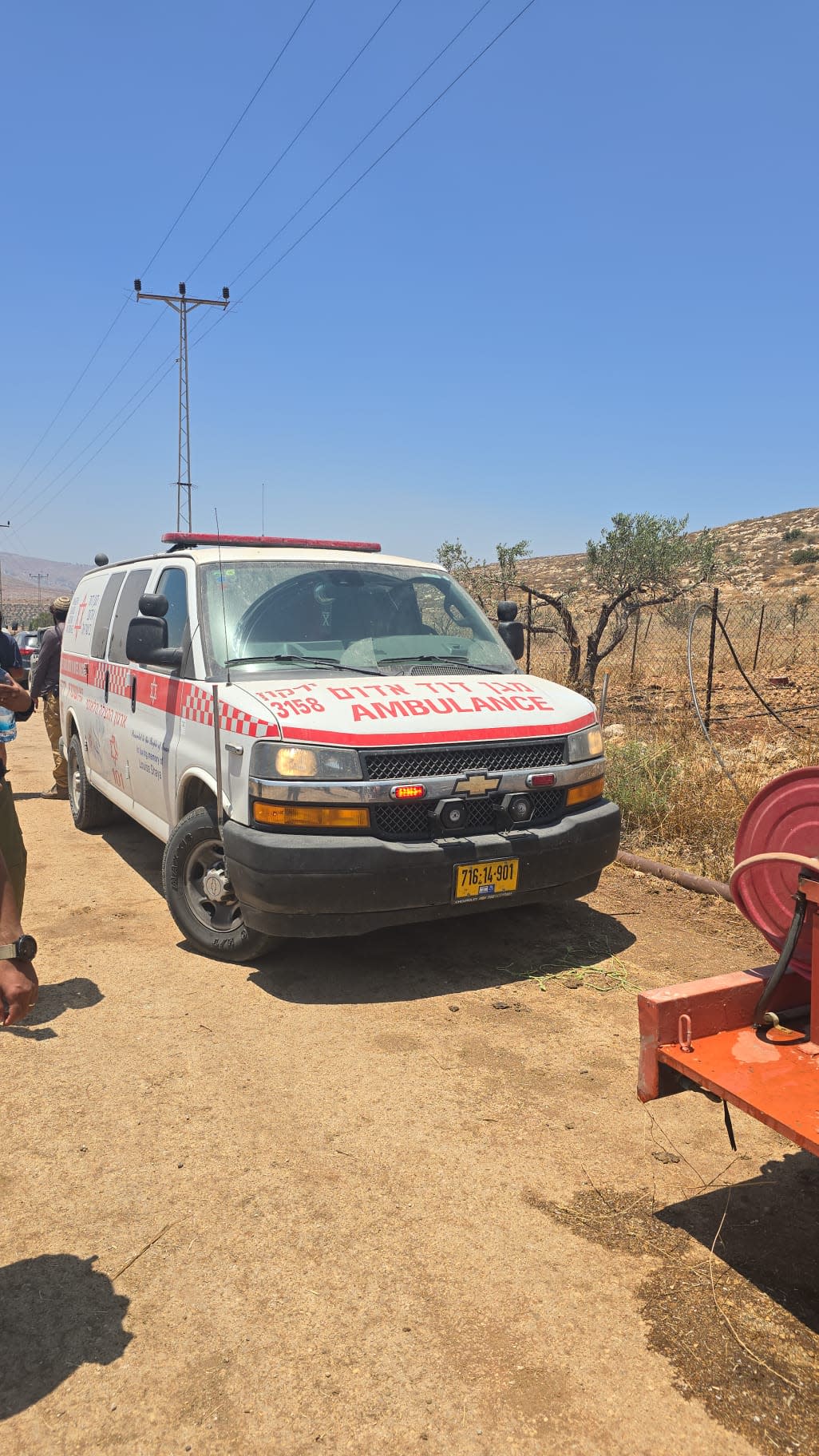
Magen David Adom responds to a stabbing attack in Samaria on July 23, 2026.
(photo credit: Magen David Adom)

A 51-year-old Israeli man was seriously wounded in a stabbing attack near the West Bank settlement of Elon Moreh on Thursday morning.

The man was attacked at the Derech Avraham Farm by two Palestinian attackers, who were killed by Israeli forces at the scene. He was evacuated via helicopter for further medical treatment at a hospital, the IDF said.

According to Israel Police, the stabbing victim was stabbed in the chest after attempting to put out a fire which had been set by Palestinian residents of Beit Furik, a nearby village. IDF and police have cordoned off the village of Beit Furik, and investigators are working with Israel Fire and Rescue Services to clarify the circumstances surrounding the outbreak of the fire.

Magen David Adom responds to a stabbing attack in Samaria on July 23, 2026. (credit: MAGEN DAVID ADOM)

Yossi Dagan issues public statement following the stabbing attack

“We are repeatedly witnessing arson and attempted attacks,” Samaria Regional Council head Yossi Dagan said following the attack.

“We expect the government to crush terrorism and those who incite it,” Dagan added. “We will win. A thousand terrorists will not help. This is our land, and we will win.”


Zawartość publikowanych artykułów i materiałów nie reprezentuje poglądów ani opinii Reunion’68,
ani też webmastera Blogu Reunion’68, chyba ze jest to wyraźnie zaznaczone.
Twoje uwagi, linki, własne artykuły lub wiadomości prześlij na adres:
webmaster@reunion68.com

Dlaczego nie zamierzam debatować z krytykami Izraela


Dlaczego nie zamierzam debatować z krytykami Izraela

Sam Harris


Wielu czytelników i słuchaczy podcastu wyrażało rozczarowanie moim niezmiennym poparciem dla Izraela i obecnie namawia mnie do debaty z kimś – właściwie z kimkolwiek – z coraz liczniejszego grona uczonych, naciągaczy i moralnych szaleńców, którzy uczynili z tego oblężonego kraju swoją zawodową lub psychiatryczną obsesję. Wygląda na to, że społeczność Making Sense przejęła tę fascynację, co w ostatnich dniach doprowadziło do kilku gorących sporów. Wyjaśniałem swoje stanowisko wobec Izraela w wielu podcastach i wystąpieniach publicznych, ale być może pomocne będzie krótkie podsumowanie go tutaj.

Po pierwsze, moje ogólne nastawienie: nie interesuje mnie analizowanie wszystkich sposobów, na jakie Izrael zawiódł – od skorumpowanego sojuszu premiera Netanjahu ze skrajną prawicą, przez liczne przestępstwa popełniane przez osadników na Zachodnim Brzegu, po śmierć niewinnych cywilów w kilku wojnach – ponieważ żadne z tych uchybień, niezależnie od ich wagi, nie zmieni mojego przekonania, że (1) etyczna różnica między Izraelem a jego wrogami pozostaje ogromna oraz że (2) światowa obsesja na punkcie państwa żydowskiego, traktowanego tak, jakby było największym złoczyńcą pośród narodów, jest godna pogardy, ponieważ wyrasta z odwiecznych kłamstw i urojeń.

Następnie prosta heurystyka: jak zasugerowałem już przynajmniej w jednym wątku społeczności, jeśli moja nieustępliwość w tych kwestiach wydaje się wam niezrozumiała, może pomóc świadomość, że z jakiegoś powodu uważam wojujący islam za dziesięciokrotnie gorszy, niż wy go postrzegacie. Kiedy mówię o „dżihadystach” i różnych ich organizacjach – Hamasie, Hezbollahu, Al-Kaidzie, Państwie Islamskim, IRGC itd. – mam na myśli ludzi, których uważam za gorszych od nazistów (dżihadyści są w istocie nazistami pewnymi istnienia Raju). Moje poglądy na konflikt na Bliskim Wschodzie nie zmienią się zasadniczo, dopóki moi krytycy nie przedstawią dowodów, że Izrael stał się równie zły jak jego wrogowie.

Możecie jednak być pewni, że jeśli Siły Obronne Izraela przekształcą się w kult śmierci wykorzystujący własną ludność cywilną jako żywe tarcze (a mimo to pozostający szeroko popieranym), jeśli zwykli Izraelczycy zaczną stawiać męczeństwo ponad wszelkie ziemskie priorytety, wychowując kolejne pokolenia pełnych zapału fanatycznych samobójców, jeśli mieszkańcy Tel Awiwu zaczną aprobować porywanie palestyńskich niemowląt, starszych kobiet i innych cywilów jako zakładników, a następnie gromadzić się w tysiącach, domagając się ich krwi – jeśli, innymi słowy, Izraelczycy zaczną przypominać Palestyńczyków – wówczas nie będzie mnie obchodziło, kto wygra tę wojnę. Dopóki do tego nie dojdzie, między obiema stronami istnieje przepaść różnic, a ja uważam, że powinniśmy skupić się na tym, jak brutalizujące jest dla każdego wolnego społeczeństwa mierzenie się z wrogami, którzy mogą szczerze twierdzić, że „kochają śmierć” bardziej, niż inni kochają życie – ponieważ właśnie taka była sytuacja Izraela przez większą część ostatniego stulecia.

Problemem na Bliskim Wschodzie nie jest i nigdy nie było istnienie państwa Izrael. Problemem jest dżihadyzm, islamizm, islamski ekstremizm, islamofaszyzm, wojujący islam – lub jakichkolwiek słów chcecie użyć, by opisać agresję i triumfalistyczne szaleństwo tych, którzy zbyt poważnie traktują najbardziej zgubne doktryny islamu.

Nie będę debatował o historii Bliskiego Wschodu, ponieważ jest ona nieistotna dla rozwiązania tamtejszego konfliktu. Oczywiście wiele osób twierdzi, że musimy rozplątać i ponownie przeanalizować każdy wątek tej historii, sięgając co najmniej wieku wstecz. Powód, dla którego jestem przekonany, że to jałowe zajęcie, jest prosty: Palestyńczycy i Izraelczycy przedstawiają rozbieżne wersje przeszłości, a żadna ilość badań czy debat ich nie pogodzi.

Znacznie ważniejsze do zrozumienia – i uważam, że jest to jedyna rzecz naprawdę warta rozważenia – jest to, czego obecni mieszkańcy Izraela, terytoriów palestyńskich i otaczających państw arabskich chcą dziś od życia. (Nie tego, czego udają, że chcą, ani tego, czego chce garstka rodzin królewskich, podczas gdy ich społeczeństwa pragną czegoś zupełnie innego). Do czego naprawdę dążą Żydzi i muzułmanie w tym regionie? Co są gotowi poświęcić? Za co są gotowi umrzeć? I za co są gotowi pozwolić umrzeć swoim dzieciom?

Kiedy w ten sposób skupiamy się na teraźniejszości, musimy – jeśli jesteśmy uczciwi – przyznać, że po obu stronach tego konfliktu istnieją dwie bardzo różne rzeczywistości: kulturowo, psychologicznie, etycznie, duchowo – pod każdym względem, który ma znaczenie. Tak, Izrael ma również swoich religijnych fanatyków. Nie są oni jednak tego samego rodzaju fanatykami, jakich spotykamy w Hamasie czy Hezbollahu, i znacznie słabiej reprezentują otaczającą ich kulturę. Niezależnie od wszystkiego, co można powiedzieć przeciwko premierowi Netanjahu, izraelskiej skrajnej prawicy i osadnikom na Zachodnim Brzegu — a jest wiele rzeczy zasługujących na potępienie – uważam, że następujące stwierdzenie pozostaje prawdziwe:

Gdyby Palestyńczycy złożyli broń, nastałby pokój. Mogłoby dojść do rozwiązania dwupaństwowego; mogłoby nawet dojść do rozwiązania jednopaństwowego; nie miałoby to znaczenia. Gdyby Palestyńczycy po prostu przestali zabijać Żydów i przestali budować kulturę, która celebruje bezsensowne morderstwo i męczeństwo jako najwyższe wartości, między Jordanem a Morzem Śródziemnym mogłoby istnieć różnorodne, tolerancyjne i zamożne społeczeństwo. Mogło istnieć już osiemdziesiąt lat temu. Ale gdyby Izraelczycy złożyli broń, doszłoby do ludobójstwa. Było to oczywiste 7 października 2023 roku. I dla każdego, kto zwracał uwagę na rzeczywistość, było to prawdą każdego dnia od momentu powstania państwa Izrael.

Prawda jest taka, że nigdy nie wiedziałem, jak Izrael powinien był odpowiedzieć na wydarzenia z 7 października. Wiem jedynie, że on, podobnie jak każde inne wolne społeczeństwo, musi ostatecznie pokonać wojujący islam. To, jak należy to zrobić, rzeczywiście podlega debacie. Nie o to jednak toczy się spór wśród krytyków Izraela, zwłaszcza po lewej stronie. Dla nich martwienie się o wojujący islam – nawet w Izraelu, nawet po największej masakrze Żydów od czasów Holokaustu – jest jedynie kolejnym przejawem „islamofobii”. To po prostu kolejny przejaw „kolonializmu” i „rasizmu” (jakby ten ostatni zarzut miał na Bliskim Wschodzie jakikolwiek sens).

Jeśli chcecie zrozumieć mój pogląd na ten konflikt, zadajcie jedno pytanie, które wyjaśnia wszystko w teraźniejszości:

Co zrobiłaby każda ze stron, gdyby miała moc zrobić dokładnie to, czego chce?

Choć wielu udaje, że jest inaczej, wszyscy znają odpowiedź na to pytanie z moralną pewnością.

Gdyby Hamas miał taką władzę, przeprowadziłby rzeczywiste ludobójstwo w Izraelu. Organizacja wielokrotnie potwierdzała swoje zaangażowanie w ten projekt, zarówno przed 7 października, jak i po tej dacie. I choć prawdą jest, że nienawiść do Żydów w świecie muzułmańskim została ogromnie wzmocniona przez trwającą od stulecia fascynację nazistowską propagandą i teoriami spiskowymi, nie jest to zjawisko wyłącznie współczesne. Istnieje na przykład słynny hadis przepowiadający, że Dzień Sądu nie nadejdzie, dopóki kamienie i drzewa nie zawołają: „O muzułmaninie, za mną ukrywa się Żyd, przyjdź i go zabij”. Nic dziwnego, że Hamas przywołał ten hadis w swojej karcie założycielskiej.

Większość Palestyńczyków o tym wie, a mimo to Hamas pozostaje popularny. Przez ponad dekadę Hamas przekierowywał zagraniczną pomoc, która miała poprawić życie w Gazie, i wykorzystywał ją do budowy największego schronu przeciwbombowego, jaki kiedykolwiek stworzył nasz gatunek – setek kilometrów tuneli – a mimo to podczas wojny nie pozwolono cywilom palestyńskim się w nich schronić. Dlaczego? Ponieważ Hamas wykorzystywał tych mężczyzn, kobiety i dzieci jako żywe tarcze. A kiedy Izrael wykonywał telefony i wysyłał miliony wiadomości tekstowych, wzywając cywilów do ewakuacji, głośniki w najbliższych meczetach ostrzegały ich, by pozostali na miejscu. Snajperzy Hamasu zabili wielu tych, którzy próbowali przenieść się w bezpieczne miejsce. Palestyńczycy wiedzą o tym wszystkim, a mimo to Hamas pozostaje popularny. Nawet po całym spustoszeniu, jakie sprowadził na własny naród, pozostaje najpopularniejszą frakcją palestyńską, wyraźnie wyprzedzając swojego rywala, Fatah. Dlatego właśnie na Bliskim Wschodzie nie ma pokoju.

Cierpienie w Gazie jest straszliwe i nigdy nie udawałem, że jest inaczej. Ale cierpienie gdzie indziej – cierpienie, o którym nie myślicie – jest równie realne. Powinniście zadać sobie pytanie, dlaczego obchodzi was ono mniej. Ta różnica, emocjonalna i polityczna, pokazuje, jak wygląda przegrana wojna informacyjna.

Nie widzieliśmy wszystkich martwych dzieci w Jemenie, Syrii czy Sudanie, gdzie liczby ofiar są znacznie wyższe niż w Gazie, ale wszyscy byliśmy świadkami pornografii nędzy i śmierci, systematycznie wytwarzanej przez zwolenników Hamasu. Możecie uważać, że wasza szczególna troska o Izrael wynika z faktu, że my, Amerykanie, dostarczamy wiele broni używanej przez izraelską armię do zabijania Palestyńczyków. Ale dostarczaliśmy broń także Arabii Saudyjskiej i Zjednoczonym Emiratom Arabskim w wojnie w Jemenie, która pochłonęła szacunkowo 377 tysięcy istnień ludzkich. Gdzie były wtedy protesty? Gdzie było moralizatorstwo celebrytów w sprawie jemeńskich ofiar? Dlaczego Zohran Mamdani nie uczynił sprzeciwu wobec tego zła jednym z głównych tematów swojej kampanii na burmistrza Nowego Jorku? Jemen przez lata był najgorszym kryzysem humanitarnym na świecie, przy pełnym udziale amerykańskiej broni i wsparcia logistycznego, a mimo to nigdy nie stał się centralną obsesją moralną uniwersytetów, mediów, sieci aktywistycznych czy polityki lewicowej w taki sposób, jak Gaza.

Zwrócenie na to uwagi nie jest retorycznym grzechem „whataboutismu”. Ujawnia raczej rażącą dysproporcję moralną: świat po prostu nie przejmuje się tym, gdy muzułmanie zabijają innych muzułmanów – zdumiewające, ale niewiele bardziej przejmuje się także wtedy, gdy zabijają chrześcijan – natomiast bardzo przejmuje się tym, gdy robią to Żydzi. Zgromadzenie Ogólne ONZ i Rada Praw Człowieka przyjęły więcej rezolucji przeciwko Izraelowi niż przeciwko wszystkim innym państwom łącznie, w tym Korei Północnej, Iranowi, Rosji, Chinom, Syrii, Sudanowi i Jemenowi. Kilka z tych krajów dopuściło się rzeczywistych ludobójstw. Nic z tego nie ma sensu. A jednak taki jest świat, w którym żyjemy.

Spośród 193 państw świata dwie trzecie zostały stworzone przez kartografów, którzy po prostu wyobrazili sobie ich granice, nie zwracając większej uwagi na plemienne interesy ludzi zamieszkujących te terytoria. W rzeczywistości ponad połowa z nich powstała po 1948 roku, czyli po roku założenia Izraela. A jednak istnieje tylko jedno państwo, którego legitymacja jest nieustannie kwestionowana na całym świecie. Jest tylko jeden naród na Ziemi, który musi stale uzasadniać swoje prawo do istnienia, nawet wtedy, gdy samo przetrwanie jego mieszkańców jest zagrożone przez otwarcie ludobójczych wrogów.

Ta obsesja na punkcie Izraela oraz podwójne standardy stosowane wobec jego obywateli stanowią dziś główny rdzeń tej zmiennej moralnej przypadłości powszechnie znanej jako „antysemityzm”.

Przez większość życia wierzyłem, że niebezpieczny antysemityzm należy już do przeszłości, przynajmniej na Zachodzie. Niestety reakcja na wydarzenia z 7 października mocno podważyła to przekonanie. Zbrodnie popełnione przez Hamas ujawniły poziom nienawiści do Żydów na świecie, który zszokował nawet tych z nas, którzy przez znaczną część życia zajmowali się badaniem antysemityzmu. Co istotne, nienawiść ta ujawniła się jeszcze przed izraelską inwazją na Gazę. Kiedy wciąż identyfikowano ciała młodych ludzi okaleczonych i zamordowanych podczas festiwalu muzycznego Nova, studenci Harvardu i profesorowie Uniwersytetu Columbia – a także demonstranci w Nowym Jorku, Londynie, Sydney i Toronto – świętowali działania ich zabójców.

Dlaczego antysemityzm ma znaczenie? Dla Żydów odpowiedź jest oczywista, ale dlaczego miałby mieć znaczenie dla wszystkich pozostałych? Ma znaczenie dlatego, że kiedy przyjrzymy się temu, czego jeszcze nienawidzą antysemici, odkryjemy, że nienawidzą wszystkiego, co umożliwia istnienie bogatych kulturowo, różnorodnych i otwartych społeczeństw. Prawdziwi antysemici przynoszą ze sobą coś więcej niż tylko nienawiść do Żydów: przynoszą cenzurę, represje polityczne, myślenie spiskowe oraz politykę odczłowieczania i szukania kozłów ofiarnych. Potępianie antysemityzmu nie jest więc szczególnym uprzywilejowaniem jednej grupy. Jest obroną moralnej i instytucjonalnej architektury, która umożliwia istnienie wolnych społeczeństw.

Na zakończenie chciałbym zwrócić się do członków społeczności Making Sense z jeszcze jedną ogólną uwagą. Wielu z was pisało do mnie, że straciliście do mnie szacunek z powodu tej kwestii (lub że nadal cenicie moją pracę i robicie mi „wyjątek” w sprawie Izraela). Odrzucam taki sposób myślenia i wy również powinniście go odrzucić. Nikt nie powinien być częścią tej społeczności tylko dlatego, że zgadza się ze mną. Nie prowadzę partii politycznej i nie istnieje żadna linia, której ja lub ktokolwiek inny miałby się trzymać. Jeśli spadłem z piedestału dlatego, że powiedziałem coś, z czym się nie zgadzacie, problemem był piedestał, a nie niezgoda. Oczywiście, jeśli uważacie, że was okłamuję lub że brakuje mi uczciwości, powinniście odejść i nigdy nie oglądać się za siebie. Jeśli jednak sądzicie po prostu, że się mylę, nawet w ważnej sprawie – a zwłaszcza w ważnej sprawie – zachęcam was, byście nadal przedstawiali lepsze dowody i argumenty. W końcu właśnie temu służy prawdziwa wspólnota intelektualna i moralna.


Link do oryginału:

Sam Harris
Why I Won’t Debate Critics of Israel
Many readers and podcast listeners have been dismayed by my enduring support for Israel and now urge me to debate someone—really anyone—drawn from a growing cast of scholars, grifters, and moral lunatics who have made that beleaguered country their professional or psychiatric obsession. The…
Read more

Zawartość publikowanych artykułów i materiałów nie reprezentuje poglądów ani opinii Reunion’68,
ani też webmastera Blogu Reunion’68, chyba ze jest to wyraźnie zaznaczone.
Twoje uwagi, linki, własne artykuły lub wiadomości prześlij na adres:
webmaster@reunion68.com


IDF declares closed military zone ahead of Nahala group’s march to Gaza with Smotrich, Ben-Gvir


IDF declares closed military zone ahead of Nahala group’s march to Gaza with Smotrich, Ben-Gvir

JERUSALEM POST STAFF


The Israeli army near the border fence with Gaza, southern Israel. February 09, 2026. / (photo credit: Tsafrir Abayov/Flash90)

The IDF closed the area surrounding the Gaza Strip to all non-residents on Sunday morning, ahead of a planned march into Gaza by the Nahala movement at 5:00 p.m.

The closed military zone extends from the Yad Mordechai junction, west of Highway 34, to the Sha’ar Hanegev junction, and from there west of Highway 232 to the Kerem Shalom area.

Further, it prohibits demonstrators from entering the area along the border fence.

The closed zone will be in effect from 8:00 a.m. on Sunday until the same time on Monday morning.

The march, titled “Thousands march to Gaza,” bears the slogan “After 21 years, we’re returning home,” referencing the 2005 disengagement from Gush Katif.

Members of Nahala movement march toward Gaza Strip with saplings and Israeli flags, February 5, 2026. (credit: The Nahala Movement)

National Security Minister Itamar Ben-Gvir, Finance Minister Bezalel Smotrich, Communications Minister Shlomo Karhi, Economy and Industry Minister Nir Barkat, Heritage Minister Amichai Eliyahu, and Social Equality Minister May Golan will reportedly all attend the march.

Golan called on the public to join her, declaring that “settlement equals security!”

MKs Limor Son Har-Melech (Otzma Yehudit), Almog Cohen (Otzma Yehudit), Simcha Rothman (Religious Zionist Party), and Zvi Sukkot (Religious Zionist Party) are also expected to attend.

The Nahala movement, which has been making recruitment efforts online over the past few days, was also joined by bereaved families, including Eliav Libi, the father of David Libi, who was killed in May 2025 in Gaza while conducting engineering work for the IDF on behalf of the Defense Ministry.

Libi called on the organization’s supporters to come to the Yad Mordechai junction, adding: “Everyone come, because we must return home!”

Nahala movement organizes march, crossings into Gaza

Since the start of the Israel-Hamas war in 2023, the Nahala movement has organized several similar marches towards the Gaza Strip, the most recent of which took place in February and in December.

In February, some 1,500 people gathered along the Gaza border to march toward the Strip and plant trees near the ruins of Nisanit.

Participants set out in groups toward the Black Arrow monument and other routes, carrying Israeli flags and saplings to signal support for renewed Jewish settlement as a path to security, according to the organizers.

At the time, the IDF had condemned the march and deployed both troops and Israel Police officers to prevent civilian marchers from reaching the fence and crossing the border.

In December, a group organized by the movement succeeded in crossing to Gaza, before being returned to Israel by IDF soldiers operating in the area. A second attempt was also made at a different point of the security fence between Gaza and Israel.


Shir Perets and Amir Bohbot contributed to this report.


Zawartość publikowanych artykułów i materiałów nie reprezentuje poglądów ani opinii Reunion’68,
ani też webmastera Blogu Reunion’68, chyba ze jest to wyraźnie zaznaczone.
Twoje uwagi, linki, własne artykuły lub wiadomości prześlij na adres:
webmaster@reunion68.com


Jewish Advocacy Group Blasts Australian Higher Education Establishment Over Antisemitism Revelations


Jewish Advocacy Group Blasts Australian Higher Education Establishment Over Antisemitism Revelations

Dion J. Pierre


People protest against the Royal Commission on Antisemitism and Social Cohesion in Sydney, Thursday, July 9, 2026. Photo: AAP Image/George Chan via Reuters Connect.

Australian Jewish advocacy groups have condemned the country’s universities after Jewish students, staff, and vice-chancellors delivered damning testimony this week to the Royal Commission on Antisemitism and Social Cohesion, describing how campus leaders allowed anti-Israel activism and antisemitism to go largely unchecked, particularly after the Oct. 7, 2023, Hamas attack on Israel.

“The harrowing testimony of Jewish students and staff, together with the evidence of several university vice-chancellors, has laid bare systematic failures of university leadership that allowed antisemitism to flourish almost unchecked on campus, especially after the October 7th attacks by Hamas,” the Australia/Israel and Jewish Affairs Council (AIJAC) said in a statement on Wednesday.

The Royal Commission, led by former High Court Justice Virginia Bell, is holding a week of hearings in Melbourne, from July 13 to 17, focused on antisemitism at Australian universities. It has heard from Jewish students and academics about their experiences, as well as from vice-chancellors of institutions including the universities of Sydney, Melbourne, and New South Wales, over their handling of campus protests.

University of Sydney Vice-Chancellor Mark Scott appeared before the commission on Wednesday and apologized to Jewish students and staff for the university’s handling of a pro-Palestinian encampment that occupied its Camperdown campus between April and June 2024. Scott told the inquiry he had “learnt just how menacing and threatening many found the encampments.”

The council also criticized universities’ inaction over the encampments and the presence on some campuses of Hizb ut-Tahrir, an Islamist group that Australia listed as a prohibited hate group in early 2026 following the Bondi Beach attack. “Evidence regarding inaction over the extremist pro-Palestinian encampments and the presence of the now proscribed hate group Hizb ut-Tahrir on some campuses raises serious questions about the judgement and leadership shown at those universities at a time when Jewish students and staff were pleading for protection,” AIJAC said.

The group said the hearings should mark a turning point for the sector. “These hearings should be a watershed moment,” it said. “Australian universities should finally accept responsibility and accountability for their failures and commit to the meaningful reforms … necessary to restore the safety, confidence and trust of Jewish students and staff.”

The Royal Commission was established in January by the federal government after the Dec. 14, 2025, Bondi Beach attack, in which a father and son, Sajid and Naveed Akram, opened fire on a Hanukkah celebration attended by around 1,000 people, killing 15 and wounding more than 40. Authorities described it as an antisemitic, Islamic State–inspired terrorist attack — the deadliest terrorist incident in Australia’s history.

Antisemitic incidents across Australia surged after the Oct. 7, 2023, Hamas attack. The Executive Council of Australian Jewry (ECAJ), the main representative body of the country’s Jewish community, recorded a 316 percent rise in reported antisemitic incidents in the 12 months that followed, compared with the prior year.

The unrest included a protest outside the Sydney Opera House on Oct. 9, 2023 — two days after the Hamas attack — where demonstrators lit flares and chanted antisemitic slogans. Widely circulated footage claimed the crowd chanted “gas the Jews,” though a New South Wales police forensic investigation later concluded the words were “where’s the Jews,” a phrase Jewish leaders condemned as menacing regardless.

The Australian government this week imposed new anti-racism standards requiring universities to adopt a formal definition of antisemitism, establish transparent complaints processes, and better protect students and staff. The government stopped short of mandating any specific definition, including the widely used International Holocaust Remembrance Alliance (IHRA) definition — a decision the opposition criticized.

“There is no place for antisemitism or any type of hate in our universities or anywhere else,” Education Minister Jason Clare said in announcing the standards. “Unis will have to act to prevent racism and respond when it happens.”


Zawartość publikowanych artykułów i materiałów nie reprezentuje poglądów ani opinii Reunion’68,
ani też webmastera Blogu Reunion’68, chyba ze jest to wyraźnie zaznaczone.
Twoje uwagi, linki, własne artykuły lub wiadomości prześlij na adres:
webmaster@reunion68.com