
Archive | 2025/10/18

Obama, Rabin, Arafat got Nobels without peace, Trump delivers and gets denied – comment


Obama, Rabin, Arafat got Nobels without peace, Trump delivers and gets denied – comment

ZVIKA KLEIN


US President Donald Trump did not receive the 2025 Nobel Peace Prize despite being a catalyst for major shifts towards peace in the Middle East.
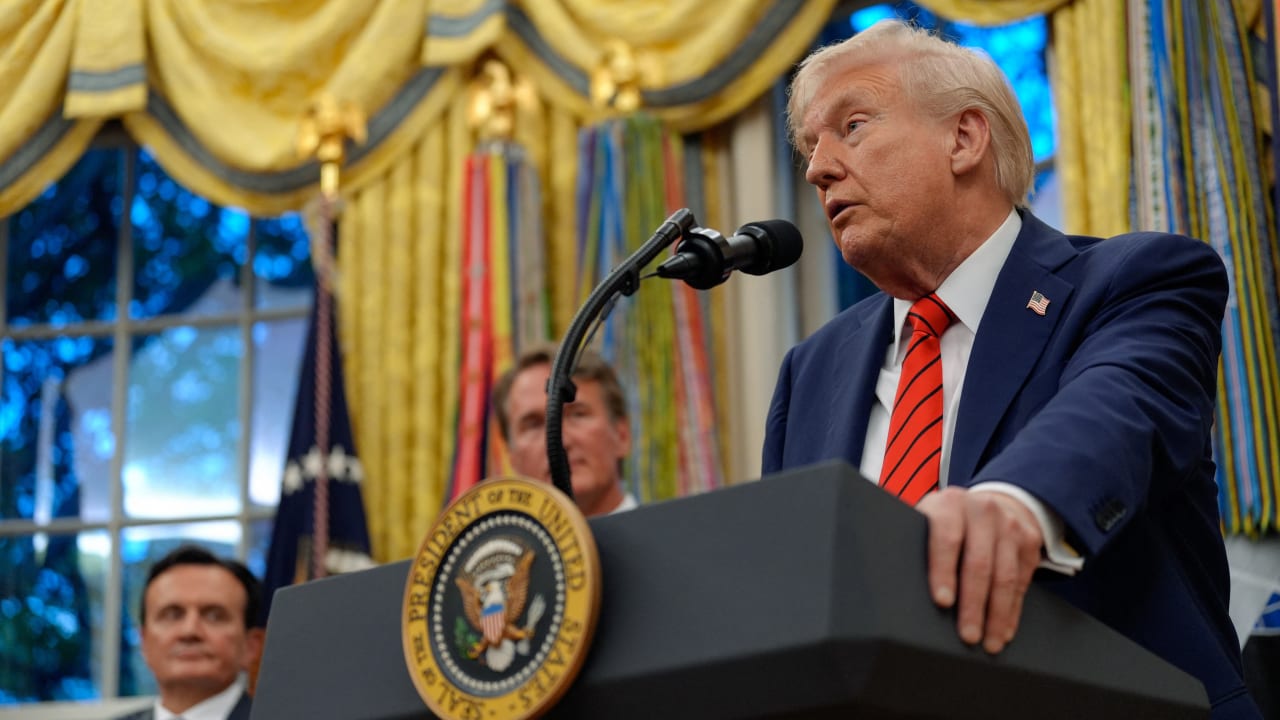
U.S. President Donald Trump speaks during an announcement about lowering U.S. drug prices, at the White House in Washington, D.C., U.S., October 10, 2025 / (photo credit: REUTERS)

Let’s be honest for a moment. The Nobel Peace Prize has never been a strict “mission accomplished” medal. Time and again, the committee has rewarded leaders for direction, momentum, and promise, long before peace was actually secured. That is why the outrage machine cuts both ways. If it was legitimate to hand the medal to architects of incomplete or fragile processes in the past, then by the committee’s own precedent Donald Trump should have been eligible this year, following the Gaza ceasefire and hostage framework he pushed over the line.

Start with the canonical example. The late Yitzhak Rabin, Shimon Peres, and Yasser Arafat received the 1994 prize for the Oslo Accords. Oslo was hope, for some, not harvest. It was a handshake, a framework, a bet on tomorrow. The region did not wake up to peace in 1994, or 1995, or 1996. Yet the committee said the early, imperfect breakthrough mattered and deserved recognition, precisely to encourage its continuation. If that logic holds, a ceasefire that begins freeing hostages after two years of underground horror and sets a mechanism to stop the bloodletting also qualifies as “work for peace,” even if it is unfinished.

Or take 2009. Barack Obama received the prize less than a year into his presidency. The committee was explicit. It was not crowning a completed peace, it was validating a shift in posture, diplomacy, and tone. Critics called it premature. The committee said encouragement matters. That is the very definition of an aspirational award. If the prize can be used to bless a change of direction, then a deal that halts rockets, starts releases, and creates a path to de-escalation in Gaza qualifies by the same yardstick.

There is more. In 2019, Ethiopia’s Abiy Ahmed was honored for making peace with Eritrea. The committee knew the settlement was fragile, that the hard parts were ahead. It gave the prize anyway, to lock in gains and pressure spoilers. In 2016, Colombia’s Juan Manuel Santos won even after voters rejected his first FARC deal in a referendum. Again, the message was clear. The Nobel often rewards incomplete peace to help it survive. Go further back. In 1973, Henry Kissinger shared the prize for an agreement in Vietnam that unraveled almost immediately. Le Duc Tho refused the medal, but the committee stood by its logic. Reward the attempt, the pause in war, the architecture of an exit, even when the future is uncertain.

U.S. President Donald Trump reacts as Secretary of State Marco Rubio speaks about Israel and Hamas agreeing on the first phase of a Gaza ceasefire, during a cabinet meeting at the White House in Washington, D.C., U.S., October 9, 2025. (credit: REUTERS/EVELYN HOCKSTEIN)

So spare us the procedural pearl-clutching. We are told the Gaza deal arrived “after the deadline,” that the committee could not consider it this calendar year. That is a bureaucrat’s refuge. The same committee has repeatedly shown it can recognize momentum, not just milestones. If the prize can lean forward when it wants to encourage a political project, it could have leaned forward here as well, or at minimum acknowledged the framework’s architects as part of a shared citation. Hiding behind the calendar now, after decades of aspirational awards, looks selective.

Let us name the hipocrisy  

And yes, let us name the hypocrisy. Many of the same voices who defended Nobel decisions that were deliberately early, symbolic, or aspirational are suddenly legalists when the candidate is Trump. They insist that nothing counts until everything is perfect, and that timelines are sacred, but only this time. Conversely, some who derided Obama’s prize as premature now demand identical treatment for Trump without admitting the standard they mocked is exactly the standard they want applied. Both camps cannot have it both ways. If you believe in the “encouragement” theory of the Nobel, say so consistently. If you believe the prize must wait for end-state peace, say that consistently too.

Here is the simple editorial judgment. By the committee’s own long practice, incomplete peace has been worthy of a Nobel when it breaks a deadlock, saves lives, or reframes a conflict. The Gaza ceasefire and hostage mechanism does all three. If Rabin, Peres, and Arafat could be honored while peace was still a sketch, if Obama could be honored for a posture, if Abiy and Santos could be honored to shore up fragile processes, then Trump’s role this year met that precedent. The committee has every right to be consistent or to change its rules. What it cannot be is selective. Calling this anything else is not principle, rather politics.


Zawartość publikowanych artykułów i materiałów nie reprezentuje poglądów ani opinii Reunion’68,
ani też webmastera Blogu Reunion’68, chyba ze jest to wyraźnie zaznaczone.
Twoje uwagi, linki, własne artykuły lub wiadomości prześlij na adres:
webmaster@reunion68.com


UK Authorities Call for ‘Immediate Review’ of Local Ban on Israeli Soccer Fans Amid Government Outrage

UK Authorities Call for ‘Immediate Review’ of Local Ban on Israeli Soccer Fans Amid Government Outrage

Shiryn Ghermezian


Soccer Football – UEFA Europa League – Maccabi Tel Aviv v GNK Dinamo Zagreb – TSC Arena, Topola, Serbia – Oct. 2, 2025, Maccabi Tel Aviv players pose for a team group photo before the match. Photo: REUTERS/Zorana Jevtic

The police and crime commissioner of the West Midlands Police (WMP) force in the United Kingdom has called for an “immediate review” of a decision to ban fans of the Israeli soccer team Maccabi Tel Aviv from attending the club’s UEFA Europa League game against Aston Villa next month following outrage from British government officials.

Simon Foster said he is requesting an urgent reassessment of the decision, made by Birmingham’s Safety Advisory Group (SAG), to determine “whether or not this decision and recommendation is appropriate, necessary, justified, reasonable, and a proportionate means of achieving a legitimate aim,” which is to ensure the safety and security of those attending the match on Nov. 6 at Villa Park in Birmingham. “That must include consideration, of all and any suitable, alternative options,” he added.

Foster concluded by saying that any decision or recommendation about the Nov. 6 match is ultimately a matter for the SAG to determine alongside the “independent, objective, and impartial operational policing judgement” of WMP.

Maccabi Tel Aviv soccer fans will not be allowed to attend the match at Villa Park in Birmingham because of security concerns, and the move has drawn condemnation from government officials in Israel and the UK, including British Prime Minister Keir Starmer.

“This is the wrong decision. We will not tolerate antisemitism on our streets,” Starmer wrote on X. “The role of the police is to ensure all football fans can enjoy the game, without fear of violence or intimidation.”

Aston Villa said on Thursday that the decision was made by the SAG, a body comprised of several professional authorities responsible for issuing safety certificates for events at Villa Park. The SAG informed the club and UEFA that no away fans would be allowed to attend the game, the team noted.

“Following a meeting this afternoon, the SAG have formally written to the club and [European soccer body] UEFA to advise no away fans will be permitted to attend Villa Park for this fixture,” Aston Villa said in a statement. “West Midlands Police have advised the SAG that they have public safety concerns outside the stadium bowl and the ability to deal with any potential protests on the night.”

The team added that it was in “continuous dialogue with Maccabi Tel Aviv and the local authorities throughout this ongoing process, with the safety of supporters attending the match and the safety of local residents at the forefront of any decision.”

West Midlands Police said on Thursday it supports the SAG’s decision, and that police classified the match as “high risk” after “a thorough assessment.”

“This decision is based on current intelligence and previous incidents, including violent clashes and hate crime offenses that occurred during the 2024 UEFA Europa League match between Ajax and Maccabi Tel Aviv in Amsterdam,” the police force said in a released statement. “Based on our professional judgement, we believe this measure will help mitigate risks to public safety.”

A spokesperson for Downing Street said there are talks “at pace, across government” to resolve the issue regarding the ban against Maccabi Tel Aviv fans.

“Culture Secretary Lisa Nandy is meeting officials to discuss what more can be done to try and find a way through to resolve this, and what more can be done to allow fans to attend the game safely,” the spokesperson said, as cited by the BBC. “The Secretary of State for Housing, Communities, and Local Government, Steve Reed, spoke to the local council this morning, and the Home Office is urgently working to support police to try and find a way through this.”

The UK’s Conservative Party Leader Kemi Badenoch said the ban was a “national disgrace” and called on Starmer to “guarantee that Jewish fans can walk into any football stadium in this country.” Conservative MP Matt Vickers criticized the move as “utterly outrageous” while MP for the Liberal Democrat party Ed Davey demanded that the ban be reversed “as soon as possible” and said, “It’s completely wrong to tackle antisemitism by banning its victims.” Reform UK leader and MP Nigel Farage wrote on X: “This takes racial discrimination to a whole new level.”

The British nongovernmental organization Campaign Against Antisemitism (CAA) told the Birmingham City Council and West Midlands Police that it intends to bring a judicial review over the decision. “Our lawyers are writing to the council and police in accordance with the pre-action protocol for judicial review,” CAA wrote in a statement on X. “Police forces and local councils must do whatever it takes to ensure that Britain is safe for everyone … We will do whatever it takes to overturn this pernicious ban which has humiliated and angered the whole country.”

Israeli Foreign Minister Gideon Sa’ar described the ban as a “shameful decision” and called on UK officials to reverse the “coward” move against Israeli soccer fans.

Ian Austin, the UK’s trade envoy to Israel, said he was “appalled” by the ban and called on police to review the decision.

“It looks like they have capitulated to a campaign by trouble-makers and abdicated their responsibility to ensure people can go about their lawful business safely,” he said. “Birmingham is a great international city. It welcomes visitors from all over the world, and they must be able to come in safely. International sport is one of our most important exports and this has major implications for fixtures in the future.”

In November 2024, Maccabi Tel Aviv fans were violently attacked by fans of the Dutch soccer team Ajax followed a European League match between the two teams in Amsterdam. During the premeditated and coordinated violence, Maccabi fans were chased with knives and sticks in the streets, run over by cars, physically beaten, and forced by their attackers to say, “Free Palestine.” Amsterdam Mayor Femke Halsema called the attackers “antisemitic hit-and-run squads” who went “Jew hunting.”


Zawartość publikowanych artykułów i materiałów nie reprezentuje poglądów ani opinii Reunion’68,
ani też webmastera Blogu Reunion’68, chyba ze jest to wyraźnie zaznaczone.
Twoje uwagi, linki, własne artykuły lub wiadomości prześlij na adres:
webmaster@reunion68.com


US News Outlets Reject Pentagon Press Access Policy

US News Outlets Reject Pentagon Press Access Policy

Reuters and Algemeiner Staff


US Defense Secretary Pete Hegseth attends a Senate Appropriations Committee hearing on US President Donald Trump’s budget request for the Department of Defense, on Capitol Hill in Washington, DC, US, June 11, 2025. Photo: REUTERS/Elizabeth Frantz

At least 30 news organizations declined to sign a new Pentagon access policy for journalists, warning of the potential for less comprehensive coverage of the world’s most powerful military ahead of a Tuesday deadline to accept new restrictions.

The policy requires journalists to acknowledge new rules on press access, including that they could be branded security risks and have their Pentagon press badges revoked if they ask department employees to disclose classified and some types of unclassified information.

Reuters is among the outlets that have refused to sign, citing the threat posed to press freedoms. Others that have announced their refusal to accept the new press access rules in statements or their own news stories are: the Associated Press, Bloomberg News, The New York Times, The Wall Street Journal, The Washington Post, CNN, Fox News, CBS, NBC, ABC, NPR, Axios, Politico, The Guardian, The Atlantic, The Hill, Newsmax, Breaking Defense and Task & Purpose.

Chief Pentagon spokesperson Sean Parnell said in a statement on Monday: “The policy does not ask for them to agree, just to acknowledge that they understand what our policy is. This has caused reporters to have a full blown meltdown, crying victim online. We stand by our policy because it’s what’s best for our troops and the national security of this country.”

The department has set a Tuesday deadline for news organizations to agree to it or turn in their Pentagon press badges and clear out their workspaces in the building by Wednesday.

President Donald Trump, asked about the new policy on Tuesday, told reporters that Pentagon chief Pete Hegseth “finds the press to be very disruptive in terms of world peace and maybe security for our nation.”

Hegseth called the requirements “common sense,” adding that “we’re trying to make sure national security is respected.”

News organizations have not disputed restrictions on reporters’ access to sensitive areas in the Pentagon. Credentialed reporters have historically been limited to unclassified spaces, according to the Pentagon Press Association.

All five major broadcast networks issued a joint statement on Tuesday, saying: “Today, we join virtually every other news organization in declining to agree to the Pentagon’s new requirements, which would restrict journalists’ ability to keep the nation and the world informed of important national security issues. The policy is without precedent and threatens core journalistic protections. We will continue to cover the US military as each of our organizations has done for many decades, upholding the principles of a free and independent press.”

The New York Times Washington Bureau Chief Richard Stevenson said in a statement on Friday: “Since the policy was first announced, we have expressed concerns that it constrains how journalists can report on the U.S. military, which is funded by nearly $1 trillion in taxpayer money annually. The public has a right to know how the government and military are operating.”

Reuters also took issue with the new rules. “Reuters is bound by its commitment to accurate, impartial and independent news under the Thomson Reuters Trust Principles. We also steadfastly believe in the press protections afforded by the US Constitution, the unrestricted flow of information and journalism that serves the public interest without fear or favor. The Pentagon’s new restrictions erode these fundamental values,” a spokesperson said.

The rules, which followed negotiations with Pentagon officials in recent weeks, threatened to violate protections for the press under the First Amendment to the US Constitution by regulating routine attempts by reporters to seek newsworthy information and documents from sources, said a lawyer familiar with negotiations with the Pentagon.

The requirement that reporters acknowledge that disclosure of sensitive information could harm US national security could aid prosecutors if they sought to charge a reporter for disclosing defense information under the Espionage Act, the lawyer added.

Conservative cable news outlet One America News signed on to the new policy.

“After thorough review of the revised press policy by our attorney, OAN staff has signed the document,” Charles Herring, the president of OAN parent company Herring Networks, said in a statement. Reuters could not immediately ascertain if other organizations had also signed it.

The Pentagon’s policy, announced last month, is the latest expansion of restrictions on press access under Defense Secretary Hegseth, a former Fox News host. Trump has ordered the department to rename itself the Department of War, a change that would require action by Congress.

Hegseth on Monday, while traveling with Trump to Israel and Egypt, responded on social media platform X to news organizations declining to agree to the policy by posting a hand-waving emoji, implying he was bidding them goodbye.

The Pentagon Press Association, which represents more than 100 news organizations that regularly cover the military, including Reuters, urged Pentagon leadership to reconsider the policy, arguing it “gags Pentagon employees and threatens retaliation against reporters who seek out information that has not been pre-approved for release.”

The group said it was not issuing a specific recommendation on whether reporters should agree.

The Pentagon revised its proposed policy following negotiations between the department and news organizations that came after they widely condemned requirements that barred credentialed reporters from seeking out sensitive information that was not approved for release.

The revised policy notes that receiving or publishing sensitive information “is generally protected by the First Amendment” but states that soliciting the disclosure of such information “may weigh in the consideration of whether you pose a security or safety risk.” The policy adds: “The press’s rights are not absolute and do not override the government’s compelling interest in maintaining the confidentiality of sensitive information.”


Zawartość publikowanych artykułów i materiałów nie reprezentuje poglądów ani opinii Reunion’68,
ani też webmastera Blogu Reunion’68, chyba ze jest to wyraźnie zaznaczone.
Twoje uwagi, linki, własne artykuły lub wiadomości prześlij na adres:
webmaster@reunion68.com