

Archive | 2025/10/28

Libańczycy domagają się pokoju z Izraelem


Libańczycy domagają się pokoju z Izraelem


Hussain Abdul-Hussain


Tłumienie propokojowych głosów w Libanie — przez sądy i zastraszanie ze strony Hezbollahu — podważa wiarygodność kraju na arenie międzynarodowej.

„Przełammy tabu; domagamy się pokoju” — zadeklarował Marcel Ghanem, gospodarz najpopularniejszego talk-show w Libanie. „Domaganie się pokoju [z Izraelem] nie jest przestępstwem” — podkreślił, rzucając wyzwanie utrwalonym narracjom. Marwan Hamade, doświadczony druzyjski parlamentarzysta, wystąpił w stacji I24 News (francuskojęzyczna wersja), by wypowiedzieć się na temat Gazy, dając do zrozumienia, że gotów jest złamać surrealistyczne przepisy libańskiego bojkotu. Publicysta Tony Karam potępił zwodnicze negocjacje z Izraelem i złudzenia zwycięstwa nad nim, pisząc: „Nadszedł czas na polityczną odwagę”. Grupa anonimowych Libańczyków zainicjowała „Lebanon Israel Initiative”, mającą na celu promowanie dialogu i współpracy między sąsiadującymi państwami.

Mimo to państwo libańskie, zastraszone wpływami Hezbollahu, pozostaje głuche na te wezwania do pokoju, a sam dialog penalizuje, rażąco naruszając podstawowe wolności i prawa człowieka. To tłumienie opinii dążących do pojednania podważa demokratyczne fundamenty Libanu.

Hezbollah stosuje różne metody oczerniania libańskich zwolenników pokoju. Prorządowa milicja wspierana przez Iran wylewa jad w mediach społecznościowych — nagrywa filmy, rozpowszechnia je na szeroką skalę, piętnuje zwolenników porozumienia i domaga się ich uwięzienia. Ta zorganizowana kampania ma na celu uciszenie sprzeciwu i utrzymanie kontroli Hezbollahu nad przestrzenią publiczną, przy jednoczesnym forsowaniu hasła: „Izrael to wieczny wróg” jako nienaruszalnej zasady narodowej.

Zastraszanie dotyka wielu, w tym Hamadego — ocalałego z próby zamachu z 2004 roku, prawdopodobnie przeprowadzonego przez ludzi Hezbollahu. Później Hamade złagodził swoje stanowisko, twierdząc, że do udziału w wywiadzie zaprosił go przyjaciel, a on sam sądził, że chodzi o inną stację, a nie izraelski kanał. Ta postawa odzwierciedla paraliżujący wpływ działań Hezbollahu.

W odpowiedzi na niepokorne głosy domagające się pokoju Hezbollah intensyfikuje ataki. Poza nagonką w mediach społecznościowych, prawnik powiązany z Hezbollahem pozywa propokojowych aktywistów do sądu, oskarżając ich o zdradę. Te prawne represje wykorzystują wymiar sprawiedliwości jako broń przeciwko dysydentom, pogłębiając tym samym kryzys wolności słowa.

W Libanie przeciwnicy pokoju często utożsamiają dialog z Izraelem z aktem szpiegostwa. Każdy, kto postuluje pokój, ryzykuje, że zostanie uznany za zdrajcę lub szpiega — to niebezpieczne uproszczenie, które skutecznie tłumi wszelką uzasadnioną debatę.

Tłumienie propokojowych głosów przez libańskie sądy i zastraszanie ze strony Hezbollahu podważają wiarygodność kraju na arenie międzynarodowej.

Niechęć do akceptowania wolności wypowiedzi może wynikać z kulturowej tendencji do utożsamiania sprzeciwu z zdradą. Pewien palestyński bojownik kiedyś powiedział: „Jednym z moich lęków jest to, że zdrada stanie się kiedyś punktem widzenia” — fraza ta bywa używana jako oręż do tłumienia debaty nad uznaniem Izraela. To przekonanie wciąż utrzymuje się wśród niektórych społeczności libańskich, palestyńskich i arabskich, odzwierciedlając szerszy opór wobec otwartego dialogu.

Sprowadzanie sprzeciwu do zdrady to poważne nieporozumienie. O ile dana opinia nie nawołuje do przemocy ani nie wiąże się z działaniami wywiadowczymi, nie powinna być traktowana jako zdradziecka. Wolność słowa, będąca fundamentem społeczeństw otwartych, musi być chroniona. Tymczasem Liban i inne państwa regionu często zawodzą w tej kwestii. Państwo powinno bronić prawa do debaty i zaprzestać prześladowań obywateli utrzymujących kontakty z Izraelczykami. Zagwarantowanie wolności słowa to nie tylko obowiązek prawny, ale i kluczowy krok ku bardziej inkluzywnemu i pokojowemu społeczeństwu.

Jeszcze gorsze od nękania ze strony Hezbollahu jest słabość libańskiego państwa. Zamiast bronić „wolności wypowiedzi” gwarantowanej przez konstytucję, Liban lawiruje — udaje, że dąży do pokoju, aby zadowolić Waszyngton, a jednocześnie stara się nie rozjuszyć Hezbollahu. Taka dwulicowość podważa zaufanie społeczne i blokuje postęp.

Gdy libańscy urzędnicy mówią o rozmowach z Izraelem — często mylnie interpretowanych jako gesty pokojowe — mają na myśli „rozmowy pośrednie” za pośrednictwem amerykańskich mediatorów w celu „rozwiązania sporów” — czyli eufemizm oznaczający wyznaczanie granic i tymczasowe zawieszenie broni, a nie prawdziwe pojednanie.

Od czasu do czasu Liban precyzuje, że dąży do zawieszenia broni z Izraelem, deklarując, że pokój zostanie podpisany dopiero po utworzeniu państwa palestyńskiego, co jest zgodne z polityką Ligi Arabskiej. Takie stanowisko podporządkowuje interesy Libanu szerszej agendzie regionalnej.

Pięćdziesiąt sześć lat po oddaniu suwerenności palestyńskim bojownikom w 1969 roku, a później Hezbollahowi, Liban wciąż przedkłada palestyńskie interesy nad własne. Palestyńczycy uczynili z Libanu punkt wypadowy do ataków na Izrael, co doprowadziło do niszczących represji i wywołało wojnę domową, która na trwałe naznaczyła kraj.

Liban poświęcił dla sprawy palestyńskiej więcej niż sami Palestyńczycy — przyjmując uchodźców i znosząc konflikty. Nadszedł czas, by uznać Izrael, podpisać traktat pokojowy i znormalizować stosunki. Taka polityka przyniosłaby stabilność, przyciągnęła inwestycje zagraniczne i ożywiła gospodarkę Libanu. Ghanem wezwał kraj do postawienia własnych interesów na pierwszym miejscu — nawet jeśli oznaczałoby to przełamanie wieloletniego tabu dotyczącego Palestyny.

Dopóki Bejrut nie przestanie penalizować prawa swoich obywateli do swobodnych kontaktów z Izraelczykami — o ile nie mają one charakteru szpiegowskiego — i nie uzna pokoju za opcję polityczną, a nie niepodważalny dogmat tożsamości narodowej, postęp będzie niemożliwy. Państwo musi stworzyć warunki do swobodnej wymiany myśli, bez groźby represji.

Propokojowe głosy w Libanie brzmią coraz donośniej, odzwierciedlając tęsknotę za zmianą. Oby pokój z Izraelem, oparty na wzajemnym szacunku i współpracy, nadszedł wkrótce, zapowiadając nową erę stabilizacji i dobrobytu.


Link do oryginału: https://thisisbeirut.com.lb/articles/1327912/the-lebanese-demand-peace-with-israel?utm_source=substack&;utm_medium=email

Hussain Abdul-Hussain – Iracko-libański dziennikarz mieszkający w Waszyngtonie. Pracuje jako analityk w instytucie Fundacji Defence of Democrecies. Wcześniej pracował w utworzonej przez amerykański Kongres Arabic TV, przed tym był reporterem w wychodzącej w Bejrucie The Daily Star. Jest absolwentem Amerykańskiego Uniwersytetu w Bejrucie, gdzie studiował historię Bliskiego Wschodu.


Zawartość publikowanych artykułów i materiałów nie reprezentuje poglądów ani opinii Reunion’68,
ani też webmastera Blogu Reunion’68, chyba ze jest to wyraźnie zaznaczone.
Twoje uwagi, linki, własne artykuły lub wiadomości prześlij na adres:
webmaster@reunion68.com

‘If I capitulated, there’d be no Israel,’ Netanyahu says


‘If I capitulated, there’d be no Israel,’ Netanyahu says

Gabe Groisman


In a one-on-one interview in his office, the Israeli prime minister puts Hamas on notice, saying the Jewish state can do things the easy or hard way.

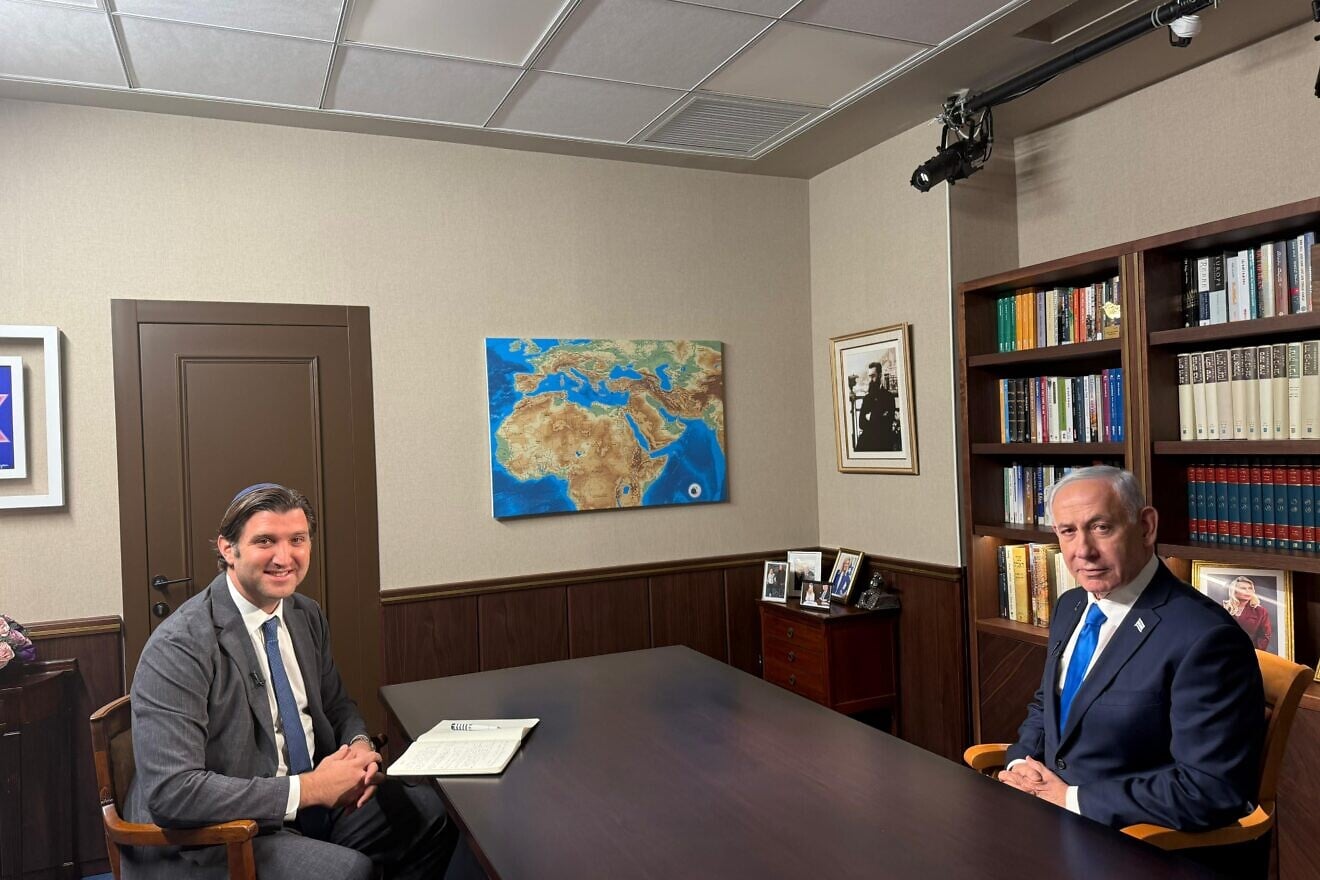
Israeli Prime Minister Benjamin Netanyahu speaks with Gabe Groisman in the Prime Minister’s Office in Jerusalem, Oct. 26, 2025. Photo by Yona Groisman.

If he had not withstood intense international and domestic pressure during the seven-front war against Iran and its proxies, particularly Hamas, “there would be no Israel,” Israeli Prime Minister Benjamin Netanyahu said on the Standpoint With Gabe Groisman podcast produced by JNS in his first in-depth interview since the Oct.10 Gaza ceasefire.

The Israeli premier said that the Jewish state, with U.S. help, “smashed the Iran axis,” reshaped the Middle East and paved the way to “finish off” Hamas.

“When you’re in the eye of the storm, you have to decide if you’re going to be swept by the storm or you’re going to be a rock in the storm,” the Israeli premier told me on Sunday in his Jerusalem office. Had Israel been “swept in the storm,” he added, it “would have suffered an enormous defeat, and America would have suffered an enormous defeat.”

“It would have been a triumph for the Iran axis if we accepted all the pressures that were put on us, both from abroad and from inside, domestic pressure by the deep state, by the left and others, to stand still,” Netanyahu said, “basically surrender to Hamas demands.”

Had the Jewish state yielded, Hamas leader Yahya Sinwar and Hezbollah chief Hassan Nasrallah would still be alive, Bashar Assad would still run Syria, and the Iranians would still “lord it” over the region, “thinking that they’re going to have, in two seconds or in two minutes, atomic bombs to annihilate everyone inside,” according to Netanyahu.

“The reason I could withstand the storm is that I knew that if I capitulated to it, there would be no Israel,” he said. “It’s as simple as that, and when you’re in a leadership position, you have to do what is not only what is right but what is absolutely necessary. So I had no qualms about that.”

The Trump plan

Addressing the proposed international force slated to oversee Gaza’s stabilization as part of U.S. President Donald Trump’s plan, Netanyahu put Hamas on notice.

“We’re willing to give it a try, but if not, as President Trump has said, it’s going to be done one of two ways,” he said. “Either the easy way, with the international force, or the hard way, with Israel, and it’ll be done.”

Netanyahu said that Jerusalem would only accept participants in the international stabilization mission that are “acceptable to Israel,” suggesting that he refuses to repeat what he calls the “failure of the U.N. forces that were put into place in Lebanon after 1978.”

.


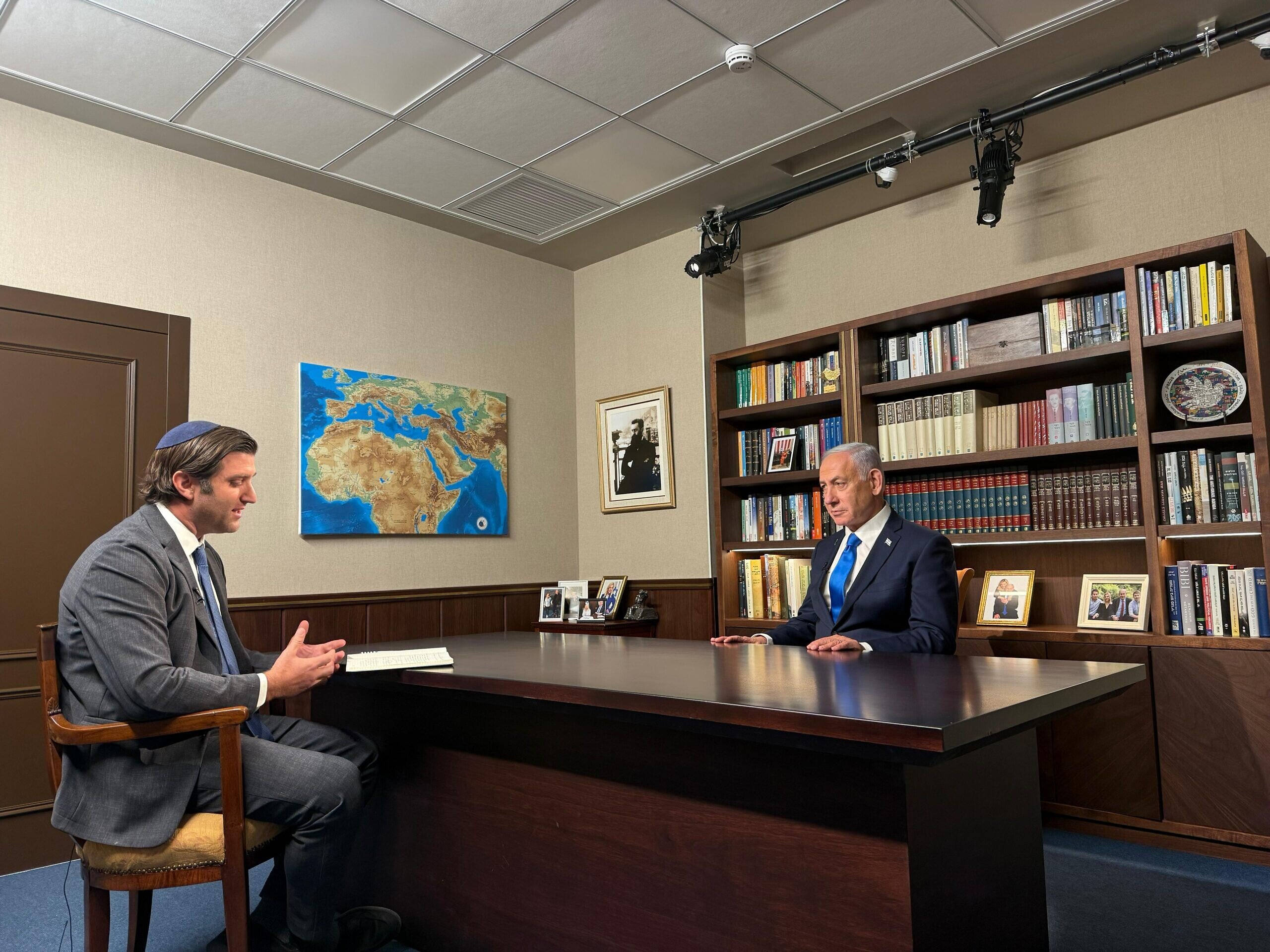
Israeli Prime Minister Benjamin Netanyahu talks tome Gabe Groisman on Oct. 26. 2025.

.

Netanyahu declined to name the nations that might be part of the acceptable list.

“We’re talking to them right now, and I think it’s better that we talk to them confidentially,” he said. “I think you can also guess which nations are not going to be there.”

The Israeli premier insisted that Israel emerged “a lot stronger” as a result of the Oct. 7 war, now officially called the War of Redemption.

“Not on Oct. 7, when we had this horrible massacre,” he said. “But if you look at where Israel was before the Oct. 7 attack and where it is today, we’re actually stronger.”

“We are rightly considered the strongest power in the Middle East,” he said. “We’ve smashed the Iran axis. We’ve exposed Iran for not being the superpower and the overbearing power that intimidated the entire region and beyond.”

Asked why the Trump initiative to end the Gaza war was “the right deal at the right time,” Netanyahu said that Israel had two goals.

“We wanted first to get all our live hostages back,” he said. “Nobody believed we could. We did, but everybody assumed that we would only get them on Hamas’s terms, which means get out of Gaza, allow them to reorganize, allow them to rearm, allow them to make Gaza an enormous threat to Israel again. And I wouldn’t do that.”

Instead, the 20 living hostages held in Gaza were released on Oct. 13 “in one swoop and with Israel staying in, so that we can enforce, if necessary, disarmament and demilitarization,” Netanyahu said.

Hammered out with Netanyahu’s close confidant and top negotiator, Ron Dermer, the Israeli strategic affairs minister, the agreement was a product of intense military pressure and high-stakes diplomacy, Netanyahu said.

“We went into Gaza City and put the knife—the military knife—to Hamas’s throat in their last stronghold, Gaza City, and President Trump and his team, along with Ron Dermer, put together a 20-point plan, which effectively isolates Hamas,” he said. “Hamas wanted to isolate us. We isolated them and got the deal.”

“If we don’t finish off Hamas, it’ll cast a shadow for sure,” he said. “So we intend to finish them off.”

Expanding the Abraham Accords

Netanyahu said that the war strengthened both Israel’s regional standing and the 2020 Abraham Accords, noting that Arab states “stuck with Israel” throughout the war and that new normalization efforts are advancing quietly.

He recalled that one of the reported reasons that Hamas launched the Oct. 7 massacre was to block Saudi Arabia from signing on to the Abraham Accords. “Are we going to see Saudi Arabia back at the table soon with Israel? Well, I hope so,” he said.

“I’d rather not engage in public proclamations. I don’t think that does any useful thing,” he said. “I think either there is a mutual interest or there isn’t, and I think there is, actually, stronger than ever.”

Far from being derailed by the Gaza war, the Abraham Accords were reinforced by it, according to Netanyahu. “We have an opportunity to expand them to other countries,” he said, cautioning skeptics to avoid the distraction of “surface noise.”

“I’m telling you from below the surface that there are important advances that we’re making. I hope they succeed,” he said. “But I think they have a chance to succeed because of the emergence and predominance of Israeli power.”

Netanyahu said that Turkey and Qatar must be confronted with the question, “Are you on our side or are you not on our side?”

“You shouldn’t be swept away by naivete. If you can get them on your side, completely good. If not, recognize who you’re dealing with and don’t be swept away with rose-colored glasses,” he said.

Netanyahu described Turkey as “very hostile to Israel and to Zionism in recent years” and said that Qatar is “involved on U.S. campuses” and its channel Al Jazeera is “poisoning the minds of billions.”

Still, he credited Doha for its role in the Trump deal.

“I’ve said this to the Qataris. I said, ‘I appreciate your help in getting the hostages out, but I also recognize the things that we are very concerned with, and we’d like you to move away from those and become a positive partner,’” he said.

Israeli Prime Minister Benjamin Netanyahu speaks with Gabe Groisman in the Prime Minister’s Office in Jerusalem, Oct. 26, 2025. Photo by Yona Groisman.

U.S.-Israel alliance

The prime minister credited Trump with being “a full partner” and giving Israel the strategic space to finish what it started.

The U.S. president’s recent visit to the Knesset “swept all Israelis and many around the world,” Netanyahu said. He described Trump’s speech as “a fusion of two things that was absolutely remarkable and unforgettable.”

It communicated both “the depth of the alliance” between Israel and the United States and the “strength of America under President Trump coming back to the world scene, becoming a dominant power, shaping events and helping change the Middle East together.”

For Netanyahu, Trump’s address carried a personal message too.

“He told me he was surprised by the strength of the support for me, because he’s reading these fake polls that are coming out in our so-called mainstream media,” the prime minister said. “He told me this. ‘What I saw in the Knesset was massive support for you, Bibi.’”

The Israeli premier also addressed the complicated texture of U.S.–Israel relations and the periodic tensions that arise between even close allies. He pushed back against claims that one side dominates the other.

“We have a great alliance of partners,” he said. “I was in Washington a few weeks ago, and they said, ‘Netanyahu controls America and America’s defense policy.’ And then it flipped. ‘America controls Netanyahu, and it controls Israel’s defense policy.’ Neither argument, neither statement, is true.”

“Israel is an independent country,” he said. “The United States is definitely an independent country, and we are partners. We’re not a proxy. We’re not a subservient power.”

“We’re an independent state, and we fashion our own security policy and follow it,” he said. “We defend ourselves by ourselves, we decide what is dangerous for us, and we act accordingly.”

Netanyahu stressed that Israel does not seek permission for preemptive strikes.

“If you attack us, we attack you immediately back. But if you prepare an attack, we go and wipe you out. We just did in Gaza, as we do in Lebanon,” he said. “We’re not asking permission from our American friends. We just tell them that’s what we’re doing, and that’s fine.”

“That’s the way it should be,” he added.

For Netanyahu, Israeli independence reinforces rather than undermines the alliance. “What’s good for America,” he told me, is “a strong and independent Israel, because that’s the anchor of security in the Middle East.”

“If Israel weren’t here—a stronger Israel wasn’t here—there wouldn’t be a Middle East,” he said. “It would collapse under Iran in two seconds, and they know that.”

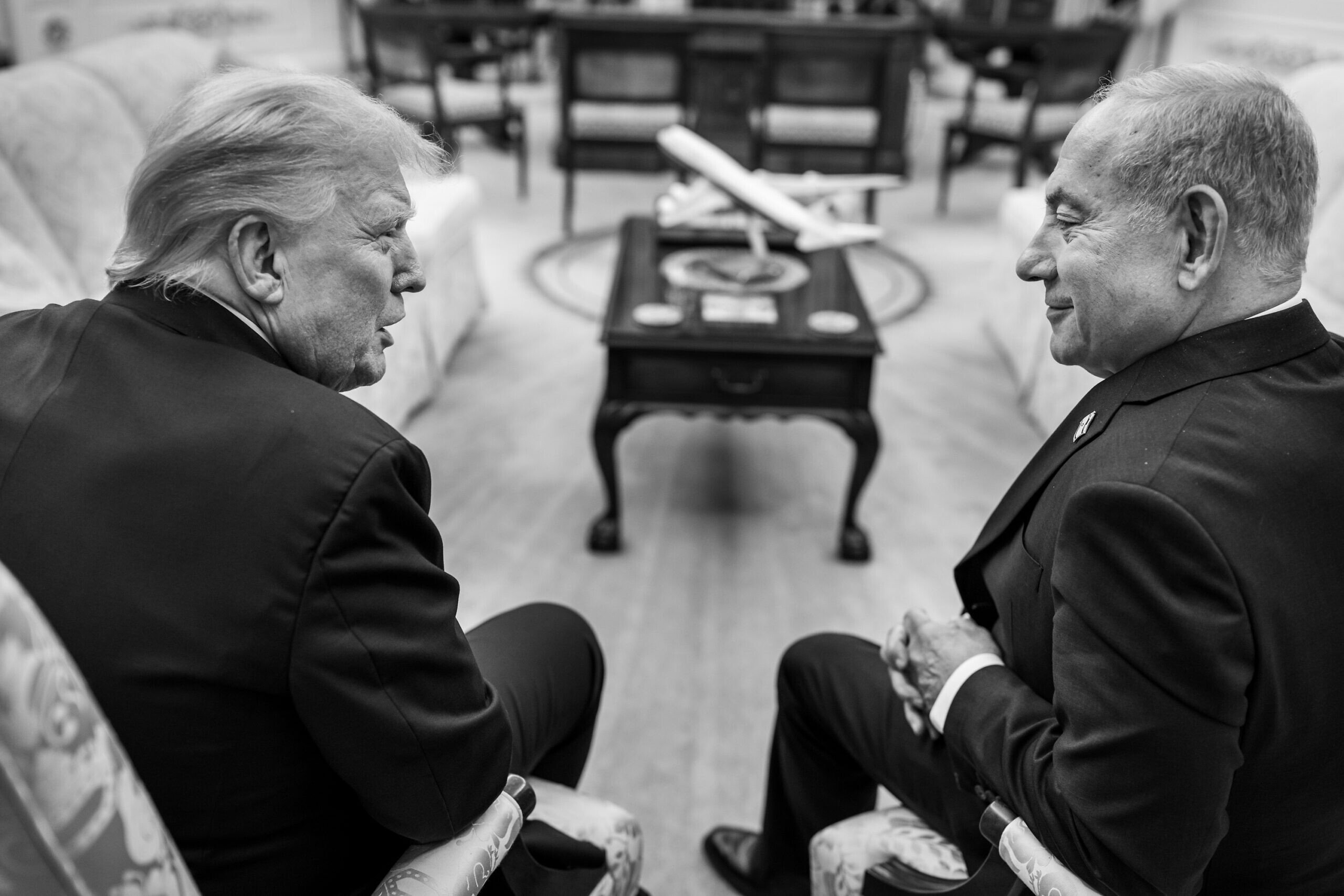
President Donald Trump speaks with Israeli Prime Minister Benjamin Netanyahu in the Oval Office after a joint press conference announcing the U.S. peace plan for Gaza, Sept. 29, 2025. Photo by Daniel Torok/White House.

Support from home

Asked what toll two years of war, political strife and unrelenting international pressure have taken on him, Netanyahu said, “I had great support first from my family, first and foremost from my wife, who’s been my rock through thick and thin.”

He added that “equally,” he has received support from “the soldiers of Israel and the people of Israel.”

The “vast majority of the people and almost every single soldier I met during the war,” told him, “Prime Minister, keep going. Don’t stop. Don’t surrender,” Netanyahu said.

“You’re serving a larger cause and a larger purpose. It goes back to the millennium dream of not only establishing a Jewish state, an independent Jewish state in our ancient homeland, here in Israel, in Judea, Samaria and the rest of the land of Israel,” he said.

“It goes back to the fact that our generation now is charged with preserving that dream, keeping it going, assuring its vitality,” Netanyahu said.

“I think I had great support,” he said. “You may have thought that I was isolated, but I didn’t feel that way. I felt that I had the best support that any leader can hope for.”


Steve Linde contributed to this report.


Zawartość publikowanych artykułów i materiałów nie reprezentuje poglądów ani opinii Reunion’68,
ani też webmastera Blogu Reunion’68, chyba ze jest to wyraźnie zaznaczone.
Twoje uwagi, linki, własne artykuły lub wiadomości prześlij na adres:
webmaster@reunion68.com

Jeffries Ends the Suspense, Endorses Mamdani in NY Mayor’s Race


Jeffries Ends the Suspense, Endorses Mamdani in NY Mayor’s Race

Reuters and Algemeiner Staff


Zohran Mamdani, a New York City mayoral candidate, speaks on Primary Day at a campaign news conference at Astoria Park in Queens, New York, United States, on June 24, 2025. Photo: Kyle Mazza vis Reuters Connec

US Representative Hakeem Jeffries of New York, a top elected Democrat in the US Congress, on Friday endorsed Zohran Mamdani in the race for mayor of New York City, four months after the New York State assemblyman won the Democratic Party nomination.

The long delay in the House Democratic leader’s embrace of the 33-year-old self-described democratic socialist came after a steady stream of questions from journalists on whether he ever would go to bat for Mamdani, and as Republicans keep asserting that Democrats are too far-left for the nation.

“I deeply respect the will of the primary voters and the young people who have been inspired to participate in the electoral process,” Jeffries said in a statement. “Zohran Mamdani has relentlessly focused on addressing the affordability crisis and explicitly committed to being a mayor for all New Yorkers,” he said.

Jeffries’ Brooklyn congressional district is part of New York City.

His endorsement of Mamdani, who shocked political observers on June 24 with a convincing victory in the mayoral primary, comes just 11 days before the city’s November 4 general election.

Senate Democratic Leader Chuck Schumer, also of New York, has so far withheld any endorsement in the mayoral race.

Mamdani is running against a field of candidates that includes former Democratic Governor Andrew Cuomo, who opposed him in the Democratic primary and is now running as an independent. 

Republican President Donald Trump has called Mamdani a “communist” and has hinted that he might deploy the National Guard to New York if he becomes mayor.

Republicans in the deeply divided US Congress have taken cues from Trump and used terms such as “communists,” “socialists” and “Marxists” in an attempt to paint even less liberal Democrats as being out of step with the national electorate.

Next month’s New York City election, along with governors’ elections in Virginia and New Jersey, are being closely watched as possible indicators of each party’s prospects in 2026.

Midterm elections next year will determine whether Republicans hold onto their narrow majorities in the House and Senate, with many races already shaping up.

Jeffries said Mamdani has pledged to make public safety of New York’s large Jewish community a priority amid “a startling rise in antisemitic incidents.” Progressives and moderates within the Democratic Party have often been at odds over US policy toward Israel and its massive bombing campaign of Gaza over a two-year period, triggered by an attack within Israel by Hamas.

On Thursday, New York Mayor Eric Adams, who is not running for re-election, endorsed Cuomo in a move seen as attempting to undercut Mamdani.


Zawartość publikowanych artykułów i materiałów nie reprezentuje poglądów ani opinii Reunion’68,
ani też webmastera Blogu Reunion’68, chyba ze jest to wyraźnie zaznaczone.
Twoje uwagi, linki, własne artykuły lub wiadomości prześlij na adres:
webmaster@reunion68.com
