
Archive | January 2026

Greta Thunberg’s Terrorist Friends


Greta Thunberg’s Terrorist Friends

Moshe Phillips


Greta Thunberg and UN special rapporteur Francesca Albanese in an embrace with a Hamas terrorist in the artwork “Human Shields” by AleXsandro Palombo. Photo: Provided

In late December, perennial protester Greta Thunberg was arrested in London while holding a sign that read, “I SUPPORT PALESTINE ACTION PRISONERS” and “I OPPOSE GENOCIDE.”

Thunberg was quickly released and was later seen at another protest that evening, where she was reportedly shouting, “support the hunger strikers.” Palestine Action radicals began a hunger strike in jail on November 2.

News reports did little to explain what Palestine Action is and what crimes their extremists had committed.

Far too many in the UK have also seemed eager to give Palestine Action a pass. This has led to serious frustration from those who have taken the time to understand what Palestine Action is really all about.

For example, Security Minister Dan Jarvis stated the following to the House of Commons on September 8:

Some of those holding placards in support of Palestine Action may not know the extent of its activities. It has conducted an escalating campaign involving intimidation and sustained criminal damage, including to Britain’s national security infrastructure. Some of its attacks have involved the use of weapons, resulting in alleged violence and serious injuries to individuals. Palestine Action’s members have been charged with violent disorder, grievous bodily harm with intent, actual bodily harm, criminal damage and aggravated burglary — charges that include, in the assessment of the independent Crown Prosecution Service, a terrorism connection.

A June news report from the London Telegraph stated that “members of the organisation were ‘spreading intifada,’ an Arabic word for uprising. This week, The Telegraph revealed that Palestine Action was plotting to target RAF bases across the country in a wave of attacks.”

Palestine Action knows exactly what it means when they say “spreading intifada.” During a now notorious Palestine Action attack on police during a 2024 break-in, one Palestine Action militant hit a female police sergeant named Kate Evans with a sledgehammer in the back, causing a severe spinal injury. A second policeman, named Aaron Buxton, was also hit with a sledgehammer.

Greta Thunberg’s blood libel that Israel is committing genocide also needs addressing. The lie on her sign is a fabrication that Palestine Action extremists traffic in. The Palestine Action website also features Holocaust inversion, which is a particularly disgusting form of Jew-hatred that falsely portrays Israel and Jews as Nazis, diminishes the historical nature of the Holocaust, and spreads the blood libel that Israel is committing genocide.

Kamran Ahmed is prominently featured on the Palestine Action website, and is in a British jail for reportedly causing over $1.3 million in damage at an Israeli company’s research facility in South Gloucestershire in August 2024 after committing an illegal break-in. Palestine Action portrays its terrorism and property destruction as necessary to stop what they label as Israeli war crimes. The Palestine Action site quotes Ahmed as saying, “You spit on the face of Anne Frank, who wished someone would put a halt to that genocide (Holocaust).”

Palestine Action and Kamran Ahmed did not develop their Holocaust denial on their own. Palestinian Authority President Mahmoud Abbas was a key initiator of Holocaust distortion, Holocaust inversion, and Holocaust denial in the Arab world.

In 2022, German Chancellor Olaf Scholz sharply criticized Abbas after he claimed that Israel had committed “50 Holocausts.” Scholz stated that he was “disgusted by the outrageous remarks” and that “for us Germans, in particular, any relativisation of the singularity of the Holocaust is intolerable and unacceptable.” Going further, Scholz said, “I condemn any attempt to deny the crimes of the Holocaust.”

From Mahmoud Abbas’ Holocaust distortion to Greta Thunberg’s reckless endorsement, influential figures are lending cover to a movement that thrives on violence and lies. Palestine Action’s activists are not victims or “political prisoners” — they are criminals, and they are exactly where they belong: in jail. Excusing their actions only rewards Jew-hatred and undermines the rule of law.


Moshe Phillips is national chairman of Americans For A Safe Israel, AFSI, (www.AFSI.org), a leading pro-Israel advocacy and education organization.


Zawartość publikowanych artykułów i materiałów nie reprezentuje poglądów ani opinii Reunion’68,
ani też webmastera Blogu Reunion’68, chyba ze jest to wyraźnie zaznaczone.
Twoje uwagi, linki, własne artykuły lub wiadomości prześlij na adres:
webmaster@reunion68.com


Po masakrze w Bondi. Australijski stan chce uznać antyizraelskie hasło za mowę nienawiści

Krewni jednej z ofiar masowej strzelaniny, która miała miejsce w niedzielę podczas obchodów żydowskiego święta na plaży Bondi w Sydney w Australii, 16 grudnia 2025 r. (Fot. REUTERS/Hollie Adams)


Po masakrze w Bondi. Australijski stan chce uznać antyizraelskie hasło za mowę nienawiści

Michał Kokot


Jedno z wezwań, którymi posługują się środowiska antyizraelskie, ma zostać wpisane do kodeksu karnego w stanie Nowa Południowa Walia. Tydzień temu dwóch islamistów zastrzeliło tam 15 osób.

Na Bondi, najsłynniejszej plaży Australii, w ubiegłą niedzielę (14.12) dwóch mężczyzn (ojciec i syn) zastrzeliło 15 osób i raniło kolejnych 39 podczas festiwalu żydowskiego. Sprawcy mieli, zdaniem policji, inspirować się Państwem Islamskim. Ich najmłodsza ofiara miała 10 lat.

Była to największa masakra od 1996 roku. Wówczas uzbrojony sprawca w Port Arthur na Tasmanii zabił 35 osób i ranił 24. Australia dyskutowała wtedy o ograniczeniu dostępu do broni, skupując w ramach ogólnokrajowego programu tysiące ich sztuk.

Podobne działania władze podejmują teraz, tłumacząc to “walką z ekstremizmem”. 

Chris Minns, premier Nowej Południowej Walii, wzywa do powołania komisji królewskiej w sprawie ataku. Zapowiada na przyszły tydzień zwołanie parlamentu stanowego, by uchwalić surowsze przepisy dotyczące mowy nienawiści i ograniczenia dostępu do broni palnej. Potwierdził, że będzie chciał, aby hasło „globalizuj intifadę” zostało sklasyfikowane jako element mowy nienawiści. 

Sugeruje też zaostrzenie przepisów w sprawie zgromadzeń publicznych, by Australia mogła cieszyć się „spokojnym latem”. 

Australijczycy czczą pamięć ofiar strzelaniny

W niedzielę (21.12) cały kraj będzie obchodzić dzień żałoby narodowej, który o godz. 18:47 czasu lokalnego zostanie uczczony minutą ciszy. Tego dnia wszystkie flagi zostaną opuszczone do połowy masztów, a Australijczycy zostaną poproszeni o zapalenie świeczek w oknach, aby uczcić pamięć ofiar. 

To chwila, w której będziemy mogli zastanowić się i potwierdzić, że nienawiść i przemoc nigdy nie będą definiować nas jako Australijczyków

– powiedział Anthony Albanese, premier Australii. 

W sobotę (19.12) tysiąc australijskich ratowników wodnych utworzyło łańcuch, zwracając się w stronę oceanu. Setki pływaków i surferów (sport, którego dzieci w Australii uczą się od najmłodszych lat szkolnych) wypłynęło na wodę przed plażę Bondi, tworząc ogromny krąg i oddając cześć ofiarom strzelaniny. 

Rekordowa ilość broni palnej w Australii

Rząd ogłosił narodowy plan skupowania broni, podobny do tego, jaki został ogłoszony przed trzydziestoma laty po ataku w Port Arthur. Setki tysięcy sztuk broni mają zostać najpierw odkupione, a następnie zniszczone przez władze federalne, jak i stanowe. Rozważane jest również zaostrzenie prawa do jej posiadania.

Sprawcy ataku w Bondi mieli zarejestrowanych sześć sztuk broni palnej. W całym kraju są dzisiaj cztery miliony zarejestrowanych sztuk broni palnej  – więcej niż podczas masakry w 1996 roku.


Redagował Michał Olszewski


Zawartość publikowanych artykułów i materiałów nie reprezentuje poglądów ani opinii Reunion’68,
ani też webmastera Blogu Reunion’68, chyba ze jest to wyraźnie zaznaczone.
Twoje uwagi, linki, własne artykuły lub wiadomości prześlij na adres:
webmaster@reunion68.com


Mamdani Called ‘Tone-Deaf’ After Deleting Posts About Combating Antisemitism on First Day in Office as NYC Mayor


Mamdani Called ‘Tone-Deaf’ After Deleting Posts About Combating Antisemitism on First Day in Office as NYC Mayor

Shiryn Ghermezian


New York City Mayor Zohran Mamdani delivers a speech during his inauguration ceremony in New York City, US, Jan. 1, 2026. Photo: REUTERS/Kylie Cooper

Newly inaugurated New York City Mayor Zohran Mamdani is facing backlash from a Jewish nonprofit organization for removing some social media posts about the city’s fight against antisemitism from the official mayoral account on X.

The National Jewish Advocacy Center (NJAC) called it “tone-deaf” and “shameful” that Mamdani, 34, deleted two X posts that were uploaded by his predecessor Eric Adams’ administration hours before the new mayor was sworn in and took over the account on Thursday.

On Wednesday morning, during his last day in office, Adams posted on City Hall’s official mayoral X account a thread of three posts that discuss the city’s “first-ever municipal report” on efforts to combat antisemitism. Adams said the “bold” and “detailed” report is a “blueprint for 2026.”

On Thursday, after Mamdani took office and control of the account, two posts within the thread were removed and a notice was written that said: “This Post was deleted by the Post author.” The final post in the thread that was not deleted reads: “This administration put the tools into place to protect Jewish New Yorkers and fight hate. We’re calling on every elected official to do the same.”

A member of the far-left Democratic Socialists of America, Mamdani is the first Muslim to be New York City’s mayor and the city’s first mayor to be sworn in using a Quran. A supporter of boycotting all entities tied to Israel, he has repeatedly refused to recognize Israel’s right to exist as a Jewish state; routinely accused Israel of “apartheid” and “genocide”; and refused to clearly condemn the phrase “globalize the intifada,” which has been used to call for violence against Jews and Israelis worldwide.

“It is difficult to overstate how disturbing it is that one of your very first acts as Mayor of New York City, on your very first day in office, was to delete official @NYCMayor tweets addressing the protection of Jewish New Yorkers,” NJAC began by saying in a letter on Thursday that was addressed to Mamdani. The letter was shared on social media by the nonprofit organization’s director Mark Goldfeder. It was sent to Mamdani, Department of Investigation Commissioner Jocelyn Strauber, and the Conflicts of Interest Board Executive Director Carolyn Miller, according to the Goldfeder.

“At a moment of unprecedented antisemitic intimidation, violence, and exclusion in the city, the decision to erase official statements affirming the safety and protection of Jews is not merely tone-deaf, it is shameful,” the letter further stated. “It sends a message, whether intended or not, that Jewish New Yorkers are uniquely underserving of continuity, clarity, or reassurance from their own government.”

The letter also noted that deleting posts from the mayoral X account without first preserving them in the City’s official archive may violate both state law as well as the New York City Charter, since all social media posts from that account are considered part of official public record. The Jewish organization demanded that Mamdani “restore or reissue” a clear statement affirming the city’s commitment to protecting Jewish New Yorkers “not as a favor, but as a fundamental obligation of office.”

“Even if they were archived, the choice to delete statements specifically addressing Jewish safety on Day One invites scrutiny and erodes public trust,” the letter explained. “Selective removal of official statements concerning the protection of Jewish New Yorkers – particularly if comparable statements regarding other communities were retained – raises concerns of viewpoint discrimination and unequal treatment, and risks eroding constitutional norms that require government neutrality and equal concern for all protected groups.”

“New York City’s mayoralty is an institution, not a social-media account to be curated for convenience or optics. The record matters, the law matters, and the safety and dignity of Jewish New Yorker’s most certainly matter,” the letter stated in conclusion. “Your first days in office will define your administration. This is not how that definition should begin.”

Mamdani spokesperson Dora Pekec told the New York Post the deleted posts are being archived and were not singled out because of their content.

“The mayor’s team has begun archiving posts from the @NYCMAYOR account that were published by the previous administration, in chronological order,” Pekec said in a statement. “This ongoing process is administrative in nature and is not based on the content of the posts. The mayor remains steadfast in his commitment to root out the scourge of antisemitism in our city and will deliver on his commitment to renewing the Mayor’s Office to Combat Antisemitism and increasing funding for the Office for the Prevention of Hate Crimes by 800 percent.”

Hours after taking office, Mamdani formally revoked all executive orders issued by the previous administration since Sept. 26, 2024, when Adams was indicted for corruption, charges of which have since been dismissed. As part of Mamdani’s move, he tossed out the city’s adoption of the International Holocaust Remembrance Alliance’s (IHRA) definition of antisemitism. However, Mamdani announced the same day that he will keep the Mayor’s Office to Combat Antisemitism, which was recently created by Adams.

“That is an issue that we take very seriously, and as part of the commitment that we’ve made to Jewish New Yorkers, to not only protect them, but to celebrate and cherish them,” he said on Thursday.


Zawartość publikowanych artykułów i materiałów nie reprezentuje poglądów ani opinii Reunion’68,
ani też webmastera Blogu Reunion’68, chyba ze jest to wyraźnie zaznaczone.
Twoje uwagi, linki, własne artykuły lub wiadomości prześlij na adres:
webmaster@reunion68.com

Israel moves to counter Turkey and Iran amid shifting Middle East power dynamics


Israel moves to counter Turkey and Iran amid shifting Middle East power dynamics

Daniel Seaman


.
Welcome to “Straight Up,” the bold, unfiltered JNS news show hosted by former director of Israel’s Government Press Office, Danny Seaman. Drawing on decades at the forefront of Israeli media and public diplomacy, he delivers sharp, unapologetic analysis on the issues shaping Israel, the Middle East and the global news narrative. From dismantling myths about the Oslo Accords in the 1990s to the Abraham Accords of 2020 to exposing the Iran-Hezbollah-Hamas alliance and the Western media’s bias against Israel, Seaman’s commentary is fearless, factual and grounded in firsthand experience. His direct, authoritative voice cuts through propaganda to reveal what’s driving events in the region.

Each week, “Straight Up” dives deep into the biggest stories in Israeli news, featuring in-depth conversations with journalists, security experts and policymakers who know the facts behind the headlines. Seaman’s no-spin approach sheds light on the moral, strategic and political challenges facing Israel—from countering terror and defending democracy to navigating its relationships with the United States and Arab world. Candid, uncompromising and deeply informed, “Straight Up” is the show for viewers who want to understand Israel and the Middle East as they truly are—without filters, without fear and straight to the point.


See more at: @JNS_TV and subscribe to our YouTube channel.


Zawartość publikowanych artykułów i materiałów nie reprezentuje poglądów ani opinii Reunion’68,
ani też webmastera Blogu Reunion’68, chyba ze jest to wyraźnie zaznaczone.
Twoje uwagi, linki, własne artykuły lub wiadomości prześlij na adres:
webmaster@reunion68.com


“Czy sztuka może przekazywać prawdę?”

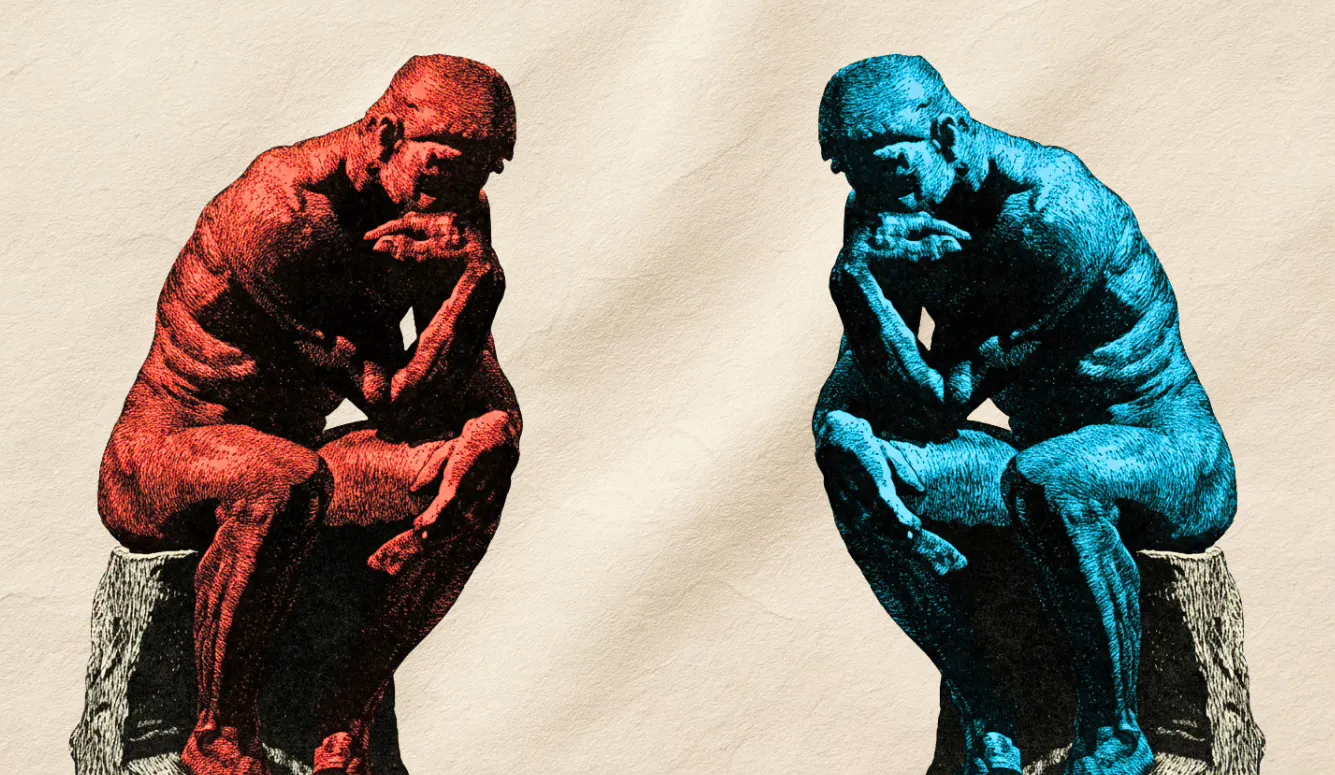
Czerwone i niebieskie, lustrzane postacie Myśliciela. Canva.


“Czy sztuka może przekazywać prawdę?”

Jerry A. Coyne


Ubiegłego roku w czerwcu uczestniczyłem w dorocznym spotkaniu Heterodox Academy, które tym razem odbyło się w Brooklynie, w Nowym Jorku. Zostałem zaproszony do udziału w panelu zatytułowanym „Obowiązki i odpowiedzialność uczonych”, którego członkami – oprócz mnie – byli Jennifer Frey, Louis Menand i John McWhorter. Wprowadzenia do panelu dokonali Alice Dreger i Colleen ErenU

Znałem wcześniej dwóch uczestników: Menanda (profesora anglistyki na Uniwersytecie Harvarda, uznanego autora i publicystę „New Yorkera”) oraz McWhortera (językoznawcę z Uniwersytetu Columbia, pisarza i felietonistę „New York Timesa”, regularnie pojawiającego się także na mojej stronie). To wystarczyło, by poczuć się onieśmielonym, więc przez kilka miesięcy zgłębiałem temat, koncentrując się na wolności akademickiej i wolności słowa. Część moich przemyśleń na ten temat zawarłem we wcześniejszych wpisach, które być może już czytaliście. Po drodze uświadomiłem sobie, że „zderzenie idei”, które często uznaje się za niezbędny (a może i wystarczający) warunek ujawniania się prawdy, w rzeczywistości nie prowadzi do żadnej prawdy. (To zderzenie, omawiane przez Johna Stuarta Milla i Olivera Wendella Holmesa, bywa podawane jako główny powód konieczności wolności słowa). Jednakże samo ścieranie się idei nie pozwala zbliżyć się do prawdy, chyba że dodamy do tego dowody empiryczne, niezbędne do odkrywania „prawd propozycjonalnych”, o których piszę w artykule poniżej.

To doprowadziło mnie do wniosku, że powszechnie przyjmowany cel istnienia uniwersytetów jest niepełny. Jak piszę w moim nowym tekście w Quillette (kliknij na link pod w zrzutem z ekranu):

Podobnie błędne jest powszechne twierdzenie, że najważniejszym celem uczelni wyższych jest poszerzanie, zachowywanie i szerzenie nowej wiedzy – czyli dążenie do „prawd uzgodnionych”. Znajdowanie prawdy nie jest celem literatury czy poezji, ani sztuk pięknych i graficznych, takich jak film, malarstwo, animacja, fotografia, ani sztuk performatywnych – teatru, tańca czy muzyki. Te dziedziny nie są stworzone do odkrywania prawdy i nie po to są nauczane. (Inne obszary, jak ekonomia czy socjologia, często zaliczane do „nauk humanistycznych”, mogą odkrywać prawdę, o ile opierają się na empirycznym badaniu rzeczywistości).

Prawd nie odkrywa bez dowodów nie tylko sztuka, ale również filozofia. (Matematyką się tu nie zajmuję – wciąż się nad nią zastanawiam). Nie rozwijam tematu filozofii w artykule, ale jak dotąd nie natknąłem się na przypadek, w którym filozofia sformułowałaby testowalną prawdę propozycjonalną bez odwoływania się do dowodów empirycznych. To jednak nie znaczy, że uważam, iż filozofii (ani szerzej – nauk humanistycznych) nie powinno się nauczać na uniwersytetach. Jak piszę w swoim artykule:

Najpierw powinienem odnieść się do zarzutu uprzedzeń wobec sztuki. To, że postrzegam sztukę jako źródło czegoś innego niż prawda w sensie naukowym, w żadnym razie nie oznacza, że ją lekceważę. Podczas studiów licencjackich uczęszczałem na zajęcia z tragedii greckiej, staroangielskiego (wciąż potrafię czytać Beowulfa w oryginale), literatury współczesnej, etyki filozoficznej i sztuk pięknych – i to właśnie one obudziły we mnie pragnienie dalszej nauki, ciągłej inspiracji i odkrywania sztuki. Dzięki sztuce i naukom humanistycznym czerpałem – i nadal czerpię – ogromną przyjemność i poczucie osobistego rozwoju. Nauka dała mi karierę, ale sztuka dała mi co najmniej tyle samo. Tyle że nie była to prawda.

Reszta artykułu, której tutaj nie streszczam tłumaczy – przynajmniej pośrednio – dlaczego wciąż uważam, że nauki humanistyczne (w tym wszystkie formy sztuki) powinny być nauczane w szkołach wyższych, bo celem takiej edukacji, choć nie jest odkrywanie prawdy, jest rozbudzanie w nas głodu doświadczenia.

Prawdziwa wartość sztuki nie polega na tym, że dostarcza wiedzy, której nie da się zdobyć inaczej, lecz na tym, że wywołuje emocjonalne i poznawcze reakcje u odbiorcy, często dając doświadczenie piękna. Sztuka może wzbogacać nasz sposób myślenia o nas samych i innych ludziach i – co istotne – pozwala patrzeć na świat cudzymi oczami. Poprzez refleksję to poszerzenie doświadczenia może pogłębiać naszą wiedzę o nas samych. Tyle że jest to wiedza subiektywna, a nie propozycjonalna.

Dziś rano pokazałem ten tekst znajomej, która zapytała mnie:

„Twoim głównym argumentem jest: ‘humanistyka ma inne zalety, więc powinniśmy ją utrzymać na uniwersytetach.’ Ale czy to wystarczające uzasadnienie? Sugerujesz, że humanistyka pozwala ludziom czuć i myśleć inaczej. Czy taki rozwój osobisty to coś, czemu uczelnie powinny poświęcać zasoby? Wielu administratorów i polityków dziś odpowiada: nie.”

Ale ja odpowiadam, że tak. Odpisałem jej:

Tak, to dobre pytanie i powinienem był się do niego odnieść. W pewnym sensie odpowiedź jest zawarta w tekście, gdy piszę, jak wiele dała mi osobiście nauka o sztuce – pobudziła we mnie chęć poznawania. Sztuka to jedno z największych dokonań człowieka i już z tego powodu powinna być nauczana na uniwersytetach. Jak napisałem – pozwala myśleć o sobie i innych z różnych perspektyw. I chociaż nie jest to prawda w sensie naukowym, to już samo to jest wartością edukacyjną. Podobnie z filozofią. Etyka była jednym z najważniejszych przedmiotów, jakie miałem na studiach – bez niej nie znałbym historii ludzkich poglądów na temat moralności, choć moralność, jak sądzę, jest czymś subiektywnym.

Uważam więc, że uniwersytety powinny pozostać takie, jakie są, z wyjątkiem nauczania religijnych dogmatów – jak ma to miejsce w niektórych szkołach teologicznych. Cel edukacji akademickiej wykracza poza poszerzanie, tworzenie, zachowywanie i szerzenie wiedzy (propozycjonalnej). Gdzie indziej mielibyśmy się uczyć o sztuce i humanistyce, jeśli nie na uniwersytetach?

Dodałem też, że choć filozofia – jak uważam – sama w sobie nie jest w stanie odkrywać prawd, to jest jednym z najcenniejszych narzędzi do oddzielania sensu od nonsensu w debacie i pomaga nam zbliżyć się do prawdy poprzez logiczne myślenie. Filozofia moralna była dla mnie szczególnie ważna, bo zmusiła mnie do zastanowienia się, dlaczego właściwie uważam pewne rzeczy za moralne lub niemoralne – i z jakiego powodu. To poszukiwanie, w którym wciąż trwam. Dlatego oczywiście uważam, że filozofia powinna pozostać w programie studiów. Jedyną rzeczą, którą należałoby usunąć, jest nauczanie religijnych dogmatów (a nie historii religii czy jej treści), które często są propagowane na wydziałach teologicznych.

Nagranie dyskusji panelowej trwa 75 minut, ale jeśli chcecie posłuchać fragmentu o prawdzie w humanistyce i zobaczyć, jak McWhorter i Menand próbują mnie symbolicznie „wysmarować smołą i wytarzać w pierzu”, zacznijcie od 22. minuty i słuchajcie przez około sześć minut. To właśnie w tej części – jak sądzę – McWhorter wypowiedział się w sposób, który podważył zarówno jego, jak i Menanda argumentację – co zaznaczam w ostatnim akapicie mojego tekstu:

Co ciekawe, uważam, że moje stanowisko „sztuka to nie prawda” nie jest tak skrajne i nierozsądne, jak sugerują moi przewracający oczami i wzruszający ramionami znajomi z humanistyki. Jak wspomniałem, to Menand i McWhorter zachowywali się w ten sposób podczas panelu, ale zauważam, że oni również zmagają się w swoim rozumowaniu z kwestią obiektywności i subiektywności. Na przykład w dyskusji o tym, czy symfonie Leonarda Bernsteina są lepsze niż jego musicale, McWhorter ostatecznie przyznał:
„Nie ma jednej prawdy: to kwestia wyrobionej opinii i tego, co sam uznałeś za wartościowe w sztuce.”

McWhorter wypowiada te słowa od 27:55. Nie musicie oglądać nagrania, ale przeczytajcie proszę cały tekst – to tylko około 2000 słów.


Link do oryginału: https://whyevolutionistrue.com/2025/12/26/my-article-in-quillette-can-art-convey-truth/

Why Evolution Is True, 26 grudnia 2025

Jerry A. Coyne – Emerytowany profesor na wydziale ekologii i ewolucji University of Chicago, jego książka “Why Evolution is True” (Polskie wydanie: “Ewolucja jest faktem”, Prószyński i Ska, 2009r.) została przełożona na kilkanaście języków, a przez Richarda Dawkinsa jest oceniana jako najlepsza książka o ewolucji.  Jerry Coyne jest jednym z najlepszych na świecie specjalistów od specjacji, rozdzielania się gatunków. Jest również jednym ze znanych “nowych ateistów” i autorem (wydanej również po polsku przez wydawnictwo “Stapis”) książki “Faith vs Fakt”. Jest wielkim miłośnikiem kotów i osobistym przyjacielem redaktor naczelnej.


Zawartość publikowanych artykułów i materiałów nie reprezentuje poglądów ani opinii Reunion’68,
ani też webmastera Blogu Reunion’68, chyba ze jest to wyraźnie zaznaczone.
Twoje uwagi, linki, własne artykuły lub wiadomości prześlij na adres:
webmaster@reunion68.com