Archive | October 2025

Hamas hands over the bodies of two more Israeli hostages

Hamas hands over the bodies of two more Israeli hostages

Joshua Marks


The terror group returned the bodies of Inbar Hayman and Sgt. Maj. Muhammad Al‑Atresh, leaving 19 bodies still to be returned.

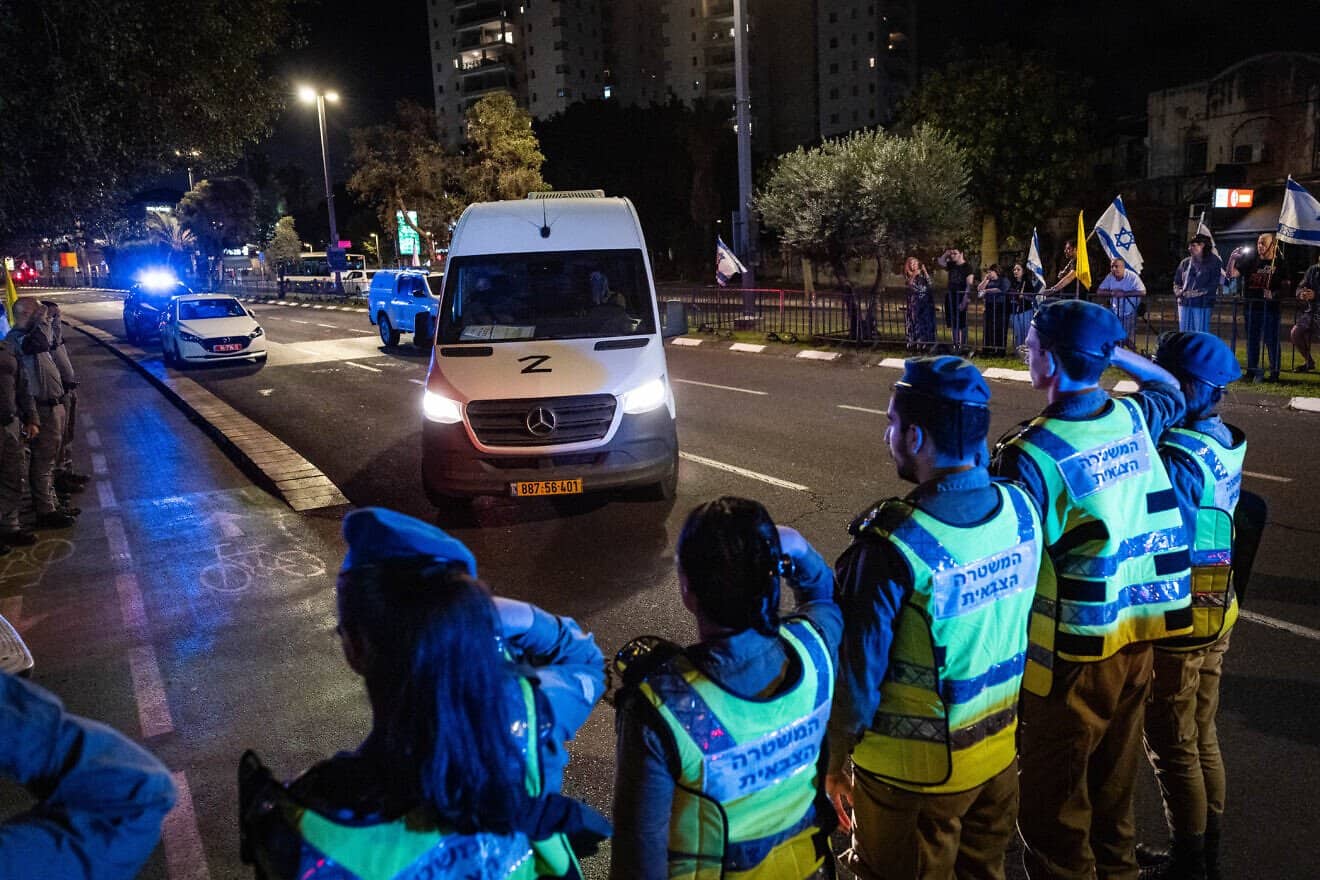
People and Israeli security forces pay their respects as the convoy carrying the bodies of hostages arrive at the Abu Kabir Forensic Institute in Tel Aviv, on Oct. 16, 2025. Photo by Yonatan Sindel/Flash90.

Hamas transferred to Israel the bodies of two more hostages on Wednesday night, leaving 19 still in Gaza.

Inbar Hayman and Sgt. Maj. Muhammad Al-Atresh were identified through forensic analysis of remains, the Israel Defense Forces announced Thursday morning.

Hayman, 27, was the last female hostage still in Gaza. She was murdered at the Nova music festival on Oct. 7, 2023, and her body was taken to Gaza, according to IDF intelligence. Her death was pronounced on Dec. 15, 2023. She leaves behind parents and a brother. 

Al-Atresh, from the Bedouin Negev village of Sa’wa, was a tracker in the IDF’s Northern Gaza Brigade. He was killed in combat on the morning of the massacre and his body taken to the Strip. He was 39 at the time of his death, which was pronounced on June 24, 2024. He leaves behind parents, siblings, two wives and 13 children.

The Hostages and Missing Families Forum paid tribute to the two slain hostages, writing on X that Hayman was a writer and artist who “brought her trademark energy and generosity to the Nova Festival, where she came to help others as a volunteer.” Al-Atresh was a “serious man who always took care of his entire family. Muhammad loved raising horses and dreamed of establishing a horse farm and a livestock area with sheep and goats.”

Israeli Defense Minister Israel Katz expressed sympathies to the families of Hayman and Al-Atresh in a Thursday morning X post, calling them heroes. He recalled hearing about Hayman’s talent in graffiti art from her family and her military service as a commander in the IDF’s Caracal Battalion.

“Ibrahim and Salem, Muhammad’s father and brother, accompanied me on numerous occasions, both in Israel and abroad, in meetings with world leaders to share Muhammad’s story,” Katz wrote. “In one of those meetings with the Belgian Foreign Minister at Kibbutz Nir Oz, Salem asked her to act to help free the hostages, and in a noble manner, he requested that she prioritize the release of the female hostages—at a time when he did not yet know that his brother had fallen.” 

Hamas is required to return all of the remaining hostages it and other Palestinian terrorist factions hold in Gaza as part of a U.S.-brokered ceasefire agreement.

The Israeli Prime Minister’s Office emphasized in a statement released on Thursday morning that Jerusalem “will not compromise” on Hamas’s obligation under the agreement to return all of the remains and “will spare no effort until we return all of the fallen hostages, every last one of them.”

Wednesday’s release followed an Arab media report earlier in the day that five bodies were expected to be redeemed, despite estimates in Israel that only two would be handed over. Hamas returned three bodies on Wednesday night, along with the remains of a Gazan man.

Four bodies were released on Tuesday. The bodies began to be released after all 20 live hostages were freed after the ceasefire went into effect on Oct. 10.

U.S. President Donald Trump said on Wednesday at the White House that “they are looking for them, absolutely” in response to a reporter’s question about the pace of the returns, calling it a “gruesome process.”

“They are digging … there are areas where they are digging and they are finding a lot of bodies, then they have to separate the bodies. You wouldn’t believe this, and some of those bodies have been there a long time and some of them are under rubble. They remove rubble. But there are graves and some are in tunnels, that died in tunnels that are way down under the earth, and the tunnels are like 3 feet high … they lived like this for a long period of time,” he said, adding, “It’s a horrible atrocity.”


Zawartość publikowanych artykułów i materiałów nie reprezentuje poglądów ani opinii Reunion’68,
ani też webmastera Blogu Reunion’68, chyba ze jest to wyraźnie zaznaczone.
Twoje uwagi, linki, własne artykuły lub wiadomości prześlij na adres:
webmaster@reunion68.com


Israel faces diplomatic divide in Latin America 


Israel faces diplomatic divide in Latin America

Shimon Sherman


“When it comes to Israel’s relations with Latin American countries, it mostly depends on who’s in power.”

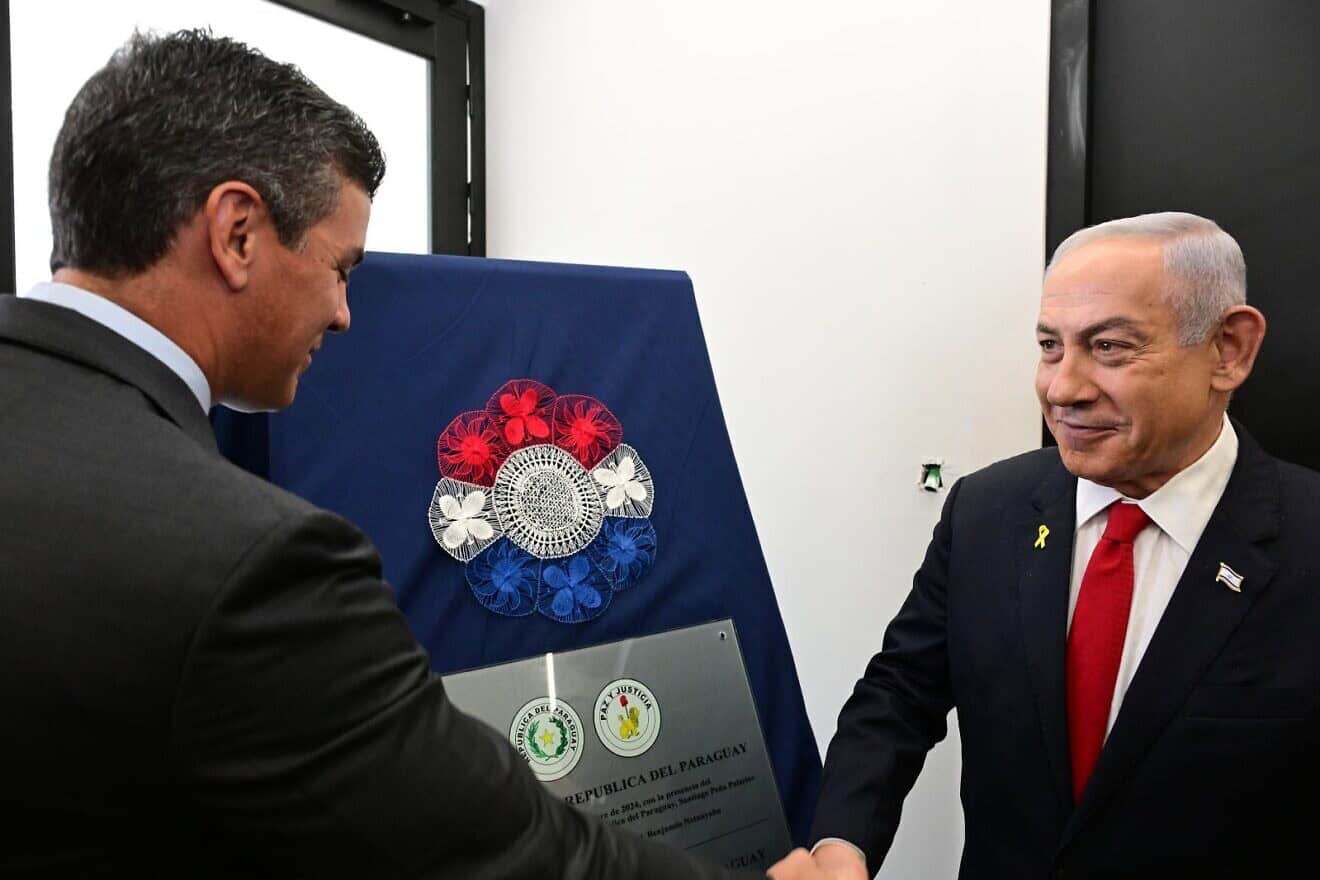
Israeli Prime Minister Benjamin Netanyahu and Paraguayan President Santiago Peña inaugurate the embassy of Paraguay in Jerusalem on Dec. 12, 2024. Credit: Amos Ben-Gershom/GPO.

Colombia’s cancellation of its free-trade agreement with Israel and the expulsion of the remaining Israeli diplomats have become the latest signal of a broader diplomatic shift sweeping Latin America. The move, officially framed as a response to the interception of a Gaza-bound flotilla carrying Colombian citizens, extends a pattern of distancing that began soon after the Gaza war erupted last year. 

Across the continent, governments have moved in sharply divergent directions. Left-leaning administrations in Brazil, Chile, Bolivia and Colombia have hardened their criticism of Israeli policy, recalling ambassadors and suspending cooperation in defense and trade. Others, most notably Argentina and Paraguay, have taken the opposite path, deepening partnerships, opening or relocating embassies in Jerusalem, and emphasizing technological and agricultural collaboration. What once was a region of cautious neutrality has, within two years, split into two discernible camps. 

The Colombian announcement did not cause that division, but underscored its long-term implications. A series of steps, diplomatic recalls, trade freezes and symbolic gestures has transformed Latin America from a secondary theater of Israeli foreign policy into a polarized hotbed of diplomatic threats. 

Before the Gaza war, Israel’s relations with Latin America were defined by a mix of strategic cooperation and political restraint. Professor Raanan Rein, a historian of modern Spain and modern Latin America at the University of Florida and former Vice President of Tel Aviv University, noted that “Israel has had very strong ties with most Latin American countries. In fact, the UN vote to establish Israel largely passed because of the support of most Latin American countries. Over the years, the relationship became more important and more substantial.”

The region served as an important market for Israeli defense exports and technology, while Latin states benefited from Israeli agricultural innovation, irrigation systems and intelligence training. Countries such as Colombia and Brazil were among Israel’s most consistent security partners. Bogotá’s purchase of Israeli Kfir fighter jets and counter-insurgency technologies reflected decades of military exchange, while Brazilian firms cooperated on water conservation, cybersecurity and precision agriculture. 

Mauricio Dimant, Research Fellow of Latin American Studies at Hebrew University, noted that “after democratization in the 1980s, poverty became the central challenge in Latin America. For many countries, leaders saw technology as the way out, and Israel as proof that innovation can overcome limitations. They saw Israel as a positive example to imitate.” This network of trade and defense links gave Israel a quiet but enduring foothold in the hemisphere. 

Diplomatically, most Latin American governments maintained what was often described as a “balanced” line. They endorsed a two-state solution and expressed solidarity with Palestinian aspirations, yet generally avoided public confrontation with Israel. Even under left-leaning administrations, cooperation in areas like counter-terrorism, border security and innovation continued. The tone of Latin foreign ministries was pragmatic, recognizing Israel as a valuable partner without allowing Middle Eastern politics to dominate bilateral agendas. 

There were, however, periodic strains. Condemnations of building in Judea and Samaria, and disputes over U.N. resolutions, occasionally generated tension, but these rarely escalated to diplomatic breaks. Most states preferred to register symbolic protest through votes or statements while keeping commercial and security channels intact. By the eve of the Gaza war, Israel’s Latin American posture rested on that pragmatic equilibrium: strong economic integration and operational cooperation, offset by rhetorical criticism that seldom translated into policy. 

Dimant explained that historically, Latin American countries have determined their Middle East foreign policy through their relations with Washington. According to Dimant, governments that were on good footing with the United States have traditionally mirrored that positive relation with regard to Israel. “Latin American countries usually shape their policy toward Israel through their policy toward the United States. The U.S. position sets the framework, and within that, they decide how close or distant to be with Jerusalem,” he told JNS. 

However, the outbreak of the Gaza war in late 2023 set off a cascade of diplomatic reactions across Latin America that quickly reshaped Israel’s position in the region. Within weeks, several governments took unprecedented steps, turning long-standing criticism into concrete action. Bolivia became the first to sever relations outright, announcing in October 2023 that it was cutting all diplomatic ties and suspending security cooperation. Chile, Colombia and Honduras soon followed with the recall of their ambassadors and the downgrading of official representation. Across the hemisphere, foreign ministries issued statements condemning Israeli operations in Gaza and calling for international investigations. Multiple states backed legal initiatives at the International Court of Justice and the International Criminal Court, framing the conflict as a matter of global accountability rather than regional diplomacy. 

By early 2024, these actions had begun to cohere into a regional pattern. Left-leaning administrations increasingly linked their Middle East positions to domestic narratives centered on anti-imperialism, anti-westernism, socialist economic policy and a rejection of long-standing U.S. hegemony in the region. Dimant explained that the Gaza conflict became a political shorthand that allowed leaders in Brasília, Santiago, La Paz and Bogotá to project what they called “moral leadership” beyond their borders. “For many left-wing governments, attacking Israel plays well at home,” Dimant observed. “It connects them to the language of anti-imperialism and shows their base they’re on the ‘right side’ of global issues,” he observed. 

Emmanuel Navon, a scholar of international relations at Tel Aviv University and a senior fellow at the Jerusalem Institute for Strategy and Security (JISS), added to this assessment, explaining that the primary motivating factor for the anti-Israel stance was ideological.

“It’s emotional and ideological; they have a very strong anti-U.S. position, and anything that’s aligned with the U.S. is automatically evil. They think in black and white, and for them, Israel clearly falls on the side of the black. It’s not a question of interest, just of ideology,” Navon told JNS. “The left in Latin America is generally very anti-U.S., anti-Western, and anti-capitalist. On an ideological level puts them on the anti-Israel side as well,” he added. 

Navon pointed out that in addition to the ideological motivator, economic incentives had also shifted, creating a perfect storm of anti-Israeli sentiment. “There were some economic incentives for these countries to seek a good relationship with Israel, but overall, the anti-Israel axis has been putting a lot more money into these countries. Hezbollah has a significant economic empire in South America. Iran has also historically put a lot of money into these countries. Most importantly, China has had massive investments in this part of the world in recent years,” Navon explained. “Compared to all of these influences, the economic benefit of aligning with Israel simply disappeared,” he said. 

As all these factors came together, certain countries in Latin America consolidated into a significant anti-Israel diplomatic bloc. In the region’s largest economy, Brazil, President Luiz Inácio Lula da Silva described Israel’s campaign in Gaza as “a genocide against innocent women and children,” remarks that prompted Israel to recall its ambassador and formally protest to Brasília. Rein explained that in addition to ideological motivators, Brazil’s anti-Israel stance is also driven by political ambition. “Brazil has sought to establish itself as a political leader in the so-called third world, which influences it to align itself with many countries that are naturally predisposed to an anti-Israel position. This is a major driver in Brazilian foreign policy in the Middle East,” Rein told JNS. 

Meanwhile, Chile’s President Gabriel Boric, long vocal on Middle East issues, called the conflict “an unacceptable brutality that demands accountability,” pairing that statement with the withdrawal of Chile’s military attachés from Tel Aviv. Rein explained that Chile’s antagonism towards Israel is likely driven by an additional demographic factor. “In Chile, there’s a very large Palestinian diaspora community, which obviously drives the government to take a much more anti-Israel stance,” he said. 

Colombia’s Gustavo Petro struck an even harder tone, declaring that “no trade is possible with those who massacre a people” as he announced the cancellation of his country’s free-trade agreement. “In Brazil, Chile, and Colombia,” said Dimant, “the left sees the Palestinian struggle as part of the same story as colonialism. It’s not just foreign policy or political interests, it’s political identity.” 

Colombia’s rupture with Israel in late 2025 offered a concentrated view of how the regional backlash against Jerusalem moved from diplomatic protest to formal disengagement on the back of ideological grievance. The decision to cancel the free-trade agreement and expel Israeli diplomats was framed domestically as an act of “moral consistency” rather than economic calculation. While the measure carried procedural hurdles, requiring congressional approval and a six-month termination period, it was presented by Petro as a statement of national principle, signaling that trade considerations would not override solidarity with Gaza. In practice, the move added little material pressure on Israel: bilateral commerce had already slowed, and most defense programs were dormant. Its significance lay in the message it sent to the Colombian electorate and other left-leaning governments.

On the other side of the spectrum, a smaller group of leaders has turned open support for Israel into a defining feature of their foreign policy. Argentina’s President Javier Milei pledged “unconditional solidarity with Israel as a natural ally of the free world,” and launched the Isaac Accords initiative to formalize cooperation among pro-Israel governments in the region. Paraguay’s President Santiago Peña, who reopened his embassy in Jerusalem in 2024, framed the move as “a reaffirmation of friendship and shared faith.” Even Uruguay’s Luis Lacalle Pou, while maintaining a more neutral posture, emphasized that his country sought “dialogue and coexistence, not rupture.” 

Navon explained that the diplomatic situation in Latin America can be very dynamic for Israel. “When it comes to Israel’s relations with Latin American countries, it mostly depends on who’s in power. These countries do not have an established pro or anti position. It generally shifts from one government to another,” he explained. Dimant agreed with this assessment, saying, “It’s not the people, it’s the governments. Public opinion in Latin America isn’t necessarily anti-Israel; the vast majority of people really don’t care about these issues. The changes come from whoever holds power,” he noted. 

In Brazil, for example, the government’s confrontational posture has faced resistance from segments of the opposition that favor a return to pragmatic engagement. Former president Jair Bolsonaro, now leading Brazil’s conservative bloc, praised Israel throughout his tenure and reiterated in 2024 that “Brazil owes its democracy to Judeo-Christian values and must not abandon Israel.” Similar voices remain active in Chile, where right-leaning figures such as José Antonio Kast criticized President Gabriel Boric’s decision to withdraw defense attachés, calling it “a symbolic gesture that damages Chile’s credibility.” Even in Colombia, where the rupture has been sharpest, opposition lawmakers have argued that canceling the trade agreement undermines national interests. Senator María Fernanda Cabal described the move as “a populist overreach that weakens Colombia’s global standing.” 

Rein emphasized that there is a wide gap between government policy and popular sentiment in Latin America. “One has to distinguish between the position of one government or another in a particular country and the attitude of the general population toward the state of Israel,” he said. “Most Latin Americans are not particularly interested in the Middle East. It’s very far away and it has very little impact on their lives. However, the governments do have an interest in playing a role on the international scene and establishing their importance in foreign policy,” he added.

However, Navon also observed that for some countries, the anti-Israel agenda was likely to be a long-term fixture of their foreign policy. “Most of these countries will shift back and forth when Israel’s policy depends on the government. Some countries, like Chile and Venezuela, are more entrenched. Chile has a very large Palestinian community, Venezuela is an anti-U.S. dictatorship, with the regime not going anywhere in the near future, so those countries are pretty established in the anti-Israel camp. With everyone else, it depends on the ideological background of the government,” he explained.


Shimon Sherman is a columnist covering global security, Middle Eastern affairs, and geopolitical developments. His reporting provides in-depth analysis on topics such as the resurgence of ISIS, Iran’s nuclear ambitions, judicial reforms in Israel, and the evolving landscape of militant groups in Syria and Iraq. With a focus on investigative journalism and expert interviews, his work offers critical insights into the most pressing issues shaping international relations and security.


Zawartość publikowanych artykułów i materiałów nie reprezentuje poglądów ani opinii Reunion’68,
ani też webmastera Blogu Reunion’68, chyba ze jest to wyraźnie zaznaczone.
Twoje uwagi, linki, własne artykuły lub wiadomości prześlij na adres:
webmaster@reunion68.com


Nobel po sąsiedzku


Nobel po sąsiedzku

Sylwia Góra


„László Krasznahorkai to wielki pisarz epicki, wpisujący się w środkowoeuropejską tradycję sięgającą od Kafki po Thomasa Bernharda. Cechą charakterystyczną tej twórczości jest absurdalność i groteskowa przesada” – uzasadniała Szwedzka Akademia, ogłaszając tegorocznego laureata.

Choć o Literackim Noblu dla László Krasznahorkaiego mówiło się już od jakiegoś czasu, to można powiedzieć, iż Akademia Szwedzka znów zaskoczyła.

To, że w tym roku będzie to pisarz, a nie pisarka, można było przewidzieć. Od kilku lat nagradzano na przemian kobietę i mężczyznę. Natomiast biorąc po uwagę kryzys demokracji, wzrost populizmu, upadek świata, który wydawał się znany i bezpieczny, również wzrost wpływu dezinformacji i sztucznej inteligencji na nasze codzienne życie, można było sądzić, że Akademia opowie się bardziej politycznie, czyli nagrodzi przywoływanego już od kilku lat Serhija Żadana lub Salmana Rushdiego.

Zdecydowała się jednak zatrzymać gdzieś w pół drogi. To ukłon w stronę Europy Środkowo-Wschodniej, która w ostatnich latach pokazuje dwa różne oblicza. Z jednej strony, polityczna wygrana lub duży wzrost znaczenia populistów (Słowacja, Czechy, Polska i Węgry). Z drugiej — kraje takie jak Mołdawia, które wygrywają z rosyjską propagandą i wciąż wierzą w to, że wejście do Unii Europejskiej to dla nich najlepsza szansa na zmianę.

Oczywiście mówimy o Nagrodzie Nobla w dziedzinie literatury, ale trudno dziś myśleć o literaturze w oderwaniu od tego, co dzieje się na świecie. Dziś to ona bardzo często go nam tłumaczy, oswaja z innością i pozwala zrozumieć człowieka na drugim końcu globu. Tym razem nam, w Polsce, jest nieco łatwiej.

László Krasznahorkai w Polsce

Po pierwsze, mamy polskie przekłady książek Noblisty. Wydawnictwo W.A.B. przetłumaczyło trzy książki László Krasznahorkaiego. W 2004 roku pojawiło się „Szatańskie tango”, w 2007 „Melancholia sprzeciwu”, w 2011 „Woja i wojna”, a na koniec tego roku wydawnictwo Czarne zapowiedziało wydanie „A świat trwa”. Ten ostatni tytuł otrzymał zresztą w 2015 roku Międzynarodową Nagrodę Bookera. Do tego możemy dopisać adaptacje książek Węgra, na przykład „Szatańskie tango” w reżyserii Béli Tarra.

Po drugie, mamy jednak wspólne doświadczenie typowe dla krajów postsowieckich, związane z kwestiami tożsamości, języka, przemocy. Z pewnością polscy czytelniczka i czytelnik odnajdą w książkach tegorocznego Noblisty własne doświadczenia.

W dużej mierze są to opowieści o ubogich mieszkańcach podupadłej wioski, którzy czekają na swojego mesjasza. Historia obracającego się w ruinę miasta, do którego przyjeżdżają tajemniczy ludzie siejący zniszczenie, o uciekinierach i migrantach, którzy szukają dla siebie lepszego życia. A to wszystko okraszone odrobiną surrealistycznej atmosfery.

„Siła sztuki wobec apokaliptycznego terroru”

Krytyczki i krytycy lubią zresztą porównywać Krasznahorkaiego z Gogolem, Melville’em i Kafką.

W uzasadnieniu Komitet Noblowski przekonywał, że nagrodę przyznano „za fascynującą i wizjonerską twórczość, która w obliczu apokaliptycznego terroru potwierdza siłę sztuki”.

Sam Krasznahorkai, choć urodził się w Gyuli na Węgrzech w 1954 roku, po raz pierwszy opuścił komunistyczne Węgry w 1987 roku, spędzając rok w Berlinie Zachodnim w ramach stypendium, później jeździł po Europie, Stanach Zjednoczonych i Azji Wschodniej. Perspektywa człowieka w podróży zaczęła się zresztą coraz mocniej uwidaczniać w jego kolejnych książkach.

Nie pozostaje nam zatem nic innego jak czekać na kolejne tłumaczenia książek Noblisty, bo trochę ich jeszcze zostało (a od lat obserwujemy taki trend na rynku wydawniczym) oraz wierzyć, że takie nagrody wciąż mają wpływ na to, że czytamy dobrą literaturę.


Sylwia Góra – Szefowa działu „Czytając” w „Kulturze Liberalnej”, kulturoznawczyni, literaturoznawczyni, doktorka nauk humanistycznych, absolwentka Polskiej Szkoły Reportażu, autorka książki „Ewa Kierska. Malarka melancholii” [Universitas 2020] oraz „Kobiety, których nie ma. Bezdomność kobiet w Polsce” [Marginesy 2022], animatorka kultury, miłośniczka literatury pisanej przez kobiety oraz biografii nieznanych i zapomnianych artystek.


Zawartość publikowanych artykułów i materiałów nie reprezentuje poglądów ani opinii Reunion’68,
ani też webmastera Blogu Reunion’68, chyba ze jest to wyraźnie zaznaczone.
Twoje uwagi, linki, własne artykuły lub wiadomości prześlij na adres:
webmaster@reunion68.com


Kto nie powinien odgrywać roli w powojennej Gazie: Lisy pilnujące kurnika

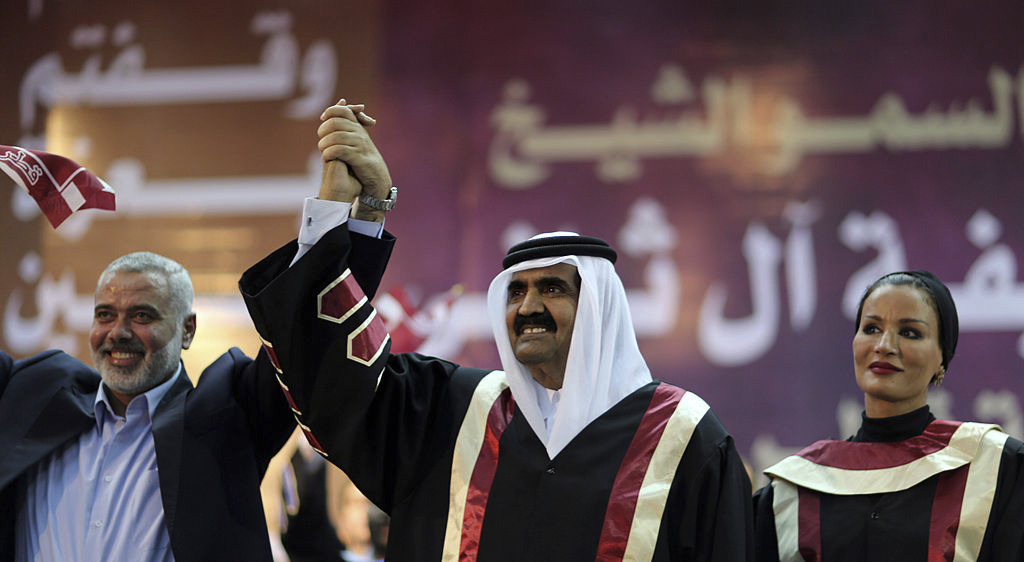
Na zdjęciu: ówczesny emir Kataru, szejk Hamad ibn Chalifa al-Sani trzyma za rękę ówczesnego przywódcę Hamasu Ismaiła Haniję podczas ich wizyty na Uniwersytecie Islamskim w Strefie Gazy, 23 października 2012 r. (Zdjęcie: Wissam Nassar/AFP via Getty Images)


Kto nie powinien odgrywać roli w powojennej Gazie: Lisy pilnujące kurnika

Khaled Abu Toameh
Tłumaczenie: Andrzej Koraszewski


Na ile poważnie należy traktować słowa prezydenta Autonomii Palestyńskiej Mahmuda Abbasa, że wspierany przez Iran Hamas “nie będzie miał roli w rządzeniu” Strefą Gazy i musi przekazać swoją broń Autonomii? Ani trochę.

Mówiąc wprost: Abbas nie jest zainteresowany powrotem do stołu negocjacyjnego — od lat czeka, aż ONZ i inne międzynarodowe instytucje narzucą Izraelowi rozwiązanie, dokładnie tak, jak zasugerował to w zeszłym miesiącu prezydent Francji Emmanuel Macron. Ostatnie jednostronne uznania “państwa palestyńskiego” przez Francję, Wielką Brytanię, Kanadę, Australię i inne państwa tylko utwierdziły Abbasa w przekonaniu, że nie warto wznawiać jakiegokolwiek procesu pokojowego z Izraelem. W końcu — po co miałby z kimkolwiek negocjować, skoro Zachód wręcza mu państwo na srebrnej tacy, bez żadnych warunków?

Plan pokojowy Trumpa prezentuje się znakomicie, dopóki sam Trump, izraelski premier Benjamin Netanjahu i Tony Blair pilnują, by wszystko pozostało na swoim miejscu. Ale co się stanie, gdy ich zabraknie? Jak głosi popularne powiedzenie na Bliskim Wschodzie: “Wy macie zegarki, a my mamy czas”.

Abbas – i ktokolwiek po nim przyjdzie – zawsze będzie wolał pokój z Hamasem niż z Izraelem. Wie, że Hamas wciąż cieszy się szerokim poparciem wśród Palestyńczyków, z których większość – według sondaży – stanowczo sprzeciwia się rozbrojeniu tej organizacji terrorystycznej.

Ci, którzy twierdzą, że Hamas nie powinien odgrywać żadnej roli w powojennym rządzeniu Gazą, powinni również domagać się wykluczenia Autonomii Palestyńskiej i Kataru z tego procesu. Dopuszczenie Kataru lub Abbasowskiej Autonomii do Strefy Gazy oznacza tylko otwarcie tylnych drzwi dla Hamasu.

Na ile poważny jest prezydent Donald Trump w kwestii swojego planu pokojowego? Podczas gdy wszyscy ochoczo świętują zakończenie “fazy pierwszej” – uwolnienie izraelskich zakładników w zamian za 2 000 więzionych palestyńskich terrorystów – pozostała część planu dopiero się klaruje.

Plan Trumpa rozpoczął się od ultimatum: jeśli Hamas nie uwolni wszystkich zakładników w ciągu 72 godzin, Izrael otrzyma błogosławieństwo USA, by “skończyć tę sprawę” z pełną mocą.

Godne uznania jest to, że Trump pragnie pokoju i że w swojej pierwszej kadencji doprowadził do powstania Porozumień Abrahama. Teraz udało mu się wynegocjować uwolnienie wszystkich zakładników do 13 października. Jeśli jednak negocjacje będą zmierzały w obecnym kierunku, to pokój będzie ostatnią rzeczą, jaką Trump osiągnie.

Głównym problemem jest to, że Stany Zjednoczone chcą współpracować z krajami wspierającymi terrorystów – takimi jak Katar, Turcja i Egipt – przy czym Katar, jak się dowiadujemy, planował nawet obalić egipski rząd w nowej “Arabskiej Wiośnie”. Gdzie więc taka współpraca może nas zaprowadzić?

Katar ma bogatą historię promowania i finansowania islamistycznych ruchów terrorystycznych – ISIS, Talibanu, Hamasu, Frontu Al-Nusra (odłamu Al-Kaidy w Syrii), bojówek w Libii oraz Bractwa Muzułmańskiego. Często występuje w roli “strażaka-podpalacza”.

Prezydent Instytutu Badań Mediów Bliskiego Wschodu (MEMRI), Yigal Carmon, ostrzega:

“Nie ma takiej propagandowej sztuczki, której nie zastosowaliby [Turcja Erdoğana, Katar i obecnie Syria Al-Sharaa], by udawać przyjaciół Ameryki. Sztuczka Kataru jest już dobrze znana: najpierw tworzy problem – jak wieloletnie wspieranie Talibanu aż do ich przejęcia Afganistanu, przy amerykańskich ofiarach – a potem pomaga ewakuować amerykańskich żołnierzy, co Trump nazwał ‘największym upokorzeniem w historii amerykańskiej polityki zagranicznej’.

Katar robi to wszędzie. Wspiera Hamas, który dokonał zbrodni z 7 października, a potem występuje jako mediator. Katar wspiera każdą islamistyczną organizację terrorystyczną przeciwko jej zsekularyzowanym przeciwnikom.”

Propozycje Kataru dotyczące “porozumienia” w Afganistanie zakończyły się tym, że Talibowie są dziś silniejsi niż kiedykolwiek – a 20 lat amerykańskich inwestycji w prawa człowieka, pieniądze i życie poszły na marne.

Carmon pisze również:

“W każdym kraju muzułmańskim, gdzie toczy się walka między islamistami a sekularystami, Katar wspiera islamistów – jak w Gazie, gdzie przez lata wspierał Hamas, budując jego siłę militarną i umożliwiając atak z 7 października… Wszędzie tam, gdzie Katar może zaangażować swoje pieniądze – czy to finansując libańską armię, odbudowę Gazy, czy inwestując na Zachodzie – robi to szerząc przy okazji radykalny wahhabizm. W przypadku Gazy, Libanu i być może Syrii, jedynie napędza nowy cykl islamizmu i terroryzmu.”

Katar wydał już podobno 100 miliardów dolarów w samych Stanach Zjednoczonych tylko po to, by kupić tam wpływy.

Trump liczy na Katar jako jednego z głównych sponsorów odbudowy Gazy. Jeśli Katar przyjmie tę rolę, będzie też oczekiwał udziału we władzy – co oznacza współdecydowanie o tym, kto jeszcze będzie mógł rządzić. Kandydatami są: Autonomia Palestyńska, 2 000 powracających terrorystów, a jeśli nie bezpośrednio Hamas, to jego nowe wcielenie. Można by nazwać tę strukturę “Demokratyczną Republiką Gazy”, ale pozostanie ona domem dla terrorystów oddanych idei zniszczenia Izraela dla chwały islamu – z przemytem broni takim jak przed masakrą z 7 października. Katar – według niektórych doniesień – ma ambicje, by zastąpić Arabię Saudyjską w roli strażnika islamskich świętości.

W kurorcie Szarm el-Szejk w Egipcie negocjacje prowadzą obecnie: prezydent Egiptu Abdel Fattah el-Sisi; Katar, Turcja, Autonomia Palestyńska-Hamas oraz inne grupy islamistyczne. Ponieważ Trump nie oczekuje, że Egipt lub Turcja sfinansują odbudowę Gazy, przyszłość tej enklawy spoczywa głównie w rękach Kataru i Autonomii Palestyńskiej.

Carmon zauważył 22 lipca:

“Erdoğan udawał sojusznika Trumpa, pomagając mu zlikwidować dowódcę ISIS Abu Bakra Al-Baghdadiego, zdobywając w ten sposób jego zaufanie. Ale zrobił to we własnym interesie – Al-Baghdadi ogłosił się ’emirem wiernych’, co Erdoğan postrzegał jako niepotrzebną konkurencję. Nie zrobił tego z sympatii do Trumpa.”

Erdoğan od dawna rości sobie też prawo do Jerozolimy jako spuścizny po Imperium Osmańskim, które chciałby odtworzyć – z samym sobą jako sułtanem.

Na ile poważnie należy traktować deklaracje prezydenta Autonomii Palestyńskiej Mahmuda Abbasa, że wspierany przez Iran Hamas “nie będzie miał roli” w rządzeniu Gazą i musi przekazać broń PA? Ani trochę.

W lipcu 2024 roku, niemal rok po ataku Hamasu z 7 października 2023 na Izrael, rządząca frakcja Abbasa, Fatah, podpisała – pod egidą Chin – porozumienie z Hamasem o wspólnym zarządzaniu Strefą Gazy po zakończeniu wojny. Warto przypomnieć, że zbrodnie Hamasu z 7 października obejmowały zamordowanie 1200 Izraelczyków i cudzoziemców oraz uprowadzenie 251 osób.

Zgodnie z porozumieniem, nazwanym Deklaracją Pekińską:

“Tymczasowy palestyński rząd jedności narodowej zostanie utworzony za zgodą wszystkich palestyńskich frakcji, decyzją prezydenta [Abbasa].”

Jak komentował Al-Monitor:

“Taki rząd ma sprawować władzę na całym terytorium palestyńskim, w tym w Strefie Gazy i na Zachodnim Brzegu, zjednoczyć wszystkie palestyńskie instytucje, rozpocząć proces odbudowy oraz przygotować wybory powszechne.”

Abbas był zatem gotów utworzyć wspólny rząd z Hamasem zaledwie 10 miesięcy po masakrze, w której zginęły tysiące Izraelczyków i Palestyńczyków. Co istotne, Abbas nie wykluczył, że Hamas może otrzymać rolę nie tylko w Gazie, ale także na Zachodnim Brzegu – jak przewiduje Deklaracja Pekińska.

Dlatego też jego niedawne oświadczenie, że Hamas “nie będzie odgrywać roli w rządzeniu”, należy traktować z przymrużeniem oka – czy raczej, jak mówią na Bliskim Wschodzie, “z łyżką hummusu”. Abbas wypowiedział te słowa w przemówieniu wideo wygłoszonym podczas sesji Zgromadzenia Ogólnego ONZ w zeszłym miesiącu.

Sekretarz Generalny ONZ António Guterres powitał porozumienie PA–Hamas z entuzjazmem. W oświadczeniu ONZ z 24 lipca 2024 r.:

“W odpowiedzi na pytania podczas codziennego briefingu w Nowym Jorku rzecznik ONZ Stéphane Dujarric poinformował, że António Guterres ‘z zadowoleniem przyjął podpisanie Deklaracji Pekińskiej przez palestyńskie frakcje’, dodając, że jest to ‘ważny krok na drodze do palestyńskiej jedności’… ‘Sekretarz Generalny zachęca wszystkie frakcje do przezwyciężenia różnic poprzez dialog i wzywa do wdrożenia zobowiązań przyjętych w Pekinie’, powiedział Dujarric.”

Innymi słowy – ONZ nie ma żadnego problemu z tym, by Hamas odgrywał rolę w rządzeniu Gazą, mimo że organizacja ta odpowiada za masakrę z 7 października i wojnę z Izraelem.

Stanowisko ONZ stoi w sprzeczności z 20-punktowym planem pokojowym Trumpa, zgodnie z którym:

“Gazą będzie tymczasowo zarządzać ponadnarodowy, technokratyczny, apolityczny komitet palestyński. Komitet ten będzie się składał z wykwalifikowanych Palestyńczyków i ekspertów międzynarodowych, pod nadzorem i kontrolą nowego międzynarodowego ciała przejściowego – ‘Rady Pokoju’, której przewodniczyć będzie prezydent Donald J. Trump. W skład wejdą też inni przywódcy państw, w tym były premier Wielkiej Brytanii Tony Blair.”

Na początku tego tygodnia, sekretarz stanu USA Marco Rubio powtórzył, że konieczne jest, aby “Hamas nie miał żadnej roli w palestyńskim rządzie”. Rubio wypowiedział się w ten sposób w drugą rocznicę masakry z 7 października, podczas rozmowy telefonicznej z brytyjską minister spraw zagranicznych Yvette Cooper.

Plan pokojowy Trumpa wygląda dobrze – ale tylko dopóki Trump, Netanjahu i Blair pilnują jego realizacji. Co się stanie, gdy ich zabraknie? Jak głosi bliskowschodnie przysłowie: “Wy macie zegarki, a my mamy czas.”

Chociaż Abbas potrzebował niemal dwóch lat, by potępić zbrodnie Hamasu, czołowi działacze Fatahu przez cały ten czas wyrażali poparcie dla tej organizacji terrorystycznej.

Abbas Zaki, weteran Komitetu Centralnego Fatahu (najwyższego organu decyzyjnego), bronił ataku z 7 października i chwalił zbrojne skrzydła Hamasu oraz Palestyńskiego Islamskiego Dżihadu – drugiej co do wielkości grupy terrorystycznej w Gazie:

“Ruch oporu przygotował i zaplanował Operację Potop Al-Aksa z jasnymi celami, w tym zniesieniem izraelskiej blokady, pełnym wycofaniem się z Zachodniego Brzegu i wymianą więźniów.”

Dżibril Radżub, inny wysoki rangą działacz Fatahu i były szef palestyńskiej Służby Bezpieczeństwa Prewencyjnego, powiedział w tym tygodniu:

“7 października był częścią [palestyńskiej] wojny obronnej, która trwa od 1948 roku. Zbrojna walka [z Izraelem] nie może być potępiona.”

Zarówno Zaki, jak i Radżub wcześniej publicznie popierali utworzenie rządu jedności z Hamasem. W zeszłym roku Zaki powiedział:

“My (Fatah), Hamas, Islamski Dżihad i każda walcząca frakcja stanowimy jedność.”

Radżub dodał:

“Każde rozwiązanie konfliktu w Gazie musi uwzględniać Hamas, ponieważ jego ideologiczne i oporowe korzenie są głęboko zakorzenione w strukturze społeczeństwa palestyńskiego.”

Jeśli Abbas naprawdę nie chce, by Hamas uczestniczył w rządzeniu, to dlaczego – odkąd Hamas całkowicie wyparł PA ze Strefy Gazy w wyniku zamachu stanu w 2007 roku – nieustannie dążył przez prawie dwie dekady do zawarcia z nim “porozumień pojednawczych”?

Przykłady:

  • 2006 – po wygranej Hamasu w wyborach parlamentarnych, Abbas i lider Hamasu Ismail Haniyeh zawierają porozumienie o utworzeniu rządu jedności narodowej.
  • 2007 – podpisanie Porozumienia z Mekki: koniec starć zbrojnych Fatahu i Hamasu, powstanie rządu jedności.
  • 2008 – Deklaracja z Sany w Jemenie: próba zakończenia sporów.
  • 2011 – porozumienie w Egipcie o wspólnym “przejściowym” rządzie technokratów.
  • 2012 – Porozumienie z Dohy: ponowne plany wspólnego rządu i wyborów.
  • 2014 – kolejna umowa o “pojednaniu” i technokratyczny rząd jedności.
  • 2017 – nowe porozumienie z udziałem Kataru, ZEA i Egiptu.
  • 2020 – wspólna konferencja prasowa Fatahu i Hamasu: zapowiedź nowego dialogu.
  • 2022 – porozumienie w Algierze: wybory prezydenckie i parlamentarne.

Choć porozumienia te nigdy nie zostały w pełni wdrożone, pokazują, że Abbas więcej czasu poświęcił na dogadywanie się z Hamasem niż na poszukiwanie pokoju z Izraelem.

Można bezpiecznie założyć, że gdy wojna w Gazie się skończy, Abbas i jego lojaliści z Fatahu wznowią działania na rzecz “pojednania” z Hamasem pod pretekstem zakończenia podziałów wewnętrznych wśród Palestyńczyków.

Wszystkie rozmowy pokojowe między Izraelem a Autonomią Palestyńską są zawieszone od 2014 roku – czyli od momentu, gdy Abbas zawarł porozumienie z Hamasem.

Mówiąc wprost – Abbas nie chce wracać do negocjacji. Liczy, że ONZ i Zachód narzucą rozwiązanie Izraelowi, tak jak zaproponował to niedawno Macron. Jednostronne uznanie “państwa palestyńskiego” przez kraje zachodnie tylko utwierdza go w przekonaniu, że nie musi prowadzić żadnych rozmów. Skoro Zachód ofiarowuje mu państwo bezwarunkowo, to nie ma o czym rozmawiać.

Abbas – jak i jego następcy – zawsze będą woleli pokój z Hamasem niż z Izraelem. Hamas wciąż cieszy się poparciem społecznym – większość Palestyńczyków, według badań, zdecydowanie sprzeciwia się jego rozbrojeniu. Jeden z sondaży z września 2024 r. wykazał, że niemal 90% Palestyńczyków nie wierzy, że bojownicy Hamasu popełnili zbrodnie uwiecznione na nagraniach, które sami nagrali i transmitowali 7 października.

Ci, którzy twierdzą, że Hamas nie powinien mieć żadnej roli w rządzeniu Gazą po zakończeniu wojny, powinni również domagać się wykluczenia Autonomii Palestyńskiej i Kataru z tego procesu. Dopuszczenie ich do Strefy Gazy oznacza tylko jedno – otwarcie drzwi dla nowej wersji Hamasu, która wróci tylnym wejściem.


Khaled Abu Toameh – arabski nagradzany dziennikarz z Jerozolimy.


Zawartość publikowanych artykułów i materiałów nie reprezentuje poglądów ani opinii Reunion’68,
ani też webmastera Blogu Reunion’68, chyba ze jest to wyraźnie zaznaczone.
Twoje uwagi, linki, własne artykuły lub wiadomości prześlij na adres:
webmaster@reunion68.com


Jewish Council, British MPs Urge Manchester Academy to Nix Concert by ‘Antisemitic’ Band Bob Vylan


Jewish Council, British MPs Urge Manchester Academy to Nix Concert by ‘Antisemitic’ Band Bob Vylan

Shiryn Ghermezian


Bob Vylan music duo performance at Glastonbury Festival (Source: FLIKR)

British Members of Parliament and Jewish leaders are urging the college preparatory school Manchester Academy to cancel a concert next month featuring the punk-rap duo Bob Vylan because of the band’s promotion of antisemitism.

The Jewish Representative Council of Greater Manchester (JRC) & Region said this week in a released statement, backed by 10 MPs, that it is “deeply concerned” about the school’s decision to host Bob Vylan on Nov. 5 after the band has “repeatedly engaged in rhetoric that crosses the line from legitimate political discourse into antisemitism and incitement.” The JRC said Bob Vylan’s “statements and actions do not provoke debate but carry a real danger by promoting hatred.” The statement was backed by 10 British lawmakers, including Greater Manchester Labour MPs Navendu Mishra, Jo Platt, Graham Stringer, Christian Wakeford, and Paul Waugh.

While performing at the Glastonbury Festival in June in Somerset, England, Bob Vylan led the crowd in chanting, “Free, free Palestine” and “Death, death to the IDF,” referring to the Israel Defense Forces. The band’s lead singer, Pascal Robinson-Foster, also complained on stage about working for a “f–king Zionist.” Their Glastonbury set was broadcast live on the BBC, whose chairman later apologized for airing the band’s “unconscionable antisemitic views.” The BBC also apologized for live streaming Bob Vylan’s “offensive and deplorable behavior” while UK Prime Minister Keir Starmer condemned the anti-IDF chant as “appalling hate speech.”

There was a recorded rise in antisemitic incidents in the United Kingdom the day after the band’s Glastonbury performance. Bob Vylan has denied accusations about the band being antisemitic.

Following the ordeal at Glastonbury, Bob Vylan was removed from the lineup for Manchester’s Radar Festival and France’s Kave Fest, their US visas were revoked ahead of their North America tour, and they were dropped by their talent agency. The band plans to visit Manchester next month on their “We Won’t Go Quietly” tour.

“There is a vital distinction between legitimate criticism of the Israeli government and speech that veers into antisemitism,” the JRC noted in its statement. “Freedom of expression is a central component of our democracy that must be protected but it cannot be right to platform an artist who has consistently been condemned as hateful and racist. We call on the Manchester Academy to cancel the performance and commit to clear policies to ensure that it will not legitimize prejudice under the guise of freedom of speech.”

The Chief Executive of the JRC is Marc Levy, whose father, Alan Levy, was among congregants at the Heaton Park Hebrew Congregation synagogue in Manchester when it was attacked last week on Yom Kippur, the holiest day in the Jewish calendar. The stabbing attack left two congregants dead and three other people injured. The attacker, identified by police as 35-year-old Jihad al-Shamie, 35, was shot dead by officers at the scene of the crime.

The JRC sent a letter to Manchester Academy last month that also demanded the school cancel Bob Vylan’s upcoming concert. The Jewish council said that their statement this week about the concert was originally meant to be released on Oct. 3 but was pushed because of the deadly terrorist attack at the Heaton Park Hebrew Congregation.

“Over the last few days, we have spoken about how incitement across society is putting the Jewish community in danger,” the JRC said this week. “One of the many issues we have continually raised is how our cultural spaces are being weaponized to support terrorism and glorify violence … The fact a band who are responsible for an ‘antisemitic broadcast’ was booked at one of our city’s most iconic venues is shameful. The fact we have not received a response, even after British Jews weer murdered in cold blood is utterly unforgiveable.”


Zawartość publikowanych artykułów i materiałów nie reprezentuje poglądów ani opinii Reunion’68,
ani też webmastera Blogu Reunion’68, chyba ze jest to wyraźnie zaznaczone.
Twoje uwagi, linki, własne artykuły lub wiadomości prześlij na adres:
webmaster@reunion68.com