
Archive | December 2025

Antisemitism in Healthcare Is a Public Health Crisis — and Must Be Treated as One


Antisemitism in Healthcare Is a Public Health Crisis — and Must Be Treated as One

Sara Colb and Miri Bar-Halpern


Illustrative: Medical staff work at the coronavirus disease (COVID-19) ward at Hadassah Ein Kerem Hospital, in Jerusalem January 31, 2022. REUTERS/Ronen Zvulun

While healthcare providers pledge to “do no harm,” that oath is being violated as antisemitism seeps into the very spaces meant to embody compassion and healing. This was the warning issued by Dr. Jacqueline Hart, who organized a medical conference on this issue, and emphasized that antisemitism in medicine endangers both patients and practitioners.

At the conference, titled Addressing Antisemitism in Healthcare,” a Jewish medical student described classmates who erased her from social media groups when they learned she was Jewish, and chalked the names of Hamas “martyrs” (those who brutally murdered Jewish men, women, and children) outside the school on the anniversary of October 7.

Other Jewish medical students were labeled “colonizers,” “oppressors,” and “bloodthirsty Zionists” by their peers. A genetic counselor who petitioned to stop her professional association from platforming a speaker with a history of antisemitic rhetoric received death threats from colleagues, and had to walk into work with a police escort. One Jewish resident recalled a patient who sneered, “I don’t trust the Jew to treat me,” while the supervising physician said nothing.

Jewish patients within the mental health sphere are experiencing what’s known as traumatic invalidation — the denial or dismissal of one’s pain, experience, and humanity. Research shows that when people are silenced, minimized, or erased in this way, the psychological impact can be as damaging as other recognized traumas, leaving deep scars of mistrust, hypervigilance, and isolation.

And when bias permeates hospitals and clinics, everyone is at risk. Patients hesitate to disclose important personal information, practitioners experience significant harm, and the public’s faith in medicine erodes.

For these reasons, antisemitism in healthcare must be treated as a public-health crisis.

A National Call to Action

America’s great medical hubs — Boston, Chicago, New York, San Francisco, Philadelphia, Seattle, Atlanta, and others — have long set the pace for clinical innovation and high-quality care. Now they must lead again. Public and private leaders within healthcare must mobilize around confronting antisemitism head-on.

For example, longitudinal studies should be funded and conducted on the impact of antisemitism on patient outcomes, workforce retention, and mental health, and to develop antisemitism-reduction interventions — just as we do for smoking cessation or infection control.

Policies and practices that illuminate and address the issue must be implemented, including adding antisemitism metrics to existing patient-safety and employee-climate surveys; requiring academic medical centers and health systems to track and publicly report antisemitic incidents; and posting a Patients’ Bill of Rights that explicitly guarantees a care environment free from discrimination.

Healthcare facilities should review their dress codes and revise policies to prohibit staff from wearing political attire that could intimidate patients or colleagues. This will help to ensure that treatment environments remain safe and welcoming for all.

Mandatory training and education are needed, including integrating antisemitism education into cultural-competence curricula for students, residents, and continuing medical education for practicing clinicians.

Facilities should create anonymous reporting hotlines — either individually or collectively — where patients and workers can report antisemitic or other bias-related incidents without fear of retaliation, and facilities should also ensure there are penalties for retaliation.

Mental health services must be available for patients and health care workers who experience discriminatory treatment. Further, regulations should be reviewed and revised to guarantee that clinical environments remain free from antisemitic bias and other forms of hate.

Finally, medical schools’ LCME accreditation and hospital Joint Commission status should be made dependent on having an antisemitism-prevention program or training requirement.

Medicine’s social contract is built on safety, dignity, and trust. When Jewish clinicians who report antisemitism are told to “keep politics out of the hospital,” or Jewish patients fear revealing their identity, that contract is broken. The cure is neither complicated nor optional: study the problem, implement interventions, train the workforce, and enforce standards — just as we have done with other threats to public health.

What’s at stake is not only the well-being of Jewish patients and professionals, but the integrity of our healthcare system itself.


Sara A. Colb is the Director of Advocacy for ADL’s National Affairs division. Dr. Miri Bar-Halpern is the Director of Trauma Training and Services at Parents for Peace and a Lecturer in Psychology at Harvard Medical School, where she supervises psychology interns and psychiatry residents. 


Zawartość publikowanych artykułów i materiałów nie reprezentuje poglądów ani opinii Reunion’68,
ani też webmastera Blogu Reunion’68, chyba ze jest to wyraźnie zaznaczone.
Twoje uwagi, linki, własne artykuły lub wiadomości prześlij na adres:
webmaster@reunion68.com

House passes bill to bar, deport Oct. 7 perpetrators


House passes bill to bar, deport Oct. 7 perpetrators

Andrew Bernard


“New laws would be helpful to prevent a future Joe Biden from making a mockery of our sovereignty and reopening our borders,” the bill’s sponsor said.

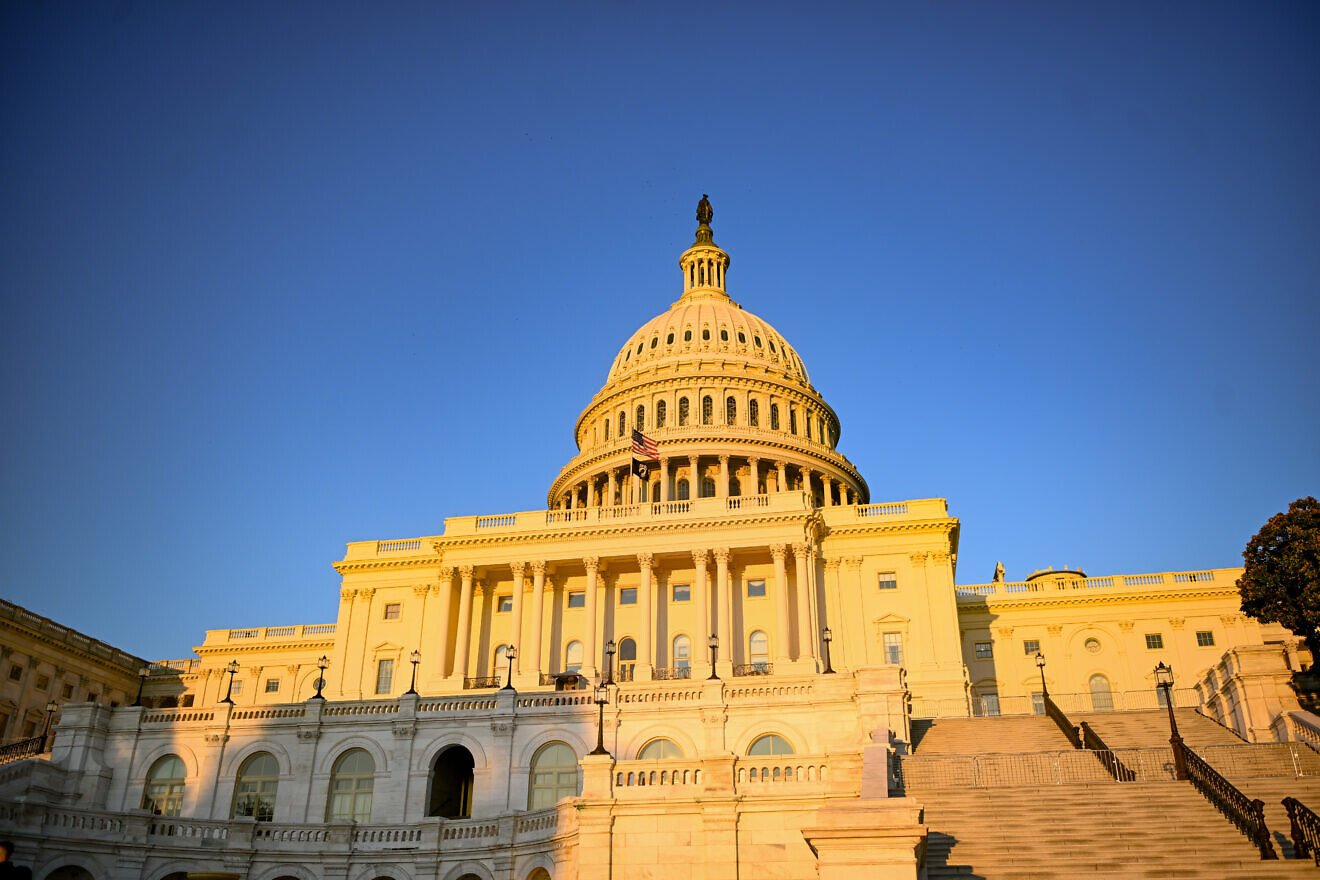
View of the U.S. Capitol building in Washington, Aug. 25, 2025. Credit: Arie Leib Abrams/Flash90.

The U.S. House of Representatives passed legislation on Monday that would render participants in the Hamas-led Oct. 7 attacks in southern Israel inadmissible to the United States.

The “No Immigration Benefits for Hamas Terrorists Act of 2025,” which Rep. Tom McClintock (R-Calif.) introduced, would amend the Immigration and Nationality Act to bar from the United States “any alien who carried out, participated in, planned, financed, afforded material support to or otherwise facilitated any of the attacks against Israel initiated by Hamas beginning on Oct. 7,” including members of Hamas and Palestinian Islamic Jihad.

The act’s 18 other co-sponsors, all Republicans, include Reps. Joe Wilson (R-S.C.), Claudia Tenney (R-N.Y.) and Ann Wagner (R-Mo.).

Rep. Jamie Raskin (D-Md.) said during floor debate on the bill that Democrats supported the legislation but were opposed to amending the Immigration and Nationality Act directly to cite specific terror acts. Raskin argued that all members of designated Foreign Terrorist Organizations, like Hamas, are already barred from entering the United States.

“To put into perspective just how anomalous this approach is, consider our response to the 9/11 attacks and the aftermath of that catastrophe,” Raskin said. “We revised our immigration laws to overhaul significant parts of our immigration system, and we created the Department of Homeland Security.”

“Even then, we did not amend the Immigration and Naturalization Act to specifically reference the events of Sept. 11, or to bar the individuals involved in the planning or commission of those outrageous terror attacks from entering or remaining in the United States,” he said.

McClintock said that Hamas deserves to join the Nazi Party and the Palestine Liberation Organization as organizations whose members are explicitly barred from immigrating to the United States under law.

“Does anyone seriously argue that we should repeal the sanctions against persons who aided and abetted the Nazis’ Holocaust?” McClintock said. “If not, then why would they oppose extending the same sanctions to the Nazis’ would-be modern-day successors, who just two years ago slaughtered more than 1,200 innocent civilians, including children and infants and the elderly, because they were Jewish?”

McClintock cited the example of Mahmoud Amin Ya’qub al-Muhtadi, a Gaza-born resident of Lafayette, La., who entered the United States in 2024 and whom the U.S. Justice Department charged about a month and a half ago for taking part in the Oct. 7 attacks.

“New laws would be helpful to prevent a future Joe Biden from making a mockery of our sovereignty and reopening our borders to the most violent criminal gangs and cartels and criminals and terrorists on the planet,” McClintock said.

Raskin asked if the new law would apply to Changpeng Zhao, former CEO of the crypto company Binance, who pleaded guilty to laundering money for terrorist organizations, including Hamas, and whom U.S. President Donald Trump pardoned in October.

McClintock said he was unfamiliar with the case.

The bill passed the House by voice vote with no objections and will now proceed to the Senate, which previously failed to take up a previous version of the legislation.


Zawartość publikowanych artykułów i materiałów nie reprezentuje poglądów ani opinii Reunion’68,
ani też webmastera Blogu Reunion’68, chyba ze jest to wyraźnie zaznaczone.
Twoje uwagi, linki, własne artykuły lub wiadomości prześlij na adres:
webmaster@reunion68.com


Nieszczęśliwi, wypasieni i zagubieni

Rysunek: Andrzej Płoski


Nieszczęśliwi, wypasieni i zagubieni

Andrzej Koraszewski


Narzekać trzeba, bo co by to było za życie bez narzekania. W dzieciństwie babcia powtarzała: „Jedz, dzieci w Afryce chodzą głodne”. Nie była to dobra motywacja do połknięcia kolejnej kluski i odroczenia ucieczki na podwórko, gdzie kopanie piłki z kolegami całkowicie eliminowało obraz głodnych dzieci w Afryce czy gdziekolwiek indziej. Współczucie bywa instrumentalne, bywa instynktownym odruchem, ale na ogół altruizm trzyma się mocno za ręce z egoizmem, co czasem okazuje się humanitarne, a czasem zgoła przeciwnie. Belgijski filozof Maarten Boudry w eseju opublikowanym na łamach „Quillette” pisze o niewdzięczności sytych.

Uświadamianie oczywistego faktu, że współcześnie żyjemy w nieporównywalnie lepszych warunkach niż kiedykolwiek ludzie w przeszłości, to dość niewdzięczne zadanie. Słowo „przednówek” z niczym się nie kojarzy, śmierci z głodu zdarzają się gdzieś daleko i nie zawsze wiadomo, czy są rzeczywiste.

Żyjemy w czasach obfitości, co nie znaczy, że bez problemów. Rewolucję przemysłową poprzedziła rewolucja w rolnictwie i nagle tempo innowacji oraz wzrost wydajności zaczął być lawinowy, ale dopiero w ostatnim półwieczu obszary biedy zaczęły się szybko kurczyć. Jak pisze Maarten Boudry:

Gdy jednak ludzie zaczęli żyć coraz dostatniej i przyzwyczajali się do dobrobytu, zaczęli zapominać o nędzy, z jakiej wyrwali się ich przodkowie. W ten sposób narodziło się zjawisko typowo nowoczesne: oddawanie się romantycznym fantazjom o błogosławieństwach prymitywnego, przednowoczesnego życia – nie rezygnując przy tym z wygód i dostatku, które daje nowoczesność.

To kawiarniane marzenie o sielskiej i rozkosznej dzikości bywa również źródłem sławy i dochodów. Rozpieszczeni i przejedzeni uprawiają „turystykę biedy”, piszą powieści i felietony, kręcą filmy, a nawet podejmują heroiczne wysiłki przeżycia kilku dni w prymitywnych warunkach, zabezpieczając się, żeby nie były nazbyt prymitywne i pamiętając, gdzie jest wyjście awaryjne.

Powinniśmy być wdzięczni, że nie rozumiemy biedy, ale problem w tym, że ta ignorancja tworzy podatny grunt dla romantycznych złudzeń. Miliony sytych mieszkańców Zachodu zachwycają się prostotą życia średniowiecznych chłopów (bez smartfonów! warzyw z własnego ogrodu!) lub koczowniczym życiem łowców-zbieraczy (brak dóbr materialnych! życie w harmonii z naturą!). Ci, którzy wychwalają zalety przedprzemysłowego rolnictwa bez nawozów i maszyn, to ci sami, którzy nigdy nie musieli sami żyć w prymitywnych warunkach.

Te fantazje sytych nie są największym problemem – im szybszy rozwój techniki i technologii, im więcej bogactwa i mniej prawdziwej, dramatycznej biedy, tym większy popyt na intelektualistów zawodowo zajmujących się zwalczaniem kapitalizmu. Okazuje się, że gryzienie ręki, która cię karmi, może być zarówno intratne, jak i dostarczać doznań smakowych. Korporacje dostarczą komputerów, na których ci twórcy smażą swoje krytyki, dostarczą platform, na których je rozpowszechniają, kont, na których można gromadzić pieniądze wpłacane przez odbiorców tej krytyki.

W rzeczywistości dobrodziejstwa postępu stają się niezauważalne. Zniknęły choroby, które dziesiątkowały całe populacje, nie ma tamtych dramatów, więc przestajemy wierzyć w szczepionki. Żyjemy coraz dłużej i coraz bezpieczniej, ale trudno przez cały czas odczuwać wdzięczność — światło jest, lodówka działa, grzejniki pracują. To wszystko stało się normą, w której najbardziej irytującą rzeczą okazuje się fakt, że ktoś na tym zarabia. W niektórych częściach świata również pokój jest tak normalny, że trudno sobie wyobrazić czasy, w których wojna była normą. Jednak kiedy dobrobyt jest normą, jego zwalczanie może się okazać niebezpieczną zabawą kapłanów niezadowolenia.

W pewnym sensie jest rzeczą naturalną, że koszmar życia, które dawno temu minęło i które nigdy nie dotknęło nas osobiście, jest dla nas tylko abstrakcją. Gorzej, kiedy tęsknota do utopii zaczyna prowadzić do wkładania kija w szprychy koła postępu.

Również na łamach „Quillette” amerykański politolog, profesor Dustin N. Sharp, pisze o skłonnościach intelektualistów do umiłowania różnych utopijnych idei. Kolejne pokolenia dają się uwodzić marzeniami o absolutnej czystości. Dekoracje się zmieniają, ale absurd i dramat pozostają te same.

To, co zaczęło się jako moda na akademickim marginesie, stało się językiem wspólnym aktywistów i intelektualistów — sposobem moralnego poznania, który traktuje świat społeczny jako rytualnie skalany, a cnotę odnajduje w tropieniu skazy. Dla nowego duchowieństwa lewicy problematyzowanie stało się jedyną uznaną formą pracy intelektualnej i moralnej. Im głębiej zdemaskujesz władzę, tym bliżej łaski jesteś. Największy prestiż przypada tym, którzy potrafią prześledzić mechanizmy dominacji aż po najdrobniejsze elementy życia społecznego. To moralna logika bardziej przystająca do oczyszczania niż do przekonywania.
Problem z tym stylem moralnym nie polega na tym, że dostrzega niesprawiedliwość — lecz na tym, że jej potrzebuje – pisze Dustin N. Sharp.

Orgie oburzenia zastępują dociekania i analizy, udają edukację; indoktrynacja zastępuje informację. Burzenie jest celem, budowanie — przeszkodą i problemem.

Zauważ, że liberalny kapitalizm — jakkolwiek niedoskonały — jednak wydłużył życie ludzi i wydźwignął setki milionów ze skrajnego ubóstwa, a zostaniesz uznany za osobę niepoważną. Przyznaj, że liberalna demokracja potrafi się czasem sama skorygować, a gospodarki rynkowe — mimo licznych wad — żywią i tworzą innowacje, a zostaniesz potraktowany jak rzecznik systemu. Częściowa obrona Zachodu lub „systemu” oznacza w najlepszym razie niedouczenie, w najgorszym — głupotę.

To kusząca oferta: wstąpienia do klubu najmądrzejszych i najbardziej przewidujących. To zaproszenie do religijnej sekty wybranych i najbardziej moralnych.

W świecie, który wydaje się pozbawiony sensu, taki progresywno-aktywistyczny światopogląd przywraca porządek, zamieniając chaos i historię w przejrzystą, binarną narrację. Niewiele opowieści jest równie trwałych — i równie przydatnych politycznie — jak ta, która przedstawia historię jako walkę między czystymi a skażonymi.

Nowością jest tu tylko wykreślenie ze spisu treści istoty nadprzyrodzonej i zastąpienie jej postaciami w gronostajach, reprezentującymi pseudonaukę i przekonującymi, że pojęli istotę wszechrzeczy.

Krytyka zmienia się szybko w teorię, a teoria — w dogmaty, od których odstępstwo jest herezją. Awangarda strzeże czystości i nawraca posiadaczy fałszywej świadomości.
Posiadacze fałszywej świadomości są niesforni, głosują nie tak, jak trzeba, nie rozumieją swoich prawdziwych interesów — prawdę mówiąc, to głupcy i prostacy.

Ta nowoczesna zachodnia lewica nie tylko gardzi maluczkimi. Rewolucyjny romantyzm wymaga zamazania historii, przemilczenia sowieckich gułagów, chińskich ofiar głodu i rewolucji kulturalnej, ludobójstwa Pol Pota, zbrodni lewicy w Afryce i Ameryce Łacińskiej, ukrycia świata, w którym — jak pisze Dustin N. Sharp — „fałszywa świadomość przestaje być błędem, a staje się przestępstwem”.

Te zbrodnie, a zarazem dowody konsekwencji budowania utopii, są zepchnięte na margines jako mało istotne i szkodliwe dla młodych umysłów.

Antidotum na destrukcyjny utopizm to polityka, która akceptuje zwykłą niedoskonałość, ograniczenia ludzkiej natury oraz wartość tradycji, instytucji i wspólnoty jako buforów wobec rozpaczy i chaosu. (Pogrubienie moje A.K.)

Niezależnie, czy utopijne idee przychodzą z lewej, czy z prawej strony, świetliste obietnice prowadzą do przymusu. Niemożność dotarcia do ideału popycha do terroru — psychicznego lub fizycznego, od łagodnego przez ostracyzm do bestialskiego, z obozami resocjalizacyjnymi.

Rewolucyjny romantyzm prawdopodobnie nie zniknie — jest jak narkotyk. Możemy jednak podjąć działania, by dealerami tego narkotyku nie byli nauczyciele naszych dzieci. To poważne wyzwanie, którego nie załatwi za nas ani państwo, ani tym bardziej postępowa awangarda, która rozsiadła się w mediach, w organizacjach rzekomo strzegących praw człowieka, w sztuce, a przede wszystkim w edukacji.


Zawartość publikowanych artykułów i materiałów nie reprezentuje poglądów ani opinii Reunion’68,
ani też webmastera Blogu Reunion’68, chyba ze jest to wyraźnie zaznaczone.
Twoje uwagi, linki, własne artykuły lub wiadomości prześlij na adres:
webmaster@reunion68.com


Why is US envoy to Poland echoing far-Right Holocaust revisionism?


Why is US envoy to Poland echoing far-Right Holocaust revisionism?

Daniel Schatz 11-28-2025 09:00


Echoing the rhetoric of Poland’s far-right nationalist camp, Rose declared that suggesting Poles had any role in the Shoah was “a grotesque falsehood and the equivalent of a blood libel against the Polish people and Polish nation.”

A view of the entrance gate at the former Nazi death camp Auschwitz Birkenau on January 23, 2024 in Oswiecim, Poland | Photo: Omar Marques/Getty Images

The new US ambassador to Poland, Thomas Rose, recently delivered a speech in Warsaw in which he categorically absolved Poland – and by extension the Polish people – of any responsibility whatsoever for the Holocaust. It is difficult to overstate how astonishing such a claim is coming from a senior American diplomat, let alone a Jewish one. Echoing the rhetoric of Poland’s far-right nationalist camp, Rose declared that suggesting Poles had any role in the Shoah was “a grotesque falsehood and the equivalent of a blood libel against the Polish people and Polish nation.”

This astonishing distortion of history coincided with a parallel diplomatic storm. Last week, Yad Vashem published a brief historical note on social media: “Poland was the first country where Jews were forced to wear a distinctive badge in order to isolate them from the surrounding population.” These are uncontested historical facts. Yet the Polish government responded with fury. The Auschwitz-Birkenau State Museum – funded and overseen by the Polish state – accused Yad Vashem of misleading the public by failing to spell out that Nazi Germany, not Polish authorities, issued and enforced the badge decree.
.
Survivors light candles as they pay tribute to the Holocaust victims during the ceremony for the 80th anniversary of the liberation of the Auschwitz camp on January 27, 2025 in Oswiecim, Poland (Photo: Sean Gallup/Getty Images)

The reaction spiraled instantly. Foreign Minister Radosław Sikorski, Prime Minister Donald Tusk, the government’s IPN institute, and the Auschwitz Museum all condemned the post. Warsaw summoned Israel’s ambassador. Officials demanded that Yad Vashem explicitly clarify in the original post itself that Poland was under German occupation, insisting that failure to insert the adjective “occupied” amounted to an attack on the Polish nation. Yad Vashem noted that the linked article clearly explained this context – yet Polish leaders declared the explanation insufficient.

What we are witnessing is not a misunderstanding. It is a symptom of a deeper and more dangerous trend: the systematic re-engineering of Holocaust memory in Eastern Europe, and in Poland most of all.

A fragile national identity and a rigid historical orthodoxy

No serious historian disputes that Nazi Germany planned, implemented, and carried out the genocide of Europe’s Jews. Nor does anyone deny that Poland suffered enormously under occupation. But history is more complicated than national mythmaking allows. As scholars such as Jan Gross, Jan Grabowski, and Barbara Engelking have demonstrated, roughly two-thirds of the Jews in hiding in Poland were betrayed or killed with the direct involvement of Polish citizens. Both realities – German responsibility and local complicity – are true simultaneously.

Yet in contemporary Poland, even acknowledging these parallel truths is treated as heresy. The fury over the Yad Vashem post rests on a brittle premise: that any wartime reference to “Poland” without the word “occupied” is a slander against the nation. In Belgium, France, or the Netherlands, historians are not required to pepper every sentence with “occupied.” Everyone understands the context. But in Poland, this insistence has become almost theological – because it guards a deeper anxiety: that Poles were not only victims, but in some cases victimizers.

Jedwabne and the return of the buried past

Nowhere is this clearer than in the enduring trauma of Jedwabne. On July 10, 1941, hundreds of Jews were murdered in that village by their Polish neighbors – burned alive in a barn while the crowd jeered. For decades, the memorial plaque falsely attributed the massacre to the German occupiers. Villagers knew this was a lie. Only with Jan Gross’s “Neighbors” did the truth become impossible to ignore: the perpetrators were locals, not Nazis. Similar pogroms occurred in nearby towns such as Radziłów, Szczuczyn, and Wąsosz.

The political backlash was swift. By 2018, the Polish parliament passed Article 55A, criminalizing public statements that assert Polish participation in Nazi crimes. Government-aligned groups sued historians Grabowski and Engelking for documenting how Jews in hiding were betrayed by their Polish neighbors. Although higher courts eventually acquitted them, the message was unmistakable: writing honestly about Polish complicity is a dangerous act.

This pattern is not unique to Poland. Hungary’s House of Terror Museum presents the Hungarian nation almost exclusively as a victim, erasing the Hungarian state’s central role in deporting 430,000 Jews to Auschwitz. Across Eastern Europe, governments cloak historical revisionism in the language of patriotism, using museums, curricula, and official rhetoric to transform complex histories into comforting myths.

Rose’s distortion – and Poland’s fury

Distorting Holocaust history corrodes public understanding of the genocide, dishonors its victims, and weakens the moral foundations of the postwar international order. If nations can rewrite their own past – sanitizing collaboration, erasing local antisemitism, and recasting their populations solely as heroic resisters – then the Holocaust becomes not a universal warning, but a political tool.

This is the broader context in which Ambassador Rose’s remarks and the Polish government’s outrage must be understood. Rose adopted a narrative increasingly promoted by Poland’s nationalist right: that any suggestion of Polish involvement in the persecution of Jews is “a grotesque falsehood” and “a blood libel.” Meanwhile, Polish officials erupted over a factual Yad Vashem post – summoning diplomats, demanding edits, and condemning historians – not because the facts were wrong, but because the facts were uncomfortable.

The truth is neither simple nor convenient: Germany committed the genocide, and some Poles helped hunt down their Jewish neighbors. To deny either reality is to deny history itself.


Daniel Schatz holds a doctorate in Political Science, is an author and columnist. He has been a Visiting Scholar at Harvard, Stanford, Georgetown, Columbia University, and the Hebrew University of Jerusalem.


Zawartość publikowanych artykułów i materiałów nie reprezentuje poglądów ani opinii Reunion’68,
ani też webmastera Blogu Reunion’68, chyba ze jest to wyraźnie zaznaczone.
Twoje uwagi, linki, własne artykuły lub wiadomości prześlij na adres:
webmaster@reunion68.com

Pro-Israel Lawyers Challenge UK University Academic’s Boycott of Israeli Scholar


Pro-Israel Lawyers Challenge UK University Academic’s Boycott of Israeli Scholar

Shiryn Ghermezian


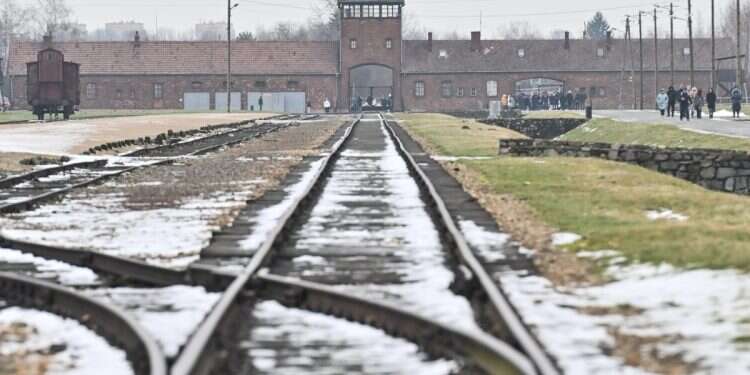
The entrance to Hebrew University of Jerusalem’s Mount Scopus campus. Photo: Wikimedia Commons

An association of lawyers who support Israel is demanding the University of East Anglia (UEA), located in Norwich, England, investigate and take disciplinary action against a senior academic who refused to consider an application from a researcher because the latter was from an Israeli university, the group announced on Friday.


Zawartość publikowanych artykułów i materiałów nie reprezentuje poglądów ani opinii Reunion’68,
ani też webmastera Blogu Reunion’68, chyba ze jest to wyraźnie zaznaczone.
Twoje uwagi, linki, własne artykuły lub wiadomości prześlij na adres:
webmaster@reunion68.com