
Archive | January 2026

Has time finally run out for Tehran’s Islamist tyrants?


Has time finally run out for Tehran’s Islamist tyrants?

Jonathan S. Tobin


The country is falling apart, pushed to the brink by failing resources and a nuclear defeat last summer. But as long as its minions are ready to slaughter dissidents, the ayatollahs will remain in power.

Rocks, tree branches and a toppled charity box remain on a street during unrest amid demonstrations in Hamedan, Iran, on Jan. 1, 2026. The demonstrations erupted after shopkeepers in Tehran’s Grand Bazaar shut their businesses to protest the sharp fall of Iran’s currency and worsening economic conditions, with clashes reported in several provinces, and Iranian media and rights groups saying multiple people were killed in the violence, marking the largest protests to hit the Islamic Republic in three years. Photo by Mobina / Middle East Images / AFP via Getty Images.

For the past 16 years, the world has continued to ask the same question with respect to the Islamist regime in Iran: Is it finally time for the despotic rule of the ayatollahs to end? Yet hopes that Iran might finally free itself have continually been disappointed. That’s why even amid the heightened expectations that the breaking point has been reached, optimism about its imminent fall should remain tempered.

The theocracy imposed on the country in 1979—when the government of Shah Reza Pahlavi collapsed and was replaced by the rule of religious extremists, led by the Ayatollah Ruhollah Khomeini—has survived every previous challenge. Despite its manifest unpopularity, it has repeatedly been able to mobilize both the Islamic Revolutionary Guard Corps and the nation’s army to suppress protests with the sort of deadly force that intimidated a restive population into sullen acceptance of their fate. Nevertheless, the Islamist government’s inability to effectively run a country rich in natural resources but now facing shortages of energy and clean water, as well as having wasted massive sums of money on building a nuclear program at home and funding terrorism abroad, has once again brought it to the brink.

Trump’s threats

Speculation that the time has finally arrived for the fall of Iran’s theocratic government is centered on the latest round of protests spreading throughout the country. An Iranian dissident site, the Human Rights Activists News Agency, reported on Jan. 6 that after 10 days of demonstrations, 34 protesters had been killed and more than 2,000 had been arrested in 285 separate anti-regime rallies.

Unlike in the past, such as in 2009, when massive protests occurred, and in the fall of 2022, when women took to the streets after the death in police custody of 22-year-old Mahsa Amini, the United States isn’t signaling its passive support for the tyrants of Tehran. Under President Barack Obama, who was already planning a campaign of appeasement of the regime that would lead to the disastrous 2015 Iran nuclear deal and failed to speak out in support of the demonstrators, President Donald Trump has left no doubt about where the United States currently stands on the issue of Iran’s future.

He warned that American armed forces are “locked and loaded,” and ready to intervene. “If they start killing people, like they have in the past, I think they’re going to get hit very hard by the United States,” Trump said last week.

Given that the United States took part in a joint air campaign with Israel last June to take out Iran’s nuclear facilities, neither the Iranians nor anyone else should regard that as an idle boast or typical Trumpian braggadocio. Over the weekend, Trump sent in American forces to capture Venezuelan dictator and narco-terrorist Nicolás Maduro and bring him back to the United States to face justice.

That should have further concentrated the minds of Iran’s leaders on the prospect of what happens to deposed tyrants. If they don’t make it to safety in friendly countries, their fate could be even less pleasant than that of Maduro. While none of them are currently under an American indictment, the reports that Iran’s Supreme Leader, Ayatollah Ali Khamenei, has already planned to escape to Moscow with his family and aides should the regime’s forces fail to quell the protests. That’s a sign that they understand that their continued grasp on power is not guaranteed.

The problem, though, is that the ayatollahs and the leaders of the IRGC are acting like they do plan to hold on. And the explanation for their strategy should sober up optimists who, not for the first time, are already making bold predictions about what a new Iran would look like and who might govern it.

Iron rules of history

The Iranian regime is still dangerous for three important reasons that separate it from historical examples of past tyrannical regimes that collapsed, such as that of France’s monarchical ancien regime in 1789 or the Soviet Union in 1991. Unlike those governments, many, if not most, of those who serve Iran’s theocracy are still ardent believers in the Islamist faith that has been its guiding force for the last 46 years. It’s also true that, unlike the ayatollah, most of them don’t have anywhere that they can flee to while holding on to their assets. As a result, the regime’s henchmen—both in the IRGC and the army—seem willing to obey orders and kill as many of their compatriots as is necessary to once again stamp out hopes for freedom.

It remains an iron rule of history that tyrannies do not end because they are brutal. They collapse when they are no longer able to count on their loyalists to be brutal. They only fall when they are either conquered by external forces (i.e., Nazi Germany or Imperial Japan) and/or experience military defeat that destroys their credibility (i.e., the junta in Argentina after its failed 1982 invasion of the Falkland Islands). Or they go down after suffering a collapse of faith in a regime’s legitimacy and belief system, as in the case with France in 1789, and Moscow’s evil empire after the fall of the Berlin Wall and the dissolution of the Soviet Union.

Is such a crisis of faith happening in Tehran? It’s hard to know for sure.

Their defeat at the hands of Israel and the United States, when their planes had free rein over Iran’s skies as they sought out its nuclear and other targets, might turn out to be a tipping point. That was a body blow to a government that only a few years ago seemed well on its way to achieving regional hegemony with clients in power in Iraq, Syria, Lebanon and part of Yemen. The Israeli rout of Tehran’s Hezbollah auxiliaries in 2024 was an unexpected setback for a terrorist force that for years seemed to be invincible in Southern Lebanon. That, in turn, led to the end of the Bashar Assad regime in Syria in December 2024, a nation that seemed to be in Iran’s pocket up until then.

Add to that the growing economic collapse of the country, and it’s hard to see how a government that still sees itself as an expression of Islamist revolution can cling to power.

Yet while the casualty figures from anti-regime protests and the claims that demonstrators are prevailing in some parts of the country are a potential sign of regime collapse, the fact that army and IRGC forces are still firing on dissidents and killing dozens could indicate that the regime’s taste for blood and their ability to shed it have not slackened.

Moreover, despite the encouragement they’re getting from Washington and Jerusalem, Iran’s protesters should be under no illusion that this time, the Americans or Israelis will do their fighting for them.

Trump’s tough talk notwithstanding, implementing threats in South America, which is in Washington’s backyard, is a far cry from doing so in the Middle East. Trump might order some airstrikes on regime targets, but he’s not going to make the mistake of engaging in an invasion that might lead to American occupation of part of Iran. Trump wants to use U.S. military force to make the Iranians pay a high price for bloody repression and continuing to spread terror. He has no interest in occupying the country or replicating the mistakes made in Iraq and Afghanistan during the long wars there that Americans grew tired of.

The Iranians must do it

If the rule of the ayatollahs is to end, it will require at least some of the Iranians with guns—in either the IRGC or the army—to turn them on their rulers. Americans, and even Israelis, might be prepared to help them become free. However, they are going to have to do most, if not all, of the hard and likely bloody work of overthrowing the theocrats themselves.

As illogical as it may be for an incompetent government that turned a rich land into a failed state to be able to hold onto power, Khamenei and his followers could do so if enough of their minions are still ready to slaughter more innocents demonstrating for freedom.

So, while Americans should be doing everything possible to encourage Iranians to throw off their shackles and rejoin the international community, it’s by no means a certainty that this is going to happen or that even American assistance will make it a realistic possibility.

That’s a discouraging thought for those who recognize just how dangerous Iran has become, both because of its status as a threshold nuclear power (or, at least, it was until last June) and its being the world’s leading state sponsor of terrorism. Still, if Iranian opponents of the theocracy can’t find a way to persuade at least some of the regime’s enforcers to lay down their arms, then all the optimism about the end of the long Islamist nightmare will prove unfounded.
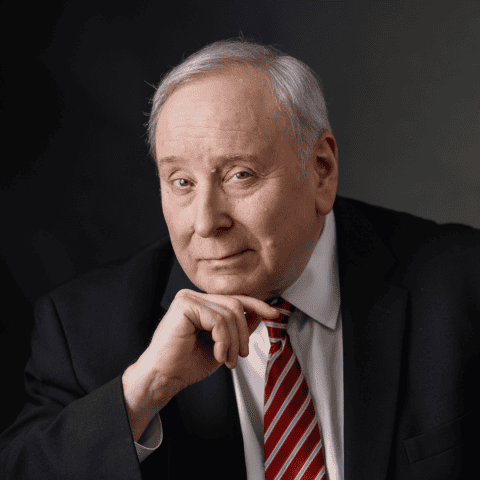

Jonathan S. Tobin is editor-in-chief of the Jewish News Syndicate, a senior contributor for The Federalist, a columnist for Newsweek and a contributor to many other publications. He covers the American political scene, foreign policy, the U.S.-Israel relationship, Middle East diplomacy, the Jewish world and the arts. He hosts the JNS “Think Twice” podcast, both the weekly video program and the “Jonathan Tobin Daily” program, which are available on all major audio platforms and YouTube. Previously, he was executive editor, then senior online editor and chief political blogger, for Commentary magazine. Before that, he was editor-in-chief of The Jewish Exponent in Philadelphia and editor of the Connecticut Jewish Ledger. He has won more than 60 awards for commentary, art criticism and other writing. He appears regularly on television, commenting on politics and foreign policy. Born in New York City, he studied history at Columbia University.


Zawartość publikowanych artykułów i materiałów nie reprezentuje poglądów ani opinii Reunion’68,
ani też webmastera Blogu Reunion’68, chyba ze jest to wyraźnie zaznaczone.
Twoje uwagi, linki, własne artykuły lub wiadomości prześlij na adres:
webmaster@reunion68.com


Celebrating Community and Mourning Tragedy at Brown University


Celebrating Community and Mourning Tragedy at Brown University

James M. Kaplan


The campus of Brown University in Providence, Rhode Island. Photo: Wikimedia Commons

Two recent events took place at Brown University, one of joy and one of tragedy.

Under a tent on Pembroke Field, Cantor Lizzie Shammash sang Shalom Aleichem and Rabbi Ayelet Cohen recited the Motzi and Kiddush, beginning a glorious weekend celebrating 130 years of Jewish life at Brown.

A few weeks later, a former Physics graduate student killed two Brown students, and wounded nine others, in a mass shooting event on campus.

The juxtaposition of these events demonstrated Brown’s commitment to its Jewish community, and also that community and support networks are central to campus life.

On the weekend of November 7-9, more than 1,000 Jewish students, faculty, and alumni convened on College Hill. There were hundreds more attendees than the university expected, spanning nearly eight decades of life at Brown.

Some of us attend a daily minyan; others rarely see the inside of a synagogue. The faces of today’s Jewish students demonstrate we have ancestry from every corner of the globe. For a weekend, we came together as one, emphasizing our common values and heritage.

We participated in lectures, panels, and religious services, celebrating alumni and our school’s accomplishments in business, academia, and the arts.

Even before the shooting tragedy on our campus, we knew America’s college students were struggling with a fractured environment. Mental health is a serious issue in our country, but especially among our young people. Three-fifths of younger adults reported serious loneliness in the past month, compared to 24 percent of people 55-65.

Younger adults are no longer anchored in their families, but still must grapple with decisions about relationships and career paths. They spend more time on their phones and alone in their dorm rooms, and 40 percent less time in group venues like the gym, library, or cafeteria.

Contrary to initial fears, the Brown shooting does not appear to have a political or religious dimension. Still, being a Jewish college student is harder now than it was just a few years ago.

Between 2019 and 2024, cases of antisemitic assault, harassment, and vandalism rose by over 300 percent, with college campuses seeing an 84 percent increase between 2023 and 2024.

People who subscribe to a dichotomy about oppressors and the oppressed common on university campuses are especially likely to hold antisemitic views.

Our “J130” event demonstrated the vibrancy and resilience of Brown’s Jewish community. Brown sprang from the tolerant and ecumenical traditions of Rhode Island. From its founding, Brown foreswore religious tests in admitting students. And there is no historical evidence that Brown used the formal Jewish quotas common at other elite institutions.

The weekend also highlighted how Jewish faith and community are not only essential to Jewish students, but also a force for good at the university. In one of the event’s faculty seminars, Judaic Studies scholar Professor Michael Satlow explained the relevance of religious wisdom. Jewish texts teach gratitude, patience, personal connection, the dignity of the individual, and the combination of purpose with humility — all somewhat counter-cultural when college students often focus on ideological conflict or careerism. That guidance resonated in November — and it’s only more important now.

Many Jews have found inspiration in a covenantal relationship with God, in which we bear a shared responsibility with the Almighty. The Pirkei Avot tells us, “What you do, do for Heaven,” and reminds us that, “It is not your duty to finish the work, but neither are you free to desist from it.”

Since the shooting, Brown students of every faith have wrestled with confusion, rage, and grief. Jewish students have sought out rabbis to make sense of these events, as other students have received pastoral care from clergy in other denominations.

Brown RISD Hillel must be a center of gravity on campus — a place of rich community, deep meaning, intellectual rigor, and spiritual resilience, even in the face of tragedy. Close to 1,000 Jewish students (and hundreds of non-Jewish students) walk through the doors of the Hillel building each semester. We must make it even more of a destination, a welcoming, bustling hive of activity, where Jewish students know they can go to be with other Jews — and where students of every faith and background can convene in fellowship.

We can make Hillel central to the intellectual life on campus. We can extend the exciting programming we’ve done on the Jewish tradition in the visual arts to include music and theater. We can innovate in the way we provide religious education to students and we can examine the way that AI may enhance the study of Jewish religious texts. We can provide more pastoral care to young men and women seeking to make sense of their world. And we can engage our alumni to mentor students, not how to ace a job interview, but on how to build meaningful and rewarding careers they can sustain over decades.

What happens at Brown RISD Hillel (and every other Hillel on every campus) matters for the wider Jewish world and the university ecosystem.

When Jewish students are grounded, supported, and educated, they become better Jews, students, and citizens. They also can help heal a wounded campus, and represent the resilience of the Jewish tradition and community in America.


James M. Kaplan chairs the Board of Trustees for Brown-RISD Hillel. He graduated from Brown University in 1992. 


Zawartość publikowanych artykułów i materiałów nie reprezentuje poglądów ani opinii Reunion’68,
ani też webmastera Blogu Reunion’68, chyba ze jest to wyraźnie zaznaczone.
Twoje uwagi, linki, własne artykuły lub wiadomości prześlij na adres:
webmaster@reunion68.com


Rażący błąd Barracka w sprawie Syrii i Libanu


Rażący błąd Barracka w sprawie Syrii i Libanu

Hussain Abdul-Hussain


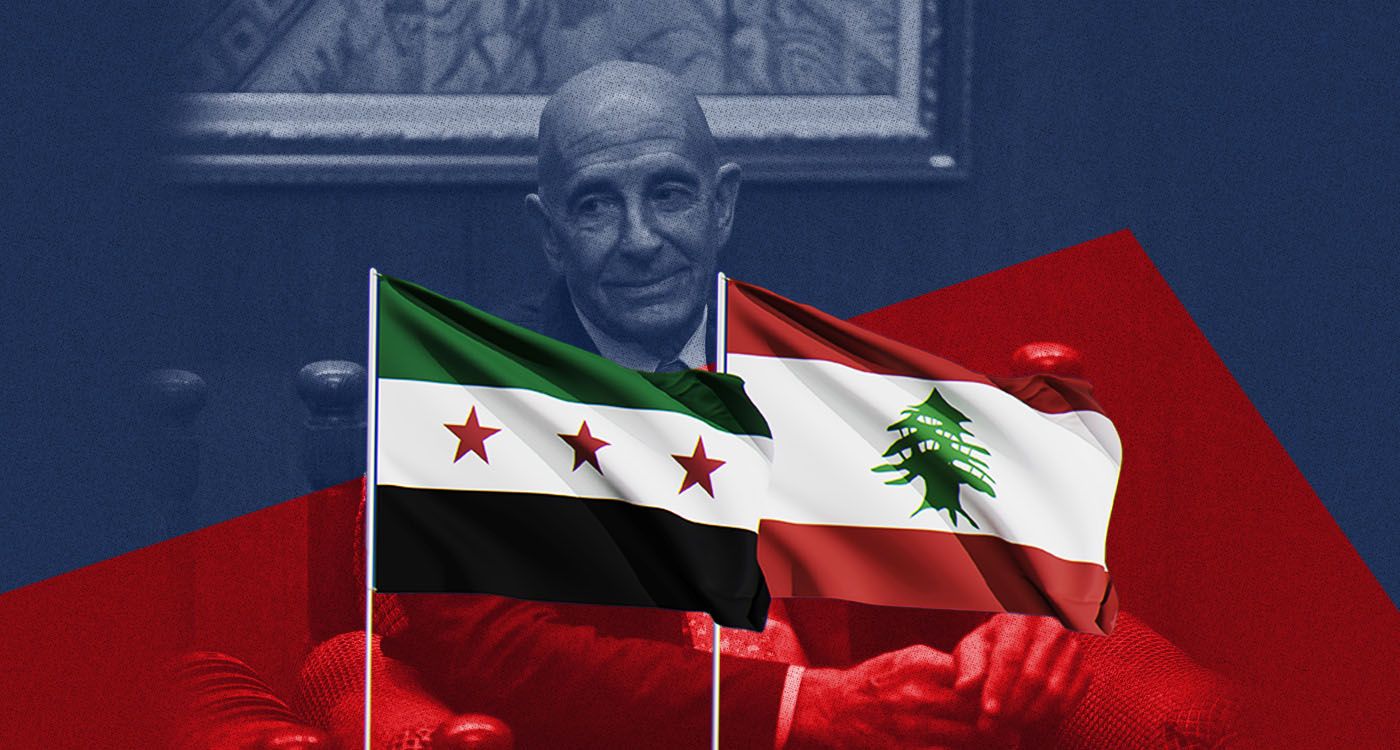
Amerykański wysłannik Tom Barrack nieustannie ostrzega, że Liban zostanie „ponownie wchłonięty” przez Syrię, jeśli Hezbollah nie zostanie rozbrojony — to historycznie bezpodstawne zagrożenie ze strony człowieka, który drwi z granic ustalonych przez Sykes-Picota jako kolonialnego nonsensu, a jednocześnie traktuje granice Syrii jako świętość. Jego wybiórczy antykolonializm oszczędza Syrię, ignoruje prawo Kurdów i Druzów do samostanowienia, a z łatwością wymazuje suwerenność Libanu.

Krótka historia Libanu pokazuje, jak ten kraj wyłonił się jako pierwsze państwo narodowe Lewantu — zachodni koncept z XVII wieku, który dopiero później dotarł do regionu — i jak pozostał jego najstarszym istniejącym do dziś państwem, z pełnym historycznym prawem do istnienia. Liban nie jest państwem doskonałym, ale na pewno nie jest też nielegalnym nowicjuszem.

W okresie prehistorycznym — zaczynając 3200 lat temu od Fenicjan — obszar dzisiejszego Libanu był zorganizowany jako rywalizujące ze sobą miasta-państwa: Tyr, Sydon, Byblos, a później Kartagina. Zdarzało się, że jedno z nich przejmowało kontrolę nad innym lub dochodziło do zjednoczenia, tworząc talasokrację, czyli imperium morskie. Jednak jak wszystkie starożytne królestwa i imperia, Fenicjanie nie stanowili państwa narodowego.

W kolejnych tysiącleciach imperia nieustannie się nawzajem najeżdżały. Dynastie, które uważały się za cień Boga na ziemi — jak osmańscy Turcy w Lewancie — podporządkowywały sobie inne królestwa. Taki był jedyny znany system rządów, aż do czasu, gdy wojujące europejskie królestwa przypadkiem natknęły się, w 1648 roku, na bardziej pokojowe rozwiązanie: traktat westfalski.

System westfalski, czyli model nowoczesnego suwerennego państwa narodowego, charakteryzuje się terytorialną wyłącznością i zasadą nieingerencji państw w sprawy wewnętrzne innych krajów. Minęły niemal dwa stulecia, zanim ten koncept dotarł do świata muzułmańskiego, zapoczątkowany przez inwazję Napoleona na Egipt w 1799 roku i jego trzyletnie rządy tamże.

Wobec znacznie bardziej zaawansowanego Zachodu, muzułmanie podzielili się na dwa obozy: islamistów, którzy winą za upadek obarczali odejście od ich zdaniem czystego islamu z VII wieku i domagali się jego zbrojnego odrodzenia, oraz modernistów, którzy nawoływali do przyjęcia świeckich idei zachodnich. Prąd modernizacyjny najszybciej rozprzestrzeniał się wśród długo uciskanych społeczności niemuzułmańskich, które przez wieki doświadczały podporządkowania.

W górach Libanu, gdzie chrześcijanie i Druzowie stanowili najgęstsze skupiska, idee europejskie wywołały silne dążenie do autonomii, a ostatecznie do secesji — wspieranej przez mocarstwa europejskie pragnące zabezpieczyć szlaki handlowe do Indii.

Począwszy od XVIII wieku, libańscy przywódcy plemienni, pełniący jednocześnie funkcję poborców podatkowych dla Stambułu, zaczęli działać niezależnie. Mocarstwa europejskie wspierały ich, podczas gdy Osmanowie podburzali muzułmanów przeciwko nim. W rezultacie Góry Libanu doświadczyły dwóch wojen domowych — w 1840 i 1860 roku — ale po każdej z nich region ten konsolidował się jako byt autonomiczny, który ostatecznie przekształcił się w państwo narodowe Liban.

W żadnym innym regionie Lewantu nie było wystarczająco dużych społeczności niemuzułmańskich, które dążyłyby do niepodległości. Muzułmanie lewantyńscy byli zadowoleni z życia pod panowaniem tureckiego sułtana. Syria nadal pozostawała dwiema lub więcej prowincjami osmańskimi — podobnie jak Palestyna i Jordania.

Kiedy w 1920 roku Francja otrzymała mandat nad Lewantem, nie stworzyła Libanu z niczego. Po prostu powiększyła już istniejący, historycznie uznany byt Góry Liban, znany jako Mutasarrifijja, o Bejrut, północ, południe i Bekaa — regiony mające silne więzi ekonomiczne i kulturowe z Górą Liban i, co istotne, zamieszkane w dużej mierze przez chrześcijan i szyitów, którzy z entuzjazmem przyjęli włączenie do Wielkiego Libanu.

Syria, w przeciwieństwie do tego, nigdy przed rokiem 1927 nie istniała jako państwo narodowe. Nawet po uzyskaniu niepodległości w 1946 roku, sunnicka większość Syrii nigdy w pełni nie zaakceptowała jej granic. To napędzało nieustające marzenia baasistów i naserystów o wchłonięciu Libanu, Jordanii i Palestyny do „Wielkiej Syrii”.

Palestyna przeszła podobną drogę: nie miała wcześniejszej historii zjednoczonego państwa, jej granice zostały wytyczone w 1920 roku, sunnicka większość arabska odrzuciła ideę państwa, podczas gdy żydowska, druzyjska i chrześcijańska mniejszość ją popierała. Binarne państwo arab­sko-żydowskie ostatecznie się nie utrzymało. W 1948 roku Żydzi ogłosili własne państwo narodowe — Izrael. W 1964 roku Arabowie zażądali powstania wyraźnie arabskiej i muzułmańskiej Palestyny w granicach z 1920 roku.

Tylko Liban wszedł w XX wiek z już ukształtowaną tożsamością narodową: wielowiekowym symbolem cedru, od dawna używanym jako pieczęć Kościoła maronickiego; charakterystyczną flagą, wolną od panarabskich, haszymidzkich barw, które później zdominowały sąsiadów; oraz nieprzerwaną tradycją lokalnych rad wybieranych od lat 60. XIX wieku.

Dlatego kiedy Barrack mówi o Syrii jak o organicznym narodzie, a o Libanie jak o kolonialnej zbieraninie, całkowicie mija się z prawdą. Rdzeń Libanu, czyli Góra Liban, był pierwszym obszarem Lewantu, który osiągnął uznaną autonomię protopaństwową w nowoczesnej erze. Syria to konstrukcja nowsza, bardziej sztuczna — i to właśnie jej panarabskie nacjonalistyczne, a dziś islamistyczne mity, nieustannie przysparzają sąsiadom kłopotów.


Link do oryginału: https://thisisbeirut.com.lb/articles/1330684/barrack-s-glaring-error-on-syria-and-lebanon?utm_source=substack&;utm_medium=email

Thi is Beirut, 10 grudnia 2025

Hussain Abdul-Hussain Iracko-libański dziennikarz mieszkający w Waszyngtonie. Pracuje jako analityk w instytucie Fundacji Defence of Democrecies. Wcześniej pracował w utworzonej przez amerykański Kongres Arabic TV, przed tym był reporterem w wychodzącej w Bejrucie The Daily Star. Jest absolwentem Amerykańskiego Uniwersytetu w Bejrucie, gdzie studiował historię Bliskiego Wschodu.  


Zawartość publikowanych artykułów i materiałów nie reprezentuje poglądów ani opinii Reunion’68,
ani też webmastera Blogu Reunion’68, chyba ze jest to wyraźnie zaznaczone.
Twoje uwagi, linki, własne artykuły lub wiadomości prześlij na adres:
webmaster@reunion68.com


Izrael wypędza kilkadziesiąt organizacji wspierających Palestyńczyków. Tłumaczy się bezpieczeństwem


Izrael wypędza kilkadziesiąt organizacji wspierających Palestyńczyków. Tłumaczy się bezpieczeństwem

Marta Urzędowska


Palestyńska kobieta zbiera wodę w pobliżu gruzów budynków mieszkalnych zniszczonych podczas wojny, w sylwestra w Dżabalii, na północy Strefy Gazy, 31 grudnia 2025 r. (Fot. REUTERS/Mahmoud Issa)

Władze Izraela cofnęły licencje 37 organizacjom pomocowym, w tym Lekarzom Bez Granic, CARE i Norwegian Refugee Council.

O swojej decyzji izraelskie władze poinformowały we wtorek (30.12). Tłumaczą, że odbierają licencje 37 organizacjom, w tym najlepszym światowym specom od pomagania, bo nie spełniają wymogów wynikających z nowych izraelskich zasad rejestracji.

Wśród organizacji, którym Izraelczycy zakazują dziś pomagać w Strefie Gazy i na Zachodnim Brzegu są tacy giganci światowej pomocy humanitarnej jak Lekarze bez Granic, ActionAid, Norwegian Refugee Council, CARE, czy International Rescue Committee.

Izraelczycy o zawieszeniu działalności organizacji pomocowych: Bez wpływu

Choć od dekad skutecznie wspierają ofiary wojen i katastrof na całym świecie, Izrael dziś zawiesza im licencje na pracę na terenach palestyńskich, co oznacza, że 1 stycznia mają przestać działać, a do początku marca muszą całkowicie wynieść się z tych terenów.

Izraelskie ministerstwo ds. diaspory, które odpowiada za rejestracje NGO’sów, wyjaśnia, dlaczego wymienione organizacje straciły licencje. „Powodem ich zawieszenia jest odmowa dostarczenia kompletnych i możliwych do zweryfikowania informacji dotyczących ich pracowników – czytamy w oświadczeniu resortu. – A to kluczowe, by zapobiegać infiltracji terrorystów w struktury pomocy humanitarnej” – dodają Izraelczycy.

Hesham Badawi, Palestyńczyk, niesie szczątki transporterów opancerzonych obok zniszczonych budynków po izraelskich działaniach wojskowych w mieście Gaza, 25 listopada 2025 r. Fot. REUTERS/Dawoud Abu Alkas

Jednocześnie ministerstwo zapewnia, że nowe zasady nie wpłyną na dostarczanie pomocy humanitarnej Palestyńczykom, bo będzie ona nadal płynęła „sprawdzonymi i zatwierdzonymi kanałami”, w tym – za pośrednictwem agend ONZ i innych organizacji, które nie straciły licencji.

– Nasz przekaz jest jasny: chętnie przyjmujemy pomoc humanitarną. Ale nie wykorzystywanie humanitarnych ram przez terrorystów – kwituje w oświadczeniu szef resortu Amichai Chikli.

Mieszkańcy Gazy rozpaczliwie potrzebują pomocy. Koczują w namiotach, nie mają opieki medycznej

Decyzja uderzy w mieszkańców Strefy Gazy, gdzie trwa kruchy rozejm przerywający dwuletnią krwawą wojnę Izraela z Hamasem. Mieszkańcy Gazy nadal koczują w namiotach mimo zimna i deszczu, bo większość budynków w Gazie została zniszczona przez izraelską armię.

Nadal pozostają też niedożywieni, bo po dwóch latach dramatycznych ograniczeń w dostarczaniu pomocy, Izraelczycy konsekwentnie wpuszczają jej za mało, a – jak przekonują eksperci od pomagania – walka ze skutkami głodu i niedożywienia, szczególnie w przypadku dzieci, potrwa latami. Na początku grudnia eksperci ONZ informowali, że choć nastąpiła poprawa w poziomie dostarczania jedzenia do Gazy, nadal co najmniej 100 tys. osób jest w „katastrofalnej” sytuacji.

Palestyńczycy mają też mocno ograniczone dostęp do pomocy medycznej, bo większość szpitali i przychodni została zniszczona w czasie wojny.

Protestują MSZ krajów pochodzenia: Izraelskie przepisy nie do przyjęcia

Decyzja o cofnięciu licencji została ostro skrytykowana przez ministerstwa spraw zagranicznych dziesięciu krajów, z których pochodzą organizacje. We wspólnym oświadczeniu szefowie dyplomacji Wielkiej Brytanii, Francji, Kanady, Danii, Finlandii, Islandii, Japonii, Norwegii, Szwecji i Szwajcarii oburzają się, że nowe zasady wprowadzone przez Izraelczyków są

„restrykcyjne” i „niemożliwe do zaakceptowania”.

Dodają, że wymuszone zamknięcie operacji tak wielu organizacji będzie miało „bardzo poważny wpływ na dostęp do podstawowych usług, w tym do opieki zdrowotnej”.

Przypominają, że sytuacja humanitarna w Strefie Gazy pozostaje „katastrofalna” i wzywają Izrael, by wycofał się ze swojej decyzji i umożliwił organizacjom działanie w „stały i przewidywalny sposób”.

„Jakiekolwiek próby utrudniania im działalności są nie do przyjęcia. Bez ich pomocy sprostanie potrzebom mieszkańców na taką skalę będzie niemożliwe” – dodają.

Lekarze bez Granic w oświadczeniu wydanym we wtorek protestują przeciwko izraelskiej decyzji. „Będzie miała katastrofalne konsekwencje dla Palestyńczyków – alarmują, dodając, że w tej chwili ich organizacja zapewnia 20 proc. łóżek szpitalnych w Gazie i bezpieczny poród jednej trzeciej dzieci.

Izraelski Cogat, agencja rządowa kontrolująca granice z Gazą, odpowiada, że to przesada, bo organizacje, które z końcem grudnia tracą licencje, w niewielkim stopniu pomagają Palestyńczykom. „Decyzja rządu nie oznacza żadnego zmniejszenia pomocy humanitarnej wpuszczanej do Gazy” – przekonuje agencja.

Forum skupiające NGO’sy: Izraelski system mętny i upolityczniony

Oficjalnie licencję na pomaganie Palestyńczykom, można stracić zatrudniając osoby, które odmawiają Izraelowi prawa do istnienia jako państwo żydowskie i demokratyczne; zaprzeczają, że miał miejsce Holocaust albo, że Hamas jesienią 2023 r. zaatakował Izrael; wspierają walkę z Izraelem; promują antyizraelskie kampanie; wzywają do bojkotowania Izraela albo popierają ściganie Izraelczyków w zagranicznych lub międzynarodowych sądach.

Humanitarny Zespół ds. Okupowanych Terenów Palestyńskich, czyli forum skupiające agendy ONZ i ponad dwieście miejscowych i międzynarodowych organizacji pomocowych, ostrzega, że nowy system „fundamentalnie naraża” działania NGO’sów w Gazie i na Zachodnim Brzegu.

„Opiera się na mętnych, arbitralnych i mocno upolitycznionych kryteriach i narzuca wymogi, których organizacje humanitarne nie mogą spełnić bez naruszania swoich prawnych zobowiązań albo rezygnowania z zasad świadczenia pomocy humanitarnej” – brzmi oświadczenie zespołu.

Izraelczycy nie pierwszy raz oskarżają organizacje pomocowe o konszachty z terrorystami. W czasie wojny w Gazie wielokrotnie formułowały podobne oskarżenia pod adresem agend ONZ i innych organizacji, w tym Lekarzy bez Granic.


Redagowała Alicja Lehmann


Zawartość publikowanych artykułów i materiałów nie reprezentuje poglądów ani opinii Reunion’68,
ani też webmastera Blogu Reunion’68, chyba ze jest to wyraźnie zaznaczone.
Twoje uwagi, linki, własne artykuły lub wiadomości prześlij na adres:
webmaster@reunion68.com


Israel, Leading Jewish Groups Blast Mamdani for Scrapping Executive Orders Created to Fight Antisemitism


Israel, Leading Jewish Groups Blast Mamdani for Scrapping Executive Orders Created to Fight Antisemitism

Corey Walker


New York City mayor-elect Zohran Mamdani holds a press conference at the Unisphere in the Queens borough of New York City, US, Nov. 5, 2025. Photo: REUTERS/Kylie Cooper

The Israeli government and leading US Jewish groups sharply criticized newly inaugurated New York City Mayor Zohran Mamdani after he used his first day in office on Thursday to revoke a series of executive orders enacted by his predecessor to combat antisemitism, arguing the moves have weakened protections for Jews.

Among the most controversial actions was Mamdani’s decision to revoke New York City’s adoption of the International Holocaust Remembrance Alliance’s (IHRA) working definition of antisemitism, a framework widely used by governments and law enforcement to identify contemporary antisemitic behavior, including some forms of anti-Zionist rhetoric.

Israel’s Foreign Ministry lambasted the move as an invitation for intensified bigotry against Jewish New Yorkers.

“On his very first day as New York City mayor, Mamdani shows his true face: He scraps the IHRA definition of antisemitism and lifts restrictions on boycotting Israel. This isn’t leadership. It’s antisemitic gasoline on an open fire,” the ministry posted on social media on Friday.

IHRA — an intergovernmental organization comprising dozens of countries including the US and Israel — adopted the “working definition” of antisemitism in 2016. Since then, the definition has been widely accepted by Jewish groups and lawmakers across the political spectrum, and it is now used by hundreds of governing institutions, including the US State Department, European Union, and United Nations,

According to the definition, antisemitism “is a certain perception of Jews, which may be expressed as hatred toward Jews. Rhetorical and physical manifestations of antisemitism are directed toward Jewish or non-Jewish individuals and/or their property, toward Jewish community institutions and religious facilities.” It provides 11 specific, contemporary examples of antisemitism in public life, the media, schools, the workplace, and in the religious sphere. Beyond classic antisemitic behavior associated with the likes of the medieval period and Nazi Germany, the examples include denial of the Holocaust and newer forms of antisemitism targeting Israel such as demonizing the Jewish state, denying its right to exist, and holding it to standards not expected of any other democratic state.

The definition could have been problematic for Mamdani, a far-left democratic socialist and avowed anti-Zionist who has made anti-Israel activism a cornerstone of his political career and been widely accused of promoting antisemitic rhetoric. A supporter of boycotting all entities tied to Israel, he has repeatedly refused to recognize Israel’s right to exist as a Jewish state; routinely accused Israel of “apartheid” and “genocide”; and refused to clearly condemn the phrase “globalize the intifada,” which has been used to call for violence against Jews and Israelis worldwide.

Leading members of the Jewish community in New York have expressed alarm about Mamdani’s electoral victory, fearing what may come in a city already experiencing a surge in antisemitic hate crimes.

Beyond the IHRA definition, Mamdani also nullified an order that opposed the campaign to boycott Israel. The boycott, divestment, and sanctions (BDS) movement, which Mamdani openly supports, seeks to isolate Israel from the international community as a step toward its eventual elimination. Leaders of the movement have repeatedly stated their goal is to destroy the world’s only Jewish state.

Mamdani further revoked a directive for the New York City Police Department (NYPD) to review protests near synagogues following contentious demonstrations outside Jewish institutions last year. However, a subsequent executive order from Mamdani included similar instructions to police. The new mayor also committed to continuing the work of the Mayor’s Office to Combat Antisemitism, which was established last year.

In November, hundreds of people amassed outside a prominent New York City synagogue and clamored for violence against Jews. Mamdani issued a statement which “discouraged” the extreme rhetoric used by the protesters but did not unequivocally condemn the harassment of Jews outside their own house of worship. Mamdani’s office notably also criticized the synagogue, with his team describing the event inside as a “violation of international law.” The protesters were harassing those attending an event being held by Nefesh B’Nefesh, a Zionist organization that helps Jews immigrate to Israel, at Park East Synagogue in Manhattan.

The rollbacks were part of a broader action by Mamdani to revoke all executive orders issued by his predecessor, former Mayor Eric Adams, since Sept. 26, 2024, when Adams was indicted for corruption, charges of which have since been dismissed. Mamdani’s office has framed the move as an administrative reset rather than a targeted policy shift, saying the new mayor sought to begin his term with a clean slate.

Leading Jewish groups, including the two main community organizations in New York, rebuked Mamdani for his first steps as mayor.

“Mayor Mamdani pledged to build an inclusive New York and combat all forms of hate, including antisemitism. But when the new administration hit reset on many of Mayor Adams’ executive orders, it reversed two significant protections against antisemitism: the city’s adoption of IHRA and critical protections against the [BDS] movement against the State of Israel,” the statement read.

“While we welcome Mayor Mamdani’s executive order seeking to better protect houses of worship, and his continuation of the Mayor’s Office to Combat Antisemitism, our community will be looking for clear and sustained leadership that demonstrates a serious commitment to confronting antisemitism and ensures that the powers of the mayor’s office are used to promote safety and unity, not to advance divisive efforts such as BDS,” the statement continued. “Singling out Israel for sanctions is not the way to make Jewish New Yorkers feel included and safe, and will undermine any words to that effect. Bringing New Yorkers together and building broad coalitions will be foundational to the mayor’s ability to advance a more inclusive New York. ”

The statement was signed by the UJA-Federation of New York, the Jewish Community Relations Council of New York, the Anti-Defamation League’s office covering New York and New Jersey, the American Jewish Committee’s New York office, the New York Board of Rabbis, Agudath Israel of America, and the Orthodox Union.

Adams also criticized Mamdani’s reversals, saying they dismantle safeguards put in place following a surge in antisemitic incidents.

“@NYCMayor promised a New Era and unity today. This isn’t new. And it isn’t unity,” Adams posted on social media. “I’ve been clear: I will be vocal in defending our Jewish brothers and sisters, just as they stood up for African Americans during the civil rights era.”

New York City is home to the world’s largest Jewish population outside Israel, and its mayor traditionally plays an influential role in US–Israel relations and global Jewish affairs.

Mamdani assumed office amid an alarming surge in antisemitic hate crimes across New York City over the last two years, following the Palestinian terrorist group Hamas’s Oct. 7, 2023, massacre across southern Israel.

Jews were targeted in the majority (54 percent) of all hate crimes perpetrated in New York City in 2024, according to data issued by the NYPD. A new report released on Wednesday by the Mayor’s Office to Combat Antisemitism noted that figure rose to a staggering 62 percent in the first quarter of this year, despite Jewish New Yorkers comprising just 11 percent of the city’s population.

A Sienna Research Institute poll released in early November revealed that a whopping 72 percent of Jewish New Yorkers believe that Mamdani will be “bad” for the city. A mere 18 percent hold a favorable view of Mamdani. Conversely, 67 percent view him unfavorably.


Zawartość publikowanych artykułów i materiałów nie reprezentuje poglądów ani opinii Reunion’68,
ani też webmastera Blogu Reunion’68, chyba ze jest to wyraźnie zaznaczone.
Twoje uwagi, linki, własne artykuły lub wiadomości prześlij na adres:
webmaster@reunion68.com