Archive | June 2026

‘It Should Look Like Nuremberg’: Why Israel Has Yet to Put a Single Oct. 7 Terrorist on Trial


‘It Should Look Like Nuremberg’: Why Israel Has Yet to Put a Single Oct. 7 Terrorist on Trial

Debbie Weiss


A Hanukkiyah, a candlestick used during the Jewish holiday of Hanukkah, stands on the remains of a burnt windowsill, following a deadly infiltration by Hamas terrorists from the Gaza Strip, in Kibbutz Be’eri in southern Israel, Oct. 17, 2023. Photo: REUTERS/Ronen Zvulun

More than two and a half years after the Hamas-led Oct. 7, 2023, massacre across southern Israel, not one of the terrorists detained for taking part in the attack has been brought to trial, according to a new report by Israel’s State Comptroller, who warned that the delay is harming deterrence and denying justice to the victims and their families.

“Bringing justice to the Hamas terrorists who committed crimes during the October 7 terror attack is of utmost importance, from a legal, moral and public perspective,” outgoing State Comptroller Matanyahu Englman said.

The report faulted the state for failing to prepare for the mass detention of security prisoners after Oct. 7, as Israel’s prisons absorbed thousands of Palestinians arrested during the war. According to the report, the number of security prisoners held by Israel jumped by about 92 percent during the war, from 5,200 to roughly 10,000, worsening an already severe shortage of prison space. By October 2025, Israel’s total prison population had reached 23,400.

The overcrowding strained the Israel Prison Service, increased the burden and risk for prison staff, and hampered the Shin Bet’s ability to carry out arrests and interrogations, the report found. Englman also said the lack of space contributed to the release of 19 Gaza detainees who had been classified as a danger to national security, including Shifa Hospital director Mohammad Abu Salmiya.

Abu Salmiya’s release, while Israeli hostages were still being held in Gaza, caused “deep cognitive damage” in Israel and became a propaganda tool for Hamas, the report said. Englman also criticized the fact that Prime Minister Benjamin Netanyahu was not consulted before the release and was informed only after the fact, saying the episode should be viewed “gravely.”

But Englman singled out the absence of prosecutions for the Oct. 7 terrorists as a separate failure, saying the drawn-out legal process has weakened the deterrent effect of trials and delayed justice for the victims of the massacre and their families.

The findings come despite recent efforts to create a legal framework for the prosecutions. In May, lawmakers approved a special military tribunal composed of 15 judges for Oct. 7 cases, hoping to break a deadlock that has left roughly 300 captured terrorists in legal limbo.

Yet even supporters of the legislation caution against viewing the delay as a simple bureaucratic failure.

Yifa Segal, an international law expert who participated in Knesset discussions surrounding the framework, said the scale of the Oct. 7 atrocities created evidentiary challenges unlike those in ordinary terrorism cases.

“There has never been anything this complex legally, in any terror attack in history,” Segal told The Algemeiner.

More than 3,000 terrorists from Hamas and other Palestinian terrorist groups crossed into Israel on Oct. 7, carrying out murders, rapes, kidnappings, and looting across hundreds of locations. By the time investigators reached many of the scenes, days had passed and evidence had been degraded, contaminated, or lost.

“The connection between a specific terrorist and a specific crime is almost impossible to prove in many of these cases,” Segal said.

In a conventional criminal trial, she explained, prosecutors would need to tie each defendant to a specific act committed against a specific victim — a standard that could be impossible to meet in many Oct. 7 cases, particularly where victims were murdered or no witnesses survived.

“In a regular criminal trial, you would have to prove that this particular Mohammad raped this particular woman,” Segal said. “She would have to testify against him. She would have to remember exactly who it was, how many terrorists assaulted her. In some of the scenes, there were no witnesses left at all.”

Trying the cases that way, Segal warned, would not only force survivors through repeated testimony and cross-examination, but could also produce the opposite of what Israel is seeking.

“It probably would have led to a great many acquittals,” she said.

The new framework is designed to allow Israel to present Oct. 7 as a coordinated atrocity rather than hundreds of disconnected criminal cases. Israel’s 1950 genocide law, passed in the aftermath of the Holocaust, is expected to be one of the statutes used in the prosecutions.

“This was an attempted genocide,” Segal said. “It shouldn’t be treated as a series of separate crimes with no connection between them.”

Under the law, the trials would be public, broadcast, and translated, both for victims and for international audiences.

“It should look like Nuremberg,” Segal said.


Zawartość publikowanych artykułów i materiałów nie reprezentuje poglądów ani opinii Reunion’68,
ani też webmastera Blogu Reunion’68, chyba ze jest to wyraźnie zaznaczone.
Twoje uwagi, linki, własne artykuły lub wiadomości prześlij na adres:
webmaster@reunion68.com


Dlaczego narracje antyizraelskie się opłacają


Dlaczego narracje antyizraelskie się opłacają

Ben M. Freeman


Najważniejsze wnioski

  • Carlson i Owens (mamy również nad Wisłą takich błaznów wielu – przyp. tłumacza) mogą wcale nie potrzebować ukrytych sponsorów. W gospodarce opartej na popycie na oburzenie i kontrowersje ich występy często same w sobie stanowią nagrodę.
  • Żydzi i Izrael są szczególnie atrakcyjnymi celami. Narracje antyizraelskie i antyżydowskie przyciągają uwagę, ponieważ często opierają się na silnie oddziałujących emocjonalnie motywach spiskowych.
  • Znaczenie ma struktura bodźców. Współczesny ekosystem medialny coraz częściej premiuje komentatorów formułujących najbardziej prowokacyjne tezy.

Ekonomia oburzenia

Ilekroć Tucker Carlson lub Candace Owens wygłaszają szczególnie kontrowersyjną tezę, natychmiast pojawia się to samo pytanie: czy ktoś im za to płaci?

To zrozumiała reakcja. Oboje coraz częściej prezentują stanowiska, które jeszcze niedawno byłyby uznawane za skrajne nawet w środowiskach konserwatywnych. Powielają teorie spiskowe, udzielają głosu ekstremistom, wykazują zaskakującą wyrozumiałość wobec wrogich reżimów i przedstawiają wydarzenia polityczne poprzez narracje o ukrytych aktorach, skrywanych prawdach oraz potężnych siłach działających za kulisami.

Znacznie ciekawsze pytanie brzmi jednak: czy w ogóle muszą być opłacani?

Założenie leżące u podstaw wielu dyskusji o cynicznym zarabianiu na kontrowersjach (grift) jest takie, że musi istnieć ktoś ukryty finansujący przekaz i nagradzający takie zachowanie. Tymczasem w epoce cyfrowej mechanizm wynagradzania jest w dużej mierze jawny. To sama publiczność stała się mecenasem, a uwaga – walutą. Bodźcem nie musi być czek od zagranicznego rządu czy organizacji. Są nim wyświetlenia, subskrypcje, kontrakty sponsorskie, płatne wystąpienia i wpływy. W gospodarce opartej na ściąganiu uwagi najbardziej opłacalna pozycja często nie jest tą najbardziej zgodną z prawdą, lecz tą najbardziej prowokacyjną.

Dlaczego celem stają się Żydzi i Izrael

To pomaga wyjaśnić, dlaczego Izrael i Żydzi stali się tak atrakcyjnym tematem dla internetowych komentatorów. Konflikt izraelsko-palestyński jest jedną z najbardziej nacechowanych emocjonalnie kwestii w polityce międzynarodowej. Wywołuje oburzenie, generuje zaangażowanie i łatwo wpisuje się w narracje o władzy, krzywdzie oraz ukrytych motywach. Złożoność przegrywa z jednoznacznością. Niuanse przegrywają z oburzeniem.

Candace Owens jest być może najbardziej wyrazistym przykładem tego zjawiska. Poświęciła niezliczone godziny swoich materiałów twierdzeniom dotyczącym żydowskich wpływów, potęgi syjonizmu oraz rzekomych prób uciszania krytyków Izraela, czyniąc z tematów, które niegdyś pozostawały na marginesie, jeden z filarów swojej marki.

Choć często podkreśla, że jej krytyka dotyczy konkretnych osób lub instytucji, a nie Żydów jako całości, konstrukcja jej argumentacji jest dziwnie znajoma. Wydarzenia polityczne przedstawiane są jako dowód na istnienie ukrytej koordynacji. Krytyka staje się dowodem, że za kulisami działają potężne interesy. Im większy sprzeciw napotyka, tym częściej przedstawia go jako potwierdzenie, że ujawnia zakazane prawdy.

Ten schemat nie jest niczym nowym. Antyżydowskie teorie spiskowe od dawna opierają się na przekonaniu, że widocznymi wydarzeniami potajemnie kierują niewidoczni aktorzy. Media społecznościowe nie stworzyły takiego sposobu myślenia. Stworzyły natomiast bezprecedensowe możliwości czerpania z niego zysków.

To istotne dlatego, że idee antyżydowskie wyjątkowo łatwo dostosowują się do kultury teorii spiskowych. Przez stulecia Żydów przedstawiano jako ukrytą siłę stojącą za wydarzeniami politycznymi, gospodarczymi i społecznymi. Współczesne teorie spiskowe często odtwarzają te same założenia, zastępując dawne słownictwo współczesnymi odniesieniami do wpływów, sieci powiązań, władzy i kontroli. W rezultacie narracje dotyczące Żydów naturalnie wpisują się w internetowy ekosystem zbudowany wokół rzekomego ujawniania ukrytych prawd.

Ewolucja poglądów Carlsona przebiegała podobnym torem. Szczególnie uderzające jest to, że kiedyś jednoznacznie oceniał reżim irański. W 2012 roku określił Islamską Republikę Iranu jako „złą”, a jej przywódców jako „szaleńców”. Ponad dekadę później sprawia często wrażenie bardziej zainteresowanego krytykowaniem tych, którzy przeciwstawiają się Iranowi i jego sojusznikom, niż samego irańskiego reżimu.

Odzwierciedla to szerszy trend obecny w części internetowego ekosystemu medialnego. Rosnący sceptycyzm wobec zachodnich instytucji coraz częściej przekłada się na sympatię wobec tych, którzy się im przeciwstawiają. Jeśli Waszyngton wspiera Izrael, Izrael staje się podejrzany. Jeśli służby wywiadowcze ostrzegają przed Iranem, zagrożenie ze strony Iranu jest bagatelizowane. Jeśli dziennikarze dokumentują działania organizacji terrorystycznych, to ich relacje stają się przedmiotem podejrzeń.

Efektem jest sposób postrzegania świata, w którym narracje antyizraelskie z góry uznawane są za wiarygodne, podczas gdy dowody podważające te narracje poddawane są wyjątkowo rygorystycznej weryfikacji. Założenie nie sprowadza się już tylko do tego, że instytucje głównego nurtu czasem się mylą. Chodzi o przekonanie, że są one z natury zwodnicze, a prawdy należy szukać po przeciwnej stronie.

Uzależnienie od oczekiwań odbiorców i gospodarka uwagi

W pewnym momencie niewiedza przestaje być wiarygodnym wyjaśnieniem. Zarówno Carlson, jak i Owens wielokrotnie spotykali się z krytyką dotyczącą promowanych przez siebie narracji. Mimo to pozostają one centralnym elementem ich publicznego wizerunku, ponieważ generują właśnie tę uwagę, kontrowersje i zaangażowanie, od których zależą ich wpływy.

Dlatego spekulacje o tajnym finansowaniu często przesłaniają znacznie ważniejszy aspekt całego zjawiska. Współczesne zarabianie na kontrowersjach nie musi opierać się na ukrytym sponsorze. Tę rolę pełni sama publiczność. Rynek nagradza oburzenie. Algorytmy premiują kontrowersje. Najbardziej skrajne głosy często przyciągają największą uwagę, a uwagę można z niezwykłą skutecznością zamieniać na pieniądze, wpływy i władzę.

Pytanie nie brzmi więc, czy Tucker Carlson i Candace Owens otrzymują wynagrodzenie za promowanie coraz bardziej skrajnych narracji dotyczących Żydów i Izraela. Znacznie bardziej niepokojąca jest możliwość, że wcale tego nie potrzebują. W ekosystemie, w którym oburzenie przynosi zyski, a kontrowersje są nagradzane, odpowiednie bodźce już istnieją.

To właśnie czyni to zjawisko tak niebezpiecznym. Problem nie polega jedynie na tym, że rozpowszechniają się fałszywe informacje. Polega na tym, że system coraz bardziej premiuje tych, którzy robią to najskuteczniej.


Link do oryginału: https://honestreporting.com/why-anti-israel-narratives-pay/?utm_source=substack&utm_medium=email

Honest Reporting, 21 czerwca 2026

Ben M. Freeman

Założyciel współczesnego ruchu Jewish Pride, autor książek Jewish Pride: Rebuilding a People (2021), Reclaiming Our Story: The Pursuit of Jewish Pride (2022) oraz The Jews: An Indigenous People (2025). Jego działalność edukacyjna koncentruje się na żydowskiej tożsamości oraz historycznej i współczesnej nienawiści wobec Żydów. Od ponad piętnastu lat zajmuje się badaniami nad Zagładą. Rozgłos zyskał w czasie kryzysu związanego z oskarżeniami o antysemityzm w Partii Pracy pod przywództwem Jeremy’ego Corbyna w Wielkiej Brytanii i szybko stał się jednym z czołowych przedstawicieli swojego pokolenia w walce z nienawiścią wobec Żydów.


Zawartość publikowanych artykułów i materiałów nie reprezentuje poglądów ani opinii Reunion’68,
ani też webmastera Blogu Reunion’68, chyba ze jest to wyraźnie zaznaczone.
Twoje uwagi, linki, własne artykuły lub wiadomości prześlij na adres:
webmaster@reunion68.com


Dan Goldman, and the decline and fall of liberal Jewish Democrats


Dan Goldman, and the decline and fall of liberal Jewish Democrats

Jonathan S. Tobin


In Zohran Mamdani’s Democratic Party, only those who bend the knee to antisemitic ideology have a place. Is this the end of an era for American Jewish life?

Rep. Dan Goldman (D-N.Y.). Credit: Lev Radin/Shutterstock.

The end of the political career of Rep. Dan Goldman (D-N.Y.) is filled with irony. He was a child of immense privilege who may wind up best remembered for being a victim of discrimination. He was also a man whose rapid rise in public life was fueled by rabid partisanship and the weaponization of the law against political opponents.

But his career came to an abrupt end earlier this week, when he was brought down by an even more extreme faction of his party that had decided he wasn’t sufficiently ideologically pure to suit the current political fashion of delegitimizing Jewish identity on the left.

This heir to the Levi Strauss Jeans fortune, who led the first attempt to impeach President Donald Trump on flimsy politicized charges, has led a life that is hardly typical of most American Jews. Yet the arc of his political career may well illustrate the end of an era for American Jewry. He might have thought his good looks, money and impeccably partisan record assured him a bright political future, but in the end, his Jewish identity did him in.

Barista bigotry

Barring a theoretical comeback in a future when the woke and the Jew-haters no longer dominate his party, not only is his career finished. He’s also linked forever with a story in which a fashionable Brooklyn coffee-shop chain publicly refunded his purchase by declaring that he should be refused service along with “racists, fascists, homophobes, genocide-enablers or anyone in between. Too bad we didn’t recognize you right away, or we would have turned you away.”

The exchange of the very liberal Goldman for another very liberal Democrat as the representative of New York’s 10th Congressional district isn’t particularly significant. The same is true of what happened in other districts on primary day, when candidates backed by New York City Mayor Zohran Mamdani also won seats. Liberal pundits can downplay the significance of these contests by saying that the divisive ideological battles that now define Gotham’s politics are not like those elsewhere. They’re not entirely wrong when they say New York City is not America.

Yet Dan Goldman’s story, both the primary defeat and the coffee-shop incident, is still important. What happened in his district is actually typical of what has become normalized in Democratic Party politics in recent years. Over the last century, Jews have been among the most dedicated and loyal supporters of the Democrats. But if they want to be accepted today, they must be willing to pay an entrance fee that requires them to disavow Israel and Jewish peoplehood, crucial elements of their identity.

This is the inevitable result of the hijacking of the Democratic Party by ideological “progressives” who have been indoctrinated in the toxic theories of critical race theory, intersectionality and settler-colonialism. They are primarily seen as the impetus for the divisive “anti-racist” movement that has done so much to exacerbate and widen racial disharmony in the United States and elsewhere.

Post-Oct. 7 surge of Jew-hatred

But as we’ve seen since the atrocities and mass murder committed during the Hamas-led Palestinian-Arab attacks on Israel on Oct. 7, 2023, they are the driving force behind the surge of antisemitism that followed. And rather than being restricted to disturbing events on college campuses where Jews were targeted by mobs of activists chanting for Jewish genocide (“From the river to the sea”) and terrorism against Jews everywhere (“Globalize the intifada”), the same trend is now dominating Democratic Party politics.

Mamdani’s trio of primary victories, like the rise of the Nazi-tattooed, Israel-bashing Graham Platner in Maine and of the Islamist-supporting Abdel El-Sayyed in Michigan as credible Senate candidates, is not merely a sign of changing times. It may well be the death knell for an era of Jewish acceptance. And with loud voices touting antisemitic Israel-bashing gaining acceptance in high places, though not similar electoral success, on the right, it does raise serious questions about whether American exceptionalism with respect to Jews and much else is now in jeopardy.

Jewish acceptance

Jews have achieved inclusion in virtually every sector of American society, business, the arts and government. The United States also offered them influence and even power. And, as journalist Batya Ungar-Sargon persuasively argues in her new book, The Jews and the Left, that didn’t begin in the 20th century. From the earliest days of the republic that is now about to celebrate its 250th birthday, Jews were not merely tolerated as they have at times been elsewhere, but included as equal partners in the American experiment. And they took advantage of the opportunities offered by a country in which political liberty and economic freedom prevailed.

Dating back to the beginning of the 20th century, the vast majority of them, whether rich or poor, embraced the Democratic Party and political liberalism, rightly or wrongly, as representing the values that had enabled their acceptance and prosperity.

But Goldman’s political fate illustrates the way the sea change in the Democratic Party with respect to the demonization of Israel and Zionism is altering the landscape for Jews.

Goldman—who probably thought that his money and then incumbency, once obtained, would lead to an indefinite, unchallenged hold on the seat he won in 2022—wasn’t merely defeated in the Democratic primary. His loss to former New York City comptroller Brad Lander was an epic trouncing, by the stunning margin of 65.8% to 34%.

The reason for his defeat was no secret. As the man who led the first partisan impeachment of Trump in 2019, Goldman likely believed he had earned a permanent hold on the affection of even the most left-wing members of his party. But he was, as the Jew-haters at Brooklyn’s Poetica coffee shops pointed out, a “genocide” enabler. Which is to say, he was a supporter of the State of Israel, even if he was not a particularly enthusiastic one

Bending the knee to the antisemitic left

Lander, like Goldman, is also Jewish and a veteran political liberal. But unlike the soon-to-be former congressman, he understood how the Democratic Party in New York City and much of the rest of the country now operates. While he has claimed, at times, to be a “liberal Zionist” and an opponent of antisemitism, he has adjusted his position on the war being waged by Iran and its terrorist proxies to destroy Israel to one that puts him in sync with current liberal fashion.

He has frequently repeated the key mantras of Hamas propaganda that falsely accuse the Jewish state of “genocide” in Gaza. And, like the vast majority of Senate Democrats, he is in favor of an arms embargo on Israel that would essentially force it to surrender to foes whose goal is a real genocide of the population of the one Jewish state on the planet. He has also campaigned against the supposed “corrupt” and “foreign” influence of AIPAC, the main pro-Israel lobby, which his ally, Mamdani, smeared as “monsters.”

Since the war on the Jews has, incredibly, become even more important to the base of the Democratic Party than the economic issues that once motivated most of its members, the fact that Goldman’s wife, Corrine Levy Goldman, is an enthusiastic supporter of Israel who criticized woke Jew-haters on social media meant that he was toast.

Lander is not as radical as Darializa Chevalier, who defeated another incumbent, Rep. Adriano Espaillat, in the primary in New York’s 13th district. Chevalier actually took part in a demonstration on Oct. 8, 2023, where she helped celebrate Hamas and defend the massacre of Jews. But with his willingness to repeat the blood libels about Jews committing “genocide” —when, in fact, they are the intended victims of an actual genocide planned by Palestinian Arabs and their supporters—made him acceptable to the new dominant faction within his party. Like the management of Poetica, left-wing Democrats will make an exception for Jews willing to support the slaughter of half of the world’s Jewish population that resides in the world’s only Jewish state.

Anti-Zionism is antisemitic by definition, since it seeks to deny rights to Jews that no one would think to take away from any other people and to normalize their delegitimization and victimization by bloodthirsty terrorists. The real “genocide enablers” are not those Jews who won’t endorse patently false accusations of Israeli criminality. That label is better applied to those who cheer for Hamas, Hezbollah and Iran, or who regularly regurgitate antisemitic propaganda about Israelis.

Antisemitic Jews

Some liberals point to Lander’s Jewish background and the ubiquitous presence of anti-Zionist Jews in Mamdani’s coterie, as well as sprinkled throughout the intersectional left’s efforts to purge Israel-supporters, whether or not they are Jews. But that effort to refute accusations of antisemitism rings hollow.

These Jews are the 21st-century version of past instances in which Jews joined their oppressors, either out of a misguided belief that this would earn their acceptance or a genuine conviction that Jewish identity and beliefs were evil, as was the case with Communist theorist Karl Marx. That was also true of the Jewish Bolsheviks who made up the Yevsektsiya, the bureau devoted to eradicating Jewish life in the first decades of the Soviet Union. Mamdani’s Jews and members of anti-Zionist groups like Jewish Voice for Peace and IfNotNow, who have joined the shock troops of the far left’s attempt to revive Communism, are their heirs.

The question facing Americans is whether the victories earned by these forces of intolerance for Jews are just a passing phase that will soon fade or a turning point for American society.

When considering this question, it’s possible to consider the coffee-shop incident as just another instance in which an era of hyper-partisanship has legitimized the sort of uncivil behavior that has been directed at conservative Republicans. For example, in 2018, then-White House Press Secretary Sarah Huckabee Sanders (now governor of Arkansas) was asked to leave a Red Hen restaurant in Lexington, Virginia, because its owner was opposed to the Trump administration.

But the manager of Poetica, who took to social media to denounce Goldman (who had only purchased a cup of coffee as a thank you for its staff allowing his 7-year-old daughter to use the restroom) and actually posted a screenshot of him at their cash register, wasn’t acting as a partisan. The point of his action was the conviction that discriminating against the overwhelming majority of Jews who won’t join attacks on the besieged Jewish state is what righteous liberals are obligated to do.

This nasty behavior is significant because it was the reason that Goldman was defeated in a district where people who share this hateful belief predominate. And as Democratic primaries around the country show, such results are no longer outliers.

The mainstream liberal media has normalized antisemitism since Oct. 7. With blood libels like The New York Times’ absurd claim that Israelis trained dogs to rape Palestinian prisoners accepted as truth rather than fiction, we can’t be surprised that rank-and-file liberal Democrats, who make up more than 90% of its readership, should draw conclusions from such screeds. Anyone who won’t parrot these lies is someone whom they think deserves to be targeted for discrimination. And once you go there, it isn’t much of a leap to decide that such persons don’t merely deserve to be voted out of office, but to be targeted for humiliation and, ultimately, violence.

Will decency prevail?

All of Goldman’s wealth, his attempt to use the law to target Trump and his perfect liberal voting record didn’t save him from this kind of treatment. And the same will be true of every other liberal Jew who won’t bend the knee to the left on Israel as did Lander.

It is possible to argue that such extremism is a prescription of political doom for the left. Antisemitism has always been a political loser in American politics. Most Americans never voted for the woke catechism of diversity, equity and inclusion (DEI) that is inextricably linked to Jew-hatred. Trump’s 2024 victory was largely the result of a sense that Democrats had tipped too far to the left on a host of social and cultural issues that most citizens regarded as bizarre and wrongheaded.

But in 2026, Democrats appear to be doubling down on the very same laundry list of woke beliefs with hatred for Israel at the very top. And, though antisemites have been repeatedly defeated in Republican primaries this year, the willingness of Vice President JD Vance to continue to legitimize the far-right’s Jew-hating podcasters like Tucker Carlson and their enablers like Megyn Kelly illustrates that similar ideas are also having an impact on the GOP and the political right.

Turning these trends around will require genuine leadership by America’s political, cultural and religious thought leaders in the coming months and years, as well as punishment at the polls for Mamdani and his fellow extremists outside of deep urban enclaves. Trusting in the common sense and decency of the American people has been a formula for Jewish acceptance and success for the last 250 years.

Contrary to the prevailing narrative that Jewish liberals have long accepted about this country, Jews are not victims in America, but fellow stakeholders in a republic where Jewish life was cherished. But the demise of Dan Goldman forces even the most sanguine observers to ponder whether that faith in the exceptional nature of the American experiment in constitutional democracy will continue to be justified.


Jonathan S. Tobin is editor-in-chief of the Jewish News Syndicate, a senior contributor for The Federalist, a columnist for Newsweek and a contributor to many other publications. He covers the American political scene, foreign policy, the U.S.-Israel relationship, Middle East diplomacy, the Jewish world and the arts. He hosts the JNS “Think Twice” podcast, both the weekly video program and the “Jonathan Tobin Daily” program, which are available on all major audio platforms and YouTube. Previously, he was executive editor, then senior online editor and chief political blogger, for Commentary magazine. Before that, he was editor-in-chief of The Jewish Exponent in Philadelphia and editor of the Connecticut Jewish Ledger. He has won more than 60 awards for commentary, art criticism and other writing. He appears regularly on television, commenting on politics and foreign policy. Born in New York City, he studied history at Columbia University.


Zawartość publikowanych artykułów i materiałów nie reprezentuje poglądów ani opinii Reunion’68,
ani też webmastera Blogu Reunion’68, chyba ze jest to wyraźnie zaznaczone.
Twoje uwagi, linki, własne artykuły lub wiadomości prześlij na adres:
webmaster@reunion68.com


Przywódca Hezbollahu odrzucił wynegocjowane przez USA porozumienie między Libanem a Izraelem

Hezbollah (zdj. ilustracyjne) (Fot. REUTERS/Khalil Ashawi)


Przywódca Hezbollahu odrzucił wynegocjowane przez USA porozumienie między Libanem a Izraelem

Artur Siekaczyński


Przywódca Hezbollahu Naim Kassem uznał umowę za nieważną i oskarżył libański rząd o jednostronne ustępstwa wobec Izraela. Zapowiedział też, że Hezbollah nie zrezygnuje z walki zbrojnej.

Kilkanaście godzin po podpisaniu porozumienia izraelski dron uderzył w południowym Libanie.

Hezbollah: Porozumienie przekracza wszystkie czerwone linie

Przywódca ugrupowania skrytykował zapisy łączące wycofanie izraelskich wojsk z rozbrojeniem Hezbollahu. Według niego w praktyce legalizują one obecność izraelskiej armii na terytorium Libanu.

Kassem nazwał porozumienie “kapitulacją przed Izraelem” i stwierdził, że podważa ono suwerenność Libanu. – Nie opuściliśmy pola walki w najtrudniejszych okolicznościach i nie opuścimy go teraz – oświadczył.


Zawartość publikowanych artykułów i materiałów nie reprezentuje poglądów ani opinii Reunion’68,
ani też webmastera Blogu Reunion’68, chyba ze jest to wyraźnie zaznaczone.
Twoje uwagi, linki, własne artykuły lub wiadomości prześlij na adres:
webmaster@reunion68.com


Od Zatoki Perskiej po Izrael: Kampania regionalnej agresji irańskiego reżimu


Od Zatoki Perskiej po Izrael: Kampania regionalnej agresji irańskiego reżimu

Sharon Levy


Najważniejsze wnioski:

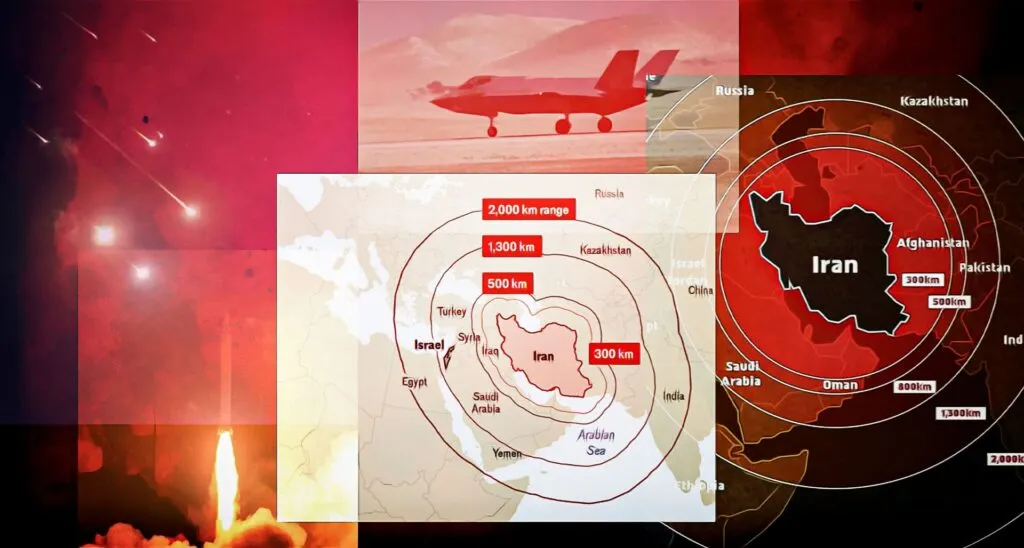
  • W ciągu ostatnich kilku dni irański reżim wystrzeliwał pociski i drony przeciwko państwom Zatoki Perskiej.
  • Po tym, jak Hezbollah złamał zawieszenie broni z Izraelem, Siły Obronne Izraela (IDF) zaatakowały cele w Bejrucie. Następnie irański reżim wystrzelił pociski w kierunku Izraela, twierdząc, że działał w „obronie” Libanu.
  • Irański reżim kieruje się wyłącznie własnymi interesami. Nie wystrzelił pocisków, aby bronić Libanu, lecz aby chronić Hezbollah i kontynuować realizację własnych celów, niezależnie od tego, jaki kraj na tym ucierpi.

7 czerwca 2026 r. Iran po raz kolejny wystrzelił pociski balistyczne w kierunku Izraela, twierdząc, że atak został przeprowadzony „w obronie” Libanu po izraelskich nalotach na Bejrut.

Niemal natychmiast po wystrzeleniu pierwszych pocisków irański minister spraw zagranicznych Seyed Abbas Araghchi opublikował w mediach społecznościowych grafikę przedstawiającą flagi Iranu i Libanu, sygnalizując, że Teheran przedstawia atak jako akt solidarności z Libanem.

Ostatnie działania irańskiego reżimu w regionie Zatoki Perskiej

Jeszcze przed wystrzeleniem pocisków w kierunku Izraela Iran już eskalował swoją aktywność militarną w innych częściach Bliskiego Wschodu.

Od początku czerwca reżim nasilił ataki w całym regionie Zatoki Perskiej. 3 czerwca Międzynarodowy Port Lotniczy w Kuwejcie został trafiony przez irańskie pociski, w wyniku czego jedna osoba zginęła, a kilka zostało rannych. Kilka dni później Iran przeprowadził kolejną serię ataków rakietowych wymierzonych zarówno w Kuwejt, jak i Bahrajn.

Według stanu na 6 czerwca 2026 r. Gulf Research Center odnotowało ponad 7000 irańskich ataków rakietowych i dronowych na państwa Zatoki Perskiej od momentu wejścia w życie zawieszenia broni. Z danych wynika, że blisko 3000 ataków było wymierzonych w Zjednoczone Emiraty Arabskie, ponad 1000 odpowiednio w Arabię Saudyjską i Kuwejt, natomiast Bahrajn padł celem ponad 700 ataków.

Od czasu wprowadzenia zawieszenia broni w kwietniu Iran wielokrotnie testował granice swojej swobody działania, jednocześnie przedstawiając się jako strona poszkodowana za każdym razem, gdy Stany Zjednoczone odpowiadały na naruszenia rozejmu zagrażające amerykańskiemu personelowi i interesom w regionie.

Teheran wygodnie pomija fakt, że wystrzeliwanie pocisków i dronów przeciwko suwerennym państwom, a także atakowanie amerykańskich sił i zasobów, samo w sobie stanowi wyraźne naruszenie zawieszenia broni.

Irański reżim atakuje Izrael we własnym interesie

Jeszcze przed izraelskimi atakami na cele Hezbollahu w Bejrucie, IDF jasno zapowiedziały, że podejmą takie działania, jeśli Hezbollah będzie nadal naruszał porozumienie o zawieszeniu broni. Dopiero po tym, jak Hezbollah wystrzelił rakiety w kierunku północnego Izraela, Izrael odpowiedział nalotami na stolicę Libanu.

Reakcja Teheranu była natychmiastowa. Irańscy urzędnicy zagrozili Izraelowi „bolesną i zdecydowaną odpowiedzią” za ataki wymierzone w Hezbollah – najważniejszego regionalnego pełnomocnika Iranu, choć obecnie znacznie osłabionego.

Biorąc pod uwagę schemat irańskich ataków rakietowych i dronowych w całym regionie Bliskiego Wschodu, powinno być oczywiste, że wystrzelenie przez Iran ponad 20 pocisków w kierunku Izraela nie było motywowane chęcią „obrony” Libanu. Nie istniało żadne zagrożenie dla libańskiej suwerenności ani dla libańskich cywilów, które wymagałoby irańskiej interwencji.

Był to raczej kolejny przejaw wieloletniej kampanii Iranu przeciwko Izraelowi oraz element szerszej strategii mającej na celu projekcję siły, utrzymanie wpływów regionalnych i niestabilności oraz zachowanie sieci swoich pełnomocników.

Nie powstrzymało to jednak części międzynarodowych mediów przed przyjęciem narracji Iranu.

„The New York Times” poinformował na przykład, że izraelskie naloty na Bejrut „sprowokowały” Iran do „odwetu”.

„The Guardian” podobnie opisał irański ostrzał rakietowy jako przeprowadzony „w odpowiedzi” na izraelskie ataki w Bejrucie.

Jeśli jednak irański ostrzał rakietowy był jedynie reakcją na izraelskie działania wojskowe w Bejrucie, to jak czytelnicy mają interpretować równoczesne ataki na Kuwejt, Bahrajn i inne państwa Zatoki Perskiej?

Odpowiedź brzmi: nie mogą.

Twierdzenie, że Iran działał w celu „obrony” Libanu, załamuje się w konfrontacji z szerszym obrazem regionalnych działań reżimu. Państwo rzeczywiście troszczące się o suwerenność Libanu nie wykorzystywałoby tego kraju jako bazy dla zbrojnej organizacji pełnomocniczej ani nie groziłoby jednocześnie sąsiednim państwom na całym Bliskim Wschodzie.

Działania Iranu są podyktowane jego własnymi interesami strategicznymi. Hezbollah pozostaje jednym z najcenniejszych narzędzi reżimu służących realizacji tych interesów, niezależnie od konsekwencji dla samego Libanu.

Teheran może próbować przedstawiać się jako ofiara występująca w obronie sąsiedniego państwa. Jednak jego dotychczasowe działania opowiadają inną historię.

To nie jest historia o obronie.

To historia reżimu gotowego zdestabilizować cały region w pogoni za swoimi ambicjami ideologicznymi.


Link do oryginału: https://honestreporting.com/from-the-gulf-to-israel-the-iranian-regimes-campaign-of-regional-aggression/?utm_source=substack&utm_medium=email

Honest Reporting: 7 czerwca 2026


Zawartość publikowanych artykułów i materiałów nie reprezentuje poglądów ani opinii Reunion’68,
ani też webmastera Blogu Reunion’68, chyba ze jest to wyraźnie zaznaczone.
Twoje uwagi, linki, własne artykuły lub wiadomości prześlij na adres:
webmaster@reunion68.com